.png)
From Nova Scotia naval knowledge to Japanese precision, the studio led by Rian Davidson proposes a structural reading of furniture.
In Barcelona, the studio Other Objects works based on a central question: how to place the structure back at the center of the design? At the helm is Rian Davidson, a designer born in Nova Scotia, Canada, whose trajectory includes naval carpentry, traditional European architecture and Japanese construction.
Davidson grew up in a territory marked by boat-building and structural solid wood carpentry. Spruce, maple, oak and birch were part of everyday life. The logic of the fittings, beams, and carved structures formed his initial understanding of construction. It was a practice linked to the environment and need, far from the industrial standardization that today dominates a large part of global production.
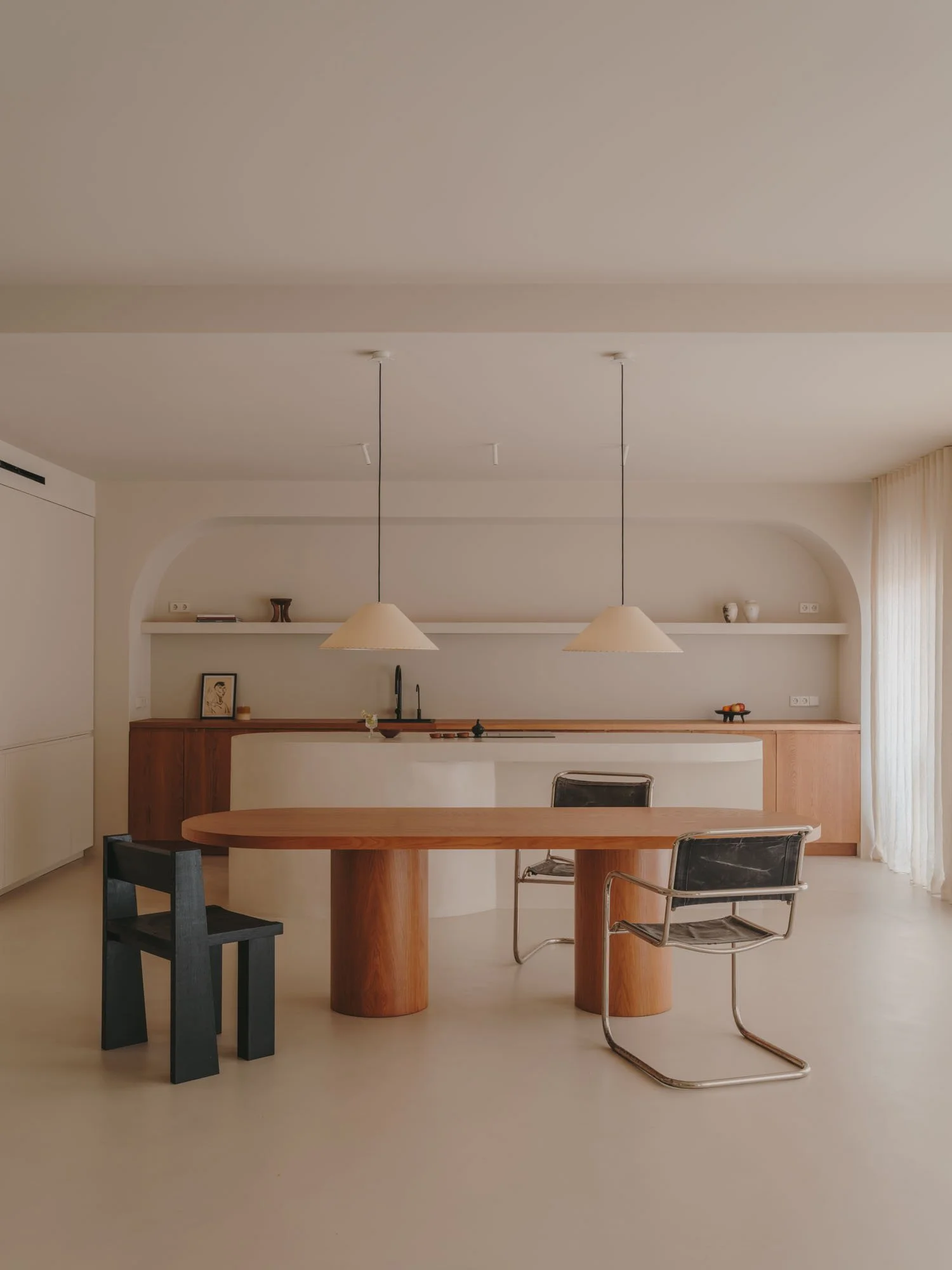
Over the past fifteen years, the designer has toured workshops and construction traditions in Europe and Japan to understand how different cultures solved problems of stability, proportion, and permanence. He investigated residential construction systems, observing how techniques emerged from climate, landscape, and local beliefs. This research naturally migrated to the furniture of Other Objects, where each piece starts from architectural logic before assuming final form.

A direct example of this approach is Quadra Chair, handcrafted in Barcelona. The chair is based on a formal exploration guided by the construction process and is defined by a precise, almost graphic, angular silhouette. Made of chestnut wood certified by the PEFC seal, it is available in the raw version, for €850, or in the charred version, for €950, both finished with hard wax oil for greater durability. What draws attention is not only the firm design, but the structural clarity: the lines reveal the constructive reasoning that underpins the piece.
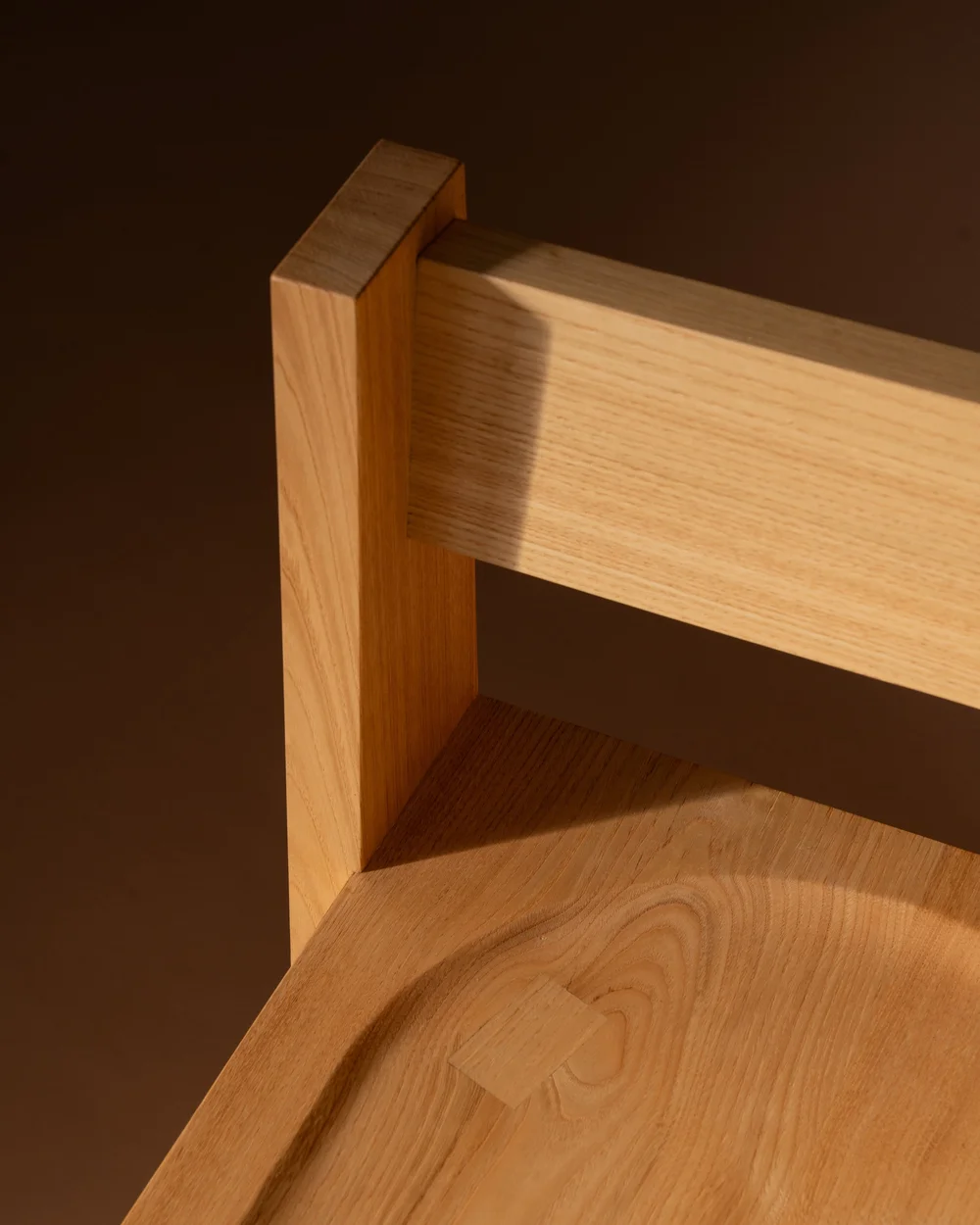
Studio work avoids excess. There is no ornamentation or formal gesture aimed at immediate effect. Complexity is concentrated on the fittings, the proportions, and the way in which the parts meet. In some cases, the detail is visible; in others, it remains discreet. The focus is not on the image of the object, but on the resolution of the structure.
While a large part of the market operates under rapid cycles and serial production, the practice of Otra Objects is organized at a different pace. Design is born from matter. The shape accompanies the construction. The historical reference does not appear as a direct citation, but as embodied knowledge.
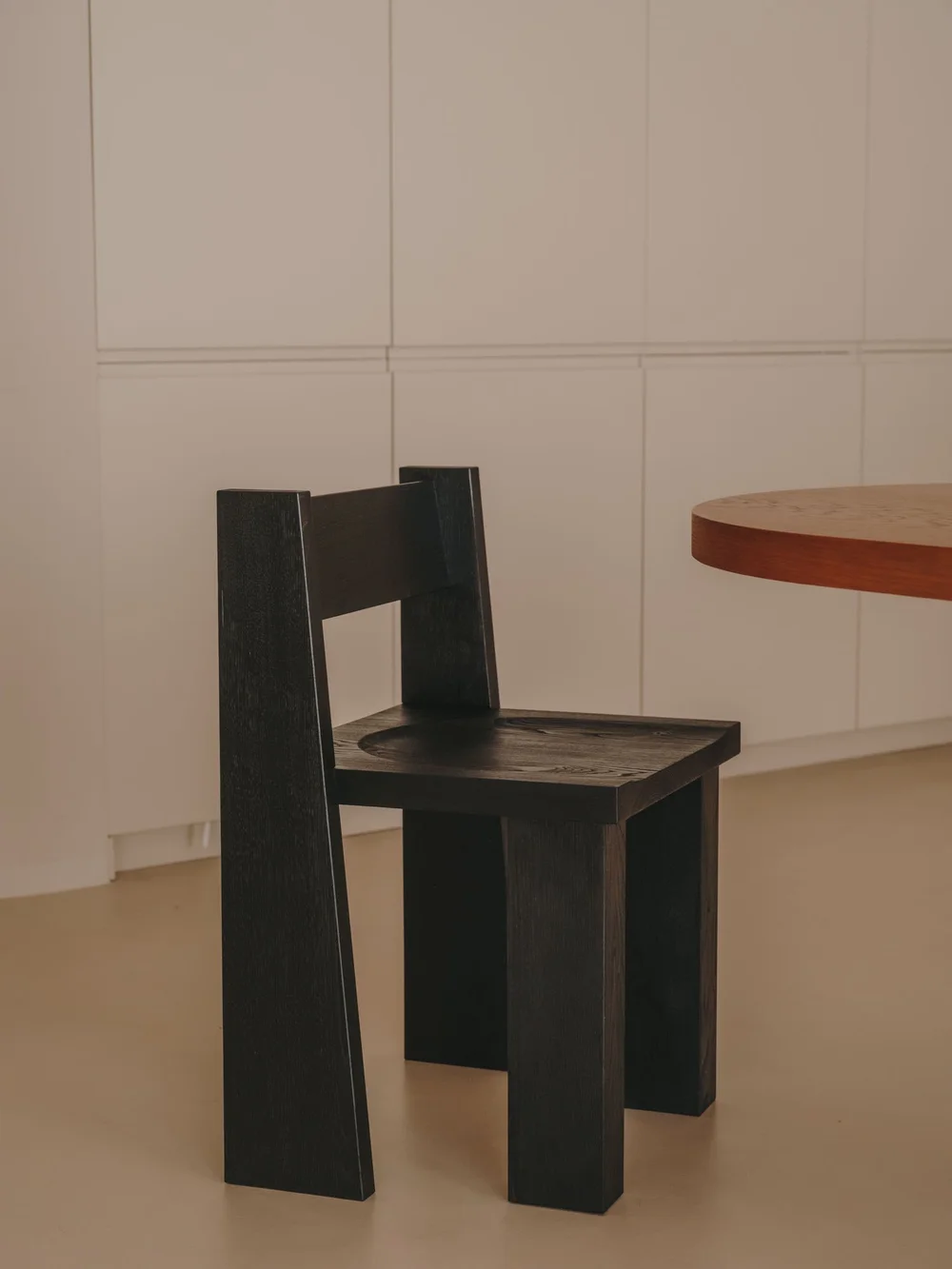
The result is pieces that carry a clear sense of origin. Canadian influence is manifested in structural honesty. The European tradition emerges from the understanding of scale and proportion. Japanese discipline appears in the treatment of detail and in formal restraint. Not as an aesthetic mix, but as a technical continuity.
At a time when design often favors finish and image, Rian Davidson treats furniture as construction. And it is in this decision - structural rather than superficial - that lies the relevance of the study today.