

Complete Looking: The Photography of Chris Steele-Perkins
Chris Steele-Perkins belongs to a lineage of photographers who have understood the image not as a mere documentary record, but as a sensitive technology of social listening, a way of interpreting the invisible tensions that organize bodies, territories and affect within modernity.
Words by
Words by Sarah Rocksane Araujo
Editorial, Fashion and Beauty
His trajectory, beginning between Burma and post‑war England, spans some of the major cultural and political transformations of the twentieth century, but what makes his work particularly singular is not merely the historical dimension of the events he photographed, but rather the way he shifted photojournalism from a purely factual logic to a profoundly human, subjective, and anthropological field.
Over decades, Steele-Perkins has built a visual archive that investigates identity, class, structural violence, belonging, youth, memory and displacement, always rejecting the aesthetic neutrality that traditionally marked part of Western documentary practice.
Education, social consciousness and documentary as political positioning
Born in 1947 in Rangoon, now Myanmar, the son of an English father and a Burmese mother, Steele-Perkins grew up in an England still deeply marked by the psychological effects of war and the social transformations of post‑war European reconstruction. As a young man he studied Psychology at Newcastle upon Tyne University. Even before becoming a photographer, he already showed a clear interest in the mechanisms of collective behavior, forms of emotional survival and the invisible structures of everyday life. It was while working for the university newspaper that he encountered documentary essays published in The Sunday Times, especially those by Don McCullin, a decisive experience for his turn toward photojournalism.
In the 1970s, while living in London, Steele-Perkins turned his gaze toward the urban transformations of England amid an economic crisis. It was a period of rising unemployment, racial tensions, industrial collapse, and the hardening of British public policy. While part of international photography focused on armed conflicts or geographic exotification, Steele-Perkins chose to investigate the domestic precarity of England, its peripheral neighbourhoods, invisible workers, and displaced youth within the very British structure. His entry into the Exit Photography Group in 1975 solidified this political dimension of his work. Alongside Nicholas Battye and Paul Trevor, he traversed industrial cities such as Glasgow and Middlesbrough, documenting urban poverty amid England’s economic transition. The result of this work would be the book Survival Programmes, a publication that today can be understood as one of the most important visual documents on the structural violence of emerging neoliberalism in Great Britain.
What distinguishes Survival Programmes from many sociological records of the time is precisely its ability to reject visual miserabilism. Steele-Perkins does not photograph poor communities as passive bodies of economic decline. On the contrary, his images emphasize coexistence, humor, intimacy, everyday resistance and survival strategies. This concern for the dignity of marginalized communities appears even more intensely in his work in Northern Ireland. During the conflicts known as The Troubles, Steele-Perkins photographed Catholic communities in Belfast from an explicitly anti‑oppressive perspective. Rather than constructing spectacular images of urban war, he sought to portray the effects of militarisation on daily life, funerals, family gatherings, children's play, leisure moments and the persistence of community life amid occupation. Steele‑Perkins claimed he was not interested in neutrality. His commitment was to historically oppressed subjects. This stance completely displaces his photographic practice from a liberal journalistic tradition based on the idea of impartiality. For him, documentary photography was inevitably political because the choice of framing already implied an ethical position.
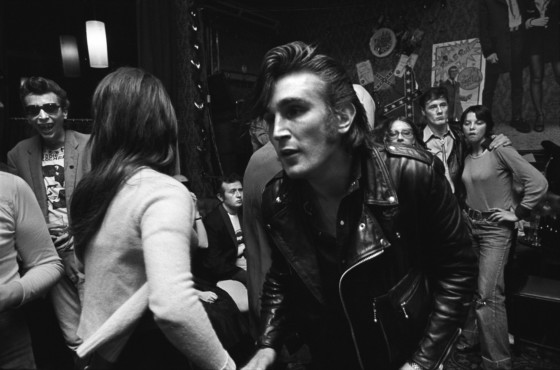
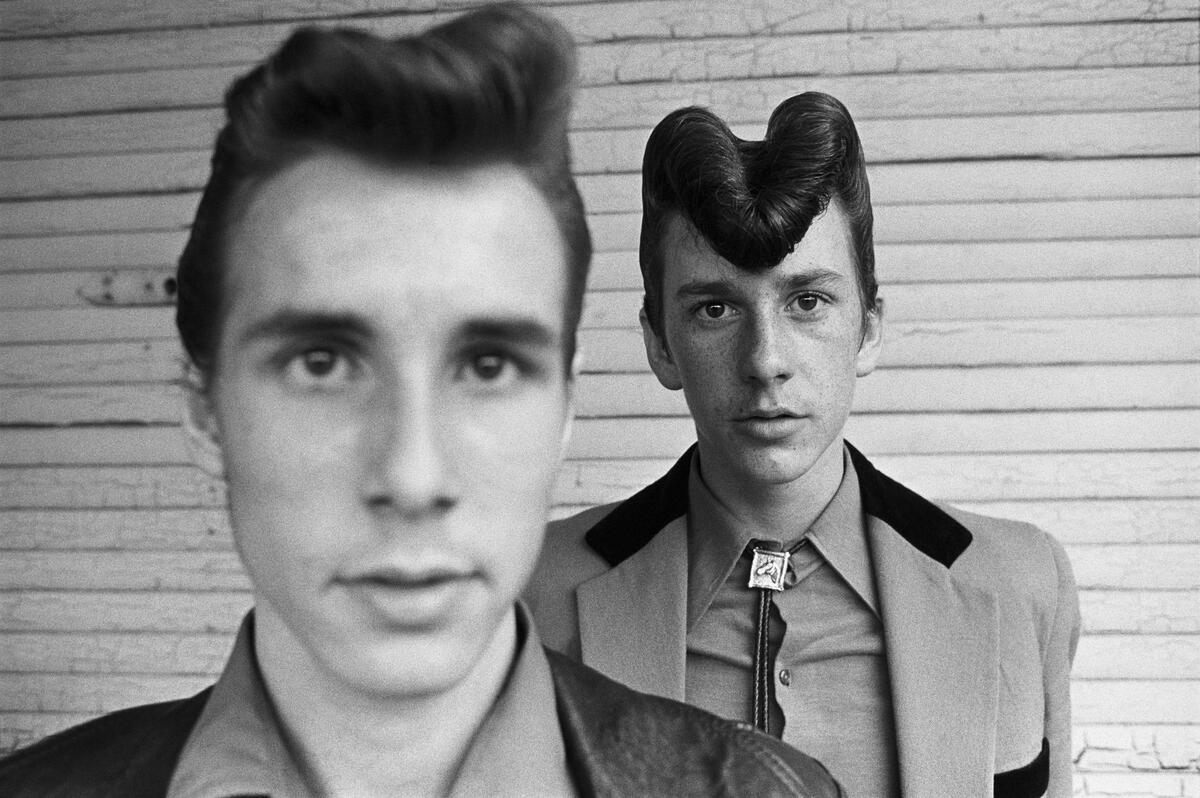
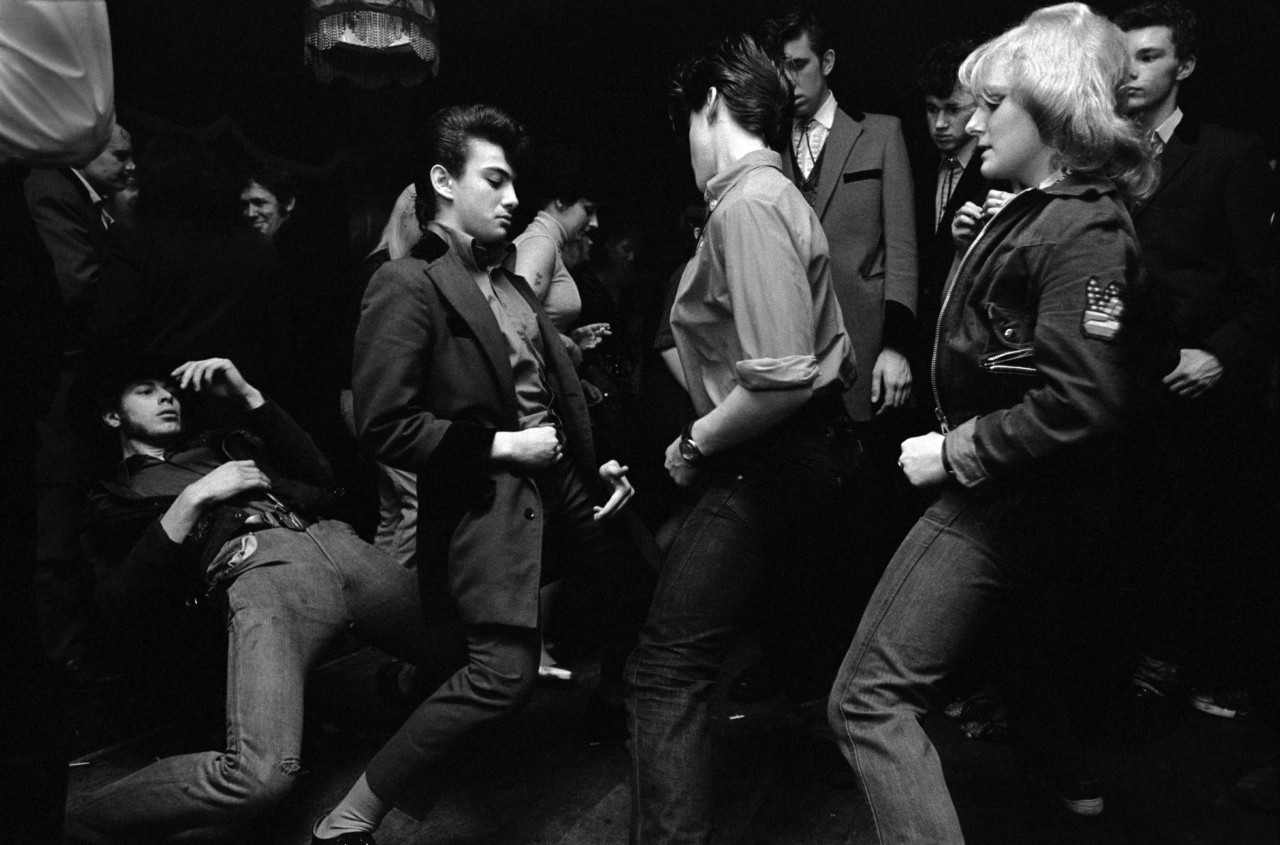
This political dimension intensifies in his work on racist movements and anti‑racist demonstrations in England in the late 1970s and early 1980s. The rise of the National Front and the hardening of British anti‑immigration discourse appear in his images not as ideological abstractions but as concrete forces reshaping the daily lives of racialized communities. Steele‑Perkins documented protests, urban tensions and the experience of ethnic minorities at a pivotal moment in British history. At the same time, he was developing one of the most emblematic projects of his career, The Teds, an essay undertaken over three years about the Teddy Boys, a British subculture that originally emerged in the 1950s and was revived in the 1970s. The project goes far beyond fashion photography or a superficial record of urban tribes. Although clothing is a central visual element, Steele‑Perkins understood attire as a device of social identity.
The images of The Teds are highly relevant to contemporary fashion studies precisely because they reveal clothing as a language of belonging, resistance and subjective construction. Draped suits, exaggerated hairstyles, shiny shoes and performative poses appear less as aesthetic trends and more as a symbolic architecture of collective existence. Steele‑Perkins believed that style is never merely appearance. Style is psychological territory.
From Magnum to the world: new territories, same ethics of looking
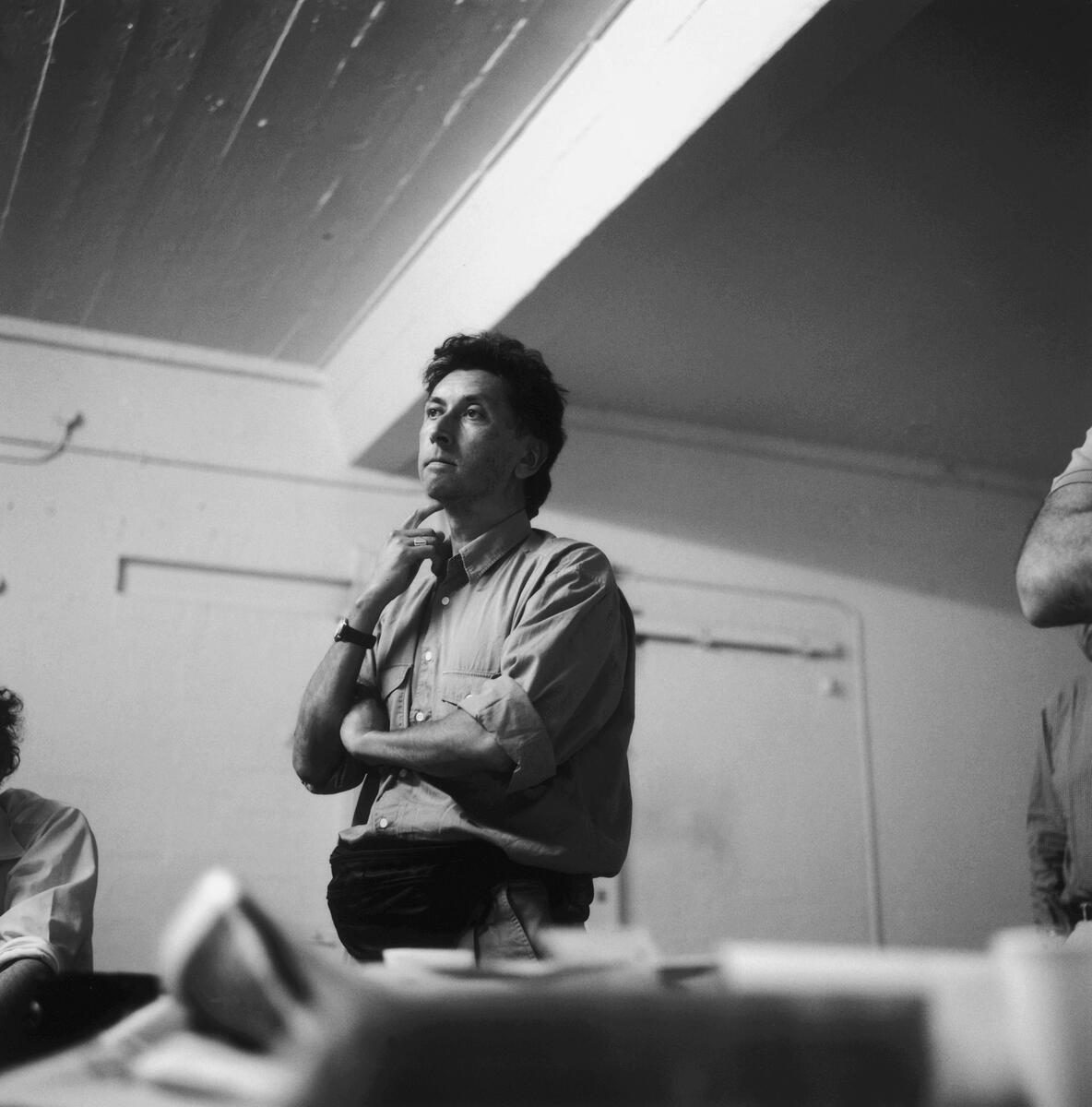
In 1979, the photographer joined Magnum Photos, a decisive milestone in his international career. From then on, he broadened his geographic scope and began developing projects in various parts of the world, especially in Africa and Asia. Yet, despite the territorial expansion, his approach remained consistent. Steele‑Perkins remained less interested in geographic exoticism and more in the human structures of everyday experience.
His work in Africa throughout the 1980s and 1990s avoids many of the historical vices of Western photojournalism on the continent. Rather than turning African populations into generic images of suffering or misery, Steele‑Perkins creates dense, contradictory, and deeply relational photographs. There is violence, but also affection, desire, humor, fashion, ornamentation, and subjectivity. This sensibility takes on new contours in The Pleasure Principle, a project on British leisure during the Thatcher era. The book marks an important shift in his output, especially through a more intense incorporation of color photography. Steele‑Perkins perceives that 1980s England was becoming increasingly performative, strange, and theatrical. Color then functions as a critical instrument capable of revealing the visual excesses of consumer society. His turn to color photography also demonstrates a sophisticated understanding of the image as an emotional construction. For Steele‑Perkins, color was never merely decorative. It functioned as psychological density. Saturated tones, abrupt contrasts, and luminous atmospheres turned ordinary situations into visually unsettling experiences.
Even during this period of chromatic experimentation, the photographer maintained black‑and‑white projects, such as his extensive documentation of Afghanistan between 1994 and 1998. The book Afghanistan is perhaps one of his most emotionally intense works. His images do not romanticize the conflict, nor do they reduce the country to the logic of permanent devastation. There is a deeply existential dimension in his Afghan photographs. Steele‑Perkins described Afghanistan as a place simultaneously beautiful, tragic, heroic, and brutal. This emotional multiplicity appears directly in the visual construction of the project. His images reveal ruins, but also delicacies. They show violence, but also contemplation. The photographer seemed to understand that no human territory can be reduced to a single narrative.
Later, his relationship with Japan inaugurated a new layer in his work. After marrying Miyako Yamada, Steele‑Perkins began a long visual investigation into Japanese culture. Unlike many foreign photographers who approach Japan through technological exoticism or hyper‑urbanization, he builds an intimate, affective, and quiet gaze of the country. Fuji, published in 2000, reveals this contemplative dimension. The photographer seems less interested in explaining Japan and more in experiencing its emotional atmospheres. His images become more measured, melancholic, and meditative. Time slows. Urban noise gives way to observation of memory, landscape, and small intimacies. This diary‑like dimension deepens in Echoes, an extremely personal book about the year 2001. Here, Steele‑Perkins turns photography into a mechanism for preserving intimate experience. Everyday life ceases to be merely documentary material and becomes an emotional archive of the passage of time.
Over the following decades, the photographer continued to investigate England, Japan, aging, migration, and belonging. Works such as England, My England, Fading Light, and The New Londoners demonstrate his rare ability to observe cultural changes without resorting to cynicism or simplifying nostalgia.
Fashion, identity, and the legacy of Chris Steele‑Perkins
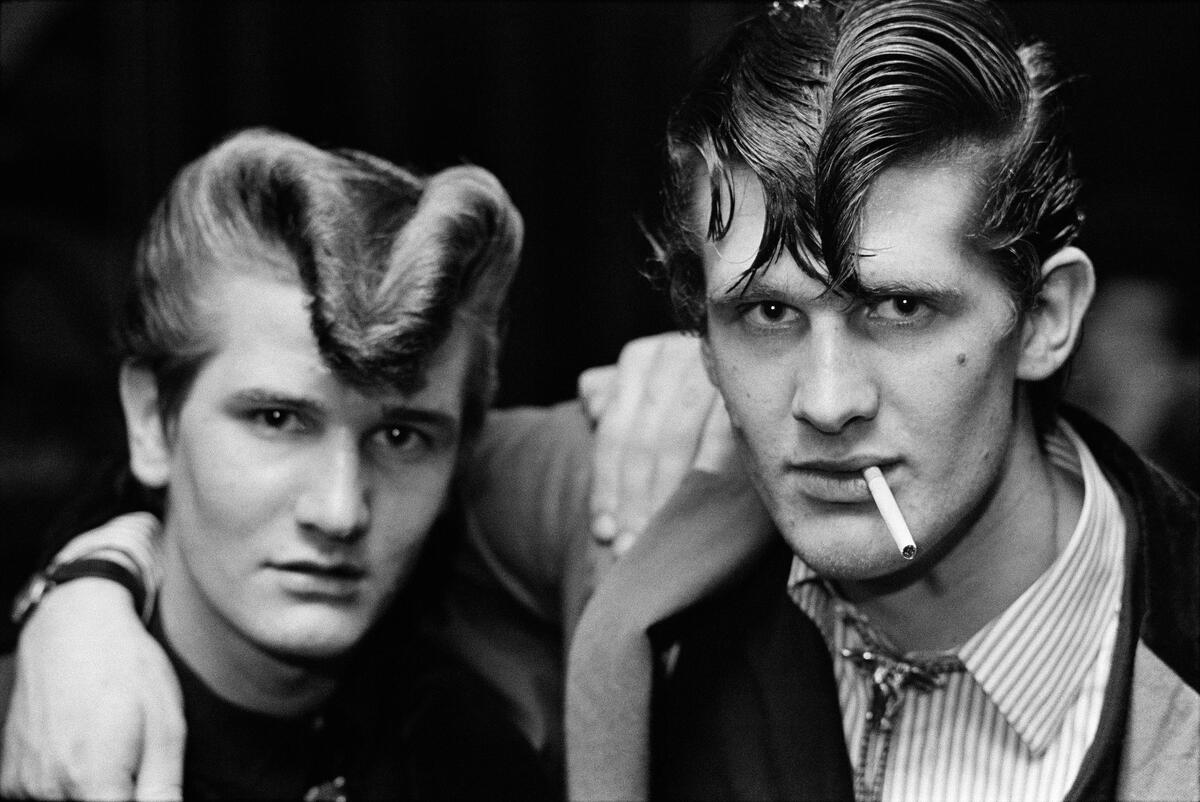
His work possesses enormous relevance to contemporary thinking about fashion, although it is rarely discussed within that specific field. Steele‑Perkins deeply understood the political dimension of appearance. In his portraits, clothing is never neutral. They function as social codes, devices of belonging, and technologies of symbolic survival. From the Teddy Boys to the racially marked youth of 1970s London, from the Catholic communities of Belfast to the beachgoers of Thatcher‑era England, the photographer observed how bodies use attire to negotiate dignity, desire, rebellion, and identity. His camera perceived clothing as an emotional extension of the subjects. In a historical moment when fashion often oscillates between commercial spectacle and empty discourse on authenticity, revisiting Steele‑Perkins’ work becomes particularly important. He reminds us that image is not merely surface. Image is condensed social memory.
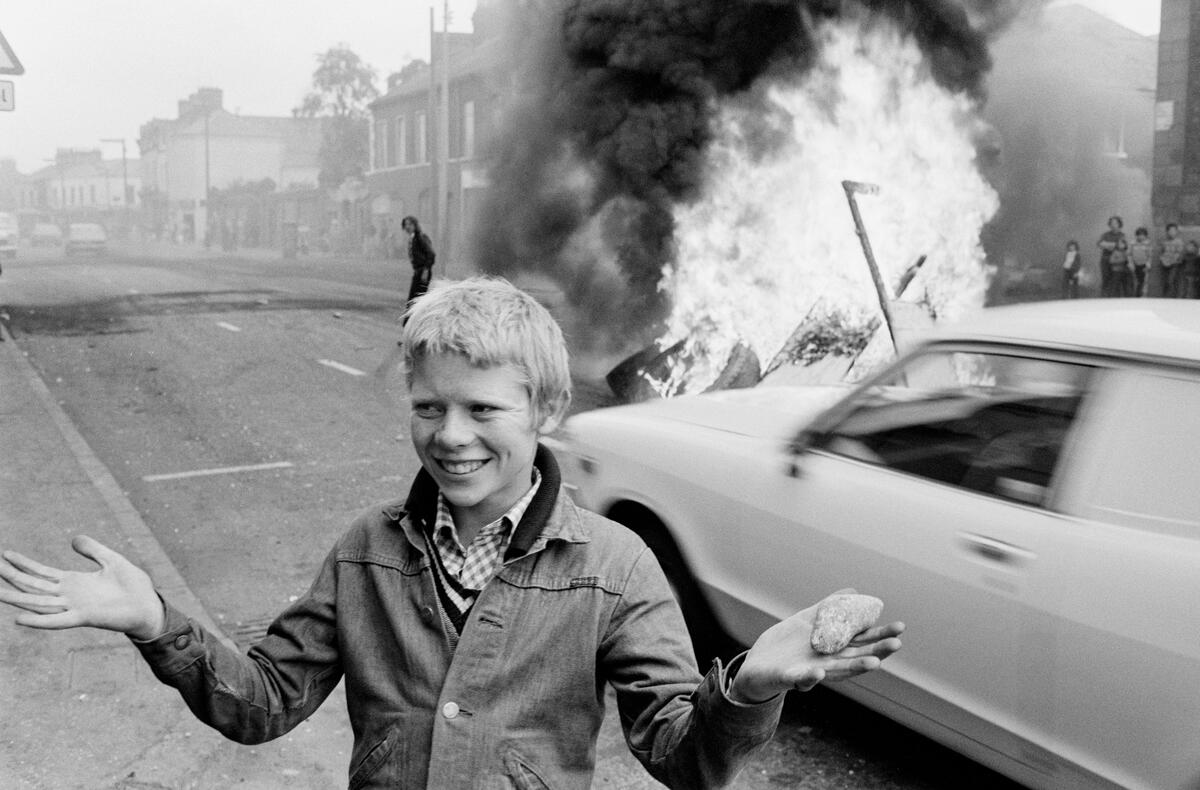
His death, at 78, closes a fundamental trajectory for the history of contemporary photojournalism, but also leaves a rare legacy. Steele‑Perkins showed that photographing can be an exercise of listening, coexistence and collective responsibility. Gregory Halpern, co‑president of Magnum, defined his photography as capable of finding lyricism in everyday life. Steele‑Perkins could perceive beauty without erasing conflict, dignity without romanticization, and humanity without simplification. His visual archive remains a testimony of a world in constant transformation, but also a reflection on what endures. Community, memory, resistance, identity and desire run through his entire oeuvre like lines that connect different geographies and different eras.
Complete TV · Reels
@egon_lab Lazarus.
See on InstagramFrom Complete




More from Sarah Rocksane Araujo
View profile


Latest from Complete
 FashionMatías Irala: the time of craftsmanship
 CultureThievery Corporation, 30 years: the Washington duo that originated in bossa nova
 The CoverBrazil still gives little recognition to genuinely Brazilian authorial fashion.
 InnovationLight has become a building material
 DesignAnton Berkasov plays his own art as one would play an instrument
 The Cover"I'm more afraid of being bored than of trying something new"
 BeautyBORNTOSTANDOUT arrives in Brazil