
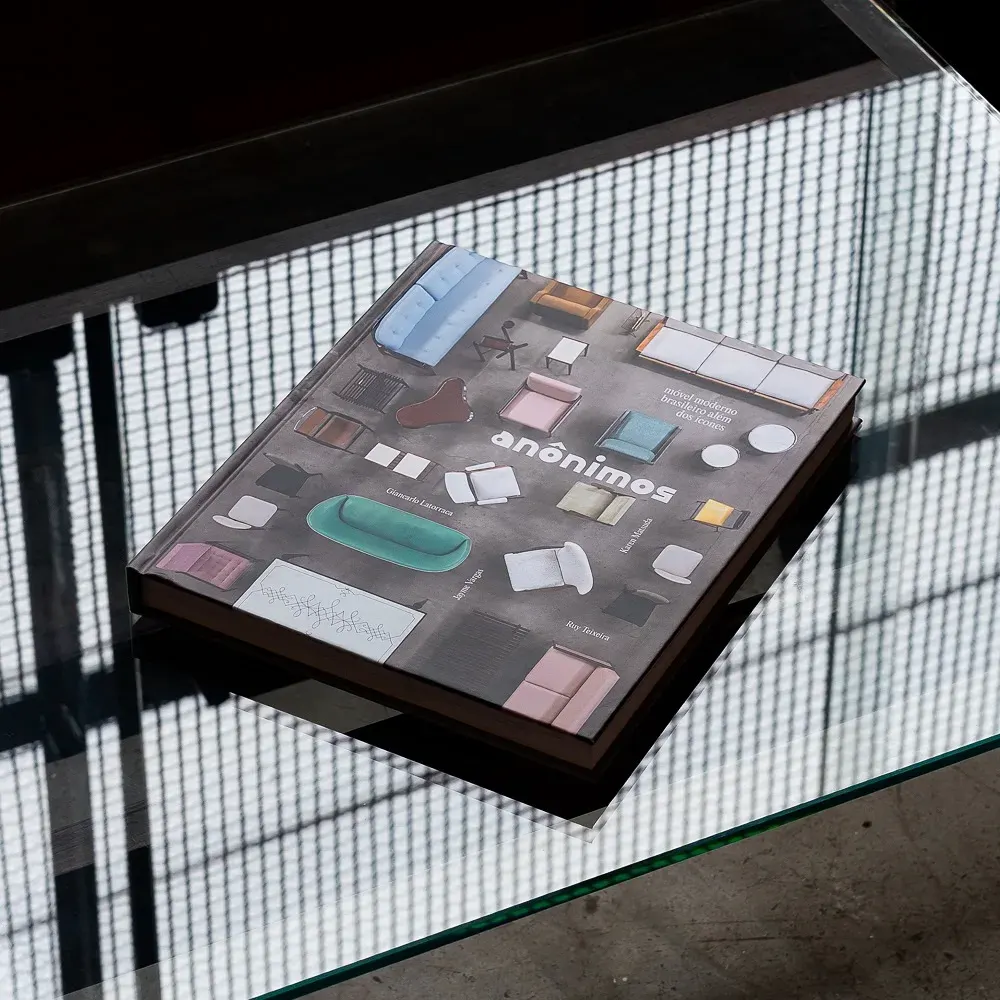
Complete Review: Anônimos, by Giancarlo Latorraca
The history of design is usually told through names, trajectories and objects that span time as undeniable references.
Words by
Words by Sarah Rocksane Araujo
Editorial, Fashion and Beauty · November 14, 2026
In Brazilian modern furniture, some signatures have become symbols of a production recognized both at home and abroad, helping to consolidate an imagined notion of the national design identity.
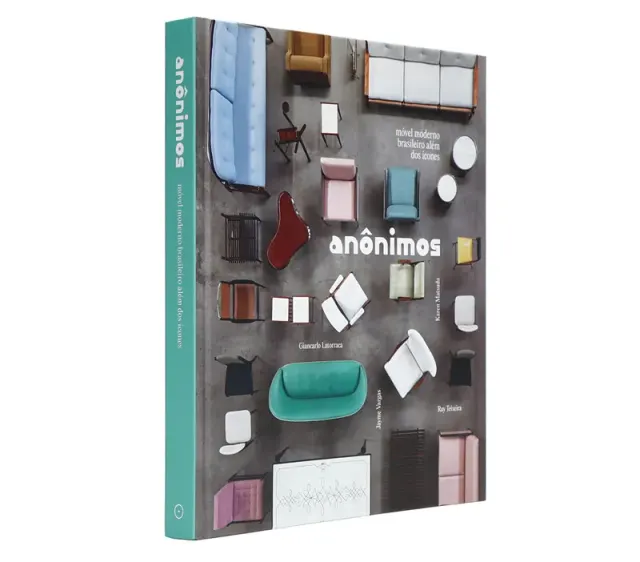
But what happens when we shift our gaze to everything that existed around those names? To the factories, joineries, shops, independent professionals and pieces that actively participated in the transformation of ways of living, yet did not achieve the same space in official records? It is from this question that Anônimos, a book by Giancarlo Latorraca, proposes to broaden the narrative about Brazilian modern furniture, recognizing the collective, industrial and commercial dimension of a history that cannot be understood solely by its most celebrated authors.

More than recovering forgotten objects, the publication investigates a production network that sustained the circulation of modern design in the country. Between creation and consumption, there was a structure composed of manufacturers of various sizes, joineries, stores with diverse profiles, architects who occasionally designed furniture, and designers whose work was not always documented. By bringing this universe to the center of the discussion, the book questions how we assign cultural value to objects and how authorship becomes a criterion of recognition. After all, a chair, a table or a cabinet also carry the history of those who produced, marketed and incorporated them into everyday life, even when their creators remain unknown. In this sense, anonymity appears not merely as a lack of signature, but as a fundamental issue for considering design memory and the limits of its historiography.
Organized into three parts, the book constructs this journey from different perspectives. In the first, Giancarlo Latorraca provides a historical overview of furniture production in Brazil and, alongside Karen Matsuda, addresses issues such as authorship, reproducibility and the local insertion of modern thought. Although associated with an international rationalism and the simplification of living modes, modern design acquired its own characteristics on Brazilian soil, shaped by specific production conditions, material repertoires and cultural dynamics. In the second part, Karen Matsuda focuses on typologies, formal characteristics and recurring materials in large‑scale production, as well as examining the channels through which these pieces reached the public. The publication thus demonstrates that design is established not only in the drawing of a piece but also in the systems that enable its manufacture, dissemination, commercialization and appropriation.
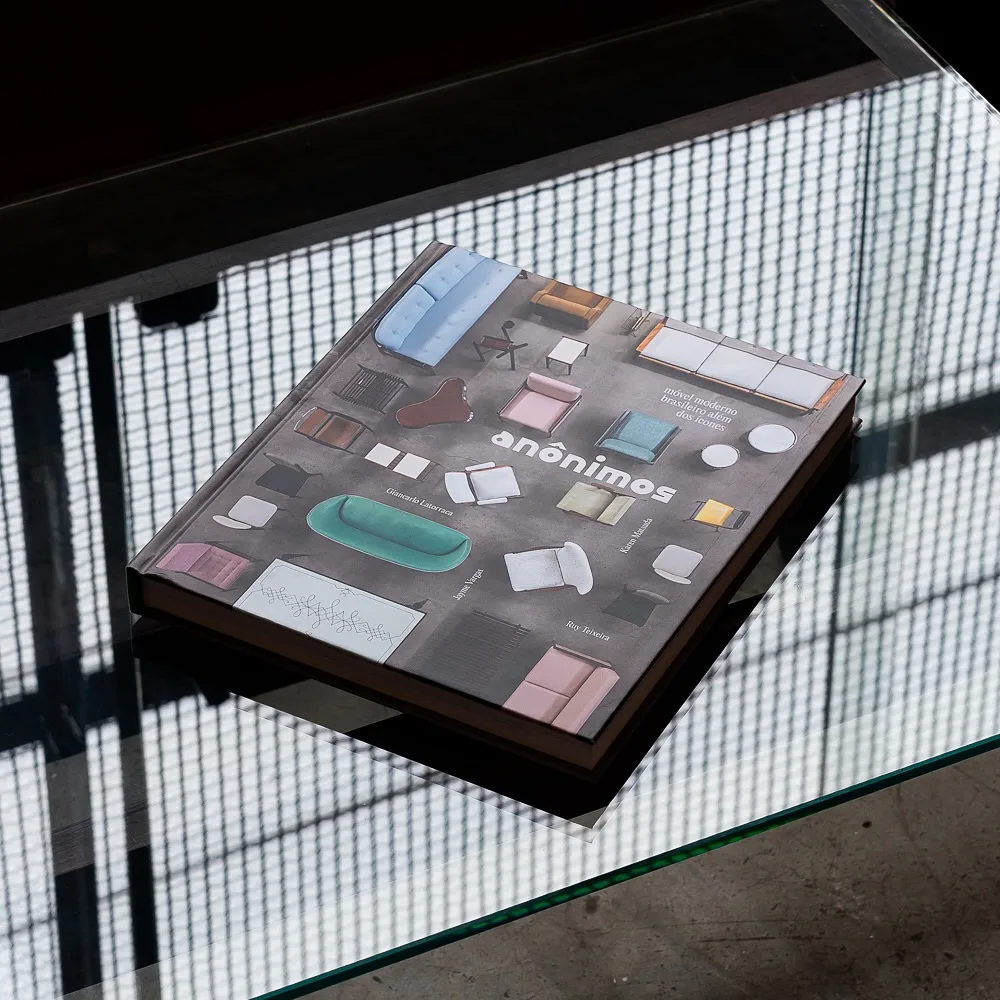
It is in the third part, authored by Jayme Vargas, that this investigation gains a particularly revealing dimension. The survey brings together furniture from dozens of production experiences, ranging from better‑known companies such as Cimo, Gelli, Liceu de Artes e Ofícios and Celina Decorações, to manufacturers about which little information remains, sometimes identified only by a stamp found on a piece or by an advertisement published in a magazine. There are also items whose provenance could not be assigned. The question that closes this selection, “Anonymous?”, encapsulates one of the most interesting provocations of the publication: how many stories remain outside our repertoire simply because we cannot identify their authors? By gathering these traces, the book turns the documentary survey into an act of recognition, making research a tool to reopen possibilities of reading Brazil’s modern heritage.
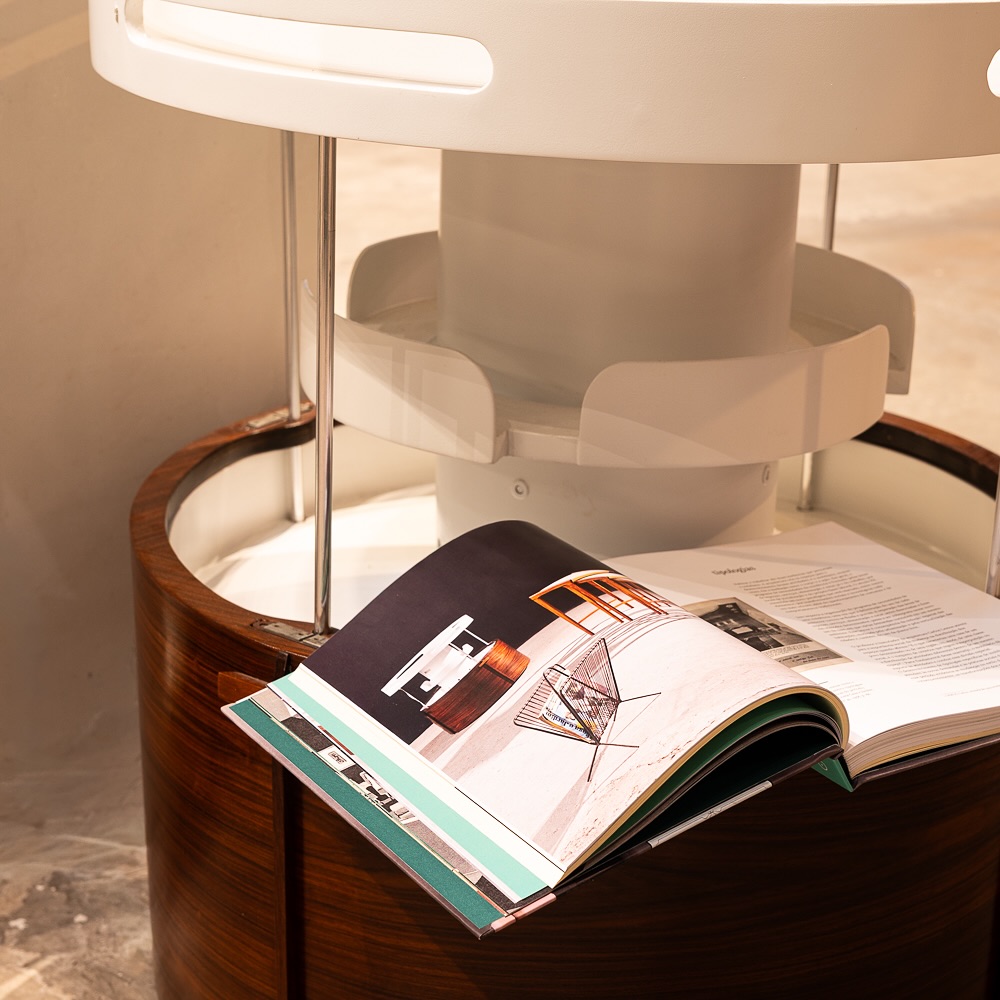
The strength of this narrative also lies in its visual construction. With around 200 images, including editorials, period‑magazine advertisements and contemporary photographs of pieces loaned by partner galleries, Anônimos offers an iconographic repertoire that allows observation of furniture transformations beyond historical descriptions. Added to this set is a photographic essay produced especially by Ruy Teixeira in a historic warehouse of the Liceu de Artes e Ofícios in São Paulo, whose presence brings the objects’ record closer to an atmosphere of material memory. The images do not function merely as illustration of the content: they help understand the circulation of the furniture, its modes of presentation and the ways it was incorporated into the domestic imagination. The editorial project makes observation an experience of discovery, inviting the reader to recognize details, constructive solutions and formal affinities that might have gone unnoticed in a narrative focused exclusively on the big names.
Complete TV · Reels
STELLAR IRIS, by artist Thomas Blanchard
See on InstagramFrom Complete




More from Sarah Rocksane Araujo
View profileLatest from Complete
 CultureDomo Damo: An artistic residency as a space for meeting, research and transformation
 FashionCasa de Criadores 58: Authorial fashion as expression
 The CoverIn the beginning, we couldn't even use the word handicraft.
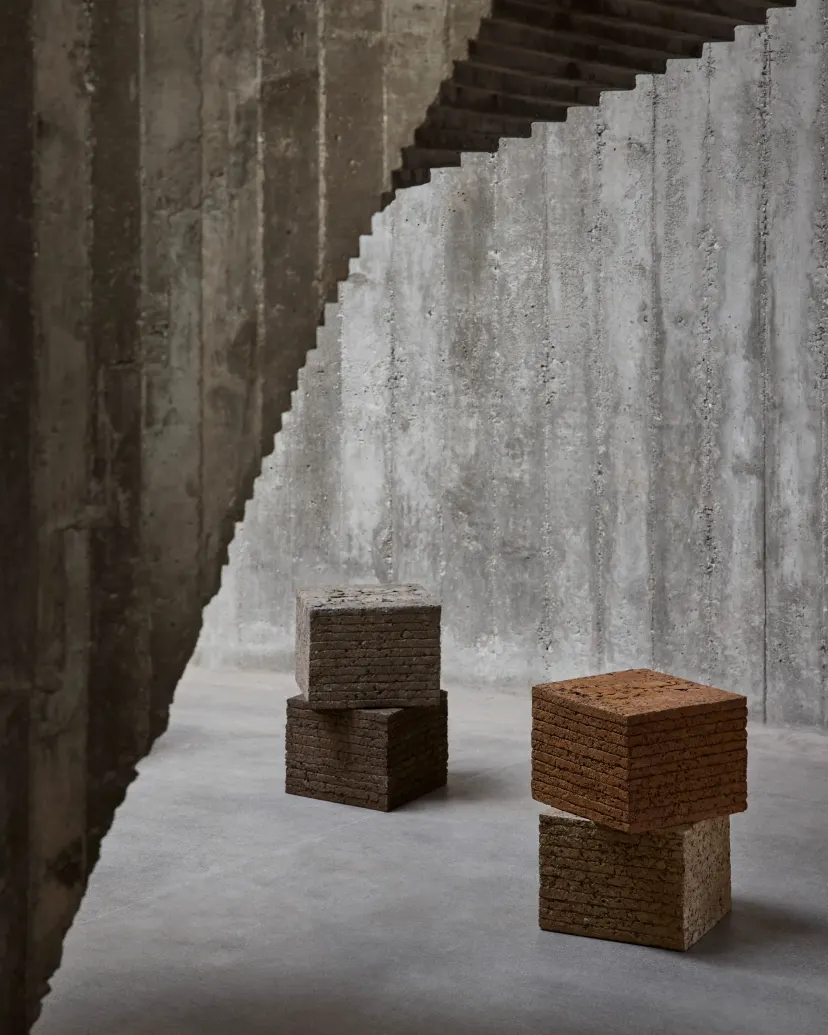 DesignCASA presents the exhibition of the 10th Brazilian Object Award
 BeautyAbeille Royale: the science of longevity conquers Brazil
 The CoverBrazil still gives little recognition to genuinely Brazilian authorial fashion.
 InnovationDiego Fernandes and Indiqz: the list of recommendations that was born in the early hours, with a child on his lap