
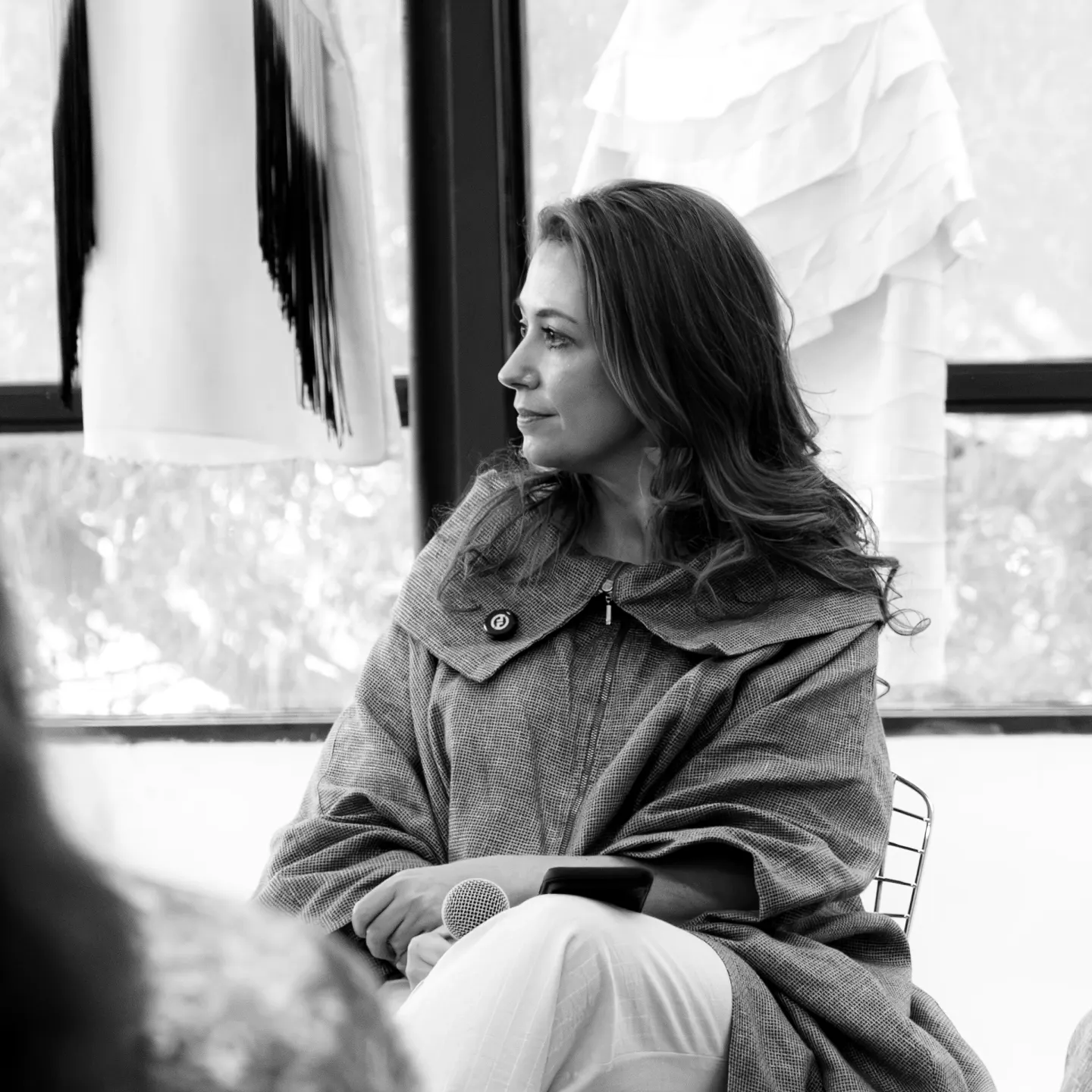
Brazil still gives little recognition to genuinely Brazilian authorial fashion.
Architect by training and stylist by insistence, Heloisa Strobel marks 13 years of Reptilia with a suspended-piece exhibition, a collection designed for the heat of cities and an ambition she sums up in two words: I want more.
Words by

Words by Rafael Silvério
Fashion · September 21, 2026
Thirteen years ago, Curitiba native Heloisa Strobel decided to bring to fabric what she had learned about volume, structure and proportion during nearly a decade at Jaime Lerner’s office. Thus Reptilia was born, a label that from its first cut rejected the disposable logic: pieces conceived less as trends and more as architecture you wear.
Still a girl, Heloisa drew and customized her own clothes: she cut, trimmed, embroidered, to her mother's despair. At 16 she wanted to study Fashion, but family pressure led her to Architecture and Urbanism at PUC‑PR. The detour, she admits, was decisive. It was in architecture that she formed the aesthetic and functional eye that now defines the collections, and it was alongside urbanist Jaime Lerner, her first employer, that she learned to think in scale, proportion and impact.
It was Lerner himself who encouraged her to take fashion seriously, when he noticed she was already sketching uniforms and experimental pieces inside the office. Heloisa returned to university for a second degree, in Fashion Design, and began entering competitions. In 2011 she placed second in Paraná Criando Moda, with a conceptual collection of fish leather and hand‑dyed silk. In 2013 she won BtoBe (Brazilians to Be), a Texbrasil program with Abit, and the prize paved the way for Reptilia's first commercial collection, presented in 2014 at the Who's Next fair in Paris.
Architect‑designer
That is how she defines herself, and the dual identity guides the method: every piece starts with pattern making on paper, then at the table and now on the computer, and only afterwards gains volume. Since 2015 production has been centered at Atelier Reptilia, where Heloisa trains her own workforce based on zero‑waste techniques. In 2018 the brand received the SESI ODS award, endorsed by the UN, in the Small Industry category, and Heloisa was invited by the Ministry of Culture to represent Brazilian fashion at the BRICS conference, with a show at South Africa Fashion Week. The following year she joined the Casa de Criadores. In 2021 she brought the Curitiba brand to São Paulo, opening a concept store on Mateus Grou street, which today hosts other authorial brands such as Isaac Silva, Misci, Neriage and Plural.
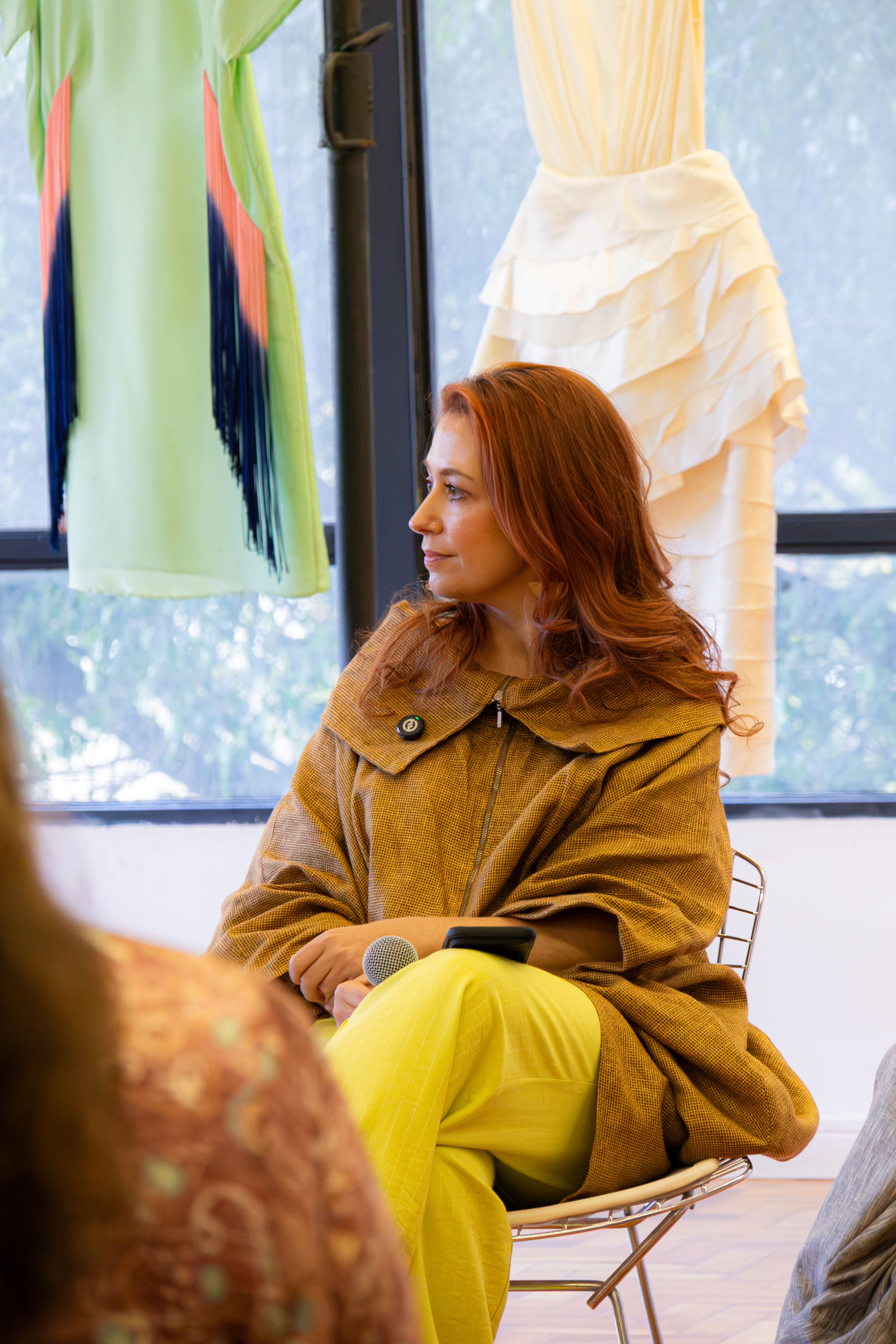
I don’t recall the exact moment I met Helo. I remember the feeling: being close to someone who draws with vitality and, at the same time, with discretion. When I was invited to the 13‑year exhibition, coinciding with the launch of the new collection, I went with that memory and with the pride of seeing a woman establish herself in a hostile environment like the fashion industry. We met at Casa de Criadores in 2019, and she remains the same generous host.
Fragmentos
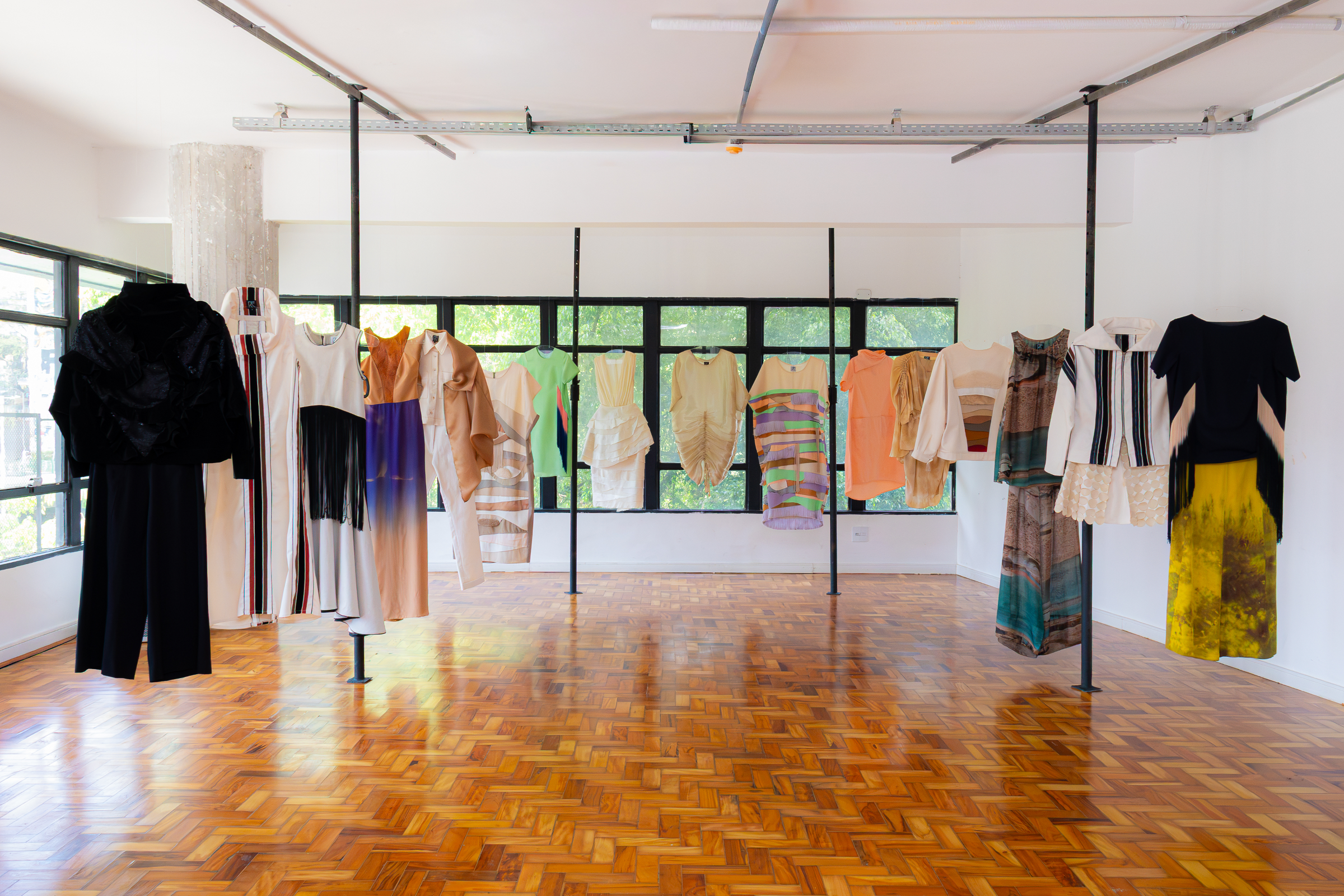
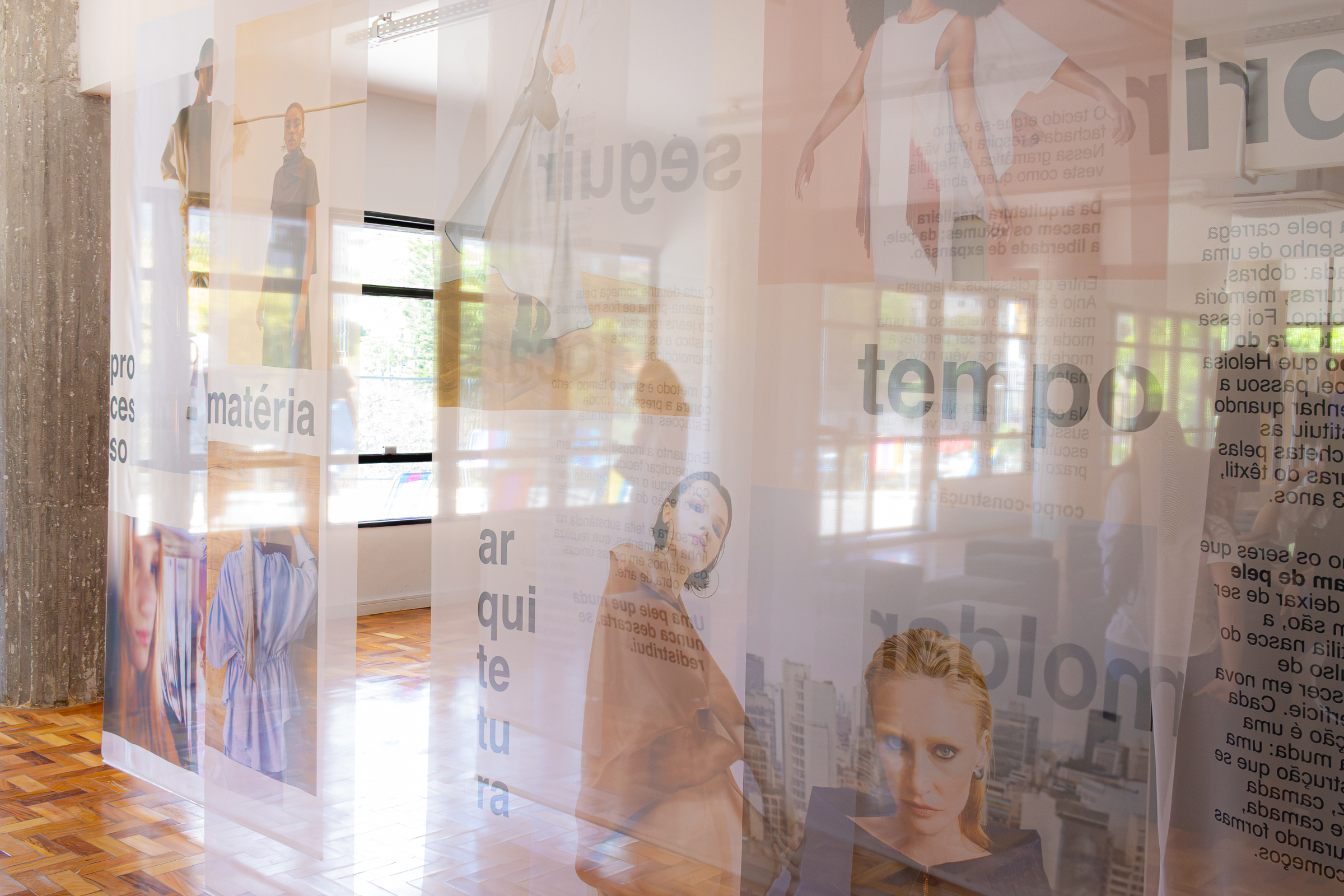
The event took place on August 27 at the Instituto Brasileiro de Teatro in downtown São Paulo. Helo welcomed me and walked me through the brand’s history and the new collection. On the second floor, Reptilia’s signature pieces, such as the Jaqueta Anjo and the Camisa Laço, were suspended from the ceiling, not following the body’s movement: a hanging runway so that silhouette and volume could speak for themselves.
On a modeling mural, she showed what she does with the cut leftovers. While clothing manufacturing usually discards about 15 % of the raw material at this stage, at Reptilia the rate is close to zero: the scraps are stored, organized and return, once a year, in a series of exclusive, limited pieces. The line was born during the pandemic and is called Fragmentos.
"I want more"
When she approached for the interview, I spoke about our journey and asked whether everything she had achieved was enough.
"I think so. I've been living in São Paulo for six years, and the city has changed me a lot, but not in a way that made me lose my essence. I am very happy and privileged to work in fashion, but the city makes us faster, perhaps even a bit more hardened. I haven't lost my questioning attitude toward fashion, and we bring that from the Casa de Criadores as well: it's the moment to question our industry, which needs to be questioned. Many lessons have come, in creation and in the market. And this issue of independent making, of being able to self‑finance, to work without constraints, remains. I have managed to grow the brand while maintaining that essence."
I insisted: is it enough?
"I want more. I don't know if I can say this, but I want more. I would feel more fulfilled if we were receiving from authorial fashion what we are delivering. I speak for myself and for other authorial brands. I see the work of my colleagues, I'm now at Mateus Grou with several of them, and we are delivering a lot. Brazil still undervalues this genuinely Brazilian authorial fashion that is being made here."
What one learns by making
Entrepreneur leading an independent label, Heloisa applies to management the same criteria she uses for cutting. I asked what the biggest lesson of these 13 years has been.
"Collective work. When I started, I saw myself only as a designer, not a maker. The moment you decide to produce, you discover it’s a far more complex process than drawing, and you learn the power of collaboration: if you don’t have hands willing to buy into your idea and work on the project with you, it won’t move forward. That’s the most valuable thing I took away from leaving architecture for fashion."
I also asked where the creative stamina comes from when business pressures mount.
"The tough moments have become more frequent since I professionalized the brand’s management. When you have to create while looking at spreadsheets, it’s harder. Today my creative flow comes largely from what I’ve already done. When I’m out of ideas, I go rummage through my Reptilia archive. It also comes from younger generations, who still have a strong enchantment with fashion. Every time I talk to a group of students, I feel motivated again."
In the afternoon of the same day, the brand welcomed undergraduate fashion students from invited institutions, who were able to touch the pieces, see the exhibition up close and talk with Helo and the team.
Calor Urbano
The DNA of Reptilia is, first and foremost, geographic. Heloisa's relationship with Curitiba shapes a unique vocabulary, where the modernist rationality of local architecture becomes silhouette, cut and finish. It is a Brazilian-ness that does not declare itself in obvious prints; it is built in structure, with pieces that are both functional and sculptural, where the industrial gesture coexists with the handcrafted. To protect this authorship, she steps away from the runway circuit in the months leading up to each collection.
The new, Calor Urbano, for Summer 2027, stems from climate change and a woman who can cross more than one climate in the same day. Denim appears in a jacquard effect, made from certified, traceable Brazilian cotton, with the reliefs programmed directly in the loom, eliminating the need for laundry and chemical bleaching. The shirts, the brand's reference product, gain ties and small bows. To the neutral palette are added chalk‑stripe, lilac, citrus‑green and a deeper red. I asked what she wanted to investigate this time.
"I really wanted to work with twists. It's the first time we've worked with twist. I tried it in plain fabric and it didn't have the look I wanted, so in the flat I went to the ties, the knots on the shirts. In the knit, I achieved the fluid twist I wanted: this drape of a fabric that folds around itself. The ribs come from the previous collection, but the twists, this year, were very strong for me."
To finish, I asked a curious person to point out the first attribute by which to recognize a Reptilia piece.
"The volume, the architectural shape. The word architecture is very present in our garments. If we have to start with a piece, I would speak of the Jaqueta Anjo, which is our great icon, and the linen pieces, where I can best work this volume."
As the creator, Reptilia remains sophisticated, provocative with lightness, and, however discreet it may aim to be, recognizable from a distance. Another memory stays in my Helo archive: that in a hostile world, she kept generosity within her layers, and shares it from time to time with all of us.
I brought Helo to The Cover because few people I know make fashion with such care and such joy. In thirteen years, she built Reptilia with her own hands and with the hands of those who learned from her in the studio, without losing the habit of receiving each visitor as if it were the first. Having Helo on the cover is to celebrate this trajectory and thank her for everything she will still show us.
Complete TV · Reels
SP-Arte @sp_arte reaches its 22nd edition from April 8 to 12, at the Bienal Pavilion in São Paulo. The event gathers 180 exhibitors
See on InstagramFrom Complete



More from Rafael Silvério
View profile

Latest from Complete
 CultureMaja Petrić: the artist who wrote her own artificial intelligence
 InnovationLight has become a building material
 The Cover"I'm more afraid of being bored than of trying something new"
 FashionFashion and the addiction of evaporation
 DesignAnton Berkasov plays his own art as one would play an instrument
 The CoverAugusto Paz: the fashion designer who started drawing in Excel
 BeautyBORNTOSTANDOUT arrives in Brazil