
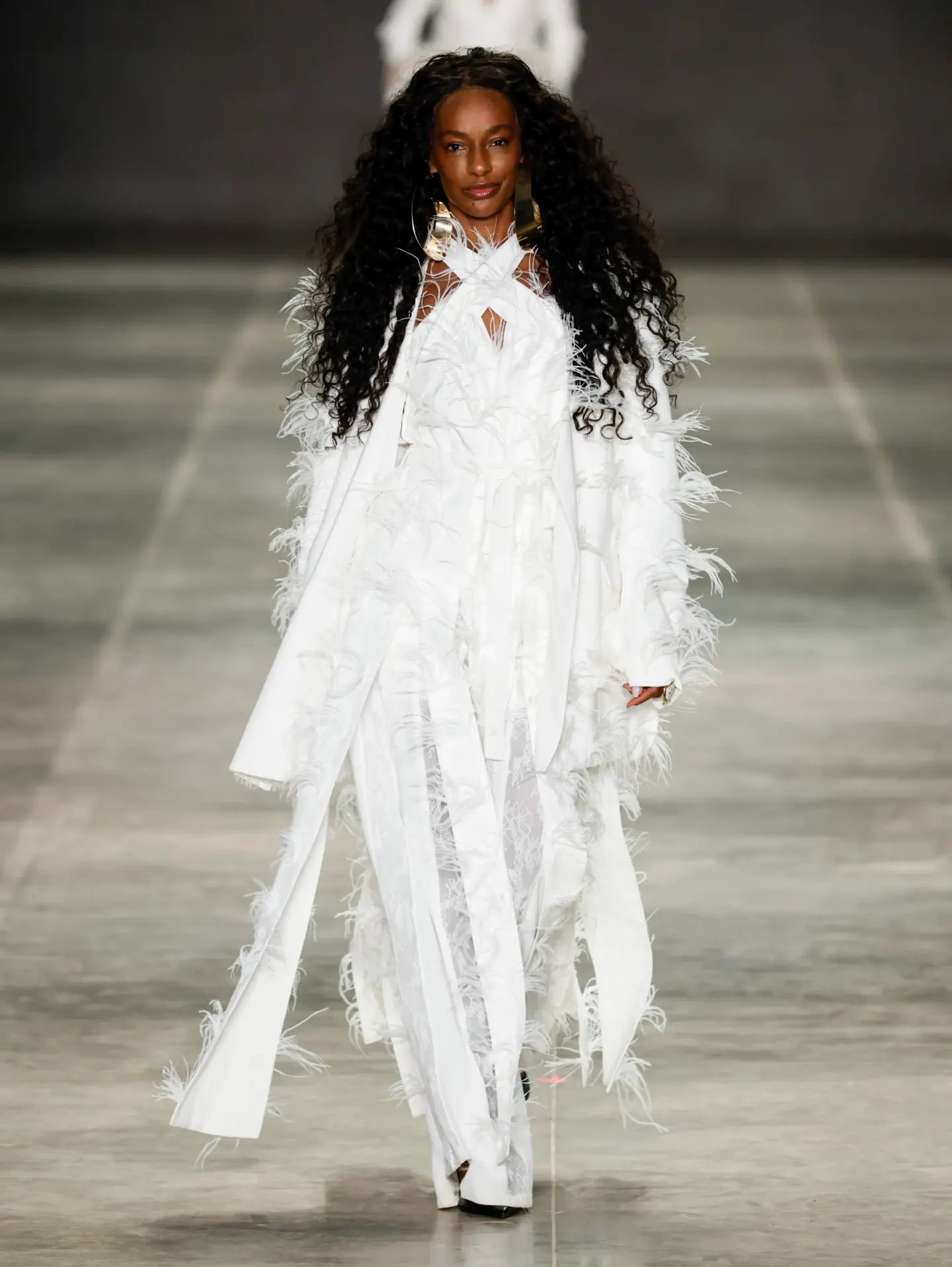
SPFW N61: Apartment 03
Time as matter and maturity as power
Words by
Words by Sarah Rocksane Araujo
Editorial, Fashion and Beauty · October 22, 2026
In fashion, time is often treated as an opponent to be conquered. Trends succeed one another, calendars speed up, and youth remains at the heart of an imagination that insists on linking novelty to constant renewal. On the runway of Apartamento 03, Luiz Claudio Silva seems to walk in the opposite direction, offering a reflection on what endures, transforms and gains new layers as it ages.
By gathering scraps from his own archive, retrieving forgotten materials from the factory, and bringing older models onto the runway, the designer builds a collection in which the passage of time ceases to be something to hide and becomes part of the language. The experience does not come across as nostalgia, nor as an attempt to reproduce an old aesthetic. It manifests in the freedom of someone who knows their own codes and no longer needs to chase novelty simply to present something unprecedented.
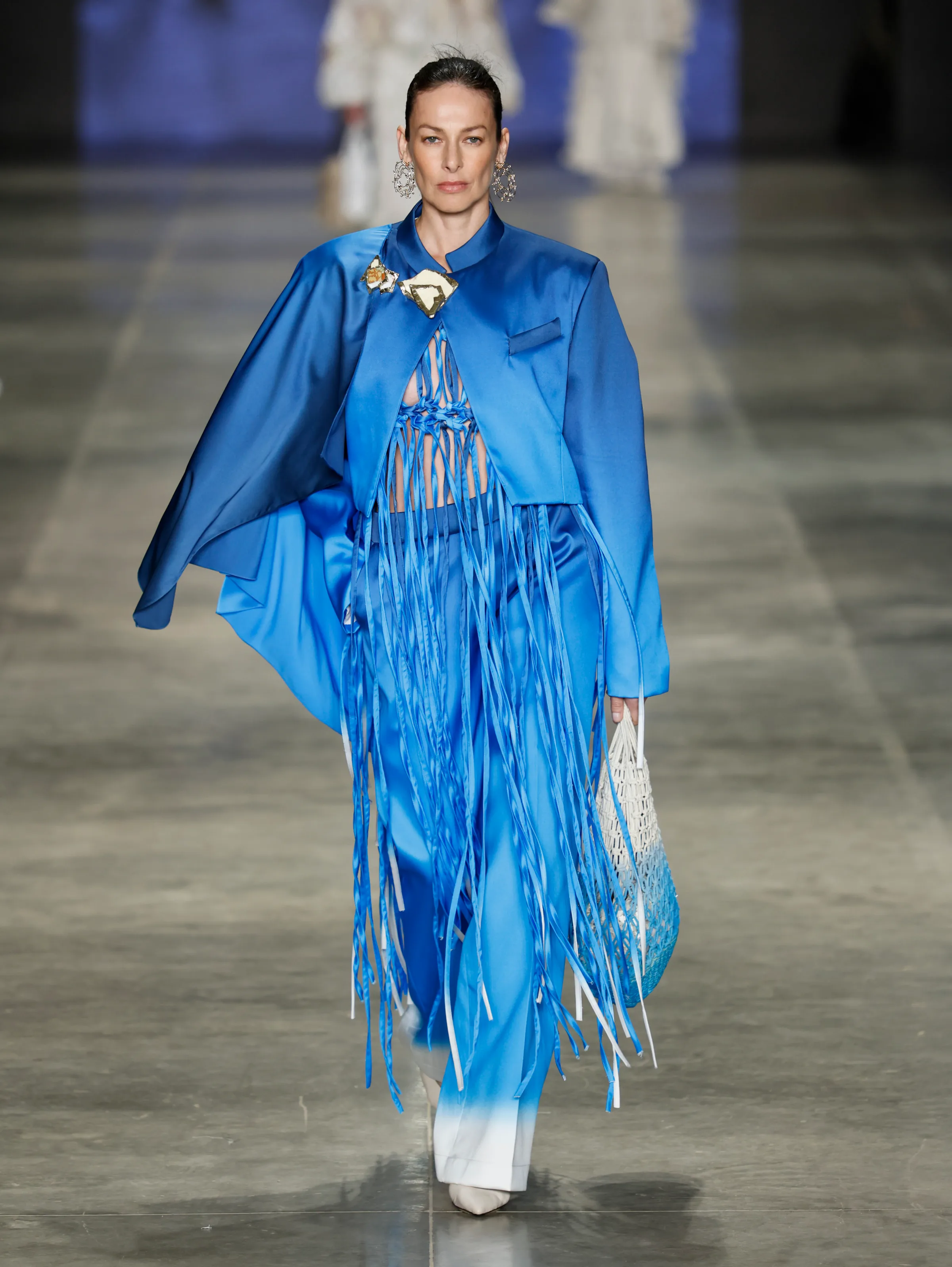
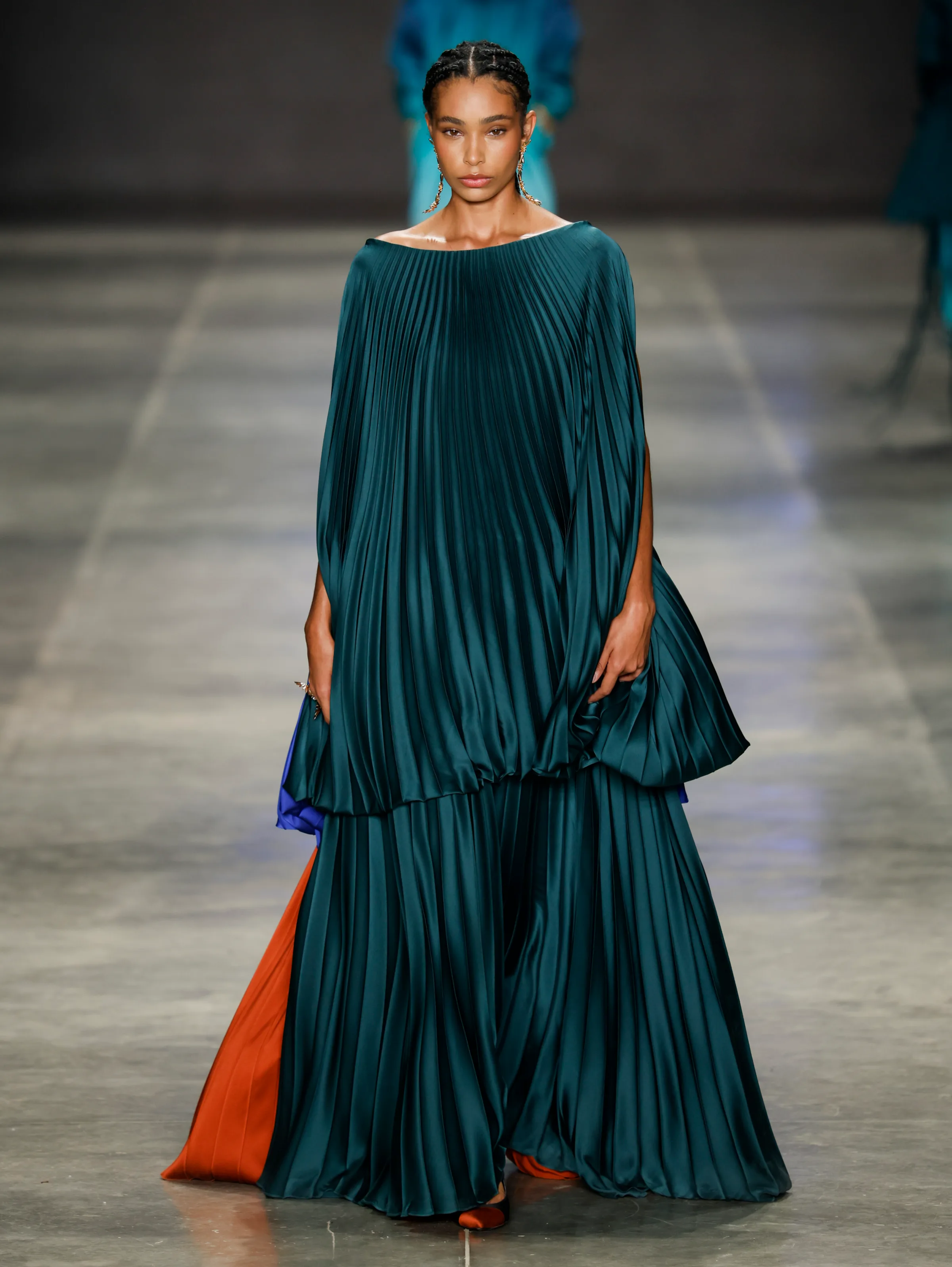
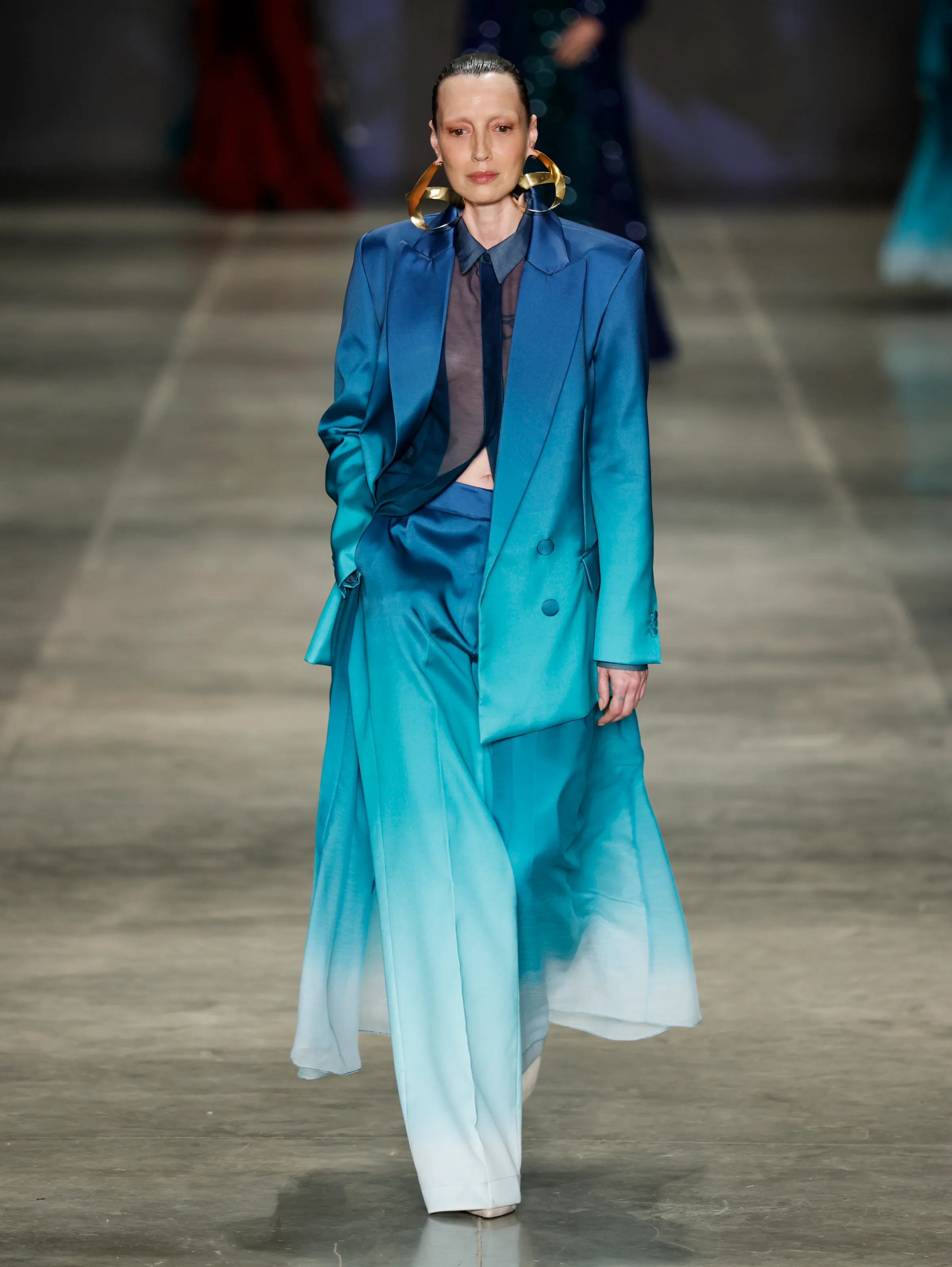
In the pieces, this maturity is expressed through irregular surfaces, unexpected material juxtapositions, and silhouettes that accommodate a moving body. The intense blue of a satin set, intersected by long fringes and paired with a handcrafted bag, turns the garment into a dynamic composition where structure and fluidity coexist. In another instance, a deep‑green pleated dress envelops the body in layers, creating a silhouette that oscillates between restraint and expansion. These are distinct images, yet they are linked by an attention to movement, material, and the presence of the wearer. Choosing older models expands this reading by shifting age—from a position often rendered invisible by the industry—to the centre of the visual narrative. Their bodies appear not as exceptions or symbolic devices, but as protagonists of a presentation that recognises experience as a form of beauty. There is a particular potency in this gesture: rather than promising eternal youth, the collection celebrates the possibility of continual transformation. Here, maturity does not signify a pause in creation, but the moment when an accumulated repertoire can be revisited with greater autonomy, rigor and awareness. Like someone returning to a personal archive and discovering that some stories have not yet been fully told, Luiz Claudio turns his own trajectory into material for experimentation.
This relationship with time finds a particularly significant expression in the presence of Stella do Patrocínio's texts, whose utterances were recorded by the visual artist Carla Guagliardi during the 1980s, when she taught art classes at the psychiatric institution where Stella was hospitalized. Later transcribed and published in the book Reino dos bichos e dos animais é o meu nome, in 2001, these accounts now cross the collection via ribbons stitched alongside the fringe of various looks. The word ceases to occupy exclusively the page and begins to integrate the garment's surface, bringing together language, body, and movement. The gesture establishes a relationship between the materiality of the apparel and a voice whose literary production challenges conventional classifications. It is, however, important that this proximity does not reduce Stella's experience to a mere aesthetic resource. Her presence summons a reflection on who has the right to produce language, which voices are recognized as literature, and how certain experiences are historically interpreted by institutions of power.
By incorporating her accounts into the collection, Apartamento 03 creates space for these words to circulate in a different context, before other eyes, without their power relying on a definitive explanation. The ribbons accompany the fringe, move with the body, and introduce a textual dimension to the visual composition. The garment begins to carry fragments of a voice that does not easily fit into conventional structures of meaning. This encounter also dialogues with the designer's interest in materials that accumulate marks, memories, and possibilities of transformation. Just as the fabrics stored in the archive find new uses, Stella's words reappear in a different configuration, crossing another field of expression. But the analogy should not erase the differences between a textile material and a human trajectory. What brings these elements together is the possibility of displacement: what has been preserved can find new spaces of circulation, provided the process does not erase its origin. Fashion, in this case, acts as a means of visibility, creating a situation where literature, art, and apparel meet.
Complete TV · Reels
@egon_lab Lazarus.
See on InstagramFrom Complete

More from Sarah Rocksane Araujo
View profile
Latest from Complete
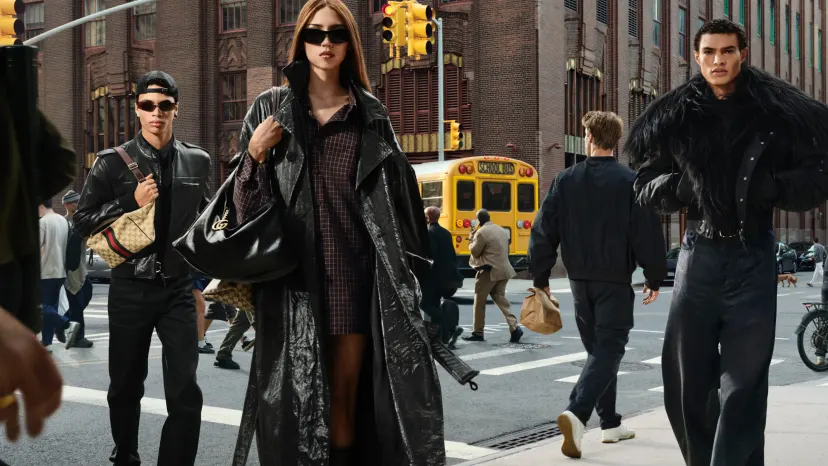 FashionGuccicore: plurality as a language of style
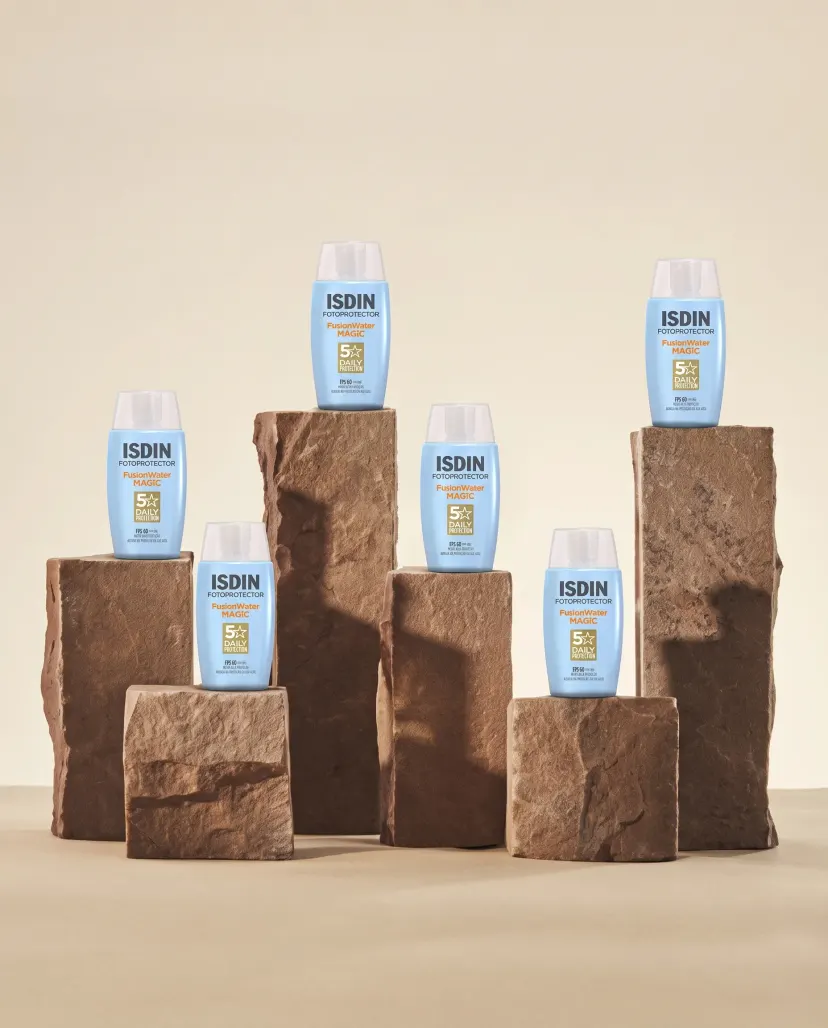 BeautyISDIN Fusion Water Magic: sun protection with lightness and technology
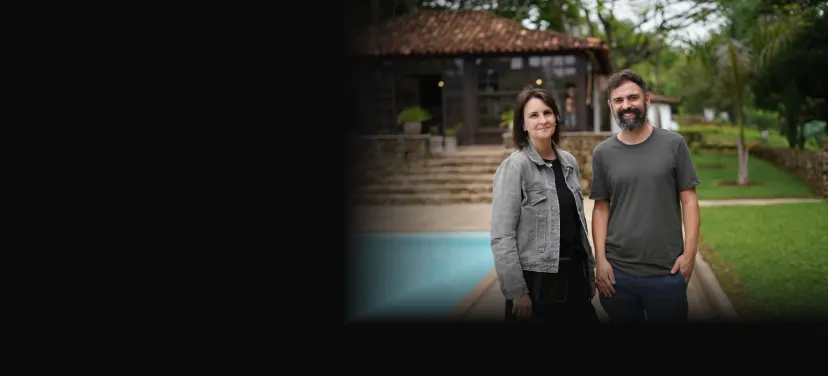 The CoverIn the beginning, we couldn't even use the word handicraft.
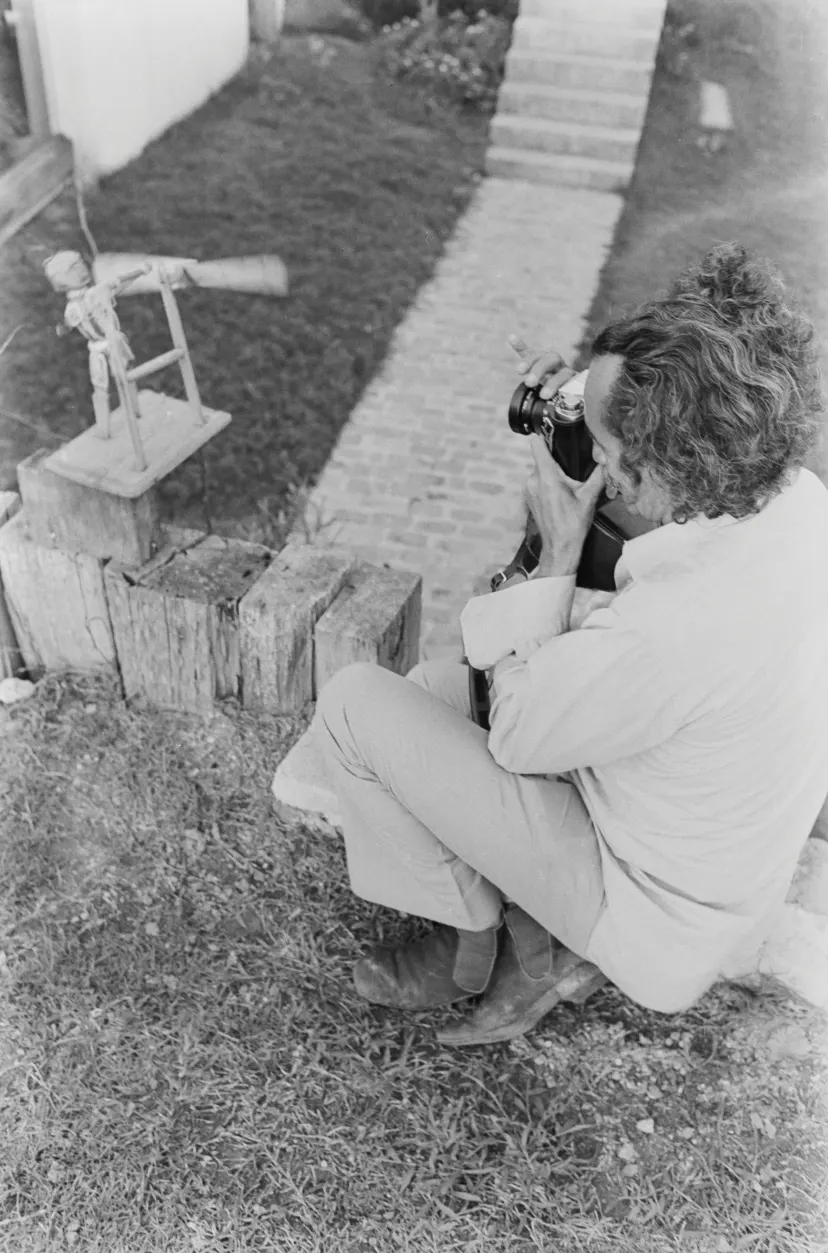 DesignTomie Ohtake House‑Studio presents Zanine Caldas
 CultureThievery Corporation, 30 years: the Washington duo that originated in bossa nova
 The CoverBrazil still gives little recognition to genuinely Brazilian authorial fashion.
 InnovationLight has become a building material