
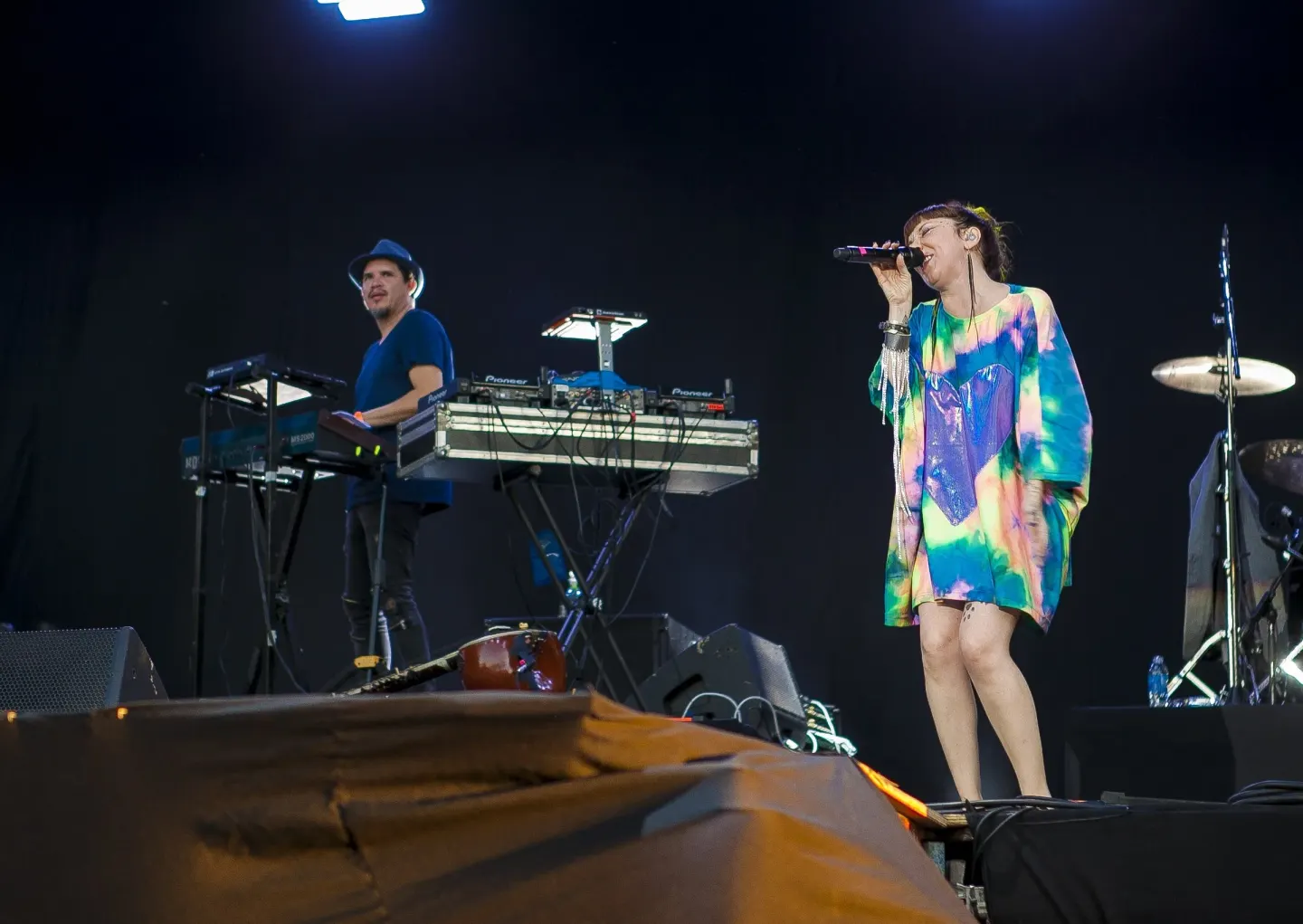
Thievery Corporation, 30 years: the Washington duo that originated in bossa nova
Rob Garza and Eric Hilton met at a Washington club in 1995 and have spent three decades blending dub, bossa nova, cittern and political discourse. Their anniversary tour concludes in December on the stage where it all began.
Words by
Words by Caíque Nucci
Editor-in-Chief · September 28, 2026
Every collection has a record that we pull off the shelf first. In the case of Thievery Corporation, that record is The Mirror Conspiracy, released on April 2, 2000 by the labels ESL and 4AD. The cover is a warm‑light close‑up: a man's eye on the right, a bottle of wine, an ashtray and, cut on the left edge, a woman's face. Above, the mirrored M monogram appears, the track list printed on the front and even the barcode, which becomes part of the design. Design and photography are by Neal Ashby, with photography also by Bill Crandall. In December 2022 the album returned to stores remastered, as a 180‑gram double LP with a gatefold cover.
No other album by the duo has sold as many copies in the United States: roughly 224,000, according to Nielsen SoundScan. It also yielded “Lebanese Blonde,” released as a single in 1998, which appeared on the Garden State soundtrack in 2004 and now totals 121 million streams on Spotify, based on kworb data from September 8. It is worth opening the album and turning its pages one by one to see how two Washington producers reached thirty years of work without ever limiting themselves to a single sound.
A beverage warehouse on 18th Street
The story begins in a three‑story mansion on 18th Street, just south of Dupont Circle, where Theodore Roosevelt lived between 1897 and 1898. There, in 1995, the Eighteenth Street Lounge opened, which had Eric Hilton among its owners. That summer, Rob Garza stopped by the club, the two started talking about music and discovered a shared taste. According to Encyclopedia.com, what brought them together was the 1960s bossa nova. They were two Washington, D.C., guys listening to Brazilian records in a bar in their own city.
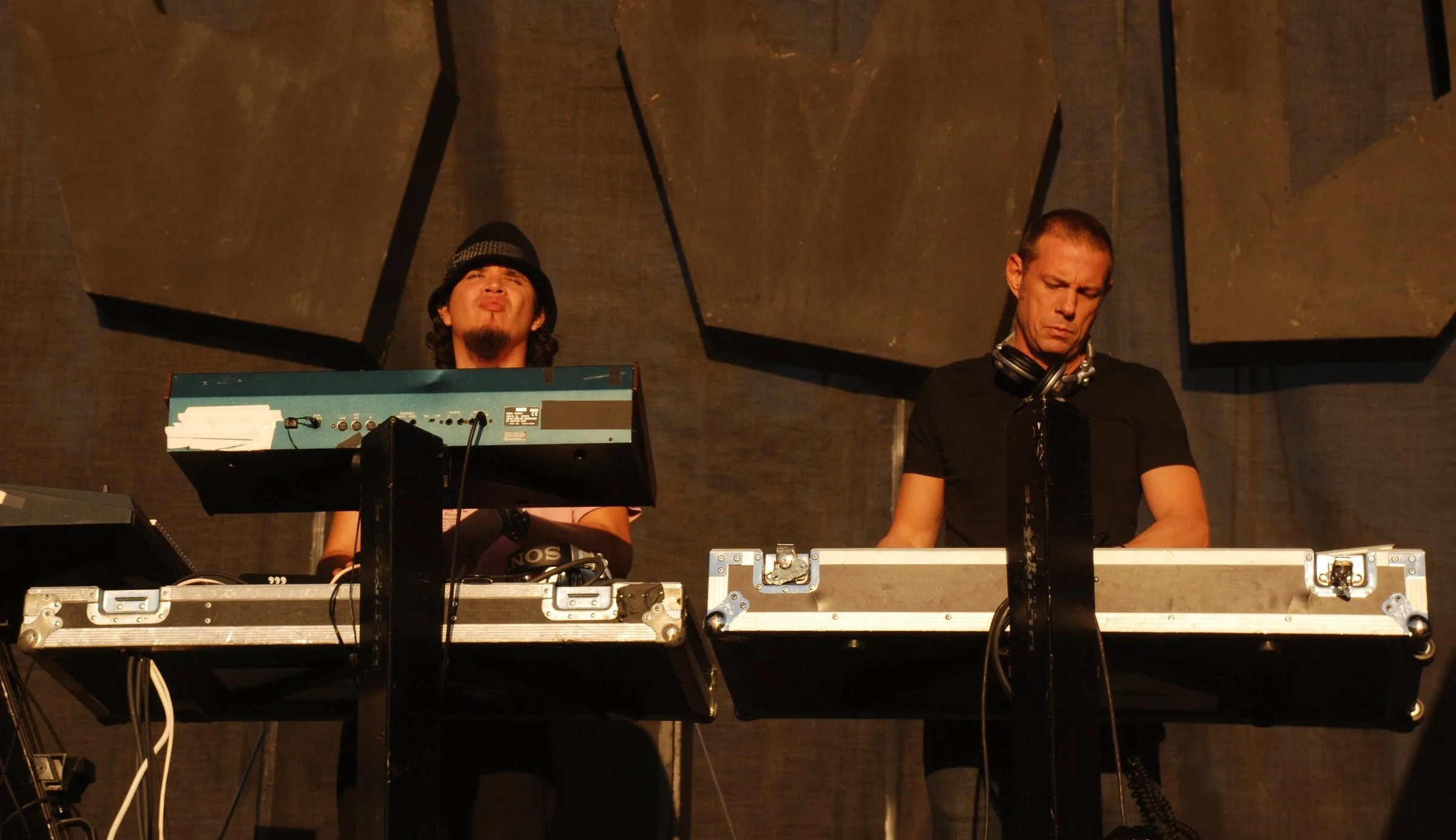
The duo's first studio was located in the club's beverage warehouse. In 1996 the Eighteenth Street Lounge Music label, ESL, arrived, bringing their first 12‑inch records, "Shaolin Satellite" and "2001: A Spliff Odyssey". That same year the debut album was released in Germany, Sounds from the Thievery Hi‑Fi, which would not reach U.S. stores until June 1997. The 18th Street house closed in June 2020 and later reopened in the Shaw neighborhood. The duo that was born there never stopped.
Thieves by trade
The name was chosen as a joke, Hilton says. The two even had credit cards made with "THIEVERY CORPORATION" embossed, as if they were firm executives. The joke has two sides. One mocks the corporate world. The other admits the method, which is "stealing" bits of other styles through samples. The Guardian called them sonic pickpockets, and they never seemed bothered.
What is drawn from these portfolios comes from many places. From Jamaica come dub and reggae, with deep bass and echo. From Indian classical music comes the sitar; from Iran, the santur that Max Sadeghi plays on “Facing East”. There is acid jazz, hip hop, electronic music and Middle Eastern music. “The Glass Bead Game” uses a passage from “Samba Do Suenho” by Cal Tjader, and “Satyam Shivam Sundaram” places a devotional Hindi chant over a sample from the Headhunters with the Pointer Sisters. When Record Collector listed the duo’s core references in 2007, it cited Antonio Carlos Jobim and Henry Mancini.
This collage has traveled far. According to kworb's count, Thievery Corporation exceeds 1.1 billion streams on Spotify. On Billboard's Dance/Electronic Albums chart, The Cosmic Game (2005) and Radio Retaliation (2008) both reached number one, one right after the other.
The thread that leads to Brazil
Jobim appears before the first track: the debut album is dedicated to his memory. The covers of the early releases honor João Gilberto, the 1973 album, and Stone Flower, by Jobim himself. Bossa nova was what brought Garza and Hilton together and became a thread that runs through the entire work.
In The Mirror Conspiracy, Bebel Gilberto sings "Só com você" in Portuguese, over a slow electronic beat. At the same time, "Air Batucada" emerged, and later came titles such as "Meu Destino" and "Pela Janela". In Radio Retaliation, Seu Jorge sings and plays guitar on "Hare Krisna". The singer Karina Zeviani has been with the group since 2005.
It is she who paves the way for Saudade, 2014, an entire album of bossa nova, Latin jazz and lounge. There are four tracks in Portuguese: “Meu Nêgo”, “Quem Me Leva”, “Nós Dois” and “Para Sempre”. The album debuted at number two on Billboard’s Dance/Electronic chart, sold 7,000 copies in its first week, and Hilton has said it is his favorite in the duo’s discography. Listeners in São Paulo or Rio recognize the hometown accent, filtered through two Americans who learned to hear Brazil through the records.
Eight languages in the same catalog
Wikipedia lists eight languages in the recordings: English, Spanish, French, Italian, Persian, Portuguese, Romanian, and Hindi. With each album the cast of voices changes. LouLou Ghelichkhani, of Iranian descent, was born in San Jose, California, grew up in France, and sings in French, Persian, and English; she provides the voice of "Omid," the Persian word for hope. Pam Bricker, a jazz singer from Washington who died in 2009, recorded "Lebanese Blonde." The Icelandic Emilíana Torrini sings "Until the Morning." The Nigerian Femi Kuti brings afrobeat to "Vampires," and Anoushka Shankar, who splits her life between India and the United Kingdom, plays sitar in "Mandala."
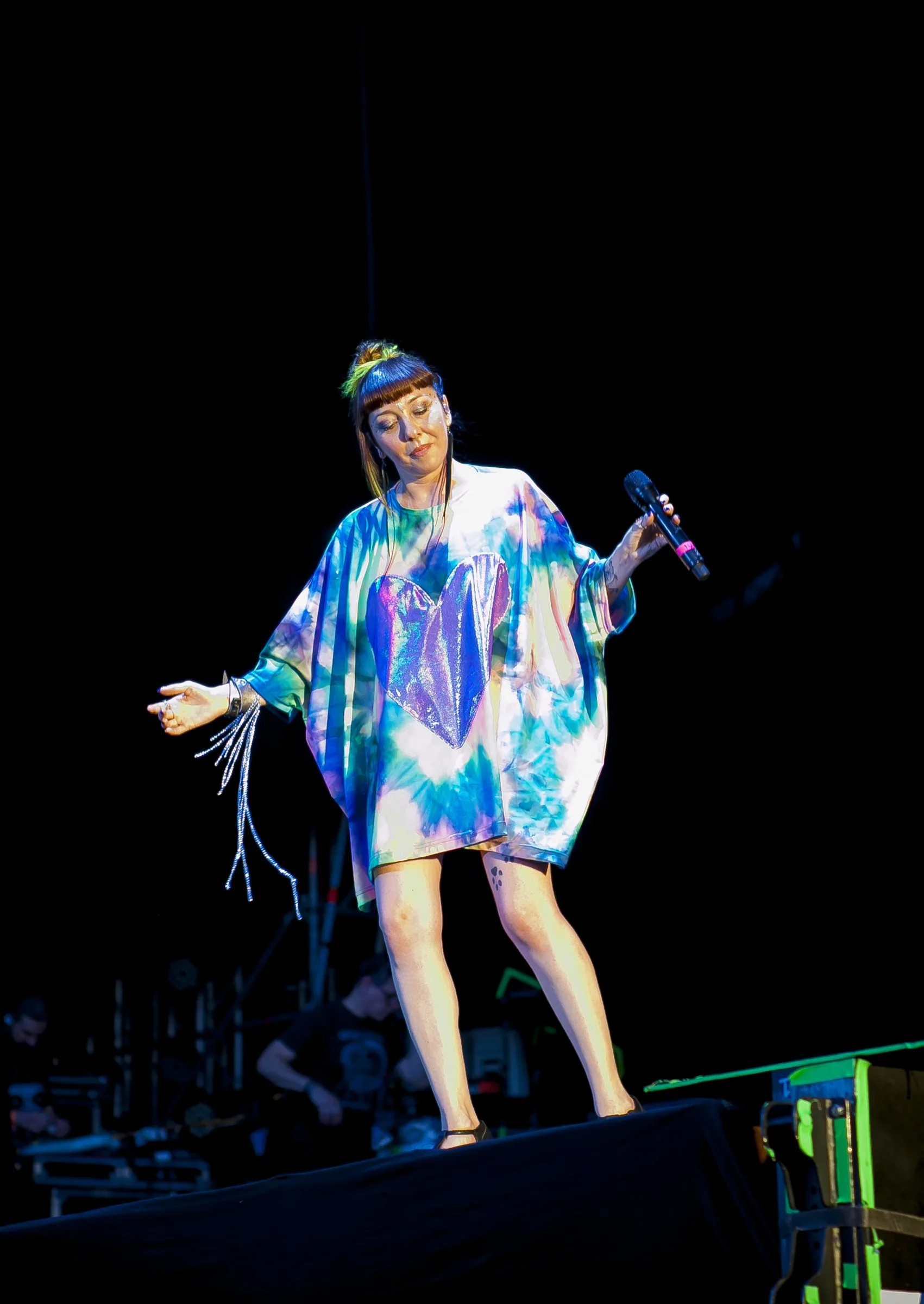
The hometown also has its place. Chuck Brown, the father of Washington go-go, sings "The Numbers Game". From the Caribbean come Puma Ptah, from the Virgin Islands, who has been touring since 2006, and Jamaican Racquel Jones, discovered during recordings in Port Antonio. Notch, from Hartford, with Puerto Rican roots, switches between English, Spanish and patois. In The Cosmic Game, the guest list reaches Perry Farrell, David Byrne and Wayne Coyne.
In Spanish, one of the recurring voices is Natalia Clavier, who sings “Claridad” on Saudade. The partnership emerged from the band: in 2023, Hilton recorded with her the album Corazón Kintsugi.
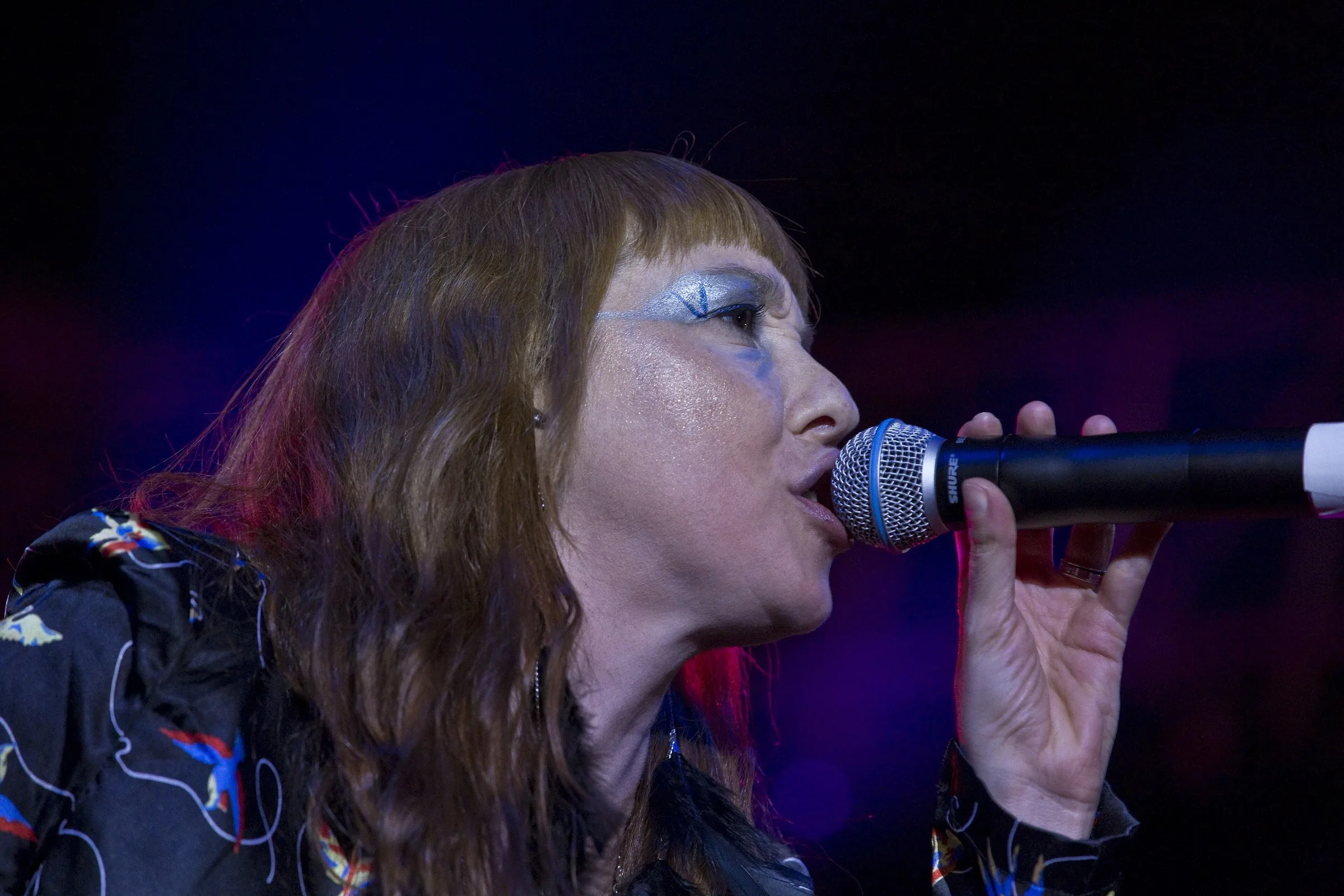
A Grammy‑nominated cover
The sound is soft, but the conversation never was. In September 2005, the duo took part in Operation Ceasefire, a show against the Iraq War. Radio Retaliation, from 2008, emerged as a political record, and Garza presented it as a more open statement of the two's positions. Culture of Fear, from 2011, treats fear as a governmental instrument. In 2017, Hilton told PopMatters that the duo's message is not limited to electoral politics and concerns how the world is organized.
The image accompanies the discourse. The cover of Radio Retaliation features a photo of Subcomandante Marcos, the Zapatista spokesperson from Mexico, and was nominated for the Grammy for Best Packaging in the 51st edition of the award, presented on February 8, 2009. The nominated art directors were Neal Ashby, Matthew Curry and Patrick Donohue; the trophy went to Metallica. Ashby has overseen the band's visual identity for more than twenty years, with a retro aesthetic that dialogues with Blue Note covers, bossa nova and political posters. Many people recognize one of their records on the shelf by its artwork before knowing who is behind it.
From festivals to the 9:30 Club
The stage has always been part of the work. The band played at Coachella in 1999, 2003 and 2009, and at Chicago’s Lollapalooza in 2006. In January 2009, they opened the Radio Retaliation tour with five consecutive sold‑out nights at the 9:30 Club in Washington, according to the Washington Post. On August 1 of that year, they opened Paul McCartney's show at FedExField in Maryland. In Colorado, the Red Rocks Amphitheatre has hosted the duo at least seven times since 2010, including the twenty‑year celebration on May 13, 2016.
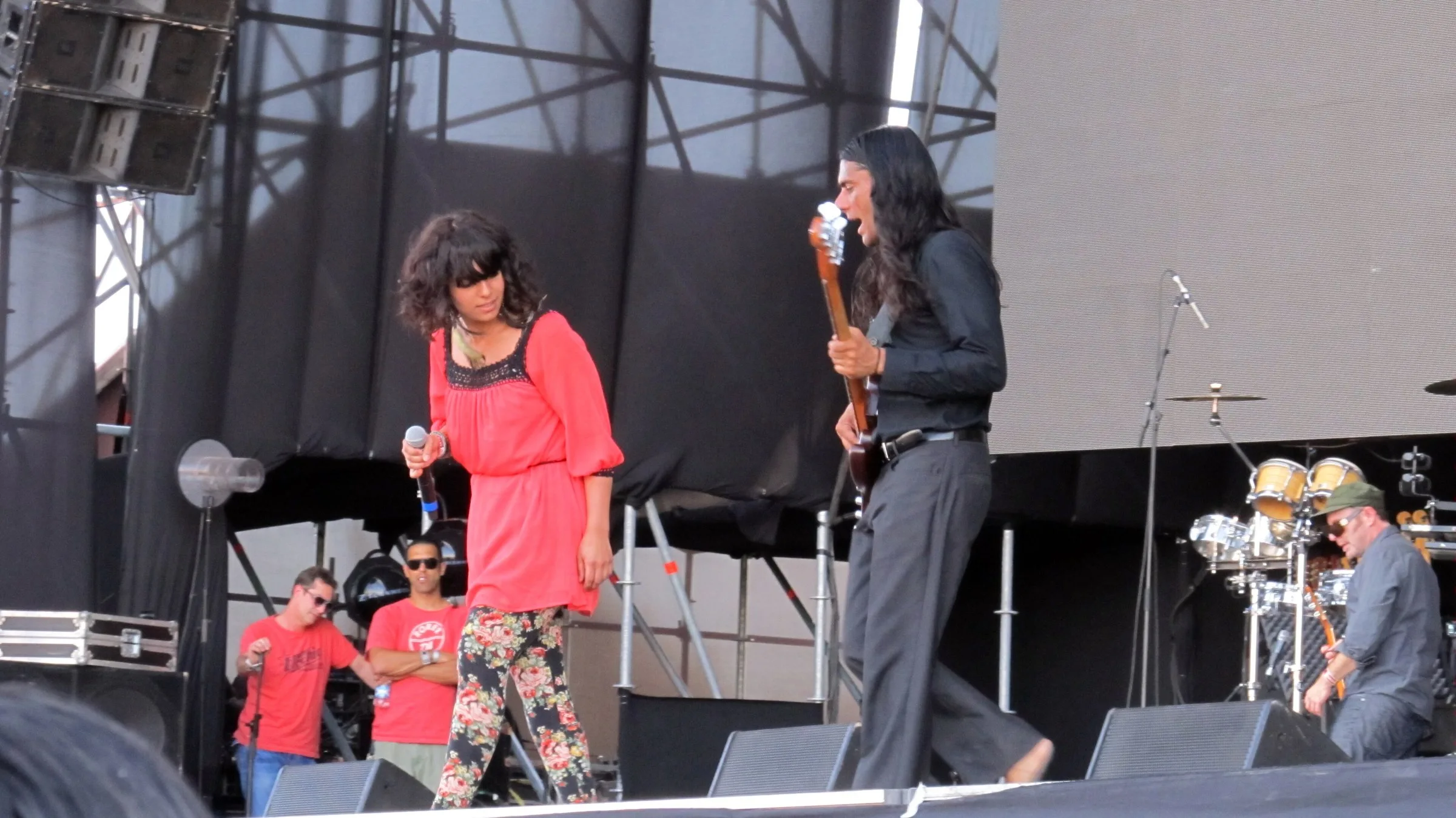
Brazil saw the band at the TIM Festival in 2006, in Rio on October 28 and in São Paulo the next day. In 2012 they returned to Lollapalooza Brazil, on April 8, at the Jockey Club in São Paulo, a week after playing at Lollapalooza Chile. In December 2017 they performed at the BUE Festival in Buenos Aires.
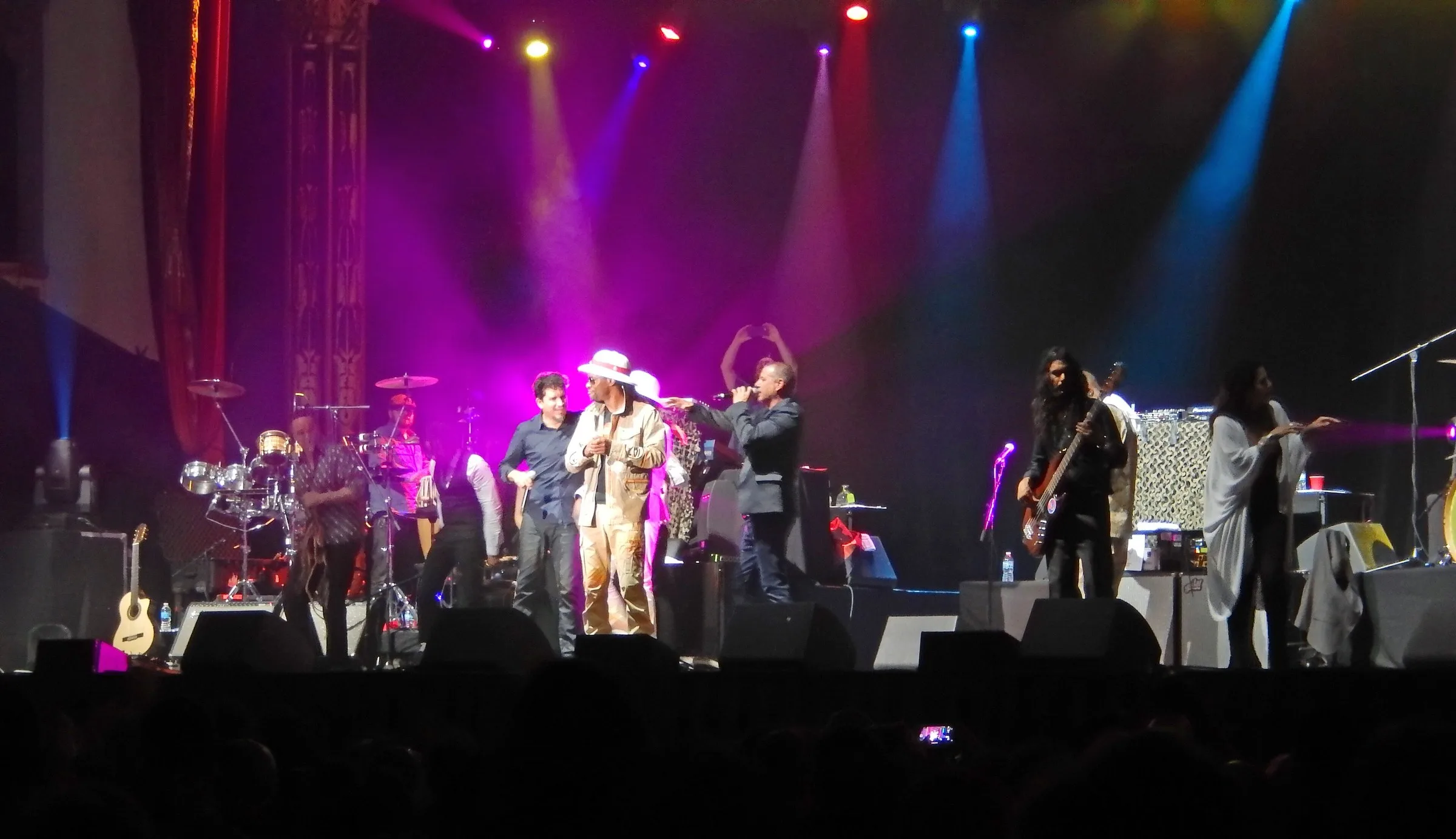
There was also an orchestral night. In May 2017, the duo performed at the Kennedy Center with 22 musicians as part of the KC Jukebox series by Mason Bates. The experience gave rise to Symphonik, recorded with the FILMharmonic Orchestra of Praga and released in 2020. setlist.fm records 809 setlists between 1998 and 2026; "Lebanese Blonde" appears in 301 of them.
Thirty years later
There is no new album in 2026. On September 9, Thievery 30 was released, a 30‑track compilation by Primary Wave Music, the same company that handled the vinyl reissue of The Mirror Conspiracy in 2022. The anniversary tour continues across the United States. This Saturday, September 19, the band plays in Bend, Oregon, with tickets sold out. In December, it will stop in Nashville, Atlanta, Asheville, Charlottesville and Richmond and conclude with three nights at the 9:30 Club on December 19, 20 and 21. The band itself announced it will finish the tour where it all began. Tickets have been on sale since September 18.
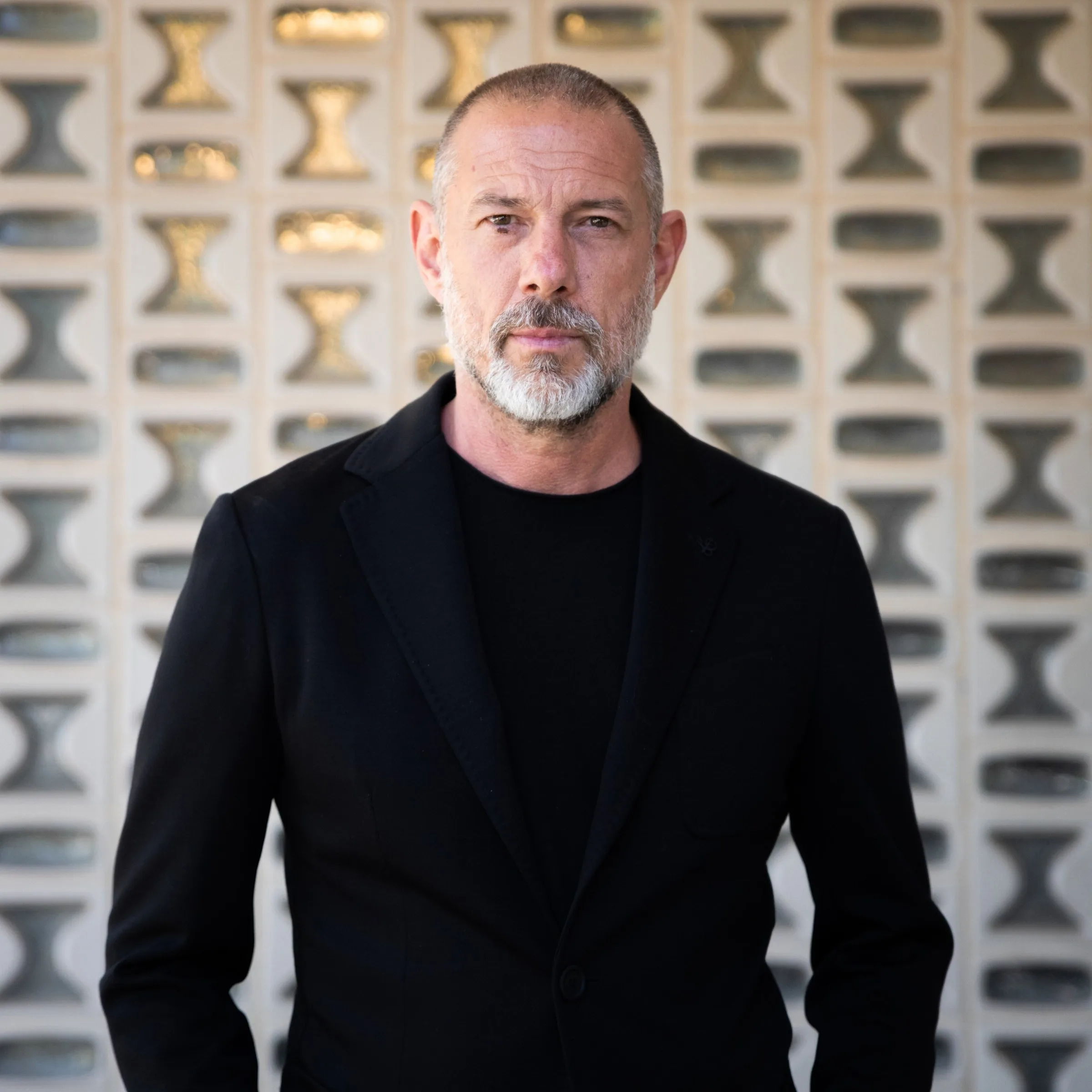
Each also takes care of his own path. Hilton set up a studio in Georgetown, released Midnight Ragas, his eighth solo album, in June 2025, and A Sky So Close this year. To the Washington City Paper in July 2025, he said he prefers the studio and tours little, because the one who loves the road is the partner. This year, an appearance of his at Terminal 5 in New York was described as rare. Garza maintains the solo project GARZA and runs the label Magnetic Moon Records.
For the Brazilian audience, the news is different: there is no announced date in Brazil nor in Latin America. Meanwhile, the way back is the same as at the start of this visit. Take The Mirror Conspiracy off the shelf, put “Só com você” on and notice how the bossa nova that brought two guys together in a Washington bar thirty years ago is still there, in the middle of the dub.
---
Cover photo: Leonardo Samrani, BUE Festival, Buenos Aires, December 15, 2017, CC BY 2.0.
Complete TV · Reels
Na obra “with my vowels”, Swilk @swilkwork desenvolve uma investigação sobre linguagem como sistema físico. A instalação utiliza estruturas
See on InstagramFrom Complete



More from Caíque Nucci
View profile
Latest from Complete
 CultureMaja Petrić: the artist who wrote her own artificial intelligence
 InnovationLight has become a building material
 The CoverBrazil still gives little recognition to genuinely Brazilian authorial fashion.
 FashionFashion and the addiction of evaporation
 DesignAnton Berkasov plays his own art as one would play an instrument
 The Cover"I'm more afraid of being bored than of trying something new"
 BeautyBORNTOSTANDOUT arrives in Brazil