

Light has become a building material
In Seoul, a group of artists creates spaces that exist only while they remain lit. Between a commission for a two‑century‑old watchmaker’s house and a ballet stage in an abandoned power plant, their work explains why so many brands have stopped hiring set design and have begun commissioning experience.
Words by
Words by Caíque Nucci
Editor-in-Chief
There is a kind of artwork that does not fit in a transport crate. It arrives on site in cables, spotlights, mirrors and a computer, fills the entire room for a few hours and vanishes when someone turns off the power. No object remains to hang on the wall or to keep in technical reserve. Only the memory of having been inside remains.
The Korean group knovcompile works precisely at that point. Founded in Seul in 2019, it brings together artists who treat light and sound as work material, just as an architect treats concrete and glass. The list of materials they themselves declare is short and revealing: laser, LED and lighting design; composition, mixing and mastering of sound; real‑time control with motion tracking and sensors; and structure, which the group designs, builds and installs. The four lines say more about the craft than any manifesto: they compose the soundtrack, write the system that reacts to the audience, and even weld the support that holds everything.
A clock explained by light
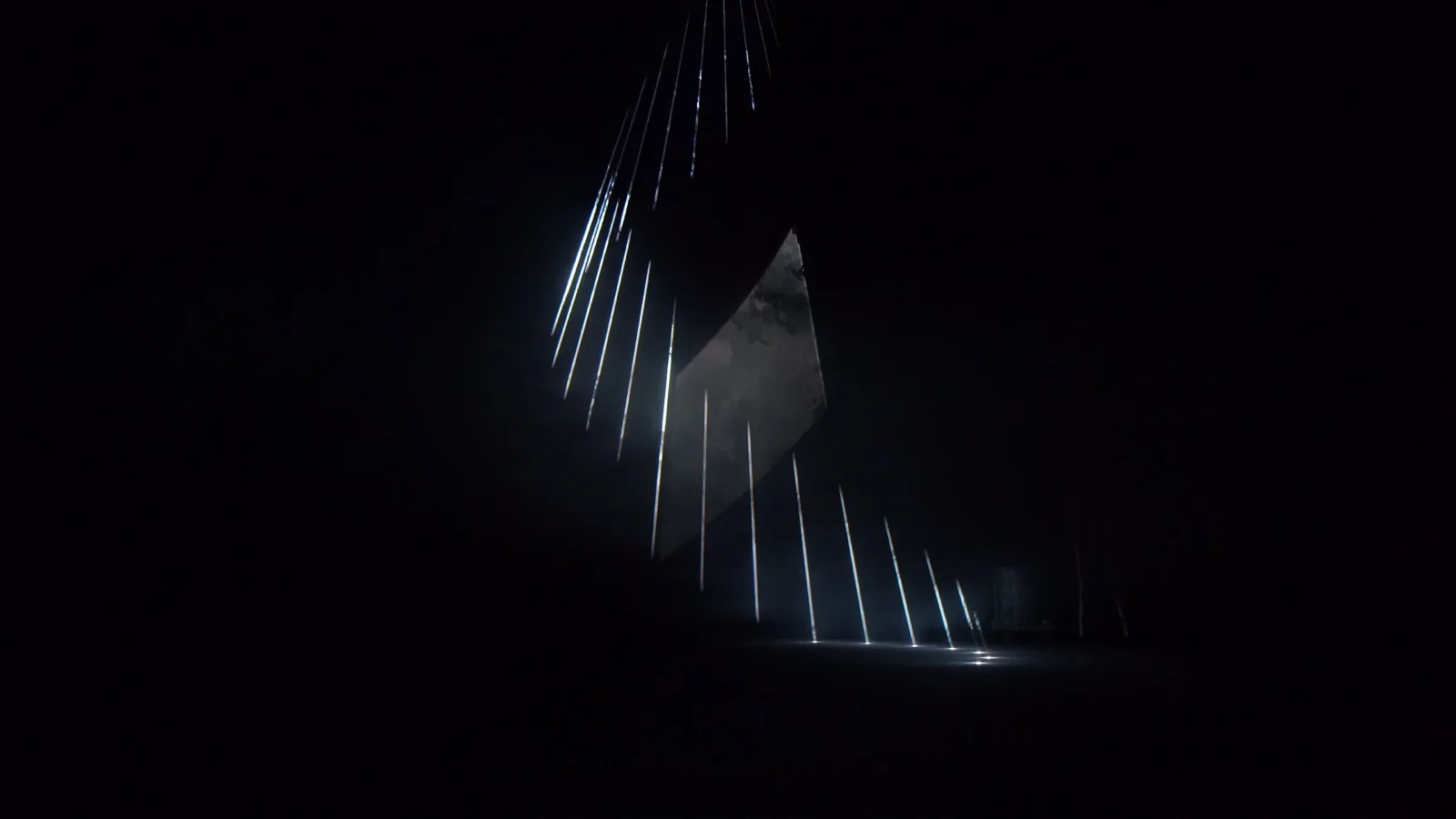
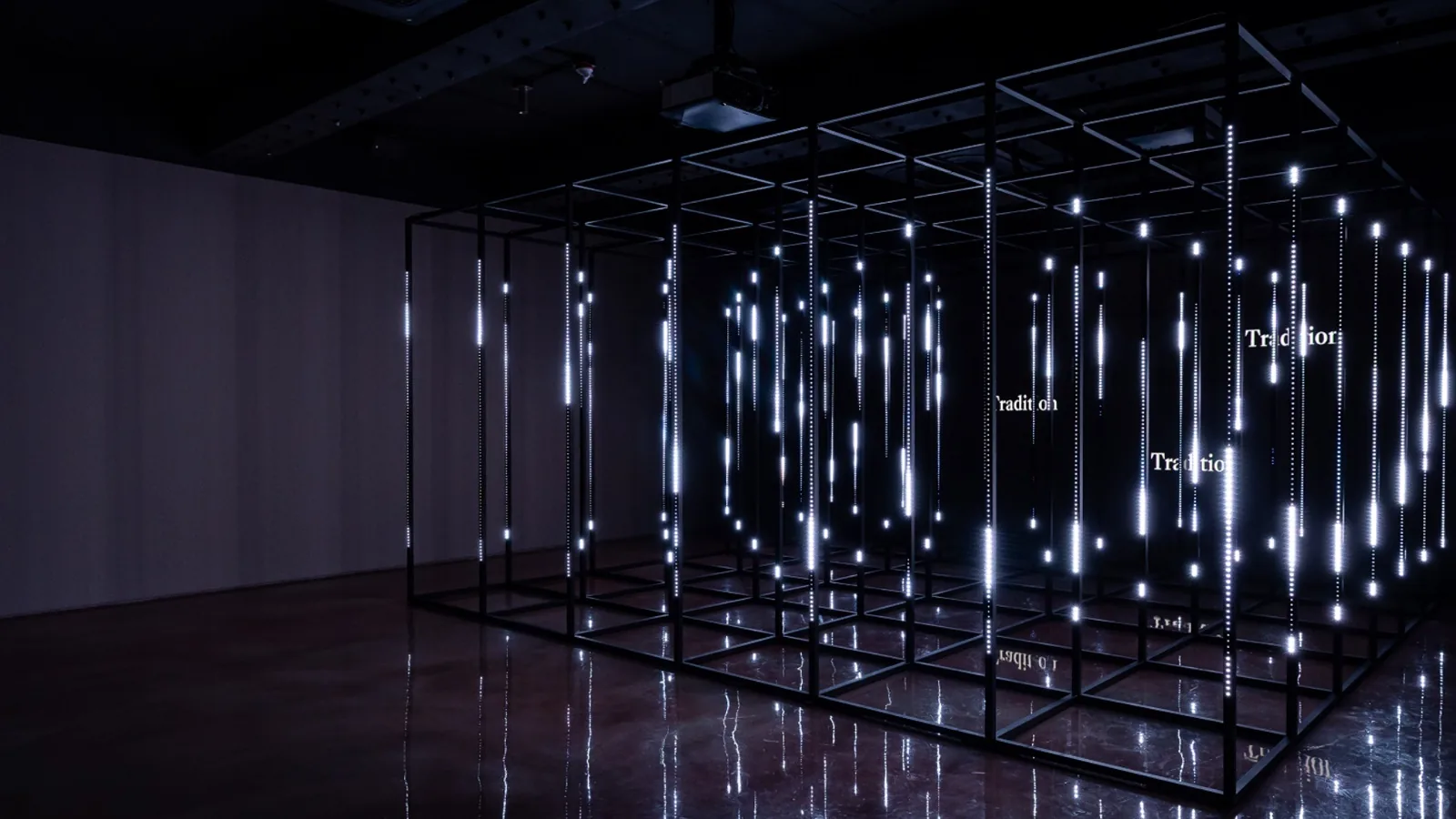
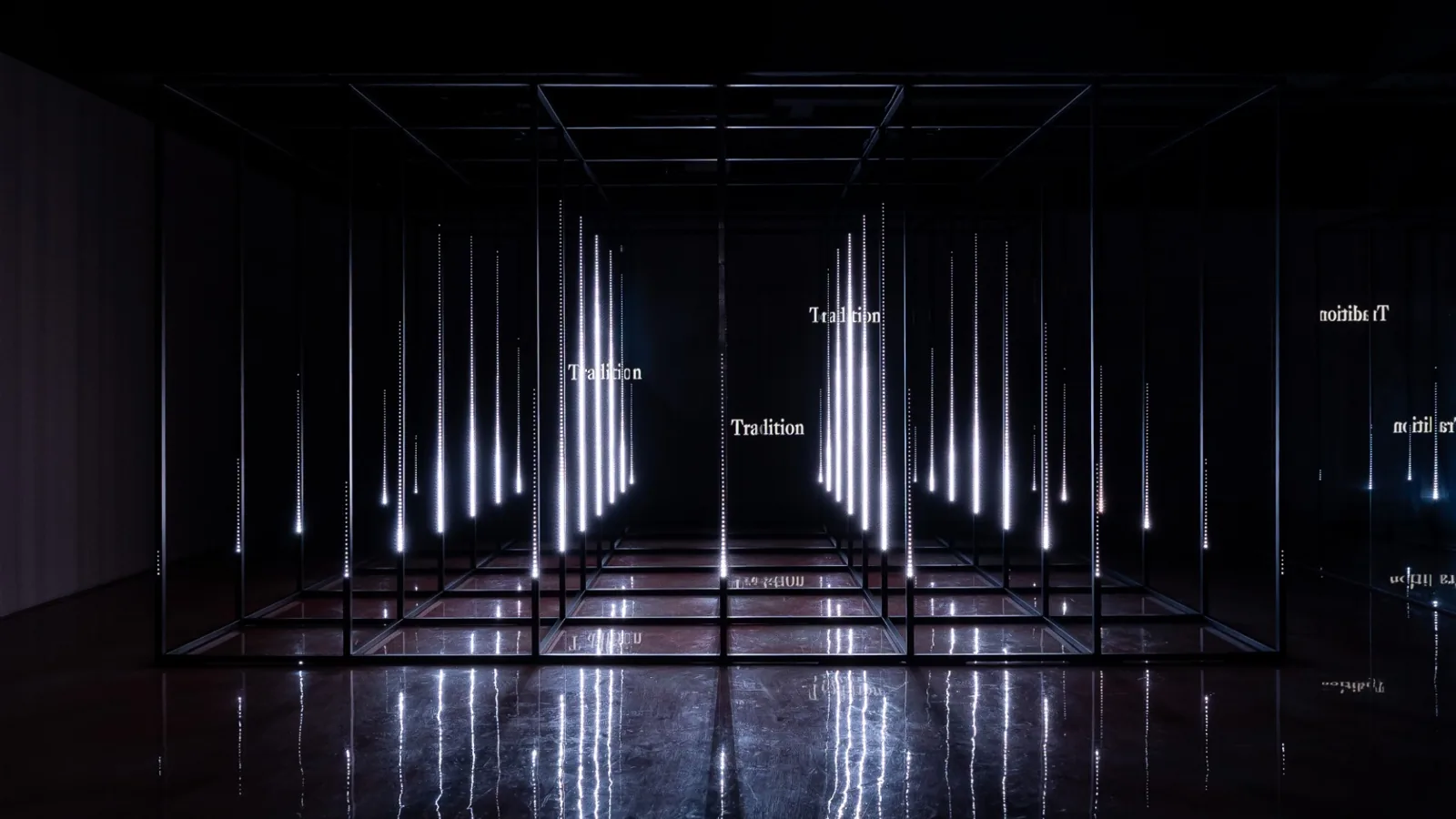
The latest commission came from Breguet, a watchmaker founded in the eighteenth century. The work is called Movement and is an audiovisual installation set up in Seul, in the neighborhood of Nonhyeon. The idea is simple to state and difficult to execute: to translate the motion of a mechanical watch, that set of parts that makes the hand move, into a light structure that the visitor walks through on foot.
The result is a forest of luminous rods suspended on a metal grid, reflected on the dark floor. Viewed straight on, one sees a corridor that seems endless. Viewed from the side, the same grid unravels into depth. The word tradition appears printed in the air at precise points, sometimes legible, sometimes inverted, depending on the angle. It is a commentary on time made with the only material that cannot be stacked.
A ballet inside a power plant
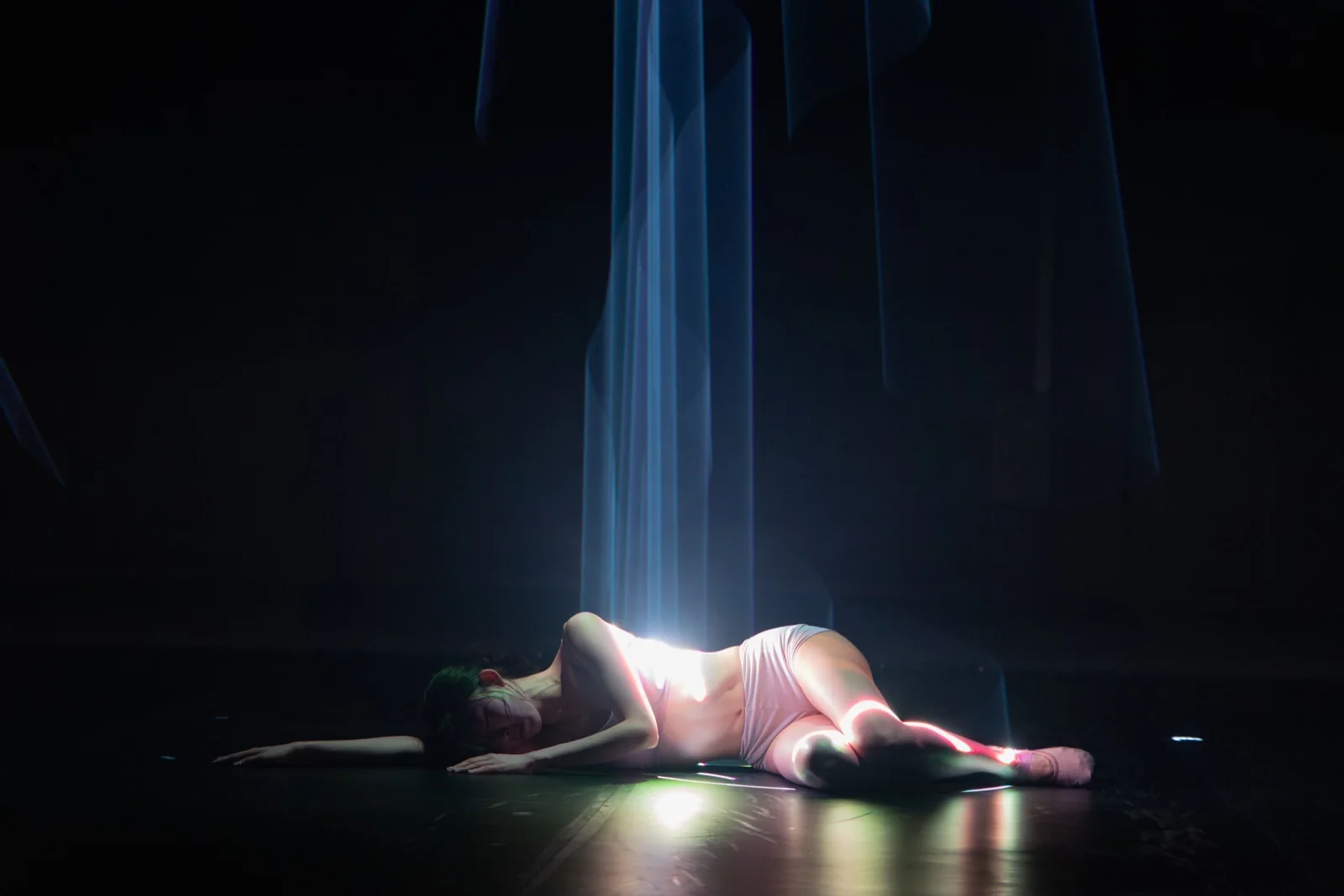
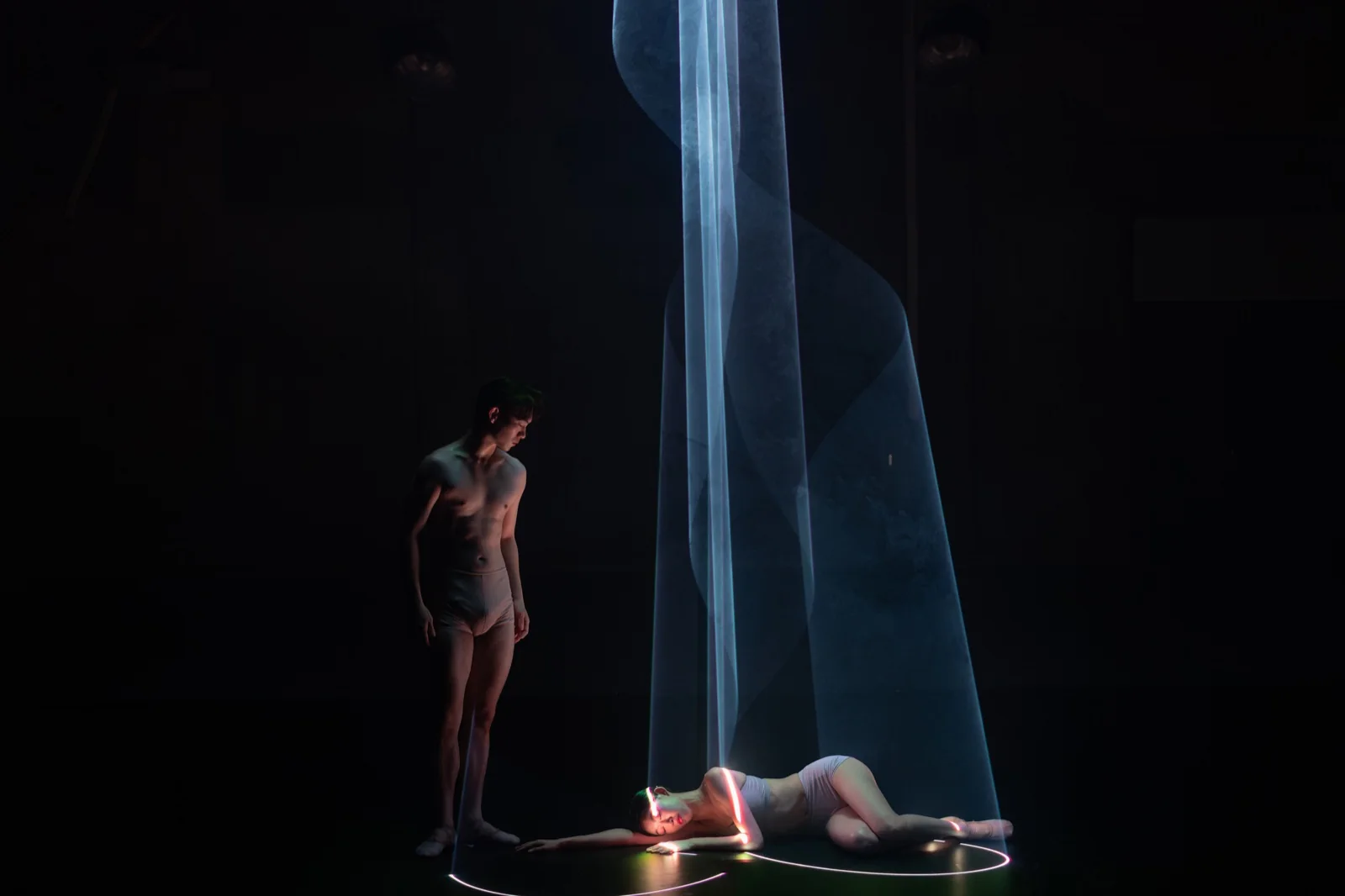
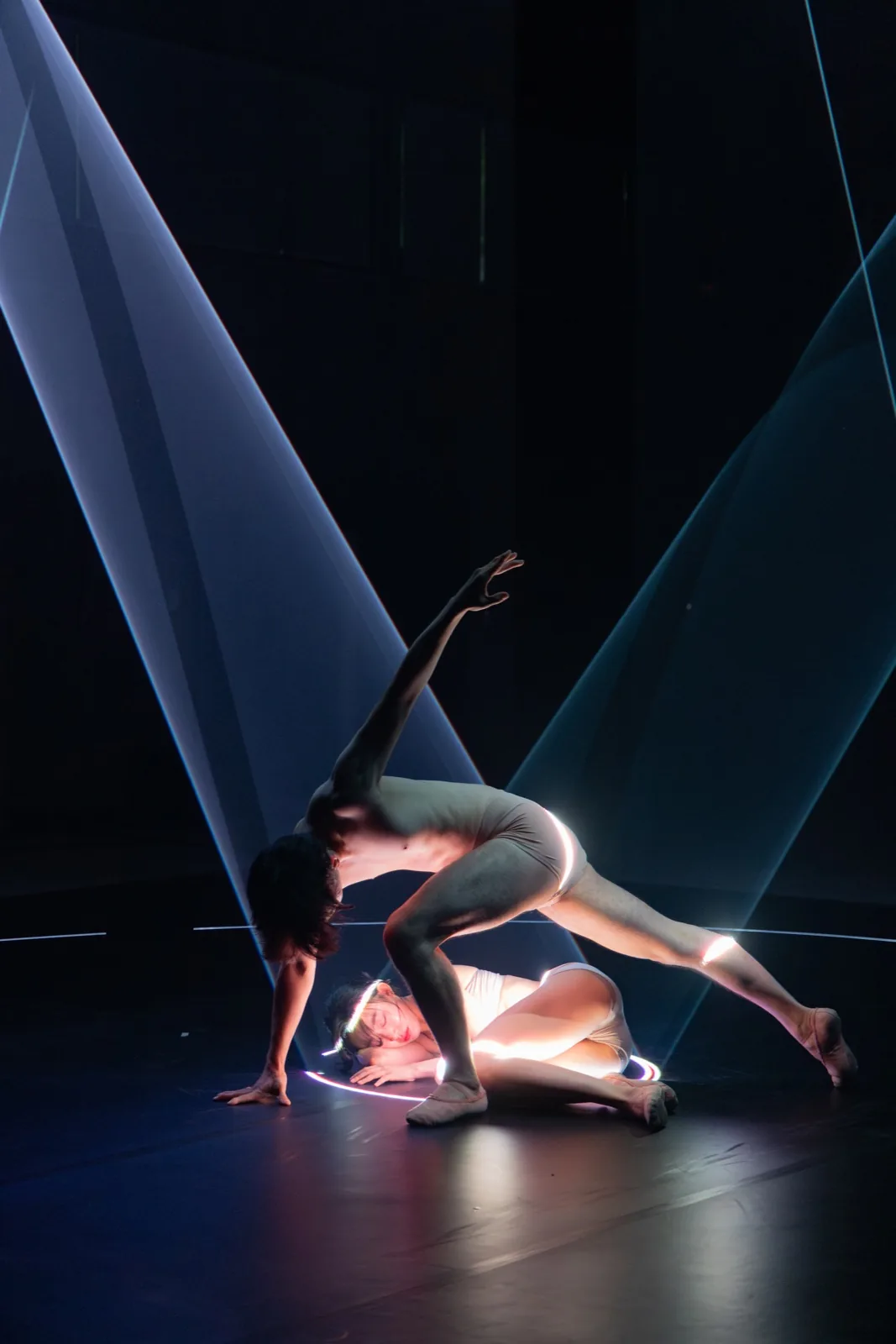
During the same period, the group signed Invariable, presented as a solo performance at Power Plant Seoul and selected by a Korean public program of convergent art. There the proposal is reversed: instead of translating an object, light becomes the only way to perceive the passage of time within a vast, empty space.
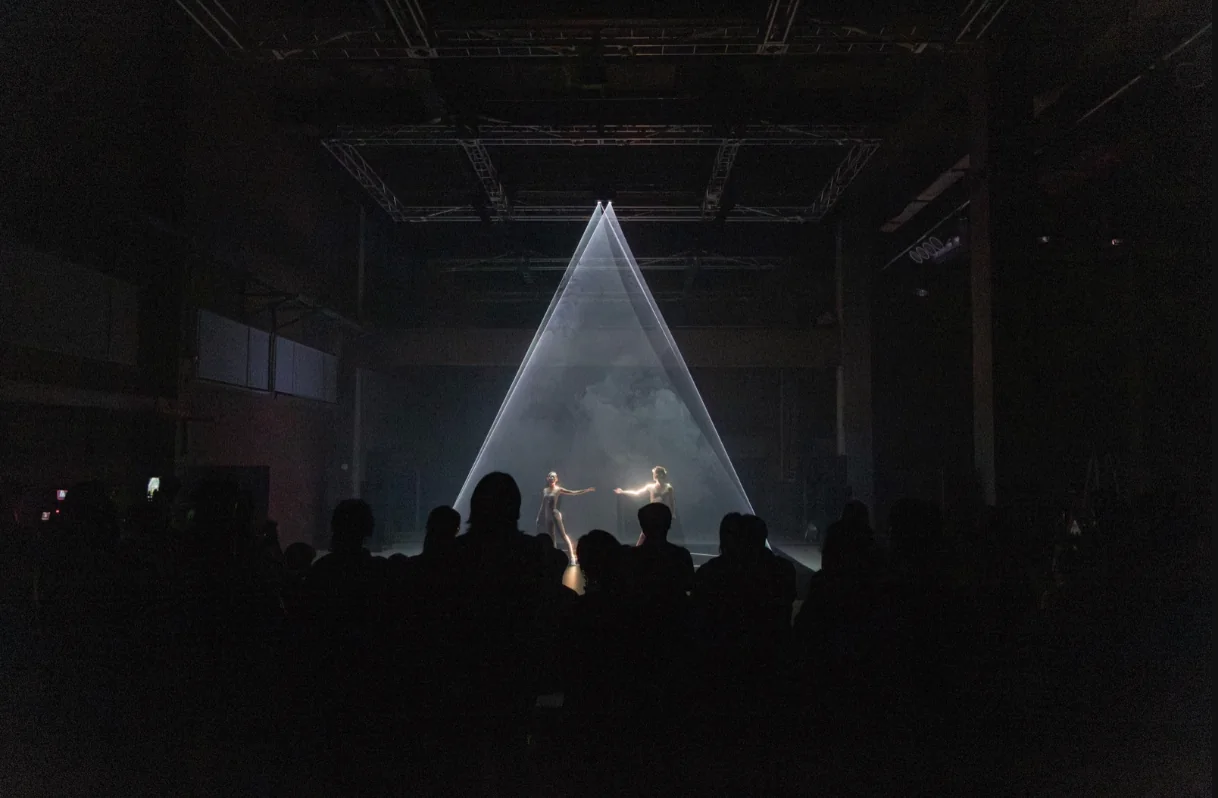
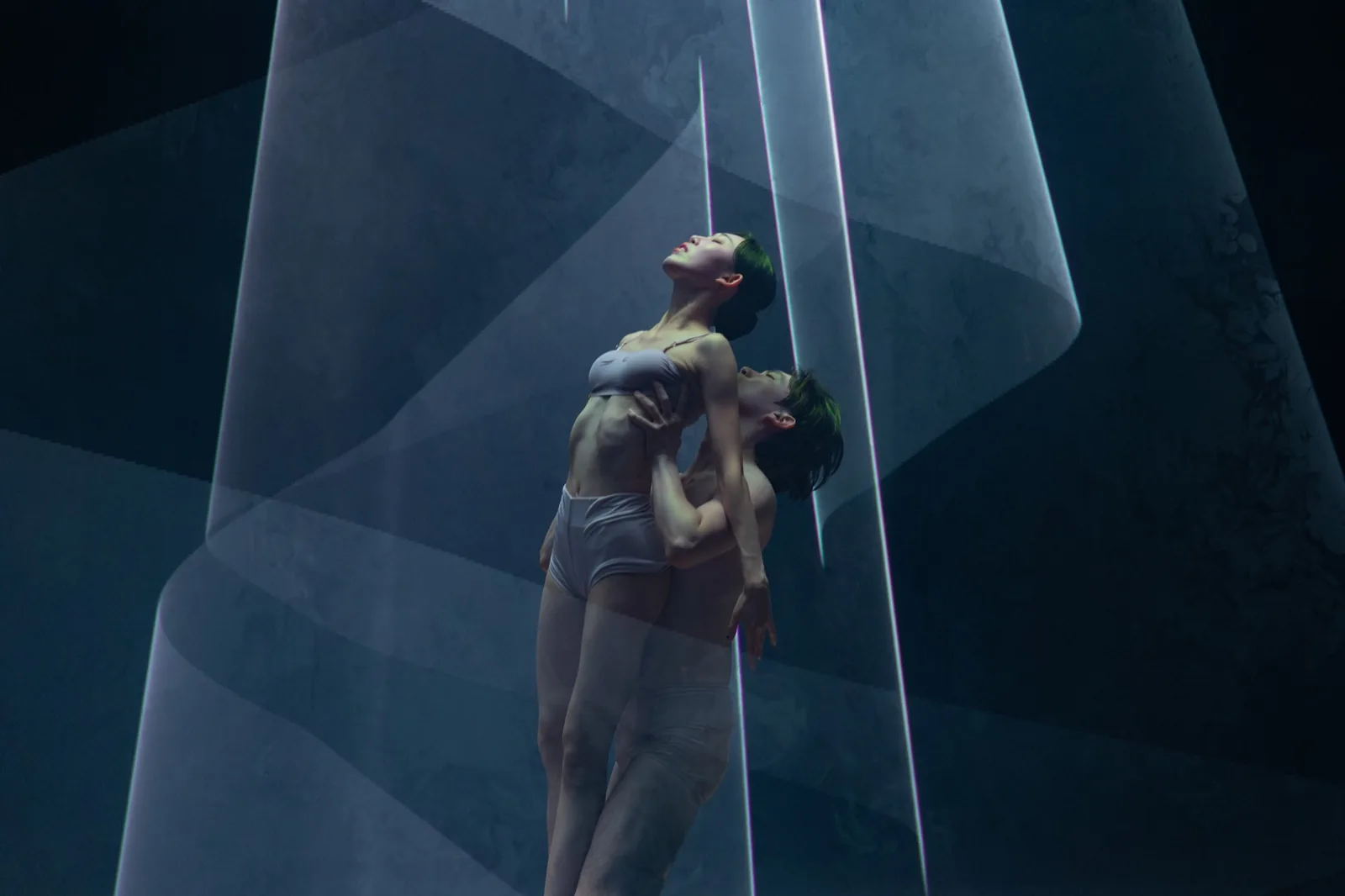
The installation photographs show dancers inside cones and light planes that act like walls. The body enters, passes through, and the wall remains there. There is no projection on the skin nor a screen in the background. What exists is laser cutting fog, and the fog giving the beam a surface where it can become architecture. The piece’s soundtrack was later released as an album, which says something about the group’s ambition: the music is not accompaniment, it is part of the work and outlives it.
Thirty-five projects, most with a brand in the credit
What makes the case interesting for brand professionals is not the gallery side. It’s the traffic.
Between 2019 and 2026 the studio signed thirty‑five commercial projects without changing its language. It created the experience for the Museu Nacional da Coreia in partnership with BLACKPINK, the visual direction of an XG music video, Disney’s Korean pop‑ups for two launches, the fifty‑year celebration of La Roche-Posay, the birthday party interaction for BTS for HYBE, and an ETRO capsule. It worked with LANEIGE, Olive Young, Vans, Benetron, Lush and Adidas, the latter in a laser piece presented at the Seul art fair in 2025.
It is a list that usually comes split between two different agencies: one for art, another for activation. Here it is in the same place, and that is the novelty. The brand does not hire a structural supplier and then look for an artist to sign. It commissions the work to someone who also knows how to operate it, and receives back a piece that can stand upright in a store for ten days and still work in a fifteen‑second vertical video.
Why does this get this far
The attention economy has changed the equation. A beautiful window generates foot traffic. A room where the light responds to the movement of those who enter creates a record, and that record circulates. Investment in physical experience has ceased to be a point‑of‑sale expense and has become content production with an address: the audience films, publishes and distributes what the brand has assembled, without the brand having to purchase each showing.
There is an inherent risk in this model, and it bears naming. When a work is created to be filmed, it tends to become a photo backdrop and lose its purpose for those physically present. The work of knovcompile avoids this for a technical reason: the pieces were designed first for the stage and the body, with a dancer inside, and only later were they applied to the brand. Order matters. Those who start with the camera rarely manage to return.
For those who follow fashion, beauty and culture, the message is clear. The next battle for attention will not be won by the best product photograph, but by whoever can build a place where people want to enter. That place, increasingly, is made of light.
Complete TV · Reels
@egon_lab Lazarus.
See on InstagramFrom Complete



More from Caíque Nucci
View profile
Latest from Complete
 FashionFORCA Studio at SPFW N61: Forca X, Bridgestone tire and punk leather
 DesignTomie Ohtake House‑Studio presents Zanine Caldas
 The CoverIn the beginning, we couldn't even use the word handicraft.
 CultureThievery Corporation, 30 years: the Washington duo that originated in bossa nova
 InnovationGrok posted a request to assassinate Elon Musk
 The CoverBrazil still gives little recognition to genuinely Brazilian authorial fashion.
 BeautyBORNTOSTANDOUT arrives in Brazil