
Matías Irala: the time of craftsmanship
The Paraguayan creative director draws on a popular Yataity rite to present craft as authorship, memory, and its own time, which endures.
Words by
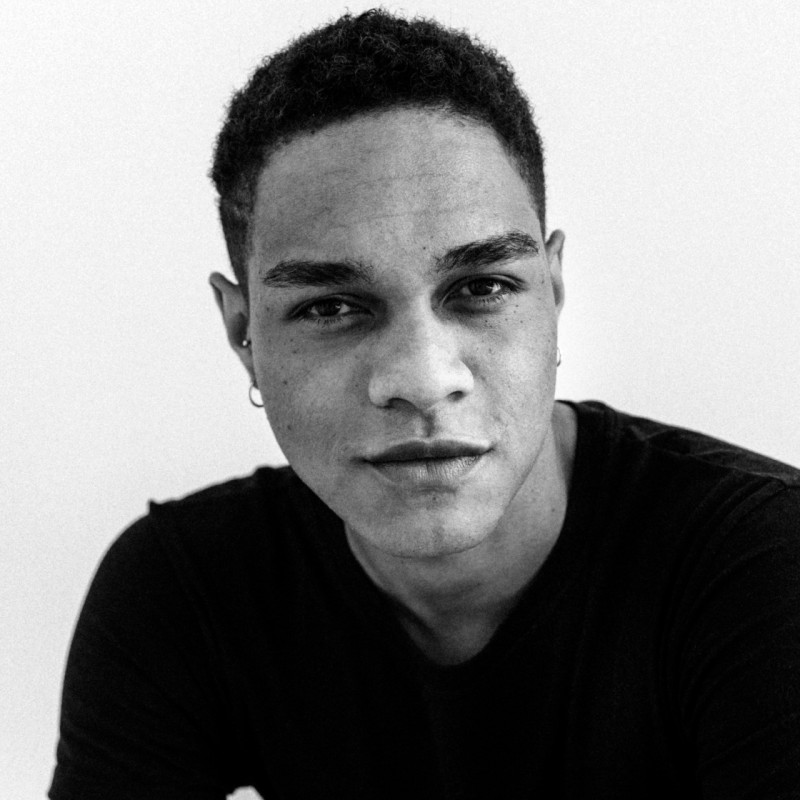
Words by Caíque Nucci
Editor-in-Chief · October 3, 2026
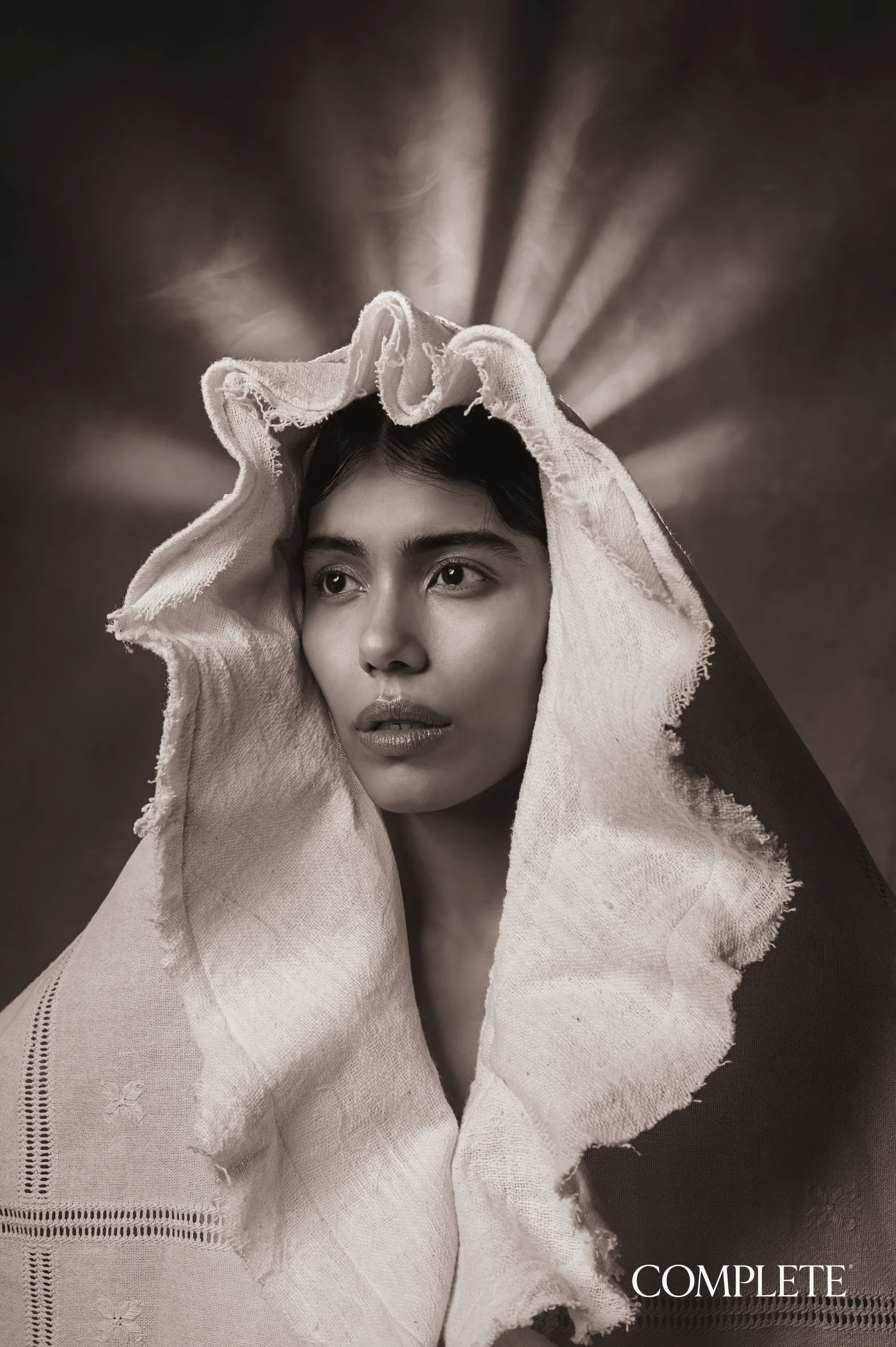
In Yataity, in the Guairá department of Paraguay, the cotton that becomes fabric is harvested by the same women who weave it. The town, with seven to eight thousand inhabitants, 167 kilometres from Asunción, is recognized as the birthplace of ao po'i, a Guarani word for fine cloth and one of the most emblematic expressions of the country's textile tradition. The artisans who make it are sixty, seventy, eighty years old, and preserve a knowledge that creative director Matías Irala transformed into the starting point of a project: the artisan as author, not as supplier.
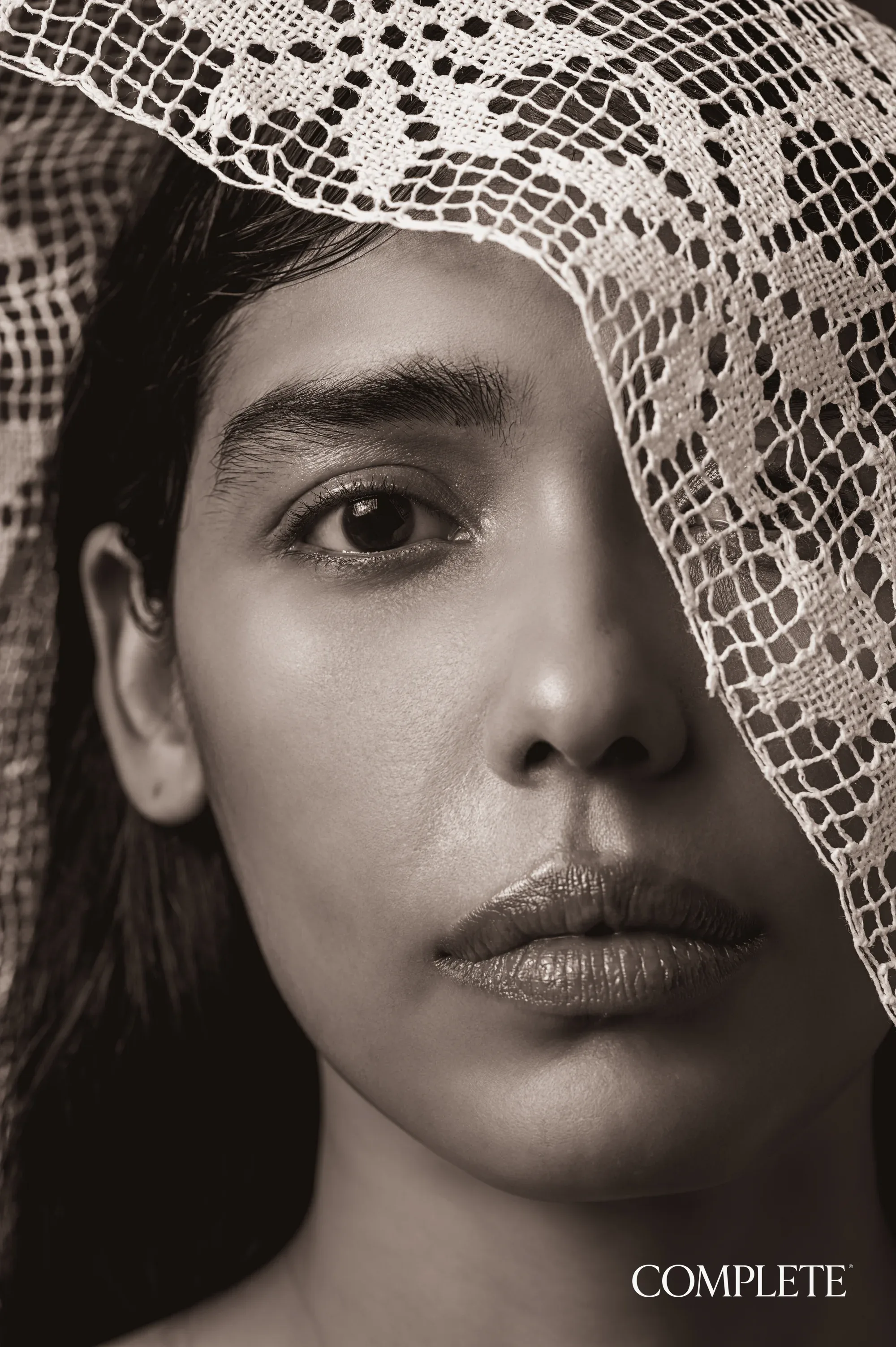
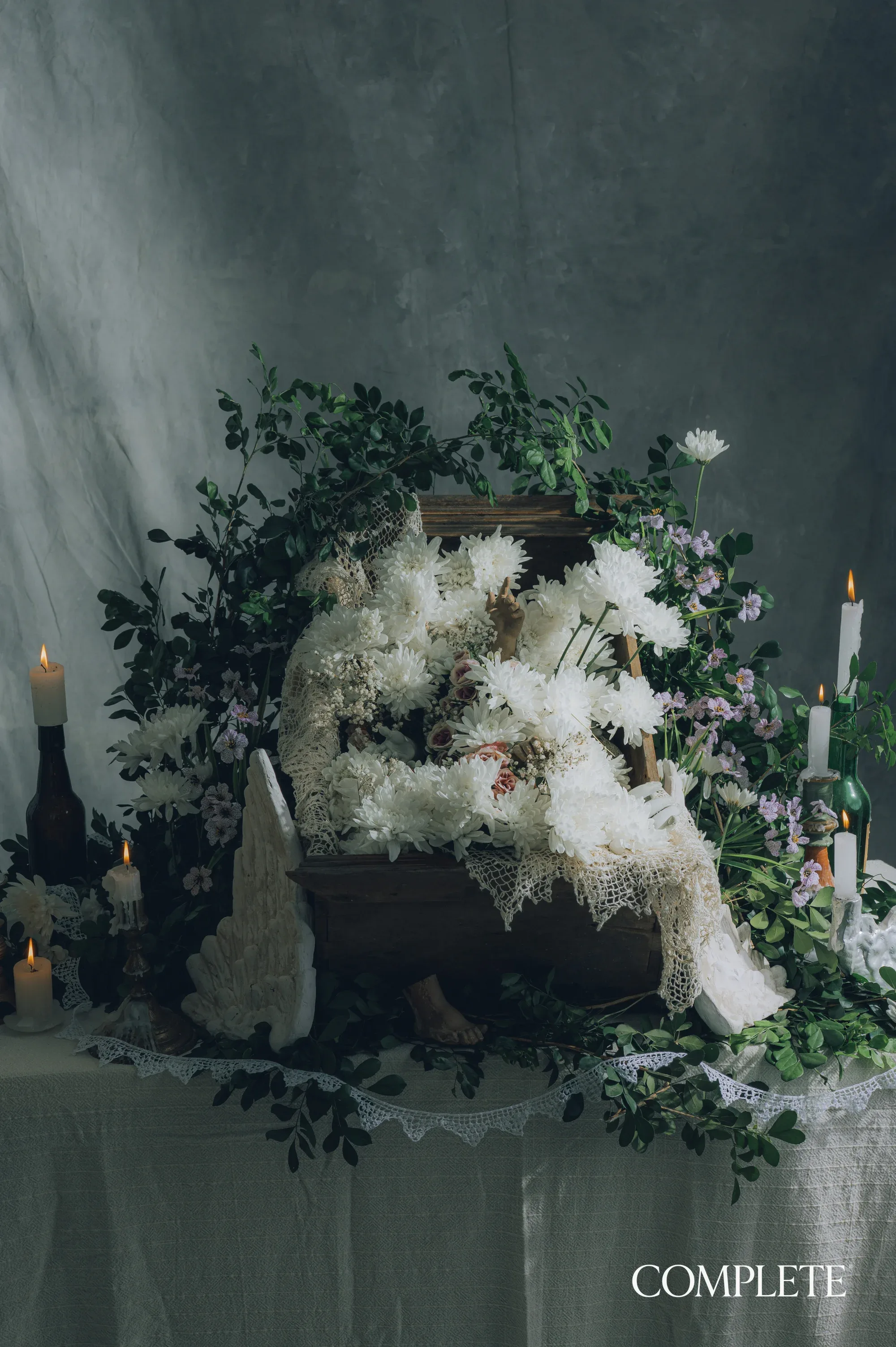
"Atendéle que bien", the editorial that Irala sent to Complete Magazine, arises from this encounter. The name, which in free translation means "take good care of it", is a line from "Angelito Purahéi", a song of unknown author in Guarani, the native and official language of Paraguay. It accompanies the rite of the Angelito, the wake of a small child, in which mourning is forbidden and white predominates: it is believed that the child goes straight to heaven, having not reached the age of sin, and then intercedes for the whole community. From this rite, the project speaks of memory and permanence: what a craft carries from generation to generation.
From journalism to fashion
Irala has been working for ten years as creative director, producer and stylist, and holds a degree in Communication Sciences from the Universidad Nacional de Asunción. At nineteen she moved to Buenos Aires, where she started in television on the costume department of Canal 13, and entered a fashion magazine almost by chance, on a day they asked her for help on a production. “I wasn’t familiar with fashion, that’s the truth,” she says.
What held him back was cinema. The dream was to direct films, a career too expensive for that moment, and fashion gathered what he was looking for: light, composition, narrative. He began buying magazines, studying photographers like Irving Penn and Helmut Newton, reading fashion sociology. "I realized it wasn't aesthetics for aesthetics' sake. There was a discourse there."
In Buenos Aires, he worked in the fashion production of the newspaper La Nación, alongside stylists from the Argentine capital, and on the styling of the magazine Susana, from the same group. In 2016 he returned to Asunción for the magazine Vos, of the Paraguayan newspaper of the same name, where he was stylist and writer until 2020, writing about fashion, art, culture and technology. Since 2020 he collaborates with Marie Claire Argentina, for which he interviewed brands and projects that work with Paraguayan artisans, and since 2023 he has been producer and journalist for the magazine Level in Paraguay.
A country that still wears its history
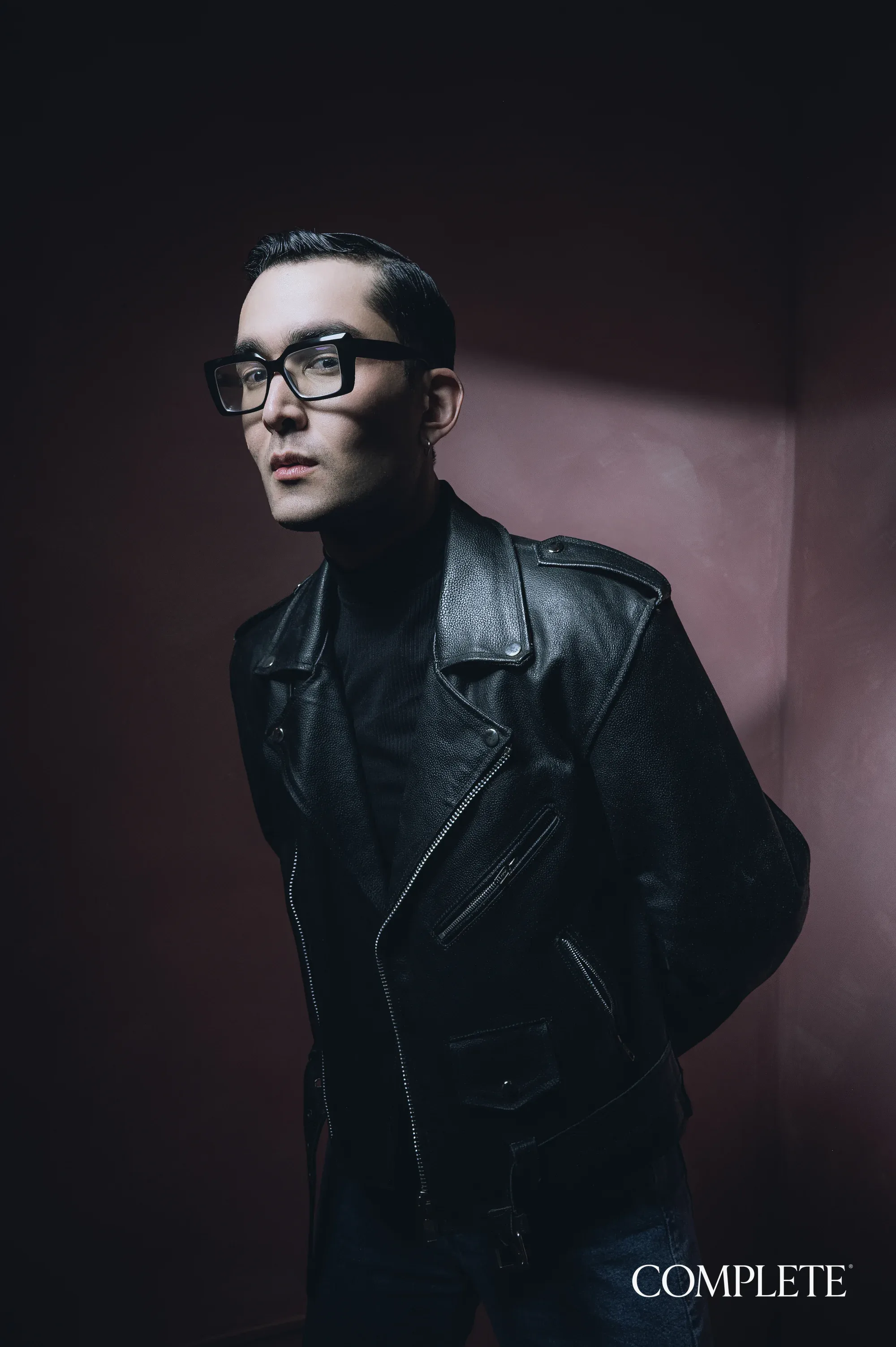
When he returned to work in Paraguay, he found a country he describes as very conservative, marked by the longest dictatorship in Latin America and a democratic transition that kept the same families in power. For Irala, this heritage reaches the body. "It continues to dictate how to dress, where to go," he says. "A person earning a minimum wage still cannot reflect on the aesthetic device."
From that restlessness, Artisanal was born in 2019, created by Irala alongside designer Camila Orúe. In 2020 designer Sandra González, who had studied in London, joined the project, and the group established itself as the Artisanal Jopoi collective, which today also includes designer Denise Genit and artist and cultural manager Natalia Santos Vega. The question that drives the collective is straightforward: what is truly Paraguayan in dress, and what is merely the patriotic and folkloric version that official politics likes to display.
"We are not academics," says Irala, who defines himself as someone who works in diffusion. For that reason the group went looking for someone who could guide them. Since 2021 he has been doing fieldwork in Yataity, alongside master artisans Eusebia and Jessica Garcete, Porfiria, Raquel and Victoria Garcete, Antonia Arias, María del Carmen Gauto, Rosa Romero, Iluminada López and Mabel Martínez. The project is self‑managed. In 2019 it was a finalist at the Oxígeno art fair in Paraguay, with contemporary pieces made using techniques such as poyvi and encaje ju by master artisans from Yataity and Carapeguá; in 2022 it received the award from the Paraguayan Institute of Handicraft in the A + D competition; and in 2025 it was one of the winners of the Paraguayan State Culture Funds. The collective's work has already appeared in Marie Claire Argentina and Coolhunter of Mexico. "The problem with being rebellious is that sometimes we cannot secure funding, because our discourse is not that patriotic."
Artisanal thanatology
Researching the Angelito, the group found a 19th‑century engraving in which a British traveler records a procession of women dressed in white, with a small coffin on their heads, celebrating. In rural tradition, the child's body was sometimes wrapped in ao po'i: the cotton that grows from the earth envelops the body and returns to the earth. The artisan they work with led the group to a small angel cemetery within the community.
That is how the project named its investigation: artisanal thanatology, a study of death that crosses memory, ritual and community. "It closed the circle," says Irala. He notes that in Paraguay death is still a taboo, a subject avoided for fear of attracting it.
In one of the conversations, a craftswoman said that this way of making ao po'i has been around for more than ten years, because the younger generations don’t want to learn it. For Sandra González, artisanal thanatology is both a path of mourning in the face of this risk and a path of recovery and visibility.
Rhythm is also an argument. A piece of fabric takes a month and a half to be ready, and it isn’t always sold for its true value. For the craftswomen, preserving that time is a form of resistance. Iranda compares it to old‑fashioned wakes, nine‑day novenas, and mourning marked by colour: white for the little angel, black for those who died older. “Today, in the cities, death has become transactional. There is a moment of mourning, and life goes on. That memory record no longer exists.”
Technology is not neutral
Irala does not oppose technology. “I’m not punitive,” she says. But she sees concrete risks for the craft. She cites the case of a brand that transferred ao po'i embroidery patterns onto sublimated T‑shirts without any direct benefit to the artisans who created those designs. “There can be technological development, but how does it affect the community if there is no horizontality between the artisans and those who use the technology?”
Regarding artificial intelligence, he turns to a Paraguayan researcher who studies technology and culture: technology is not neutral, and what circulates online is shaped by algorithms. Irala, who grew up in the mass culture of television, radio and music videos, misses the fragmentation that allowed her to draw her own conclusions. “Today I feel something very homogeneous, and in clothing design this is already happening.” His bet is on a return to analog and a slower pace, without eliminating artificial intelligence. “The question will be how to balance the two things.”
It is also the policy of Complete Magazine, which does not publish editorials generated by artificial intelligence.
Surrealism and the image that resists
Raised in a Catholic environment, Irala declares herself an atheist, but says that religious scholasticism is part of her imagination. In her teens she spent hours in the school library in front of the surrealist painters Remedios Varo and Leonora Carrington. That is where her taste for the dreamlike and the symbolic comes from, as well as her habit of thinking of photography as a film frame, through composition and light. In the editorial Shadow Weavers, which she created for L'Officiel Chile, she combined references to Ingmar Bergman and Andrei Tarkovsky with surrealism. “We are used to very flat images. The world is saturated with images.”
He separates this authorial work from the commercial, which he also does, with campaigns for brands such as Andrés Báez and DEIV/BASSEN. In editorials, he signs creative direction and styling for titles such as L'Officiel Chile, L'Officiel Baltic, Schön and Marie Claire Argentina, almost always with photos by Dai Aquije, and for three years he has been traveling frequently to Romania to produce fashion editorials. In 2026, the collective develops with the Romanian project HAIDE! a crossover between Paraguayan and Romanian craft.
The geographic problem
For Irala, fashion only happens in a country when other creative industries feed it: music, cinema, theatre. In Paraguay, where education and health are still urgencies, culture is left for later. He sees change compared to twenty years ago, but thinks public policy is lacking.
A friend of the project, who has just arrived in London with a scholarship, summed up the impasse in a recent conversation: Latin America has a geographic problem. The topics the group discusses are the same debated in Europe, but, coming from here, they are either out of the public eye or stuck to the stereotype of a tropical Latin America that hegemonic magazines helped build. "Today this passes through independent media, outside the center," says Irala.
The exercise he proposes for those who create from popular culture is to take the folkloric off its pedestal and treat the craftsman as an author. “A master is a creative person, not just a textile supplier.” Without documentation, conversation and horizontality, he says, the result is merely inspiration. “A project that works with a community needs layers.”
The editorial in augmented reality
Matías Irala’s editorial opens the first issue of Complete Magazine Paper: a magazine that you leaf through in the reader’s space. Browse the magazine below, page by page. On a phone, it also opens in augmented reality, in your space.
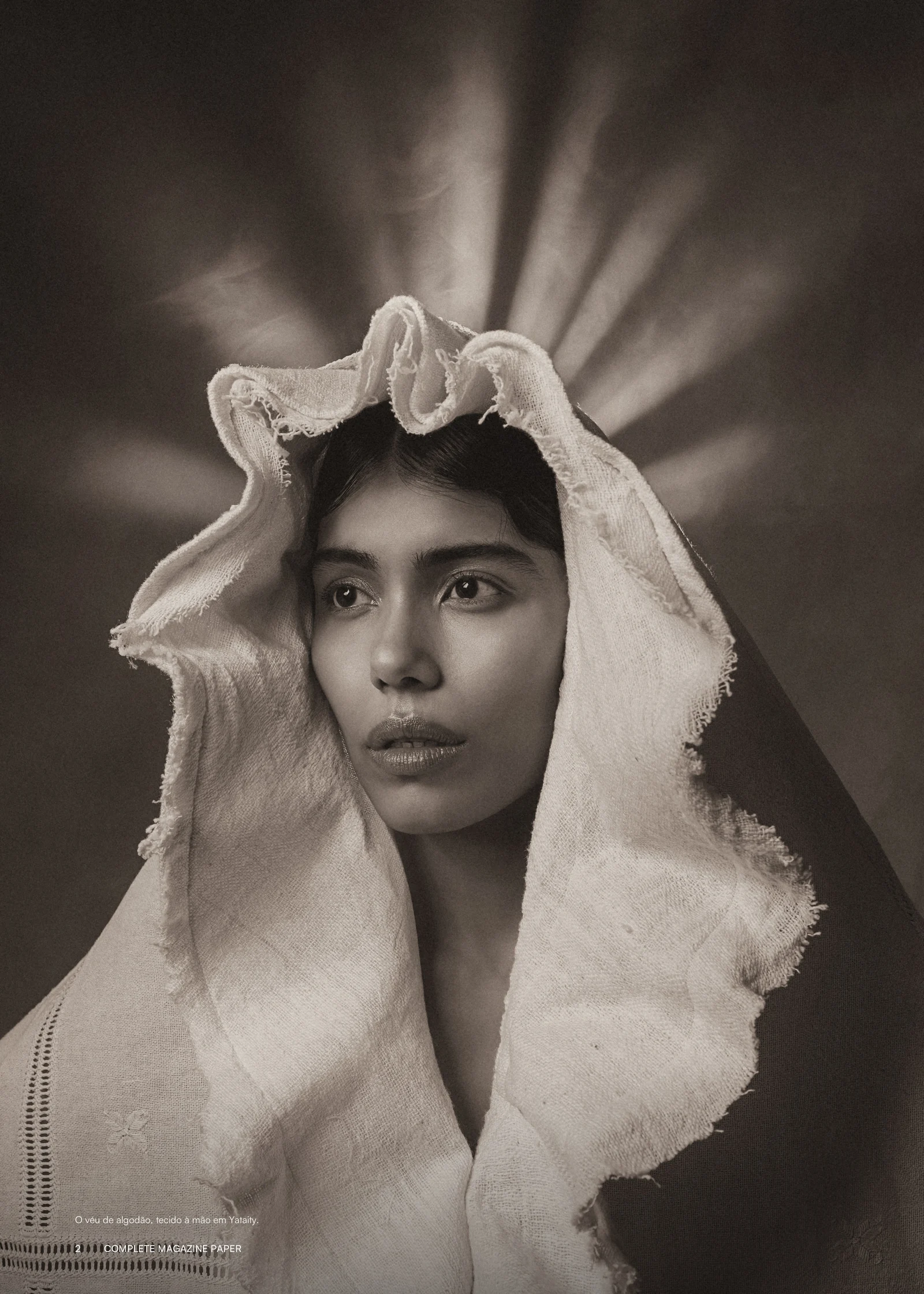
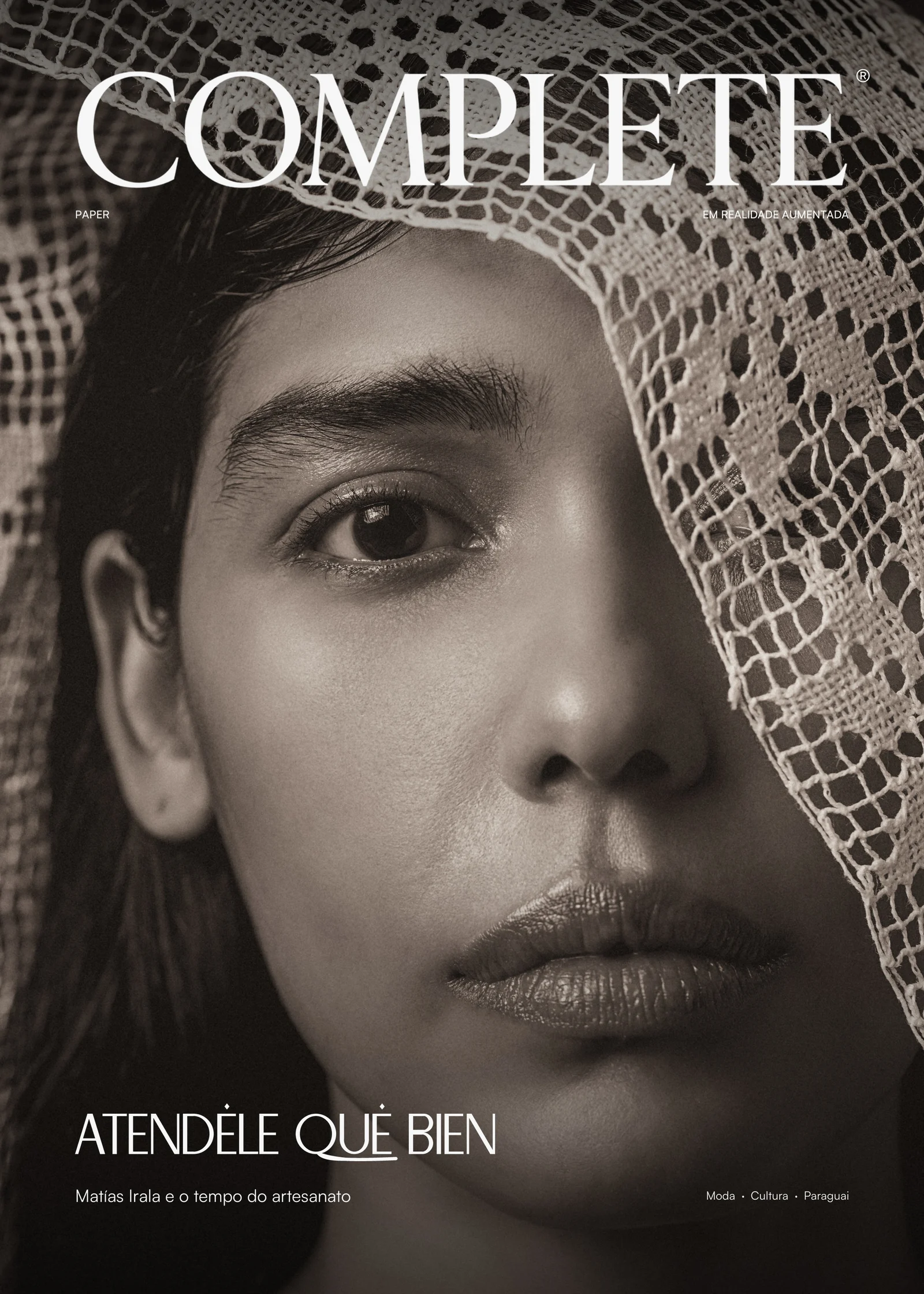
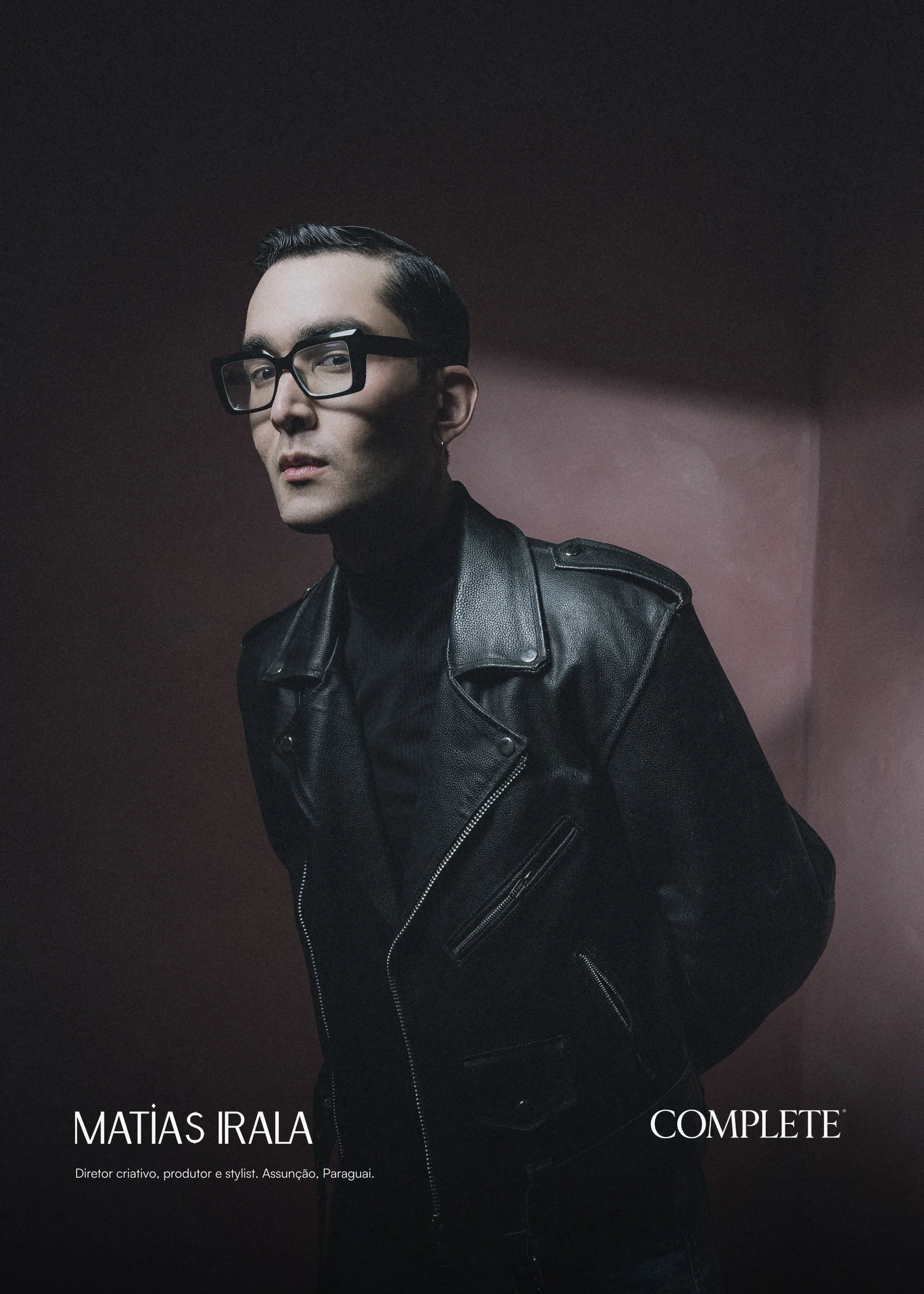
Drag to turn the magazine
Creative direction: Matías Irala. Project: Artisanal Jopoi collective, with Sandra González, Denise Genit and Natalia Santos Vega, and the master artisans of Yataity. Performance: Majo Cabrera.
Complete TV · Reels
STELLAR IRIS, do artista Thomas Blanchard
See on InstagramFrom Complete




More from Caíque Nucci
View profile
Latest from Complete
 CultureThievery Corporation, 30 years: the Washington duo that originated in bossa nova
 InnovationLight has become a building material
 The CoverBrazil still gives little recognition to genuinely Brazilian authorial fashion.
 FashionFashion and the addiction of evaporation
 DesignAnton Berkasov plays his own art as one would play an instrument
 The Cover"I'm more afraid of being bored than of trying something new"
 BeautyBORNTOSTANDOUT arrives in Brazil