
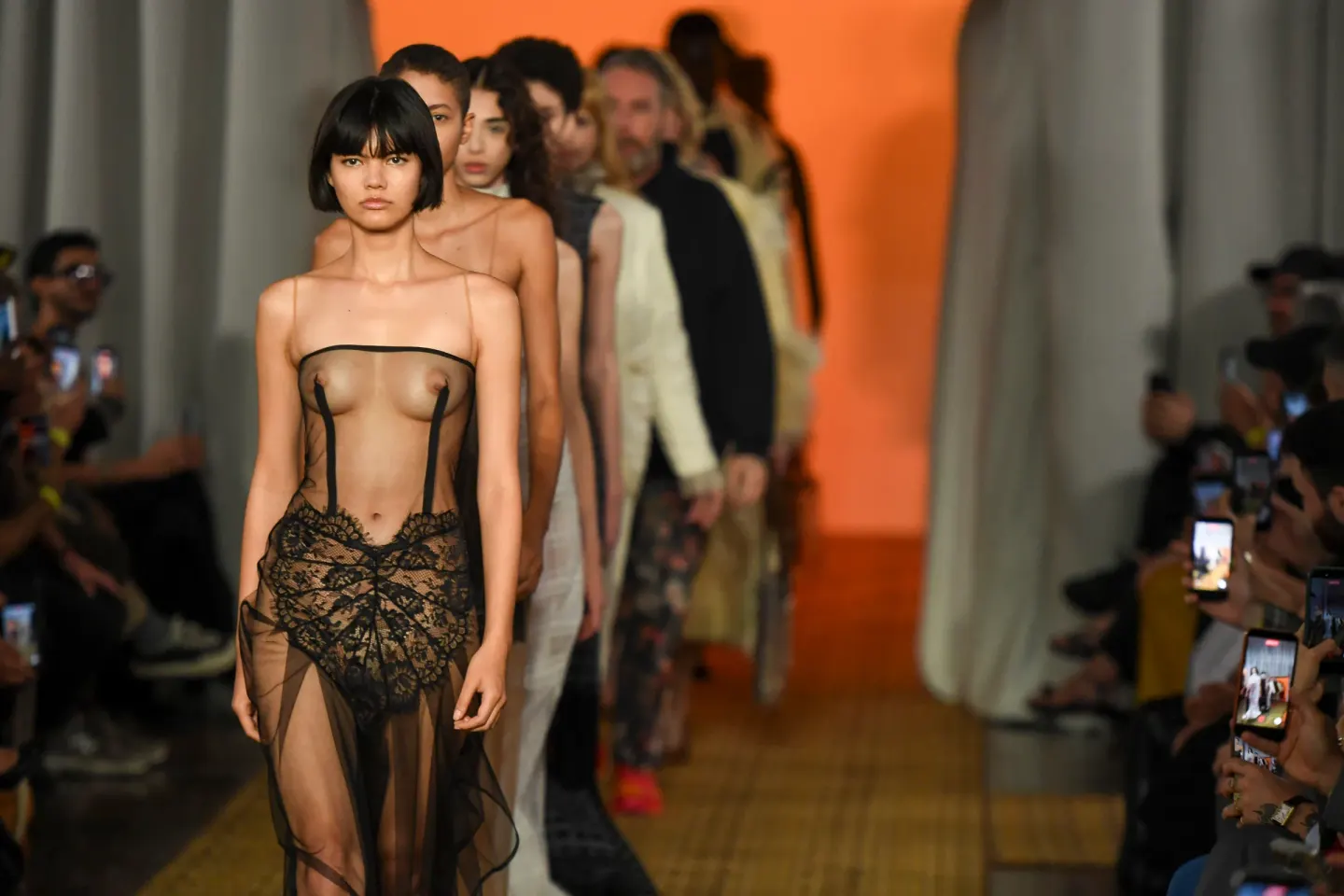
SPFW N61: Alexandre Herchcovitch
There are moments when revisiting one's own repertoire becomes a way to discover what has not yet been said.
Words by

Words by Sarah Rocksane Araujo
Editorial, Fashion and Beauty · October 14, 2026
In Alexandre Herchcovitch's fashion, memory never seems to function merely as an archive of familiar forms, but as a constantly evolving territory where personal references, historical codes and technical experiments can converge to produce new readings of dress. On Tuesday morning, October 13, the 2027 summer/autumn collection by Herchcovitch opened São Paulo Fashion Week N61, presenting an investigation that brings together different phases of the designer's trajectory.
The show takes place at a particular moment for the brand, whose distribution is concentrated in its own channels, including the physical store, e‑commerce, and exclusive appointments. The partnership with NK Store is an exception to this model, with some pieces from the new collection available exclusively by order in multibrand stores. This direct‑to‑audience approach also places the presentation within a broader discussion about the circulation paths of authorial fashion and the ways a label can build relationships beyond the launch calendar. On the runway, the retrospective gaze manifests in elements that run through Alexandre’s research, but does not limit itself to repeating recognizable formulas. There is an intention to revisit what has already been created in order to understand how these codes can acquire new meanings in the present. Rather than treating its own history as a definitive image, the designer seems to acknowledge that a language matures precisely when it is allowed to be questioned. The collection is born from this encounter between continuity and displacement, between the memory of an aesthetic signature and the desire to investigate what remains hidden in the structures of clothing. The past here is not a place to return to in search of ready answers, but a working surface on which new questions can be drawn.
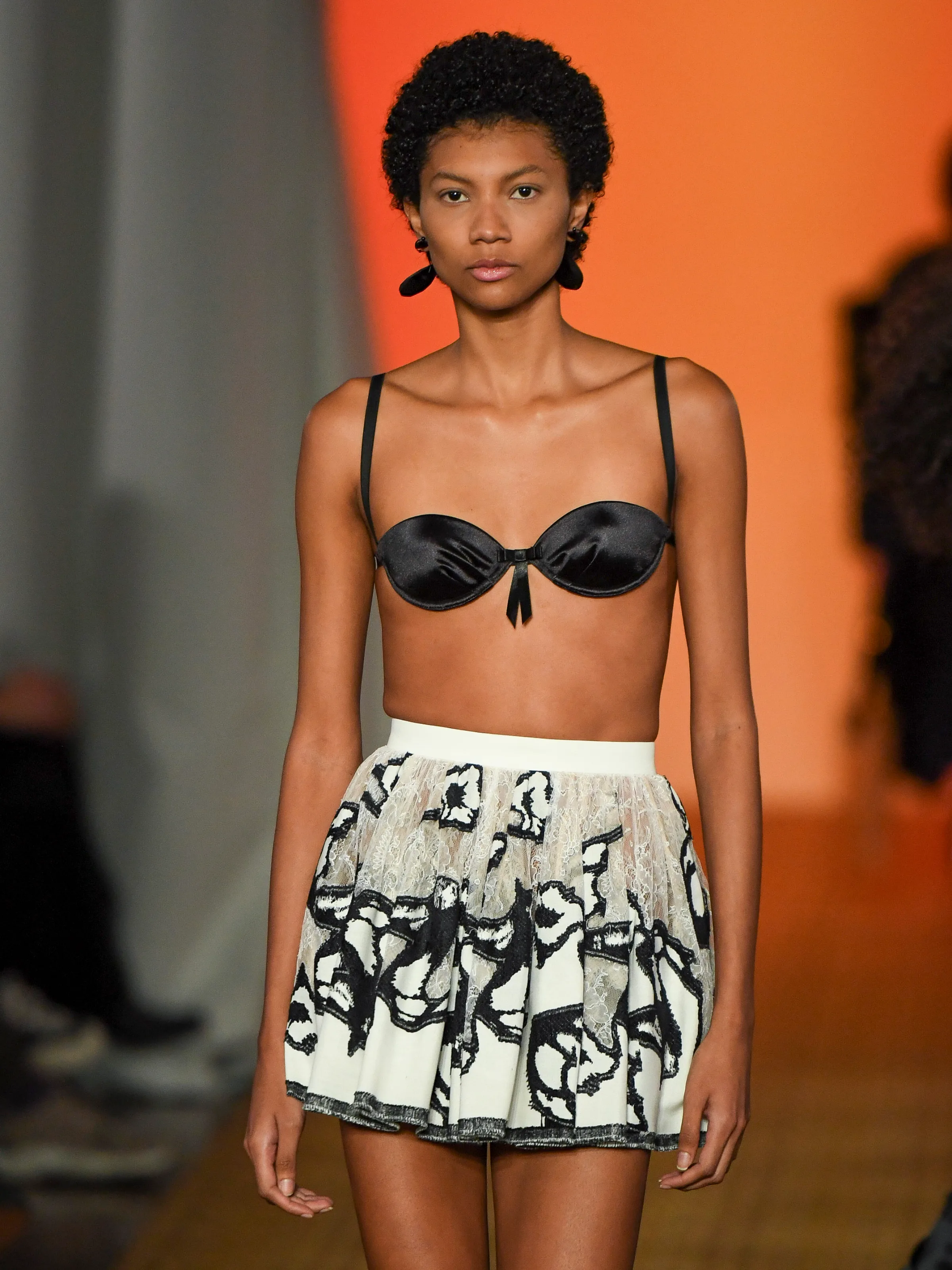
The black dresses, cut close to the body, recover an important dimension of Alexandre's research on silhouette and tailoring. They contain a restraint that contrasts with the exuberance often linked to the designer's public image, yet this economy of elements does not imply a lack of elaboration. On the contrary, the focus appears to be on construction, on how the garment follows the body and how subtle formal shifts can change the perception of a piece. The crumpled blazers, with shrunken shoulders, offer another reading of tailoring, moving away from the idea of a perfectly controlled and finished structure. The crumpling, which in other contexts might be seen as an imperfection to be corrected, becomes part of the visual language. The reduced shoulders also alter the relationship between clothing and anatomy, creating a silhouette that does not rely on amplified volumes to assert its presence.
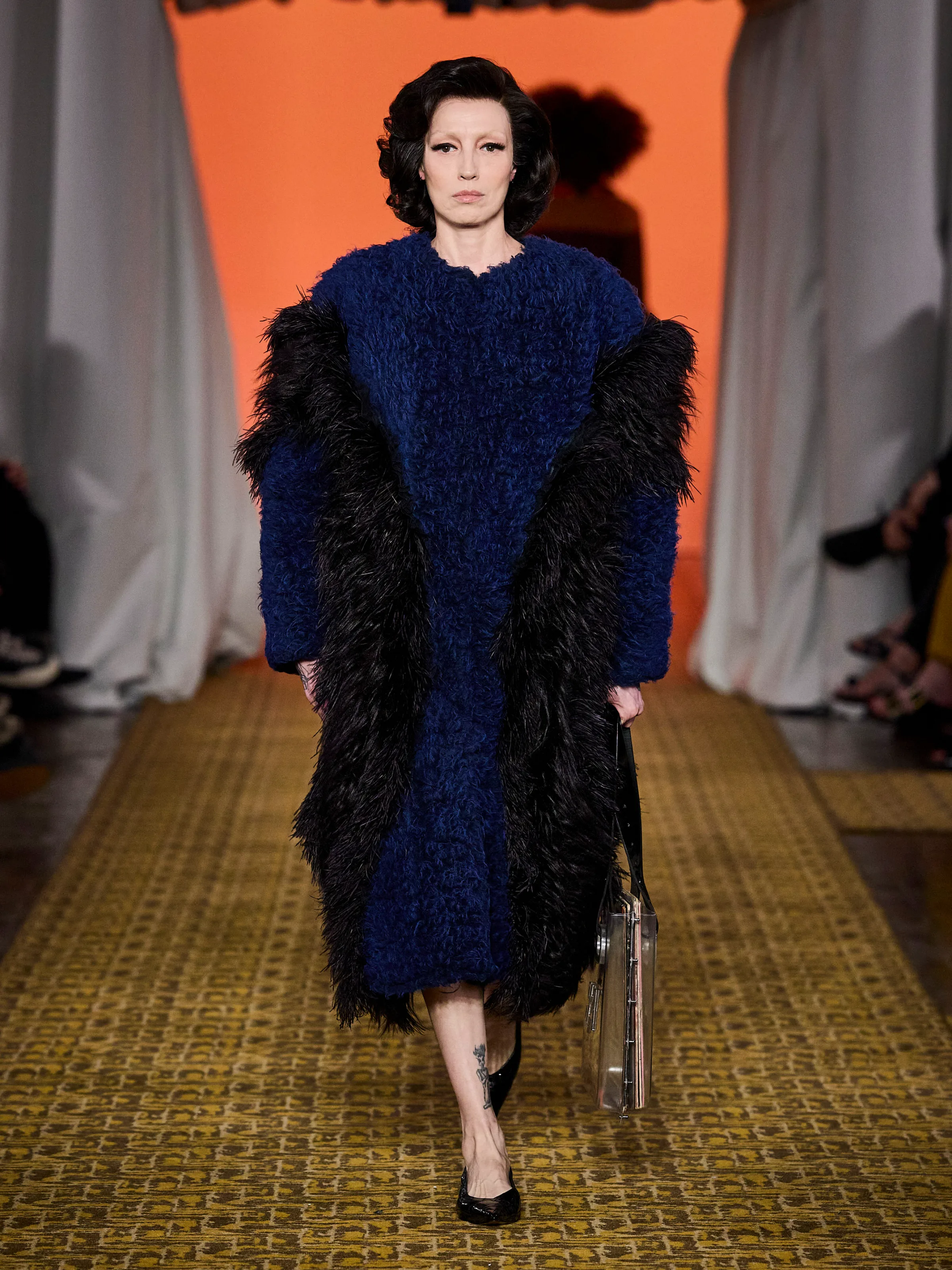
Next to these constructions, lingerie elements bring the clothing closer to a more intimate zone, where what traditionally stays beneath the garments becomes part of the exterior composition. This proximity between the visible and the hidden runs through the collection as an inquiry into the limits that shape appearance. What defines a piece as innerwear or outerwear? At what point does a functional structure become an aesthetic element? And why must certain parts of the construction remain invisible for a garment to be considered complete? By incorporating lingerie references and revisiting tailoring techniques, Alexandre does not need to abandon the codes that have marked his trajectory to set them in motion. The operation lies precisely in altering their relationships, allowing the familiarity of a blazer or a little black dress to coexist with a less conventional perception of finish and silhouette.
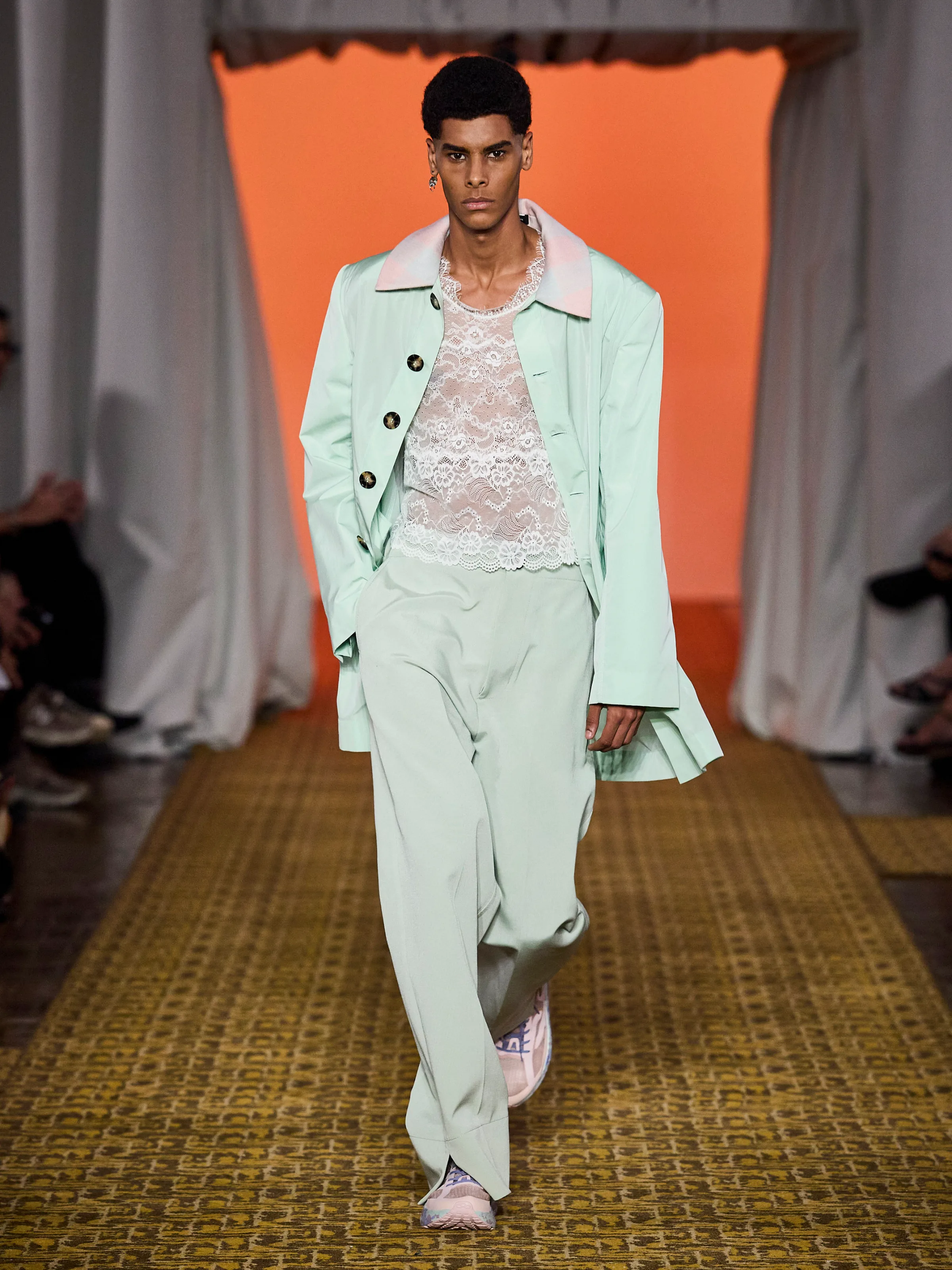
The collection suggests that the power of an authorial language is not necessarily in producing entirely new forms each season, but in keeping open the possibility of looking at familiar elements from different angles. In this process, clothing ceases to be merely a surface of presentation and becomes a field of investigation into the body, construction, and the conventions that dictate how a piece should appear.
The designer’s personal history meets the history of fashion itself in a recurring exercise of revision. One of the most evident examples appears early in the second look of the runway: an embroidered lace dress with a high collar, layers, and a slight volume at the hips. The silhouette evokes references to the Victorian era, at the end of the 19th century, when women’s clothing construction was marked by structures, ornaments, and specific codes of social presentation. In the collection, this reference does not function merely as a historical citation. It introduces a temporal layer that spans the present and allows us to observe how forms survive, transform, and can be reinterpreted.
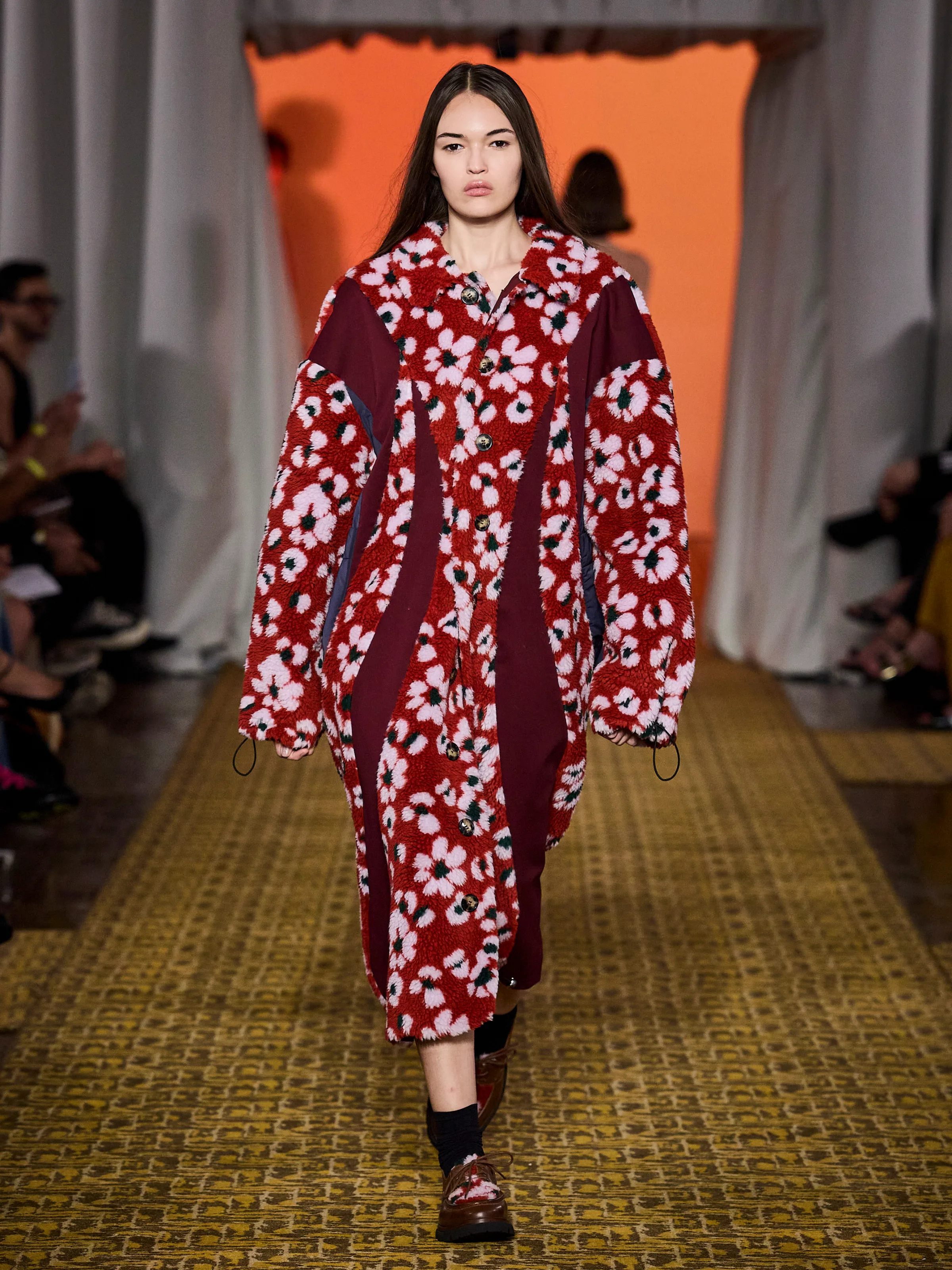
The collection does not abandon the brand’s history nor break with the references that accompany the designer’s work. It reorganizes them, creating space for the familiar to acquire a new reading. What was previously hidden now takes part in the narrative. And it is in this shift from reverse to surface that Herchcovitch;Alexandre turns the very construction of the garment into language, reminding us that fashion is also made of silent structures, accumulated memories, and details that only reveal their power when they finally meet the eye.

Complete TV · Reels
Maja Petrić: the artist who wrote her own artificial intelligence
See on InstagramFrom Complete







More from Sarah Rocksane Araujo
View profile
Latest from Complete
 DesignTomie Ohtake House‑Studio presents Zanine Caldas
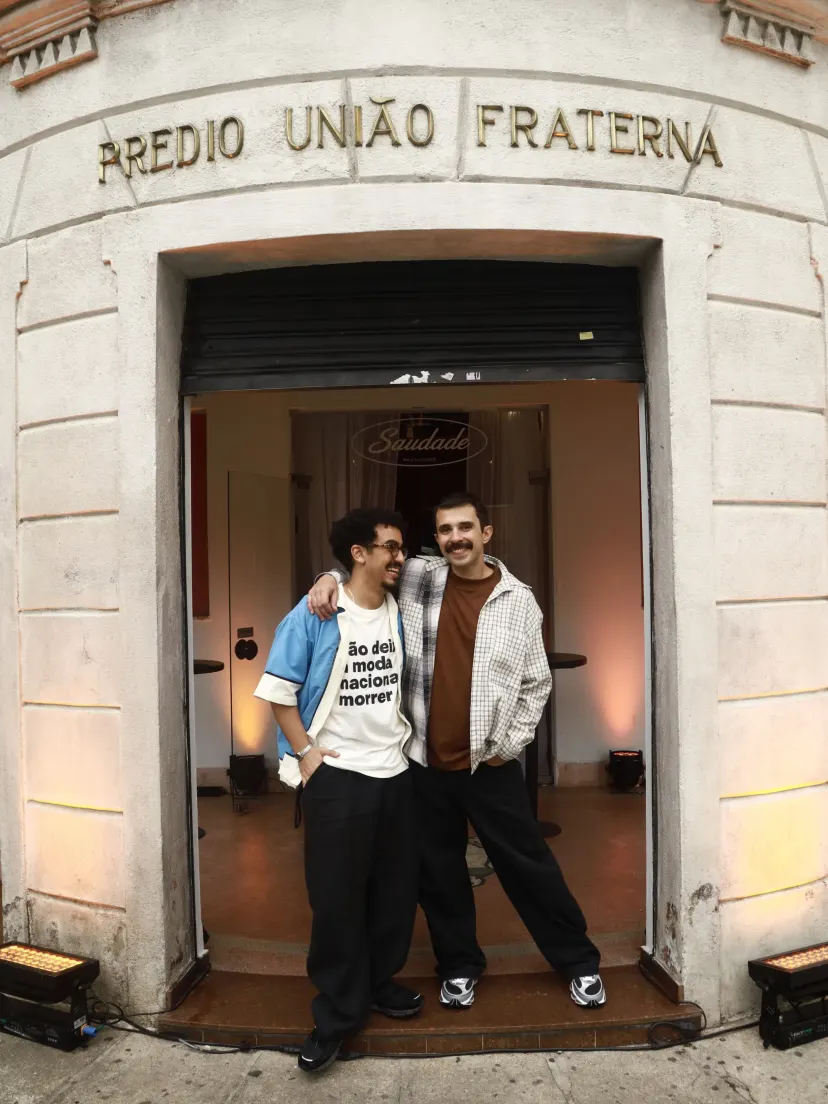 FashionLED presents Baile da Saudade
 The CoverIn the beginning, we couldn't even use the word handicraft.
 CultureThievery Corporation, 30 years: the Washington duo that originated in bossa nova
 InnovationLight has become a building material
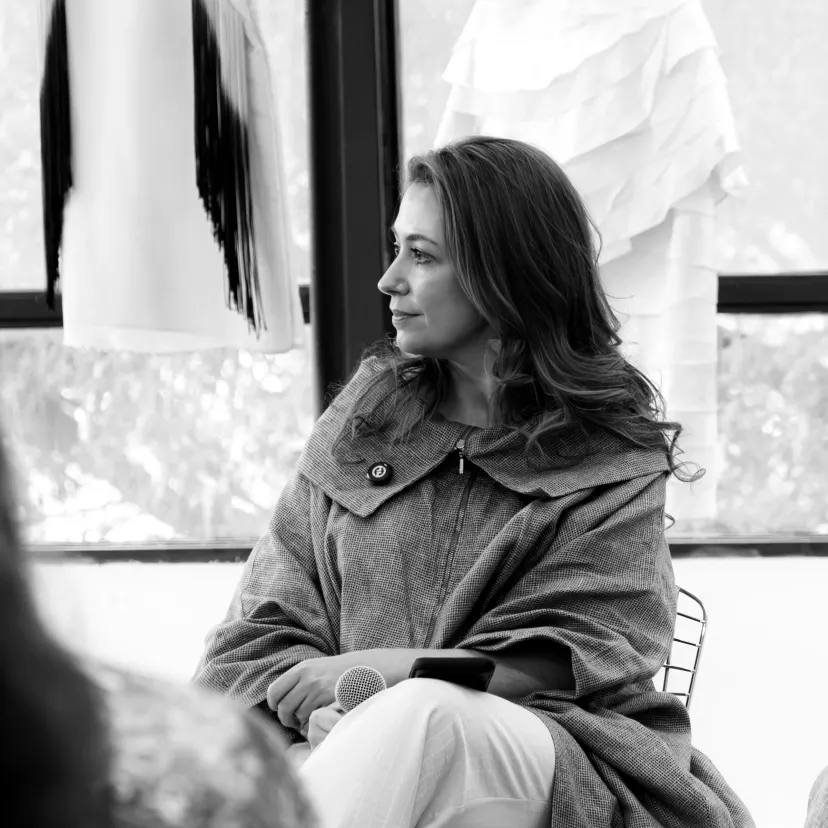 The CoverBrazil still gives little recognition to genuinely Brazilian authorial fashion.
 BeautyBORNTOSTANDOUT arrives in Brazil