
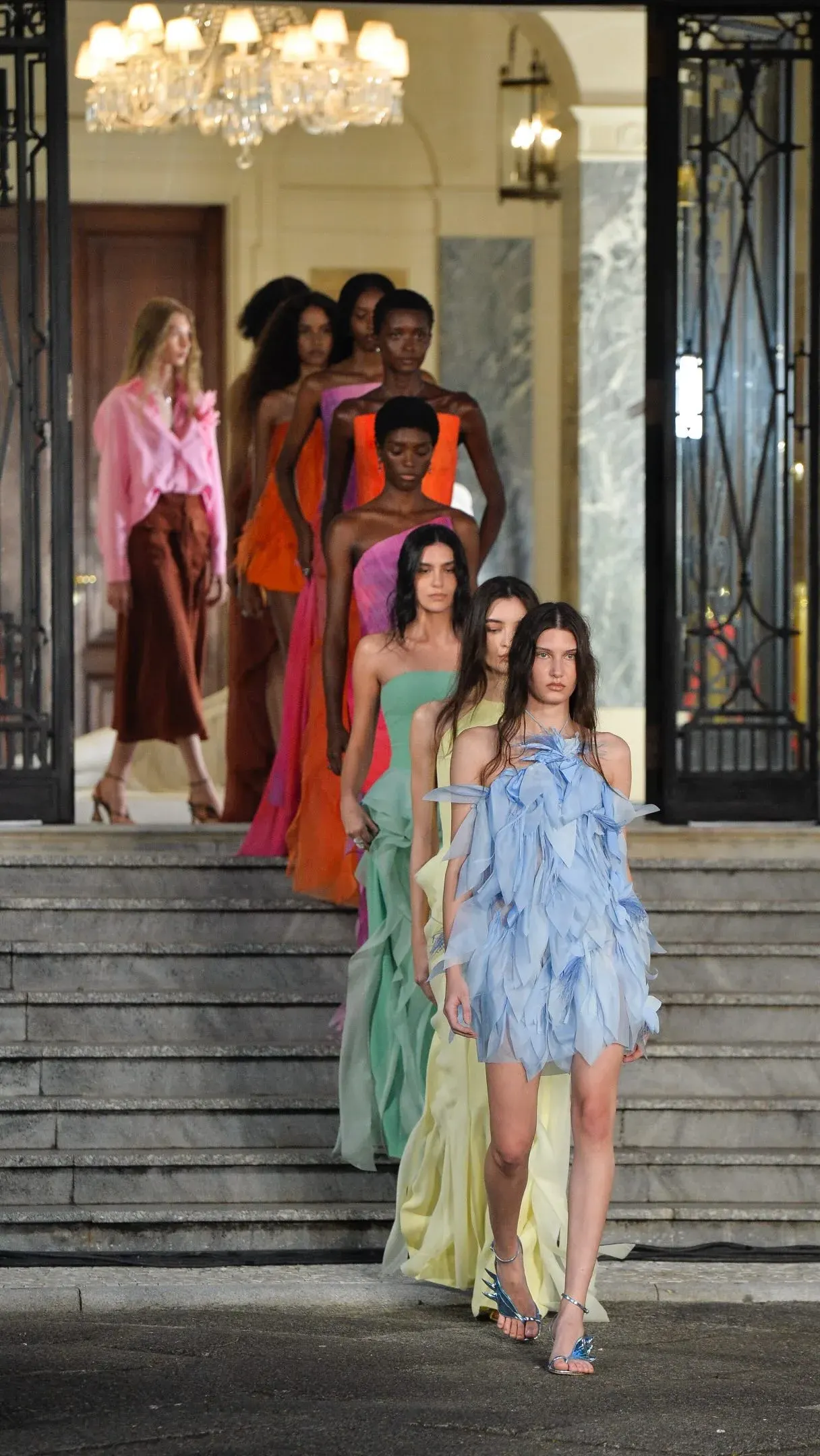
Fabiana Milazzo presents Passarim
Upon reaching 25 years of her career, the designer finds in nature not only an aesthetic reference but an invitation to contemplation, freedom, and renewal.
Words by
Words by Sarah Rocksane Araujo
Editorial, Fashion and Beauty · October 12, 2026
Thus Passarim is born, a collection that borrows the name and atmosphere of Tom Jobim’s music to build a narrative around the movement of birds and the beauty of small encounters. The choice does not seem accidental. In an industry often driven by the speed of trends and the need to produce new items in ever‑shorter cycles, slowing down can also be a creative gesture. Observing flight, tracking the sweep of wings and noticing how light transforms the landscape are experiences that require a different tempo, one more attuned to what happens between one movement and the next. It is from this sensitive relationship with the natural world that the collection draws its atmosphere, translating an affective memory into research on materials, textures and constructions.
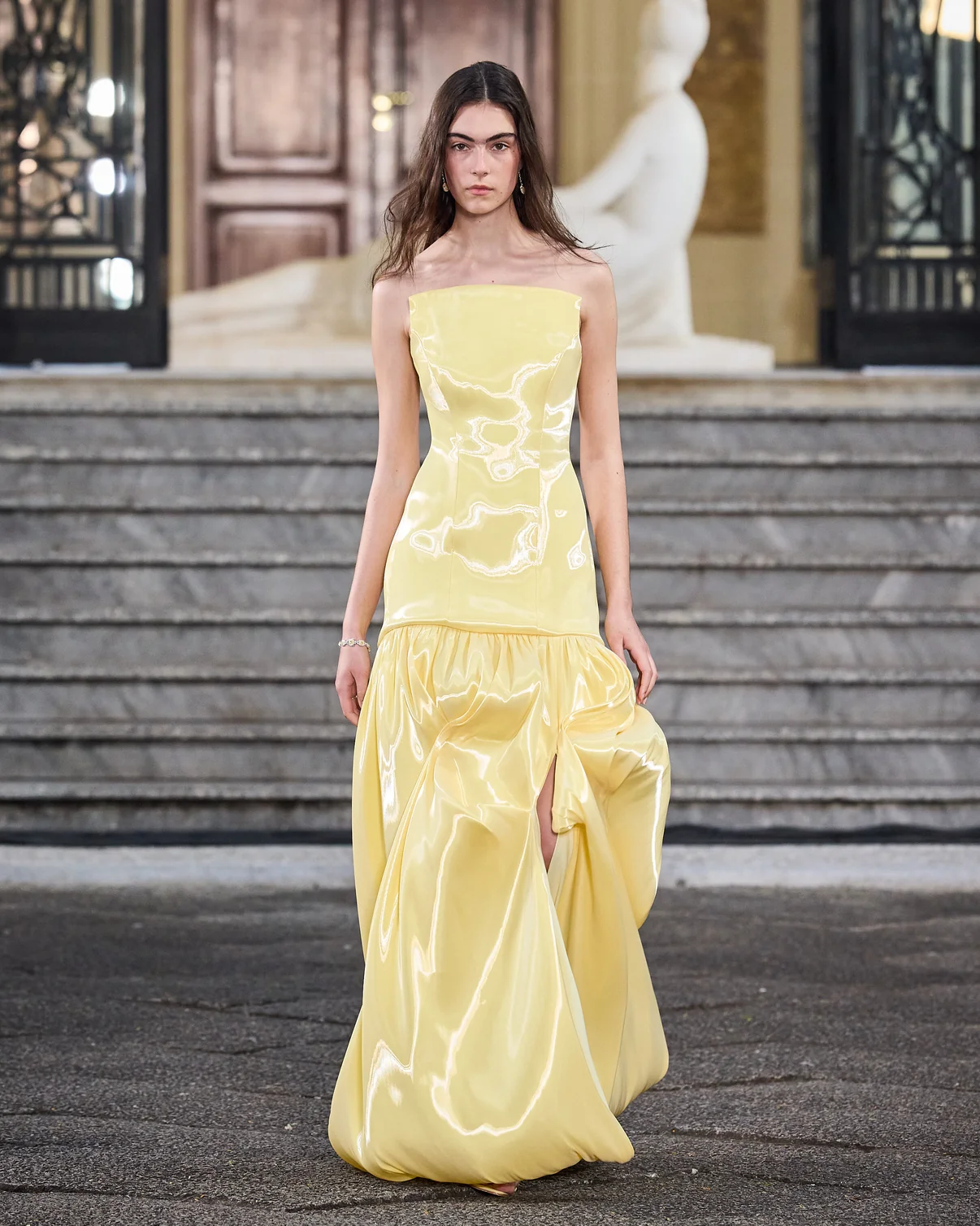
Celebrating a quarter-century of creation, the designer turns her gaze to her own references and finds in them the possibility of continuing to experiment. The collection turns the brand's anniversary into an exercise in continuity, where the accumulated experience does not represent a destination but fertile ground for new discoveries.
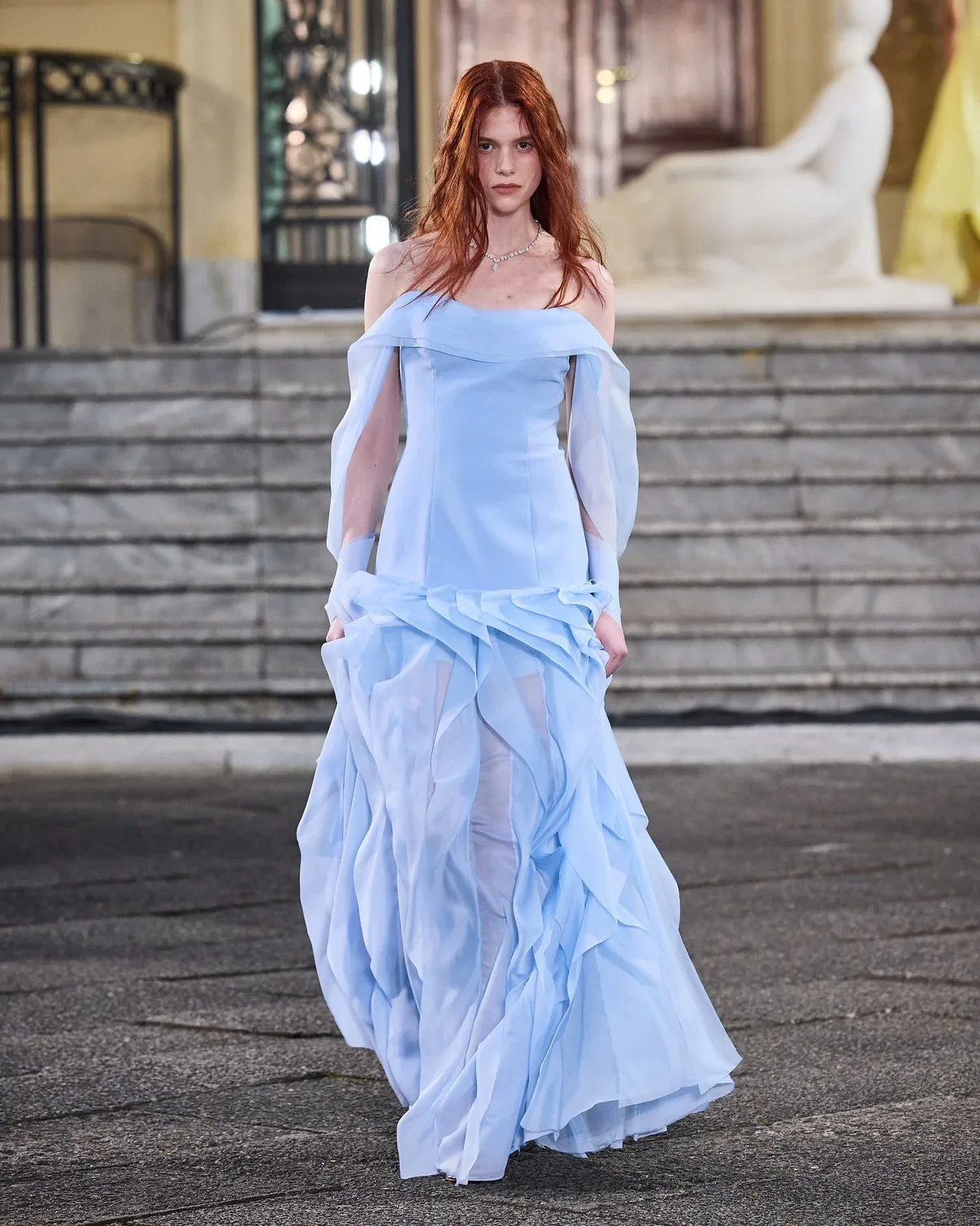
On the runway, this inspiration translates into an investigation of clothing’s ability to accompany, suggest, and even reinvent the body’s movement. Plissé, draped and voluminous elements recall the wings and plumage of birds, while elaborate constructions create silhouettes that seem to transform with each step. Lightness lies not only in the appearance of the looks but in how different techniques intertwine to produce a sense of fluidity. At this point, the language of haute couture becomes essential: nature provides the visual repertoire, but it is the construction work that allows observation to become form.
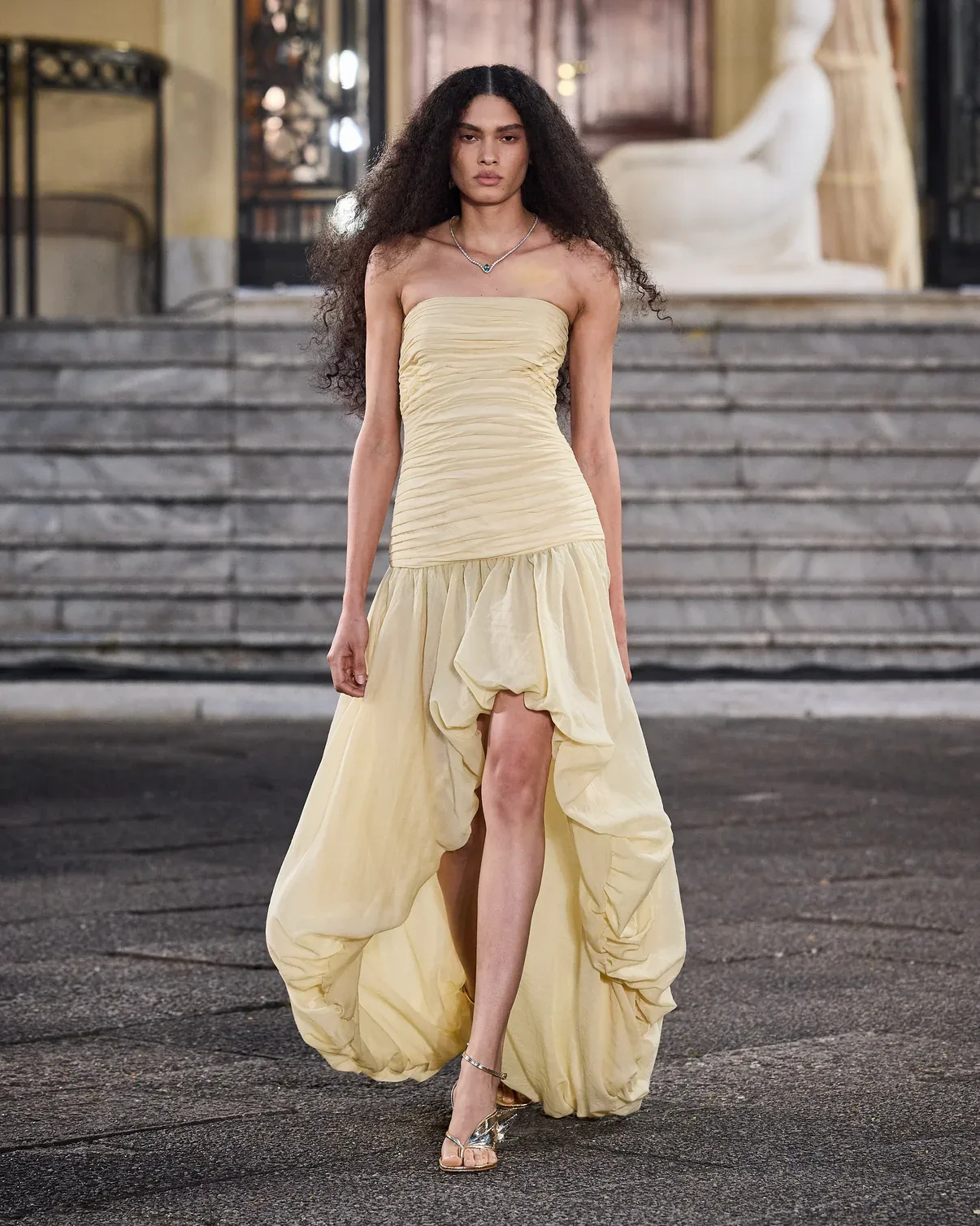
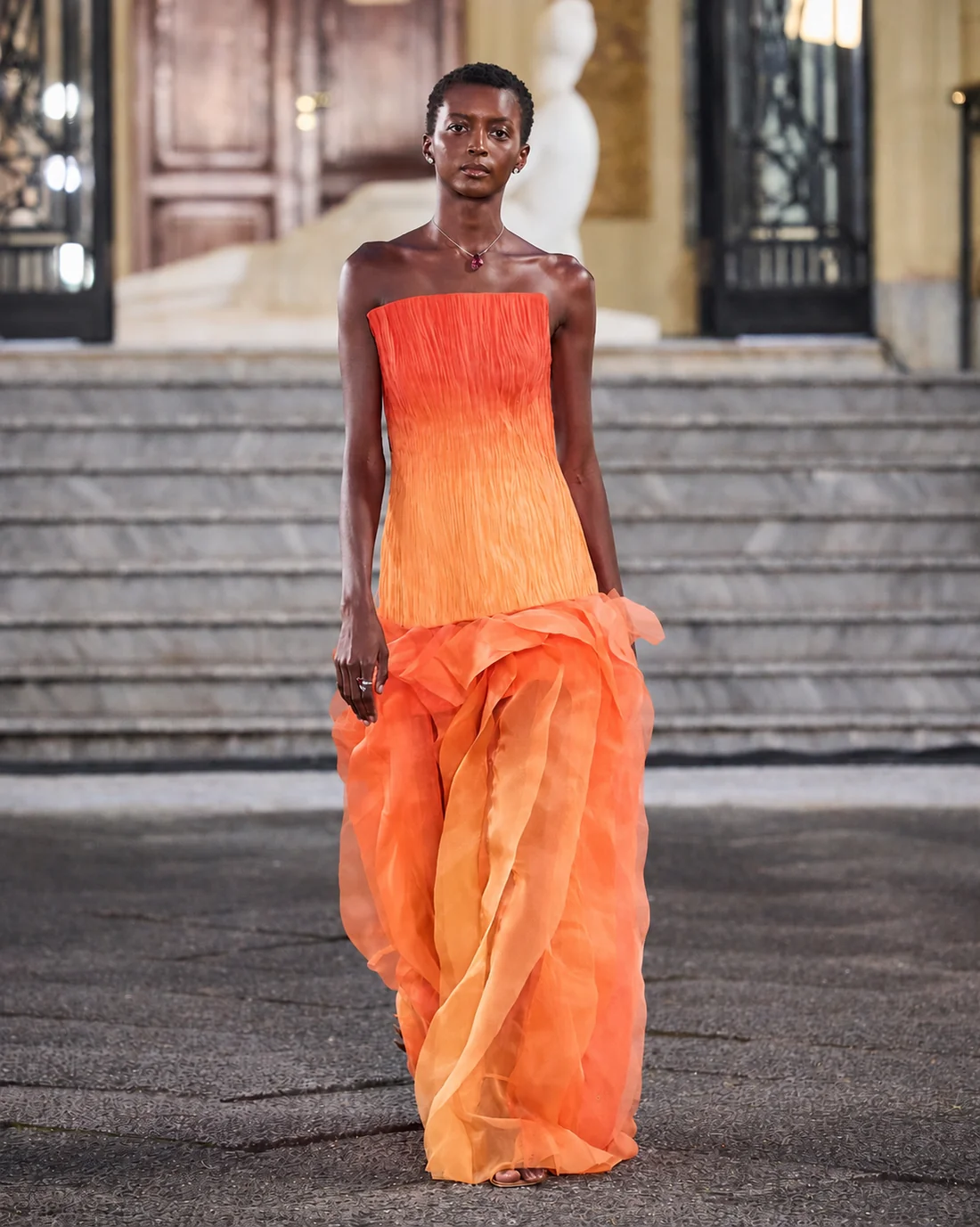
Three‑dimensional embroidery, meticulous finishes, and elaborate tailoring reaffirm a creative identity built over the years, in which manual craftsmanship occupies a central place. The collection also finds in painting a way to bring the creation closer to a lived experience. During her season at Casa da Cachoeira, Fabiana developed gradient watercolors, exploring shades of yellow, orange, and pink that evoke the incidence of light on landscapes and the delicacy of colors found in nature. These compositions came to life on organza and muslin, fabrics whose transparency and lightness amplify the sense of movement.
Instead of simply reproducing a landscape, the colors seem to dissolve it into layers, as if the memory of a place could be translated through gradations, transparencies, and nuances. The image stops functioning as a literal representation to become a sensory experience. The fabric, in turn, acts as a surface of experimentation, allowing the painting to transform into a body and accompany the movement of the wearer. There is a particular delicacy in this process: the garment does not need to illustrate nature to establish a deep relationship with it. It suffices to incorporate its rhythms, its variations, and its capacity to transform perception with each new look.
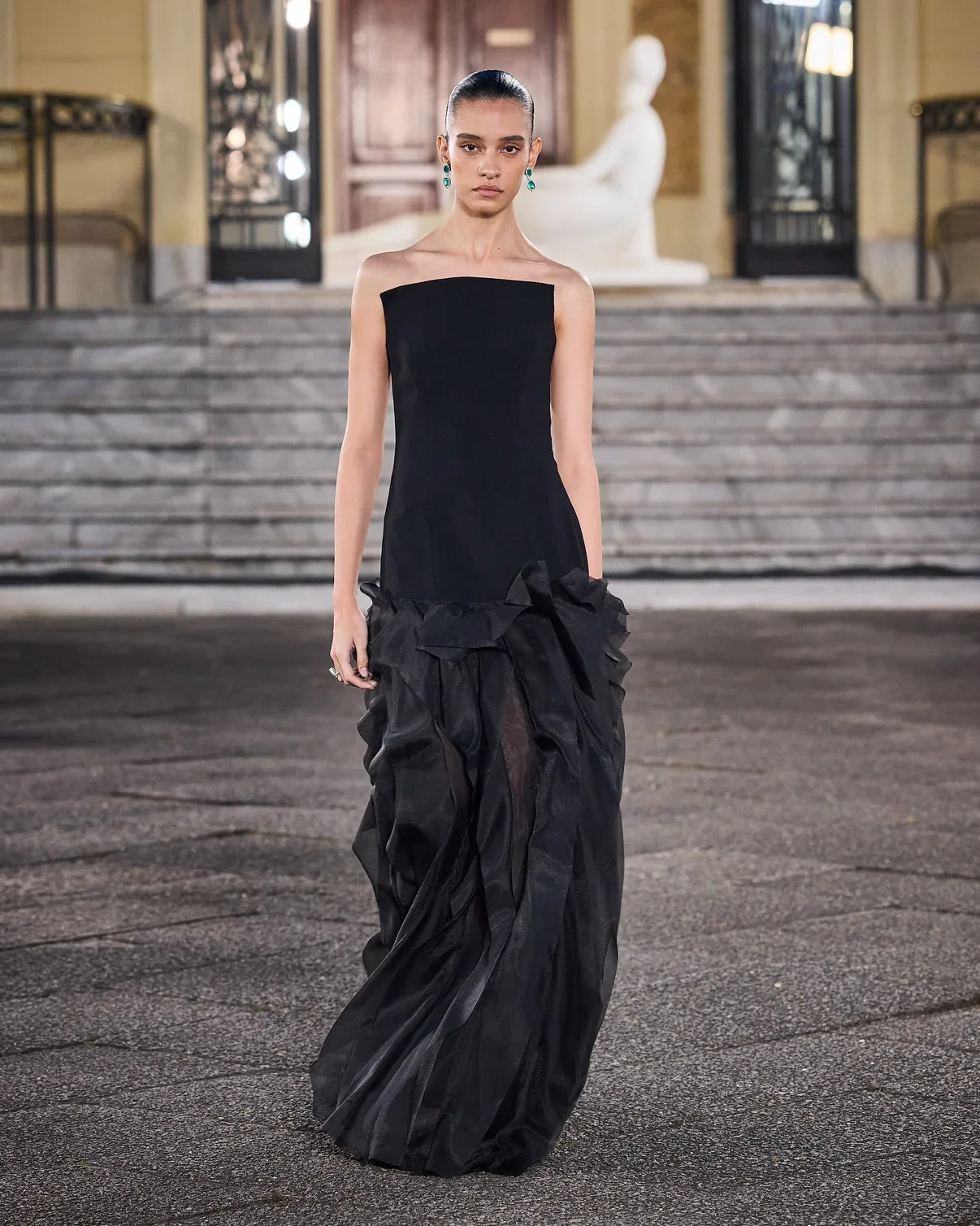
Between the references that cross the collection, the print inspired by Matinta Pereira occupies a special place. The bird, cited by Tom Jobim in the song Águas de Março, establishes a connection between the imagination of Brazilian music and the visuals that feed Fabiana’s research. To develop the graphic interpretation, the designer invited illustrator Thaysa Oliveira, who created an exclusive painting that gave rise to the print. The dialogue between music, illustration and fashion reveals how a cultural reference can cross different languages without losing its ability to produce new meanings. The choice also expands the narrative of Passarim, bringing the observation of fauna closer to an artistic repertoire that is part of Brazilian affective memory.
This relationship unfolds in the selection of materials, which combines smooth and printed organza, silk, cotton, linen, viscose, goat leather and jacquards. The Liquid fabric, developed in Italy and used exclusively by the brand in Brazil, adds another dimension to the material research. Embroidered jeans, sequins with feather effect, embroideries on tulle inspired by peacock plumage and manual feather applications explore different ways to suggest texture, shine and movement. The result is born precisely from the coexistence of surfaces and distinct techniques: transparency meets density, shine contrasts with the delicacy of fabrics and ornamental work articulates with the garment’s structure. Each choice expands the possibilities of interpreting the original inspiration, preventing the world of birds from being limited to a decorative repertoire. What matters is to see how their characteristics can be translated into language, whether through the construction of a silhouette, the vibration of a color or the way a surface reflects light. In this context, nature is not just a theme to be represented, but a system of relationships that guides creative thought.
The collection reaffirms the sophistication of haute couture as a result of research, time, and knowledge, while opening space for new materials and constructions. Perhaps this is the most significant image to mark Fabiana Milazzo's 25th anniversary: that of a flight that does not break with its place of origin, but finds in it the impetus to move forward. Like the hummingbird that inspired the collection, the creation feeds on brief encounters, observes what often goes unnoticed, and turns small moments into possibilities of permanence.
Complete TV · Reels
A IMAGEM QUE RESPONDE ÀS MÃOS, de Anton Berkasov
See on InstagramFrom Complete





More from Sarah Rocksane Araujo
View profile

Latest from Complete
 FashionLuiz Claudio Silva and Carlos Penna present the stage
 CultureThievery Corporation, 30 years: the Washington duo that originated in bossa nova
 The CoverBrazil still gives little recognition to genuinely Brazilian authorial fashion.
 InnovationLight has become a building material
 DesignAnton Berkasov plays his own art as one would play an instrument
 The Cover"I'm more afraid of being bored than of trying something new"
 BeautyBORNTOSTANDOUT arrives in Brazil