

"I'm more afraid of being bored than of trying something new"
Fashion editor at Vogue at 25, business anchor at GloboNews and now an agency partner, Maria Prata tells Complete why curiosity led her across fashion, television and luxury retail with the same antenna.
Words by
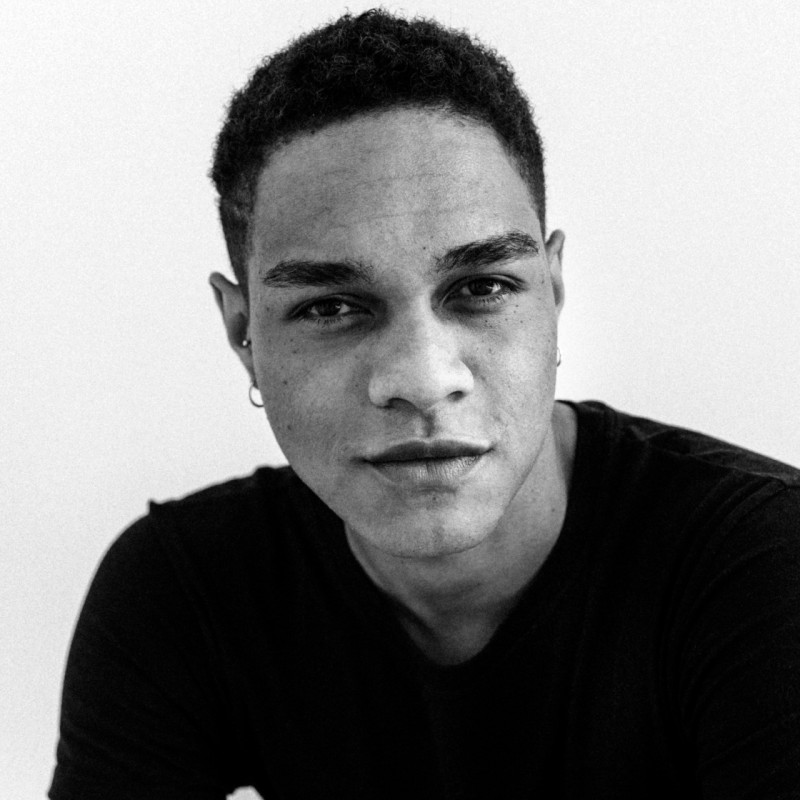
Words by Caíque Nucci
Editor-in-Chief · September 16, 2026
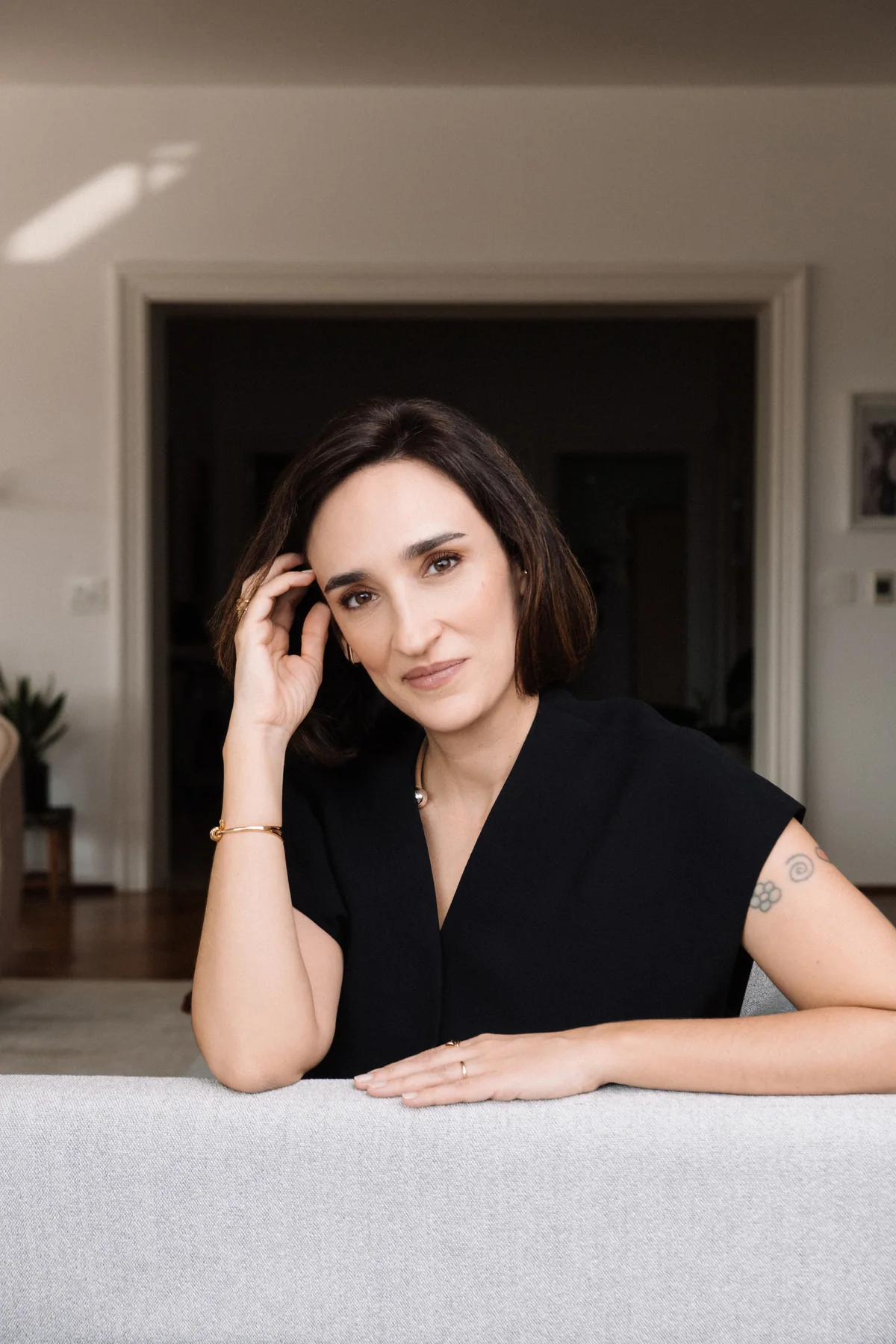
Maria Prata takes the call from home, and the first thing she says, when I confess that I am nervous, is that there is no reason to be: "I'm sitting here at home in a sweatshirt." The journalist whom The Business of Fashion named, in 2016, among the five hundred most influential people in global fashion is often described as someone who reinvents herself. She prefers another word. "I'm a generalist," she tells me, when I try to call her an all-round professional.
The distinction matters. Reinvention suggests a break. What her career shows, once the dates are put in order, is a single method applied to different objects: a magazine page, a channel's schedule, a business programme, the communication of a luxury shopping centre, a stake in a digital agency. At every stage, the same question: what is just beginning, and how do you explain it to people who have not seen it yet.
Running from the family, arriving at fashion
Maria de Góes e Vasconcellos Prata was born in São Paulo on 19 March 1979, the daughter of the journalist Marta Góes and the playwright and journalist Mário Prata. She grew up surrounded by newsroom people, and her explanation for choosing fashion is short: "The whole point was to get away from them." It was not disdain for writing. It was the wish for a territory of her own, at a time when Brazil, at the end of the 1990s, was beginning to build a fashion market, with Phytoervas Fashion, Mercado Mundo Mix in São Paulo, Babilônia Feira Hype in Rio and Erika Palomino's column in the Ilustrada section of Folha de S.Paulo.
At 18 she went to London for a six-month English course. There, she says, she came to understand fashion as non-verbal communication, in a city where people introduce themselves through what they wear: "There's something really wonderful here, which is understanding who people are just by looking at them." She wanted to stay, and her mother agreed, on one condition: that English would give way to proper training and a first job. Maria worked as a nanny and took a one-year vocational course at London College of Fashion, a preparation for the admission portfolio at Central Saint Martins. The programme covered fashion history, drawing, production, photography, pattern cutting and sewing.
The course also helped her discover what she did not want to be: a designer. She returned to Brazil, studied at Santa Marcelina and joined Capricho magazine at the invitation of Brenda Fucuta, then its editor-in-chief and a friend of Maria's mother, who wanted someone free of magazine habits to work on fashion styling. The job there was to produce images, not yet to write.
The day she became a journalist
The turn towards words came at Luminosidade, the company through which Paulo Borges turned Morumbi Fashion into São Paulo Fashion Week at the turn of 1999 to 2000. Maria was assistant to Graça Cabral, the event's communications director, and wrote short texts for the first version of its website, edited by Carolina Overmeer. A piece about a friend of hers, a model photographed by Mario Testino, caught her boss's attention. "Who wrote this?" Graça asked. "The apple doesn't fall far from the tree. You're a journalist."
She does not credit that period with sharpening her eye. What São Paulo Fashion Week gave her, she says, was the certainty that she could write, and rare access to the backstage of Brazilian fashion: designers, model agencies, photographers and lighting designers all passed through Paulo Borges's office.
A period as a freelancer followed, styling fashion for several magazines and editing a special issue of Vogue RG at Carta Editorial. When Condé Nast asked for Vogue Brasil to have women leading both the editorial team and the fashion desk, Daniela Falcão became editor-in-chief, in 2005, and Patrícia Carta invited Maria Prata to join as fashion editor. She was 25. She called her mother: "Mum, Patrícia has asked me to be fashion editor at Vogue. She's crazy, I'm far too young." The role matched what American magazines call a fashion features editor, the person responsible for the fashion writing. "There was no pretending any more that I wasn't in this."
Learning the system
Maria Prata calls Vogue "the greatest learning experience I've ever had", and the reason she gives is less glamorous than one might expect: that is where she learned to see fashion as an industry, "to understand the fashion system, to look at fashion as this giant industry, to understand the power it has". At a time when there was already an internet but no social media, the magazine published Vogue Passarelas, an issue with every look from every show, because there was nowhere else for readers to see a full collection. Covering the international fashion weeks, when only journalists and buyers were allowed into the show venues, felt to her like climbing several steps at once.
She stayed four years. She left in 2009 for an offer she had not been looking for. She had gone to Turner, which had just added Fashion TV to a package of channels, to negotiate a partnership with Vogue. Daniel Conte, the channel's director, asked whether she would like to apply for the role of editor-in-chief. "Why not?" she replied, and she explains: "I'm very curious about a lot of things. Every time the chance came up to do something I had never done before, I went for it."
At Fashion TV she learned to build a schedule and to work inside an international group, with the task of giving the channel Brazilian programming, including coverage of São Paulo Fashion Week and Fashion Rio and its own news bulletins. According to her BoF 500 profile, the channel grew from 900,000 to more than three million subscribers during that time; she does not mention the figure in the interview. In parallel she already ran a blog called Prataporter, with videos in which she appeared holding a microphone, at a time when few fashion journalists filmed themselves.
A hundred-year-old manual
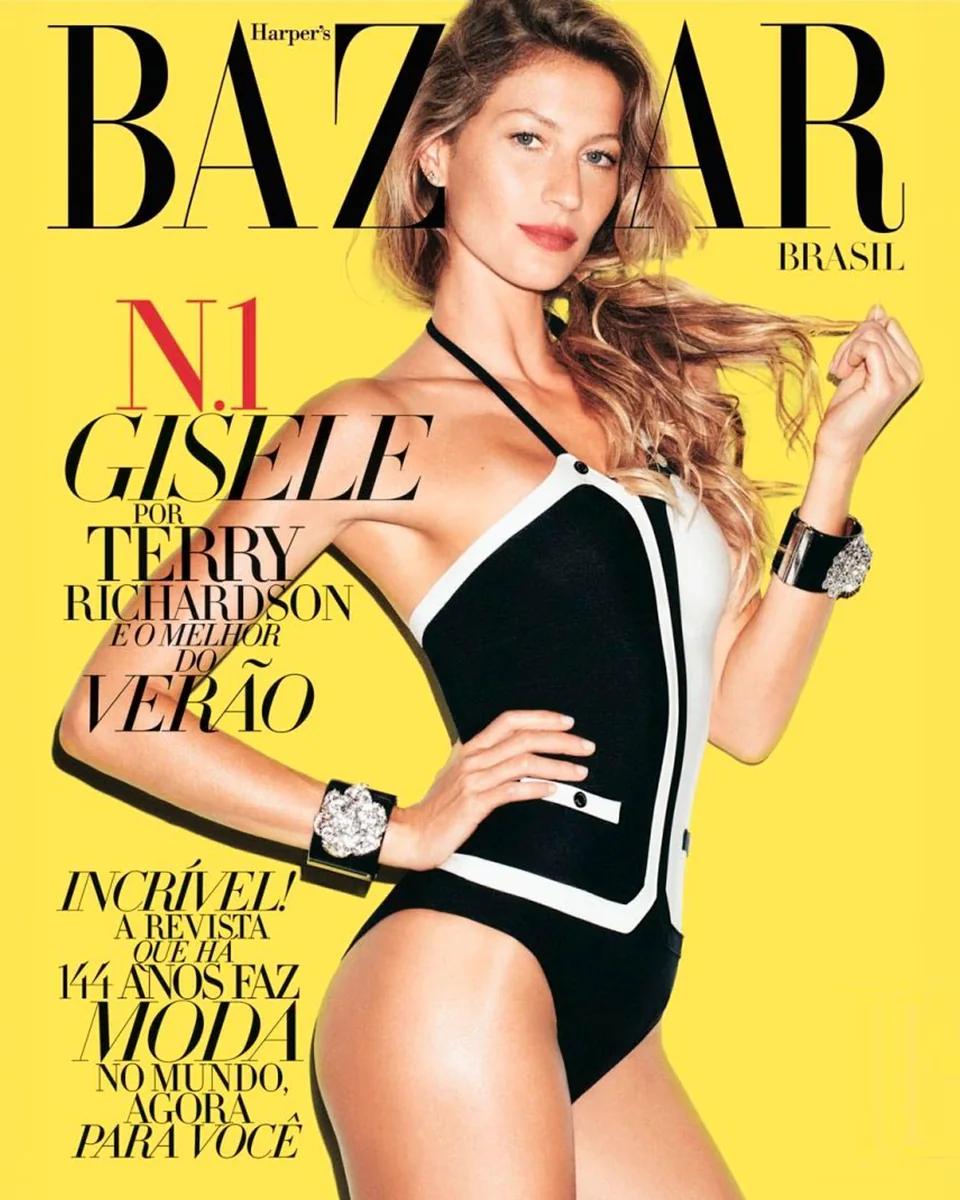
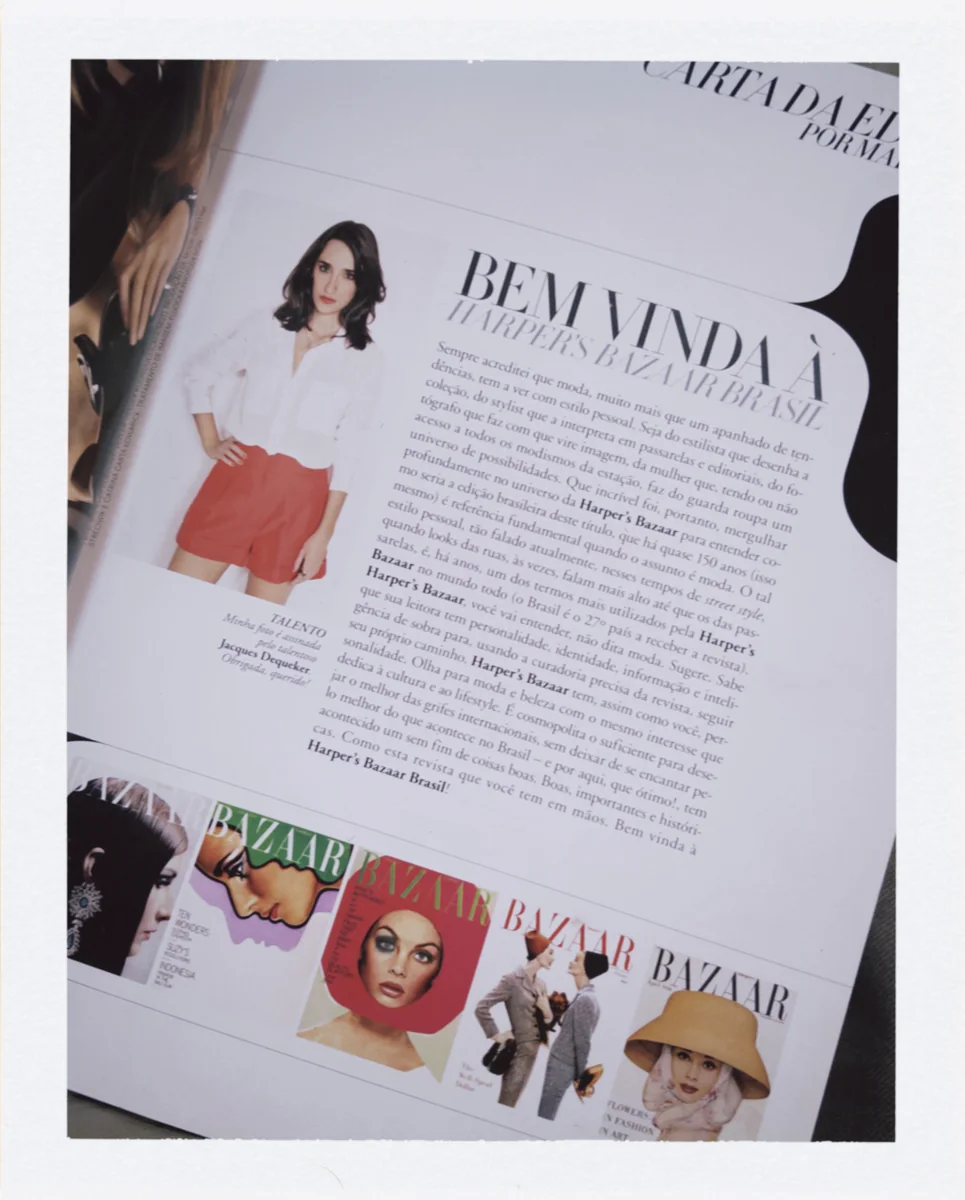
When Turner decided to turn Fashion TV into an entertainment channel, Patrícia Carta was bringing Harper's Bazaar to Brazil. The first issue came out in November 2011, published by Carta Editorial in partnership with Hearst, with Gisele Bündchen on the cover and an initial print run of 50,000 copies, according to FashionNetwork. Maria Prata was editor-in-chief for the launch.
What she says about that period contradicts the label she is usually given. When I ask whether she sees herself as an inventor, she answers without hesitation: "Not an inventor." She prefers "a manager". A title like Bazaar, she explains, "already comes with a manual", an instruction book more than a hundred years old; the job was to understand what the magazine is, who it speaks to, what language it speaks and how all of that works in a country where Vogue had already been present for thirty years. "If we had fought for the same space, we wouldn't have got very far." The choice was a more minimalist, niche magazine focused on luxury, while Vogue, by then part of Globo Condé Nast, was expanding.
What changed from one magazine to the other, in her view, was not the routine. She sat in the same place, at the same publisher, next to Patrícia Carta, whom she calls her mentor. What changed was the title, "the reasons why and where to go next", and the weight of the role.
The antenna turns to business
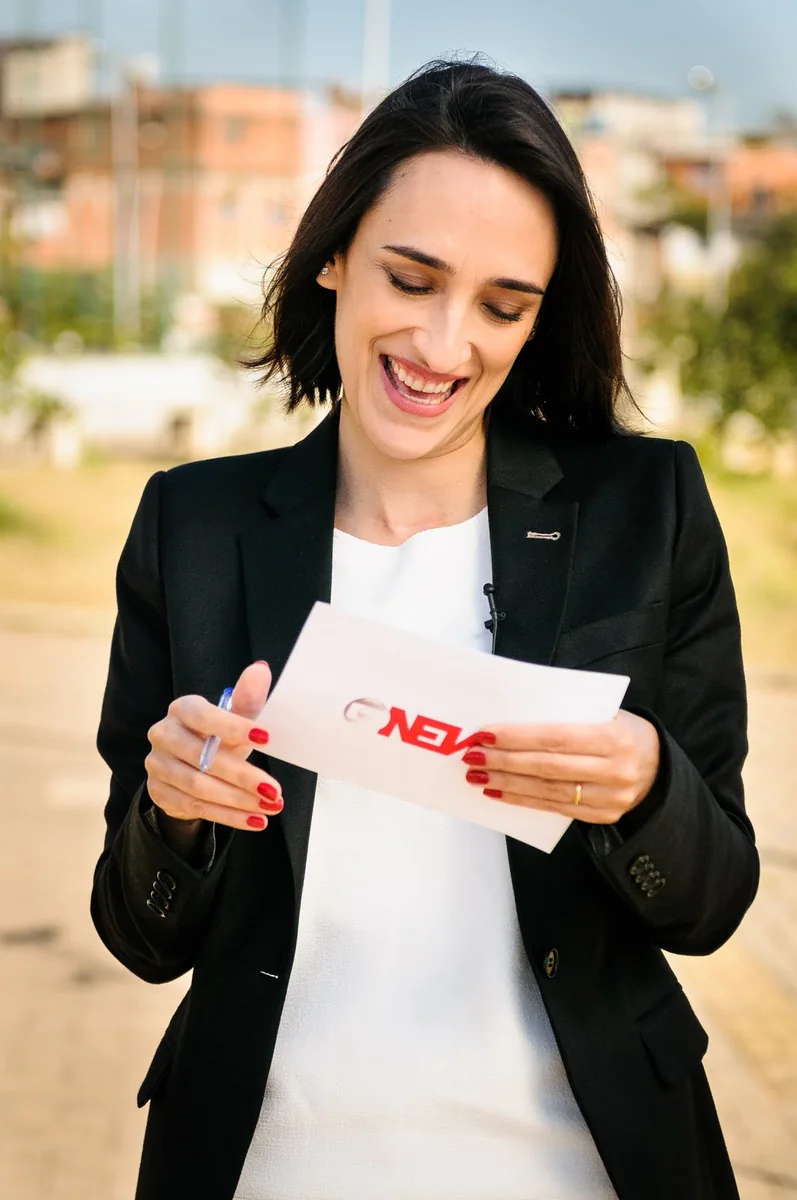
In 2014, Eugênia Moreira, then director of GloboNews, invited Maria Prata to rethink Mundo S/A, a business programme that had been on air for almost a decade. The brief was to bring the trend antenna of fashion into the corporate world. The new season premiered on 20 July 2015, with her as host, from São Paulo. It was, she says, a change as different as night and day: leaving the niche where she had a guaranteed place for an audience and a subject she had never covered.
She does not hide the fear. "I went in scared, yes. Always scared. But you go anyway." And she adds the sentence that best describes the pattern of her career: "I'm more afraid of being bored than of trying something new." Her luck, she believes, was the timing. Between 2014 and 2020, several markets were being reshaped by technology, and a programme created to talk about entrepreneurship became, in practice, an innovation programme, covering artificial intelligence, drones, fintechs and foodtechs when few general-interest outlets did.
The method, she insists, was the same as in fashion: choose the market, choose the brands, decide how to tell each story. "Instead of talking about handbags and shoes, you're talking about the financial system." When Mundo S/A went off the air, she took that method to a stage of her own: what she calls an electronic magazine, published on her social media channels, with formats such as Pílulas de Prata. The segment O Brasil que dá certo (The Brazil that works), created while she was still on Mundo S/A, earned her the Sebrae Journalism Award in December 2022, in the Influencer Journalist category. In September 2023, at the invitation of the UN Global Compact, she moderated panels on forests and biodiversity at SDGs in Brazil, at United Nations headquarters in New York.
Back to luxury through digital
In September 2022, Iguatemi announced that it had hired Maria Prata as content director of Iguatemi Daily, the group's editorial hub, with its own studios inside the shopping centre. For her, it was a return to the luxury market of Vogue and Bazaar, with a specific brief: to turn a shopping centre's social media into channels that work like a magazine. "The difference was the medium." Speaking to Meio & Mensagem in January 2024, she described this practice as brand journalism: the brand talks about the world around its products, not only about the products themselves.
Her stake in Out of Office, a digital agency founded in 2020 by Catharina Dieterich, Beatriz Borges and Thales Ferreira, grew out of a working partnership. She met the team while building her own digital presence. When she began thinking about where to invest, the answer was close at hand: "There's a business right under my nose that's doing really well and that I love." She made the offer to all three: "I'd like to become your partner." In August 2024, the agency announced Maria Prata as a partner and member of its advisory board, at a time of expansion into international projects.
Reading luxury through behaviour
It is at this point in the conversation that I ask her for a reading of the market, and her answer begins with a refusal: "If anyone says they have that answer, don't believe them." On artificial intelligence, she says that "we have no idea what is happening" and that "it changes next week, and even more the week after". She sees gains in science, medicine and education, and a frightening picture in security and geopolitics. In fashion, she wants technology to serve less harmful ways of producing, after the democratisation brought by fast fashion.
On luxury, her analysis is behavioural, and she makes clear that this is the lens she chooses. The big brands, she argues, have lost the entry-level customer in recent years, the one who bought lipstick, a pen or a wallet and sustained the base of the pyramid. The industry's figures support that reading. According to a study by Bain & Company with Altagamma, presented in November 2024, around 50 million consumers left the luxury market in two years. The State of Fashion: Luxury report, by McKinsey with The Business of Fashion, shows that price increases accounted for 80% of the sector's growth between 2019 and 2023, with leather goods and iconic pieces becoming 50% to 100% more expensive over the period. That public now has other options, new brands that talk directly to their communities. "The people at the bottom are angry, frustrated, resentful at not being able to afford it, at not having access." Groups such as Kering and LVMH buy brands and change creative directors, but "they're spinning their wheels", because desire has become fleeting and "the luxury market needs time". McKinsey itself projects growth of just 1% to 3% a year for global luxury until 2027.
When I suggest that the Brazilian state could fund national brands the way it funds start-ups, she replies "That would be wonderful" and points to the work of the Brazilian Fashion Council, founded in 2026, with public authorities. She does not promise quick results. "Brazil has never seen fashion as culture. There is no fashion museum in Brazil." It is, she says, "painstaking, ant-like work".
What remains
My last question is about what she has learned along the way. Maria Prata warns that the answer does not fit into a single sentence: "Everything I know and everything I am is in my story." Even so, she sums it up in two ideas: curiosity and the courage to take a chance. "If it doesn't work out, you can always go back."
The formula is more precise than it sounds. With every move, Maria Prata took the same instrument, the antenna Eugênia Moreira asked her to bring from fashion into business, and the same manager's discipline she claims in place of the inventor label. What connects the 25-year-old editor at Vogue with the agency partner of 2024 is the ability to step into a system she does not know, learn its language and translate it for those on the outside. She calls it being a generalist. The market calls it influence.
It is also what makes it possible to look ahead with her. Maria Prata arrived early in every territory she crossed: in Brazilian fashion while the market was still taking shape, in business television as technology began to redraw entire sectors, in branded content when a shopping centre still only talked about its shop windows. Artificial intelligence and the new shape of luxury, which she herself says she cannot predict, are the next field for that curiosity, and anyone who has followed the earlier chapters knows she rarely watches from a distance. The Cover exists to recognise those who notice what is new before it becomes consensus. Maria Prata keeps doing what she has always done: she goes in scared, lets curiosity lead the way and allows her story, where she says everything she knows and everything she is can be found, to tell the rest.
Complete TV · Reels
At Gagosian @gagosian in New York, the exhibition Negative Sculpture brings together two recent works by Michael Heizer and revisits an investigation
See on InstagramFrom Complete



More from Caíque Nucci
View profile

Most popular
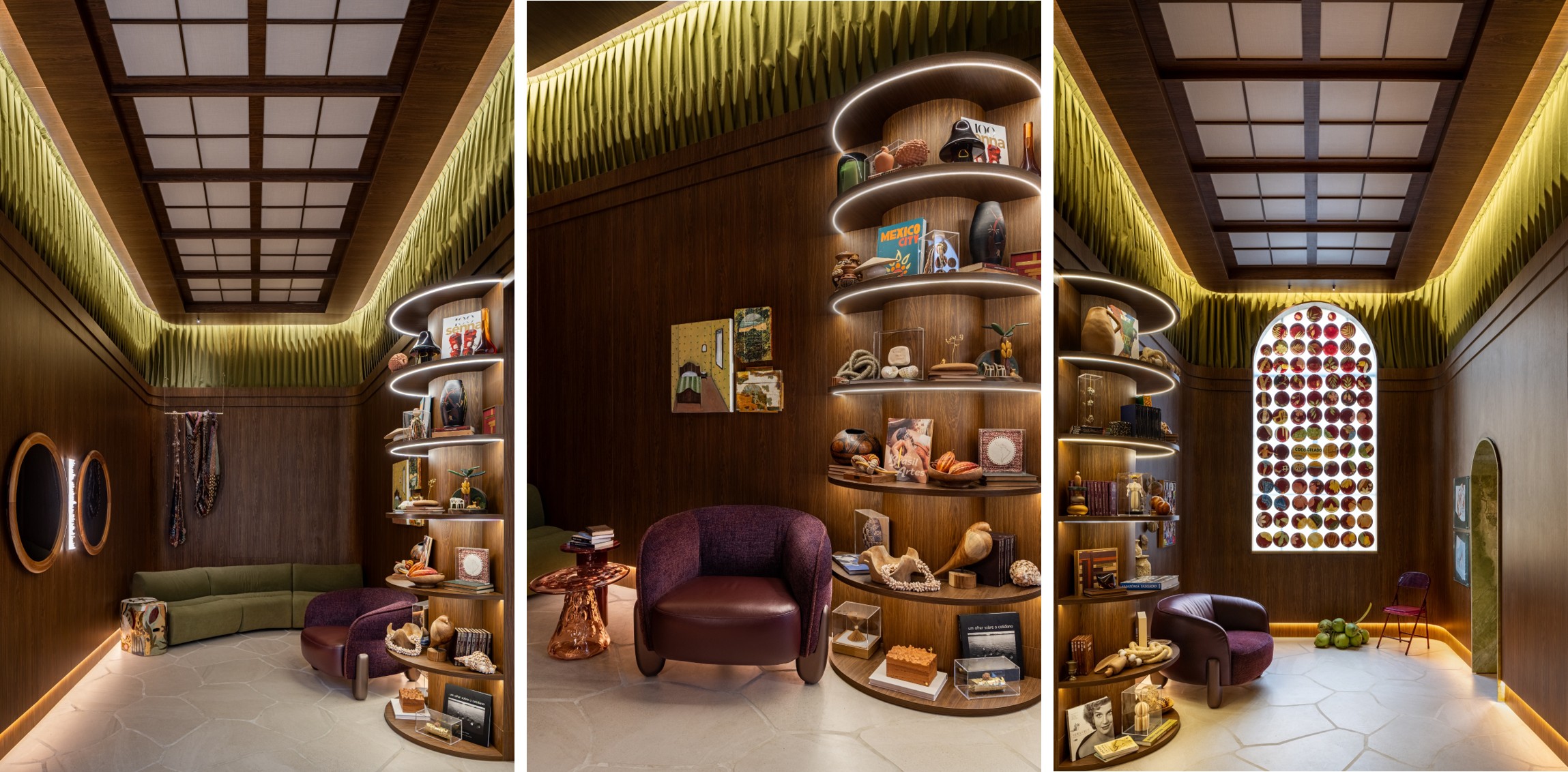 DesignBrazil's Lucas Carrara debuts at CASACOR São Paulo honoring Latin America
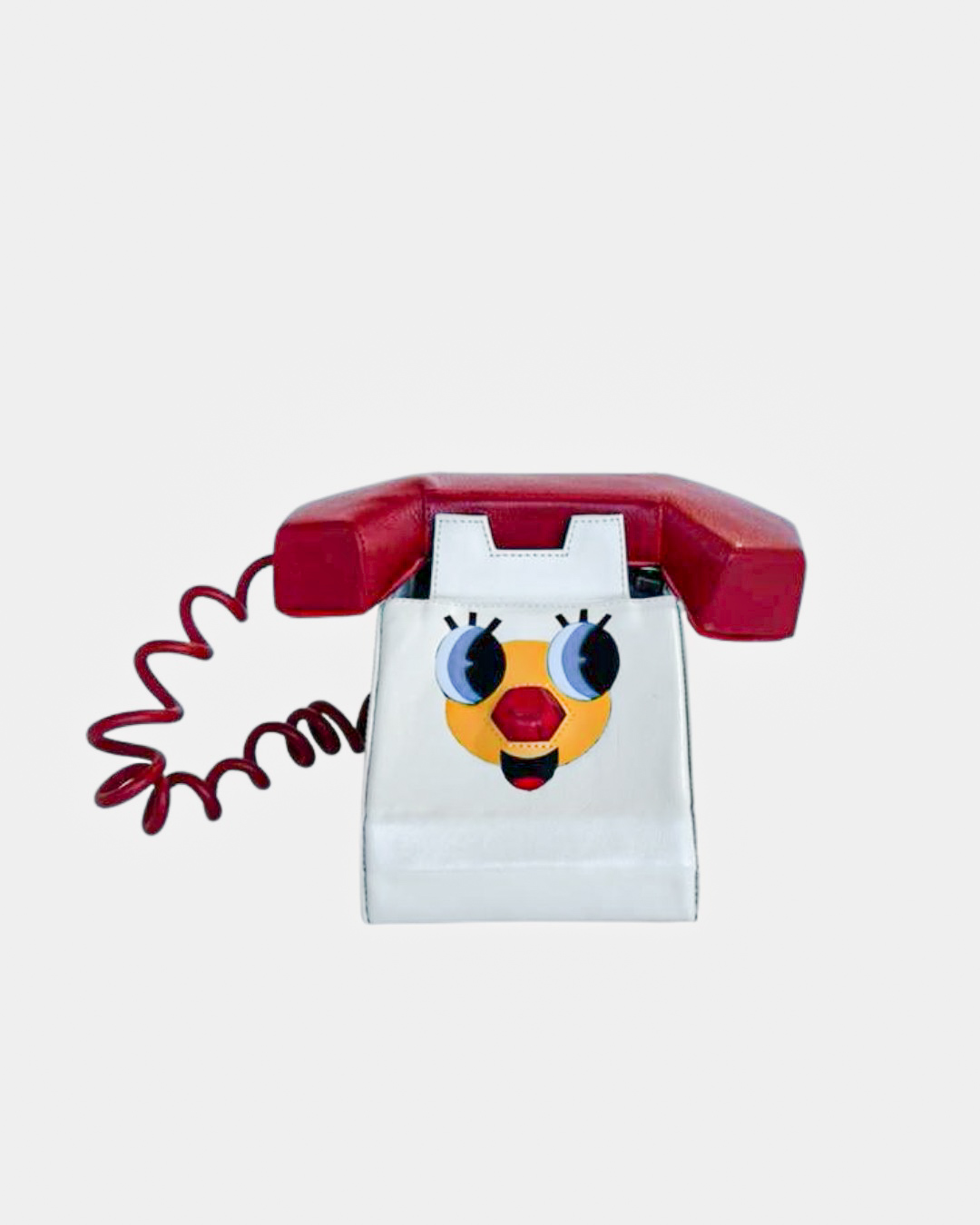 FashionRyzí revives Warner Bros. partnership with a Powerpuff Girls collection
 CultureOsesp opens Environment Week with springs by Boulanger and Schumann
 CultureCrack Wall
 CultureKati Katona and the space that no gaze can embrace