
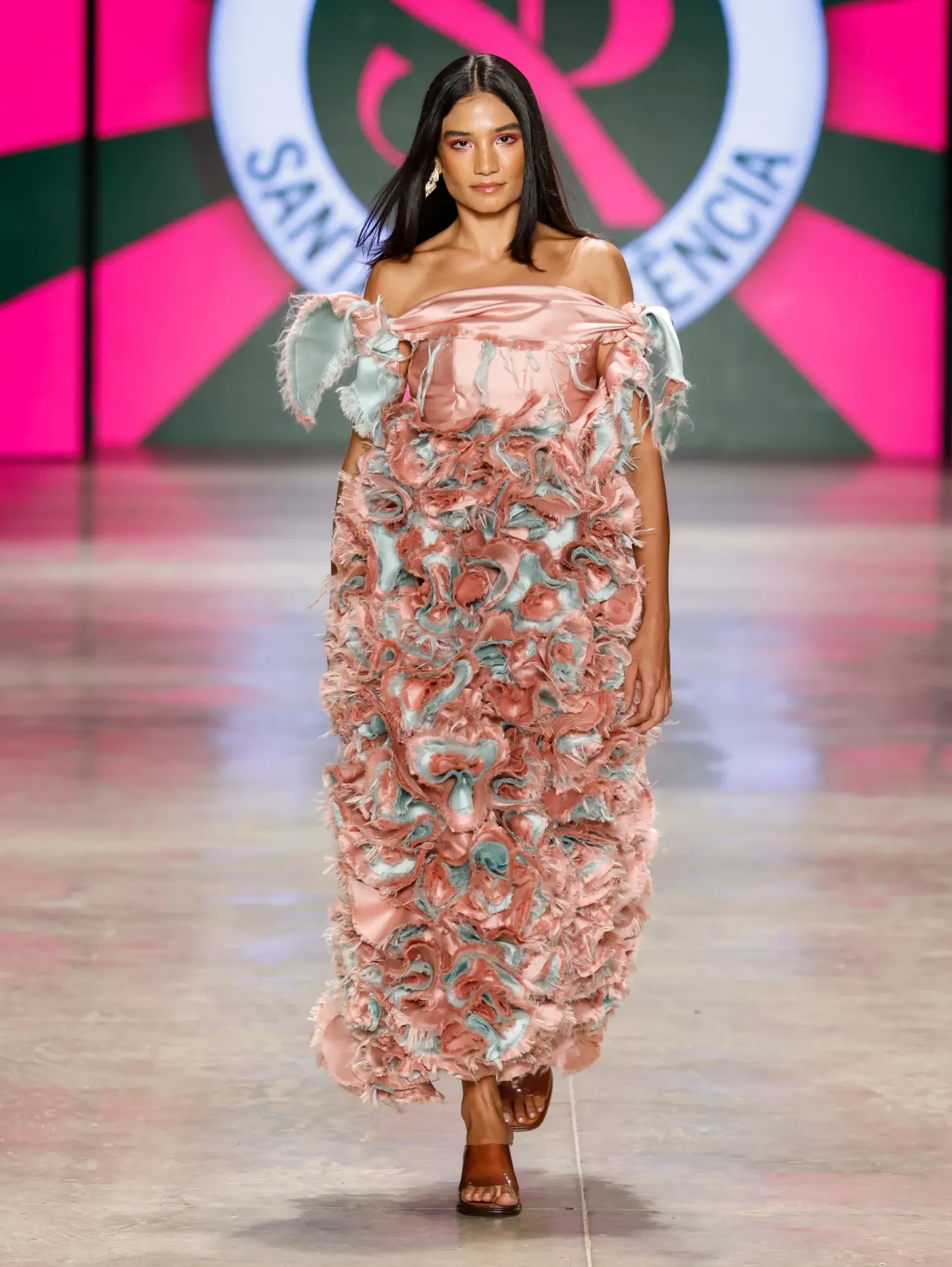
SPFW N61 - Santa Resistência
When Shakespeare meets Grande Otelo's samba and fashion dresses memory
Words by

Words by Sarah Rocksane Araujo
Editorial, Fashion and Beauty · October 22, 2026
There are stories that span centuries because they continue to reveal the contradictions of their own time. Others remain alive because they discover new voices, territories and ways of existing.
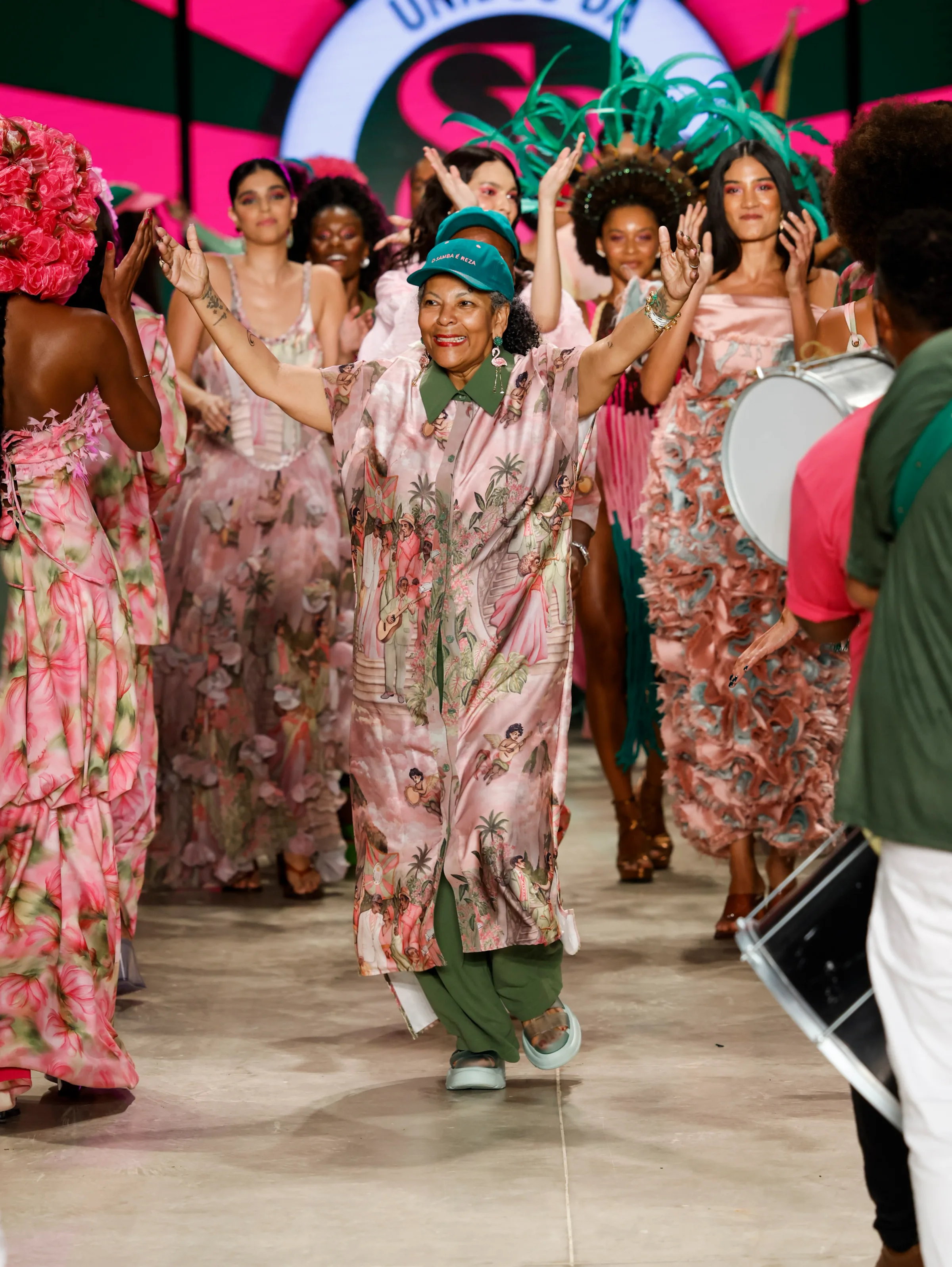
In Brazilian Othello, a Passion in Green and Pink, Santa Resistência, under the creative direction of Mônica Sampaio, brings these two movements together by establishing a dialogue between Othello, the Moor of Venice, the tragedy written by William Shakespeare in 1603, and the Brazilian musical Othello da Mangueira, conceived and directed by Gustavo Gasparani. What previously unfolded within the power structures of Shakespearean Venice is shifted to the Mangueira Hill of the 1940s, where the narrative meets the cadence of samba and the memory of composers fundamental to Brazilian culture, such as Cartola, Nelson Cavaquinho, Heitor dos Prazeres and Nelson Sargento.
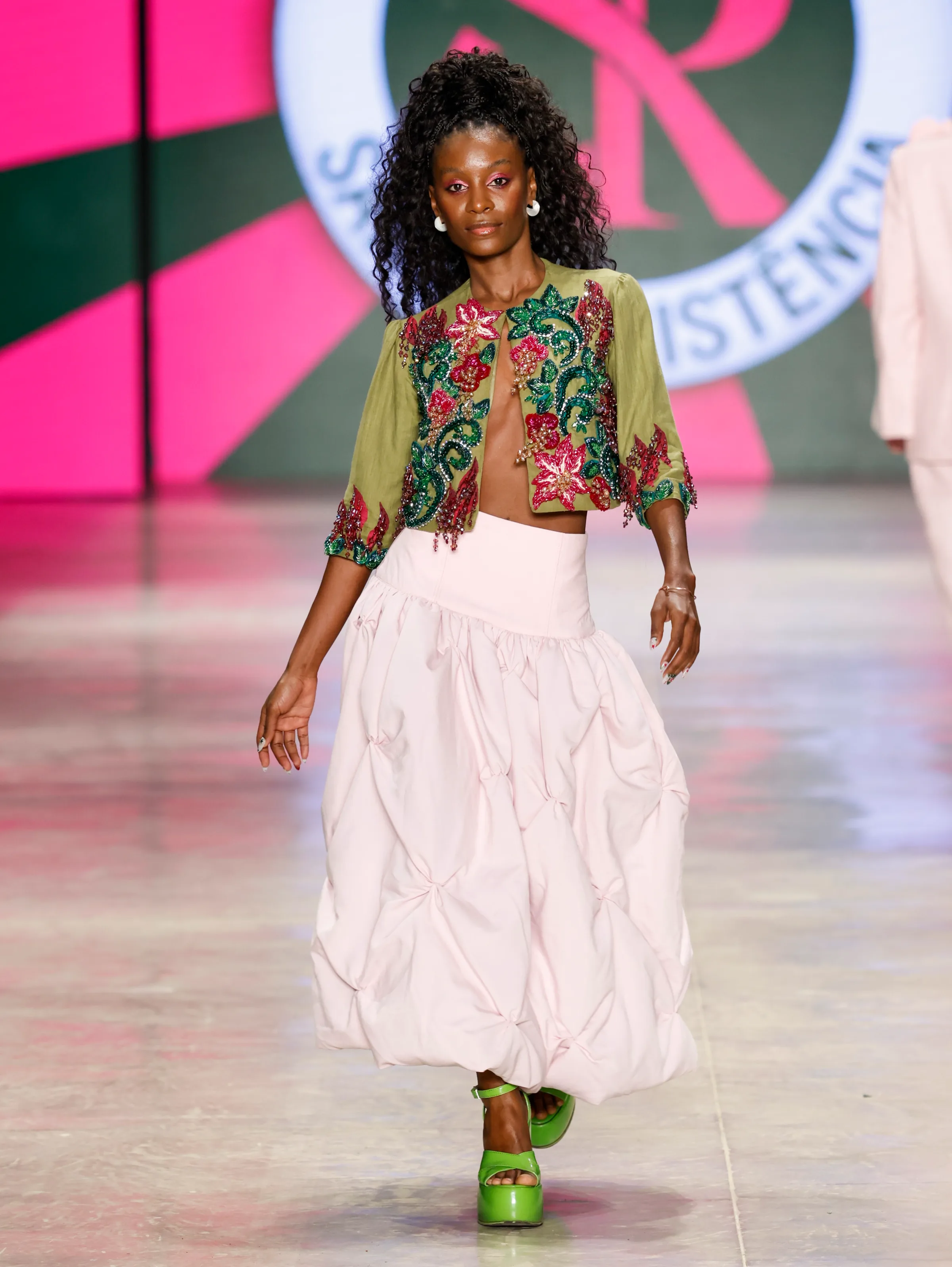
In this encounter, fashion does not appear as a literal translation of literature nor as an illustrative representation of music. It functions as a language capable of reorganizing meanings, transforming characters, and bringing together universes that, although distinct, share concerns about desire, identity, power, prejudice and belonging. The passion that drives the collection is also the one Monica devotes to samba culture and the stories it holds, turning the runway into a territory of crossings. In the narrative proposed by the designer, Desdemona ceases to occupy the role of a woman doomed to tragedy and assumes an assertive, autonomous, self‑aware stance. Othello, for his part, does not succumb to jealousy, the so‑called green‑eyed monster, but recognises the value of the woman beside him. The transformation does not erase the conflict of the original work, but offers another possibility for its characters. Rather than reproducing the tragic ending, Santa Resistência imagines a story in which love need not end in destruction and in which the woman is not reduced to a fate imposed by the male gaze. Clothing thus becomes part of constructing a narrative about passion, autonomy and reinvention, as if each silhouette could rewrite a familiar passage. Shakespeare meets samba, theatre meets the body, and fashion assumes the responsibility of envisioning alternative endings for stories that continue to reverberate in the present.
The green and pink of Mangueira visually organizes this narrative, but its presence goes beyond the function of a colour palette. The hues run through jacquards, embroideries, prints and accessories, linking the atmosphere of the Elizabethan era to the luxurious costumes of the samba school, both in its historical memory and its contemporary expression. Developed especially for the collection by RenauxView, the brand’s partner for the second consecutive year, the jacquard brings together different temporal references on a single surface, allowing ornamentation to become a meeting point between tailored clothing and the exuberance of Carnival. At other moments, excerpts from Mangueira’s historic sambas appear embroidered on the pieces, causing word and music to leave the abstract space of sound composition and integrate the materiality of the garment.
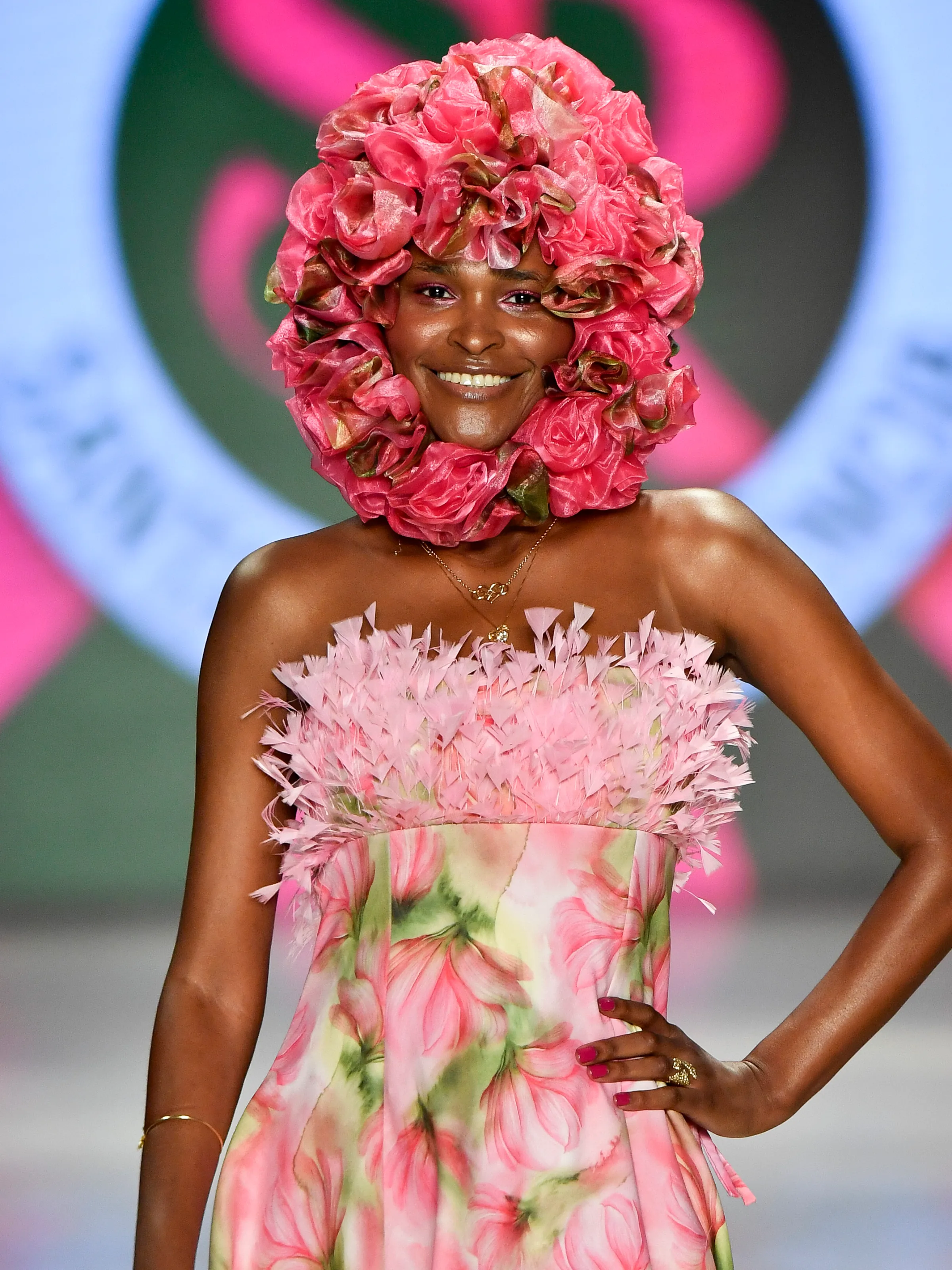
The green and pink cease to be merely the colors of a samba school and become a narrative framework that runs through the parade, linking different generations and modes of creation. It is in this operation that Santa Resistência discovers one of its most interesting possibilities: to keep cultural reference recognizable without limiting it to the reproduction of a symbol. Mangueira does not appear as a decorative backdrop for a Shakespeare‑inspired collection, just as literature does not show up as an intellectual ornament separate from the Brazilian experience. The two realms are placed in relation, and fashion takes on the task of constructing the surface where their differences can coexist. The result is a language in which memory does not remain static, because each fabric, embroidery or image participates in a renewed interpretation of what it means to wear a story.
One of the highlights is the fully beaded look with gemstones and beads, created by designer Cris Iglesias, whose execution highlights the relationship between time, material and visual construction. The partnership with Ueslei Freitas and Felipe Borges of Ateliê Massanga expands this research through a shirt and a bucket hat made entirely of wooden beads, bringing the runway closer to Brazilian artisanal practices that require technical knowledge and meticulous attention. In collaboration with the Maricá City Hall, the parade also incorporates the traditional Colaço tapestry and Brazilian point stitch, techniques kept alive by master craftswoman Dona Ilma, who is responsible for two tapestries that will be turned into bags. Other bags are made of taboa, a fiber extracted from a plant found at the bottom of lagoons and flooded areas of Maricá, in pieces signed by Dona Benedita, an 80‑year‑old local artisan.
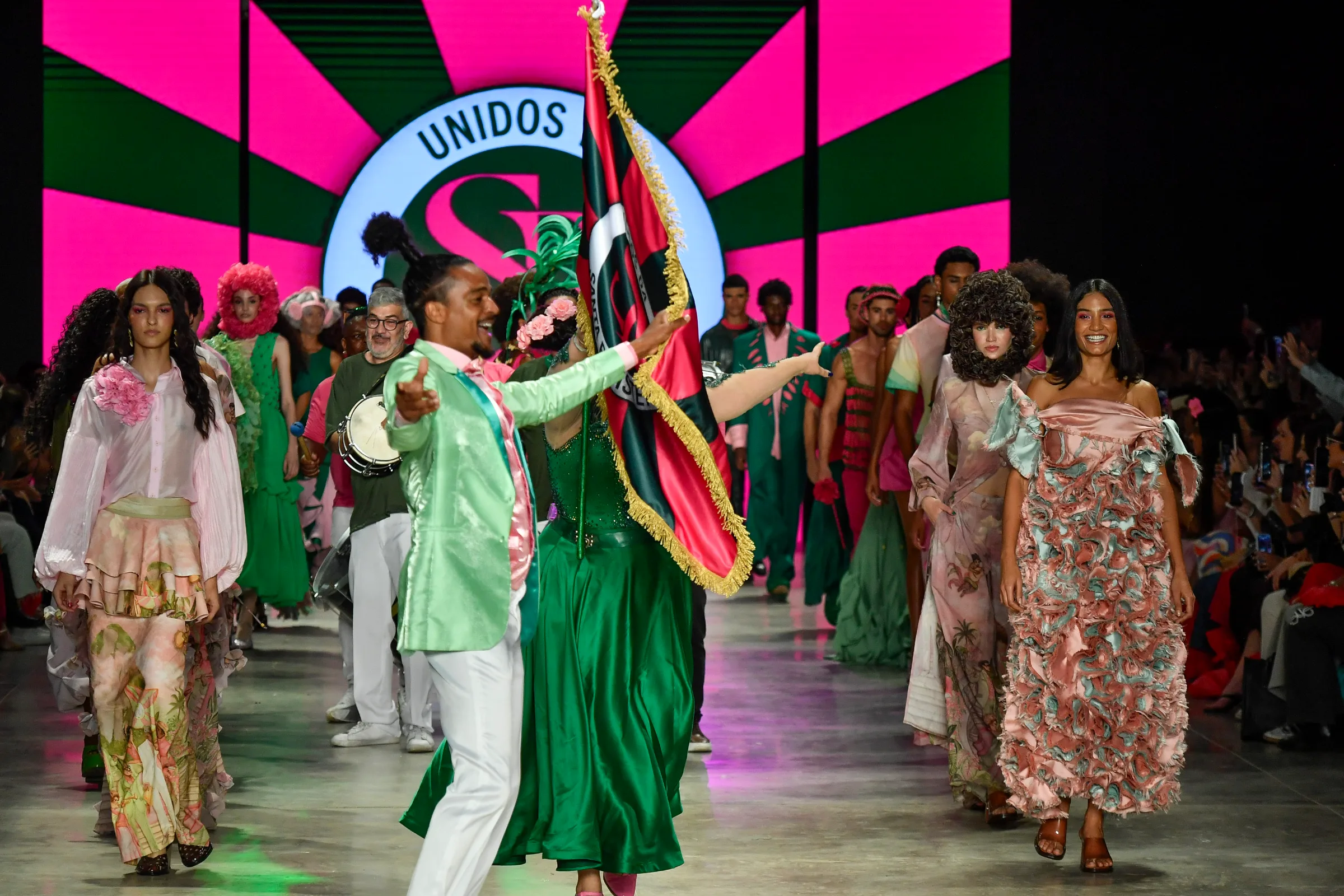
Another ongoing partnership is with the Coletivo de Costureiras da Maré, which is responsible for producing about 70% of the collection's pieces. This figure deserves attention because it highlights the direct involvement of a collective of women workers in bringing the project to life, shifting the focus from the runway to the production network that makes it possible. In this context, fashion does not end with the image of a look; it encompasses labor relations, knowledge transmission, and collaboration among various actors. The collection also introduces leather on the brand’s runway for the first time, in partnership with Fernanda Bilhar, featuring two menswear proposals and one womenswear. Among them, a light‑pink shirt with a green‑printed image of Cartola on the back stands out, a meeting that brings the materiality of leather close to the musical memory that runs through the entire show.
The strength of Otelo Brasileiro, a Green and Pink Passion, lies, therefore, in the way the Santa Resistência articulates languages without reducing their differences to a single image. Literature offers conflicts and characters; samba brings musicality, memory and belonging; craft adds techniques and knowledge passed down through generations; technology opens pathways to new experiences with form and material.
Complete TV · Reels
A NASA @nasa acabou de lançar uma ferramenta gratuita para o Dia da Terra: escreva seu nome e veja cada letra soletrada em fotografias reais
See on InstagramFrom Complete





More from Sarah Rocksane Araujo
View profile
Latest from Complete
 FashionGuccicore: plurality as a language of style
 BeautyISDIN Fusion Water Magic: sun protection with lightness and technology
 The CoverIn the beginning, we couldn't even use the word handicraft.
 DesignTomie Ohtake House‑Studio presents Zanine Caldas
 CultureThievery Corporation, 30 years: the Washington duo that originated in bossa nova
 The CoverBrazil still gives little recognition to genuinely Brazilian authorial fashion.
 InnovationLight has become a building material