

Complete Profile: Freddy Mamani
Freddy Mamani's trajectory occupies a unique place in contemporary Latin American architecture because it simultaneously addresses issues of cultural identity, urban transformation, social mobility and political representation.
Words by

Words by Sarah Rocksane Araujo
Editorial, Fashion and Beauty
In a global landscape often dominated by Eurocentric architectural references and an international aesthetic marked by formal neutrality, the Bolivian architect has forged a distinct visual language that challenges historical conventions and redefines architecture’s role as a tool of cultural affirmation. His work extends beyond building construction; it embodies the materialization of a profound shift in the social, economic, and symbolic status of Indigenous peoples in contemporary Bolivia.
Born in 1971 and a descendant of the Aimará indigenous people, Mamani grew up amid the political and social transformations that followed decades of instability and authoritarian regimes in Bolivia. Still young, he accompanied his father to the construction sites in La Paz, an experience that gave him direct knowledge of building processes even before his technical training. His professional journey began as a bricklayer, advanced to civil engineering, and later to architecture, charting an unconventional path compared to the traditional academic models of Latin American professional elites. This practical experience proved decisive for shaping his architectural vision. Unlike many architects trained within an international modernist tradition, Mamani developed his thinking from observing the urban transformations of El Alto, a city situated more than four thousand meters above sea level on the Bolivian Altiplano and regarded as one of the largest urban expressions of the growth of indigenous populations in recent decades.
El Alto is a singular urban phenomenon. Originally conceived as a peripheral extension of La Paz, it became an autonomous municipality in 1984 and began to grow rapidly due to the rural exodus of indigenous populations from the agricultural regions of the Altiplano. Today it is one of Bolivia's most populous cities and hosts a significant majority of inhabitants who identify as Aimará. The economic growth of part of this indigenous population, especially from the 1990s and 2000s, profoundly altered the Bolivian social landscape. The emergence of a new Aimará bourgeoisie produced a demand for forms of representation capable of expressing economic prosperity without abandoning culturally marginalized references. It was precisely in this context that Freddy Mamani found fertile ground to develop his architecture.
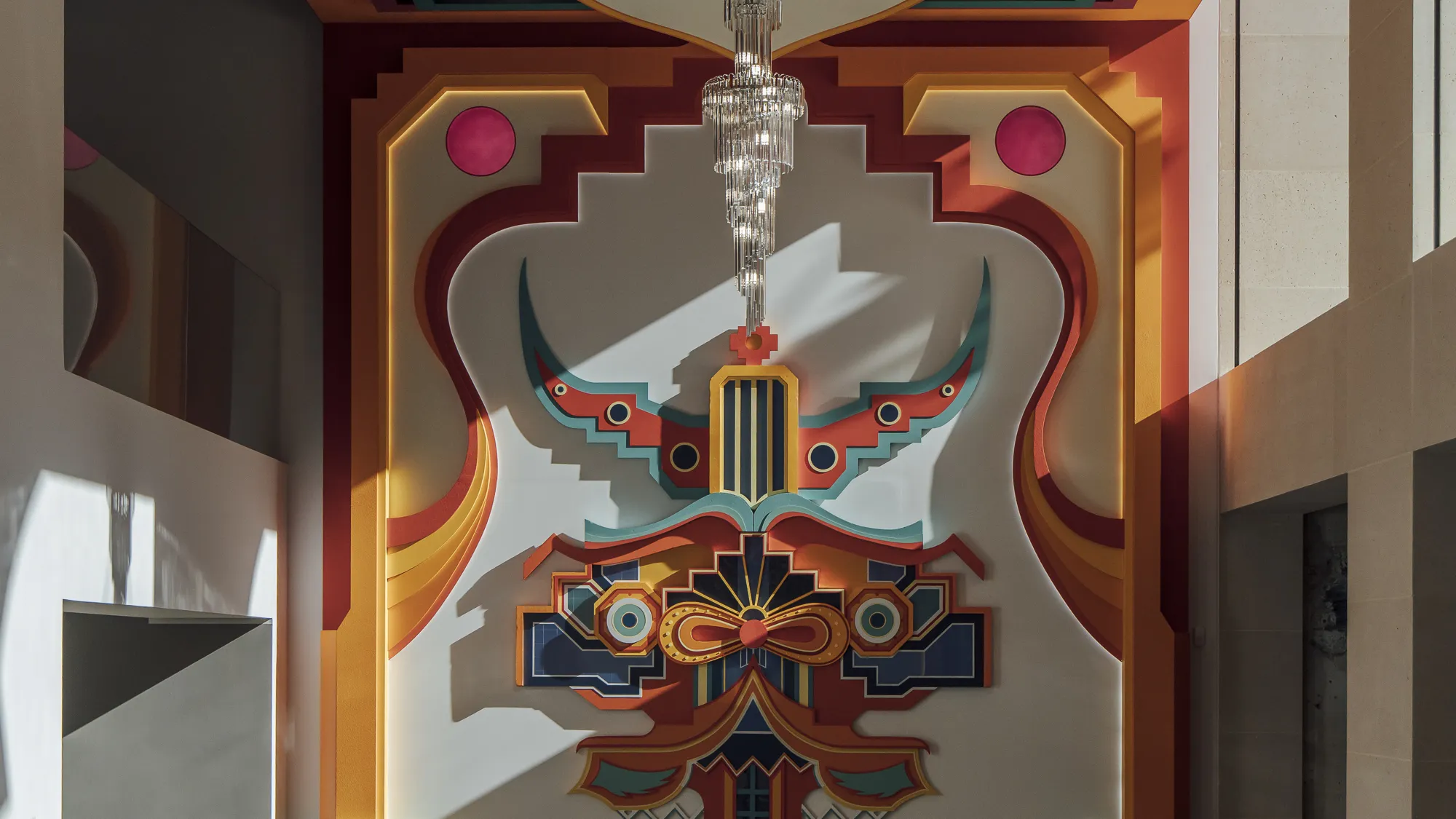
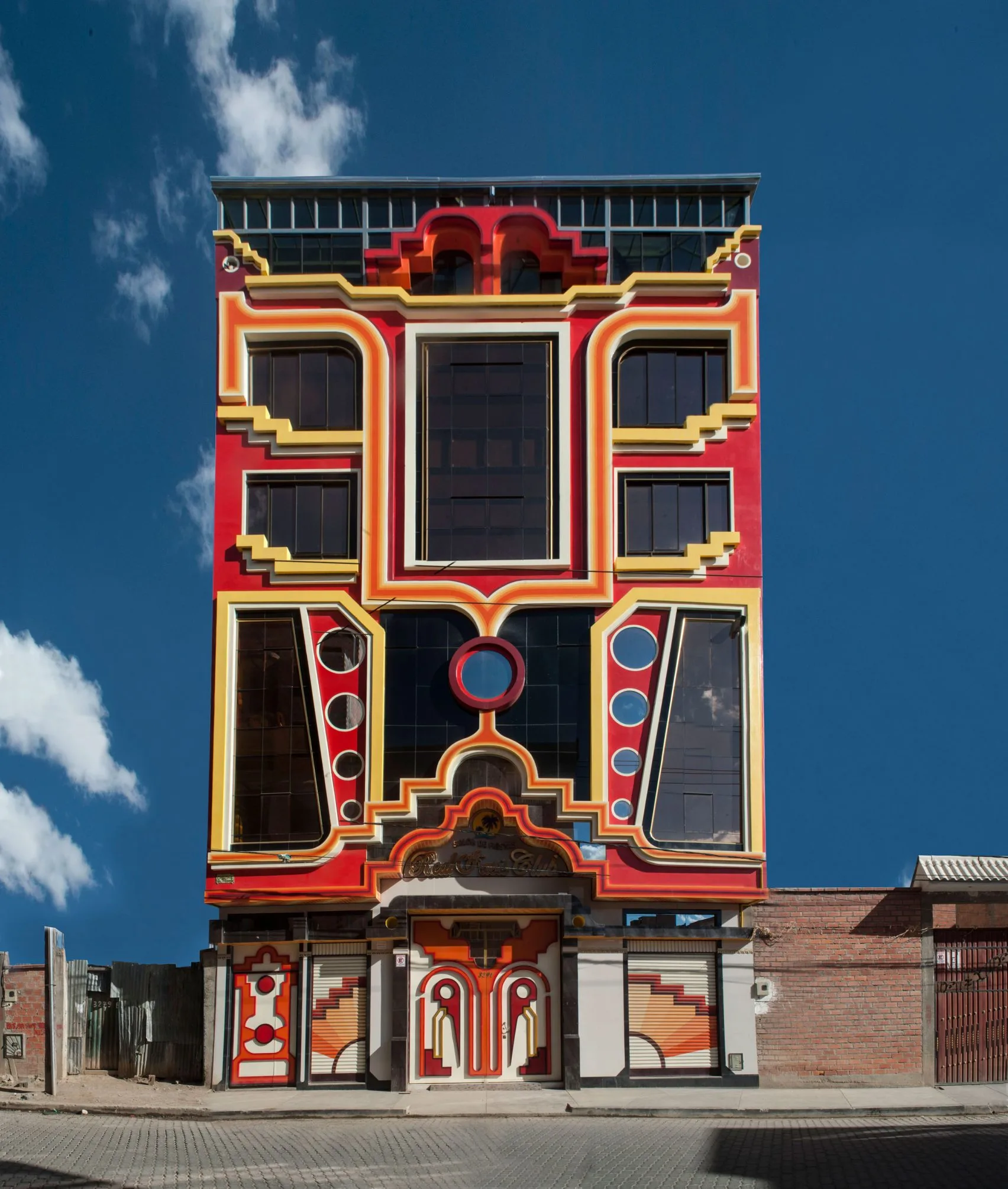
The architectural response he created was named Neo-Andino, though it is popularly known as "cholet". The concept originates from the fusion of the words "chalet" and "cholo", a term that for a long time was used pejoratively to refer to indigenous descendants, but has undergone a cultural re-signification process. The cholet turns an old marker of discrimination into a symbol of pride and belonging. These buildings exhibit a fairly specific typology. They generally have between three and seven floors and combine commercial, cultural, and residential functions in a single structure. The lower levels are occupied by shops, galleries, and commercial spaces. The intermediate levels house large banquet halls intended for weddings, community celebrations, and social events. The upper floors serve as residences for the owners or their families.
This configuration reveals a sophisticated understanding of local economic and social dynamics. The buildings are not merely dwellings or commercial spaces. They function as urban micro-ecosystems capable of generating income, strengthening community bonds, and affirming social status.
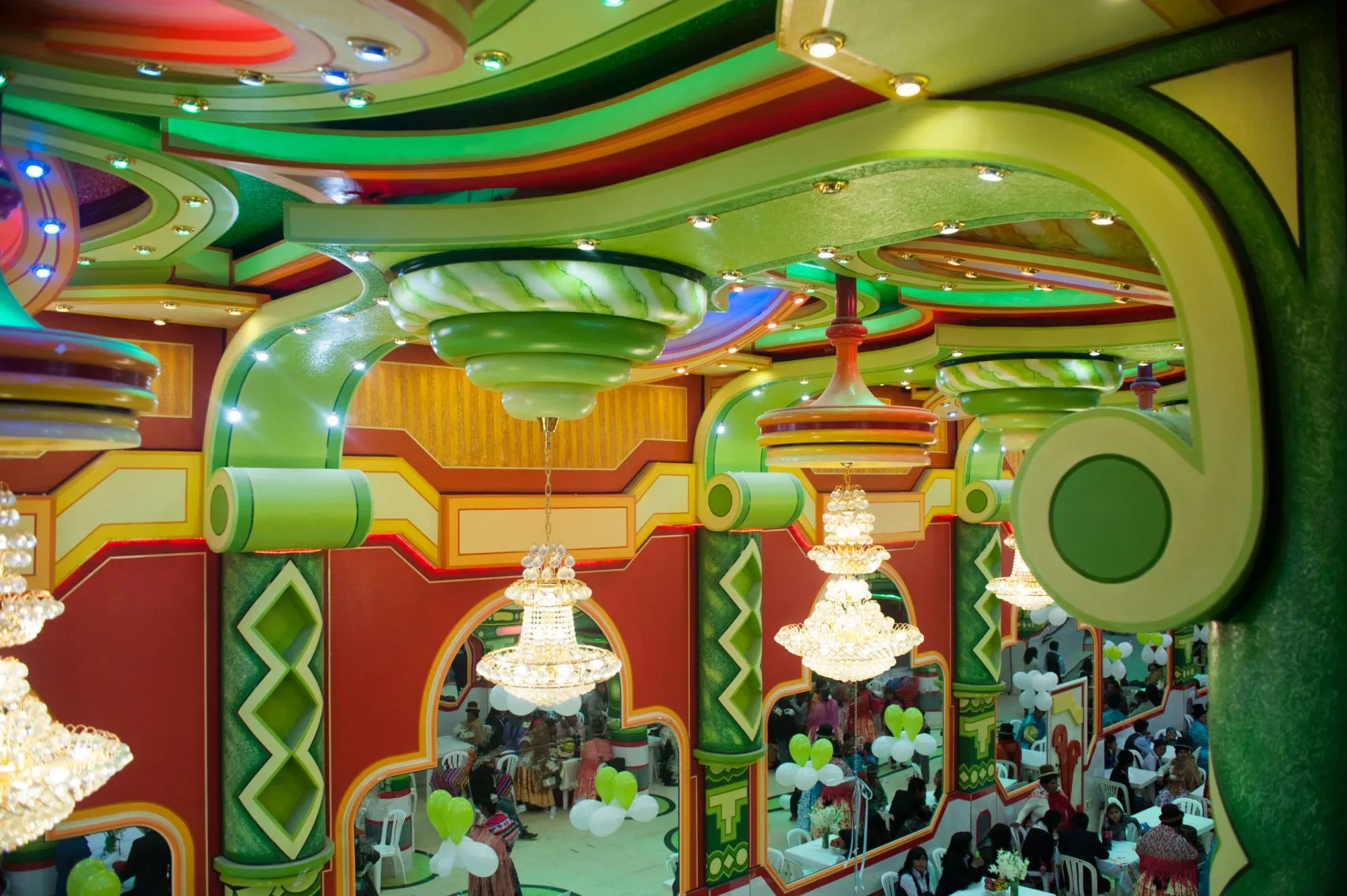
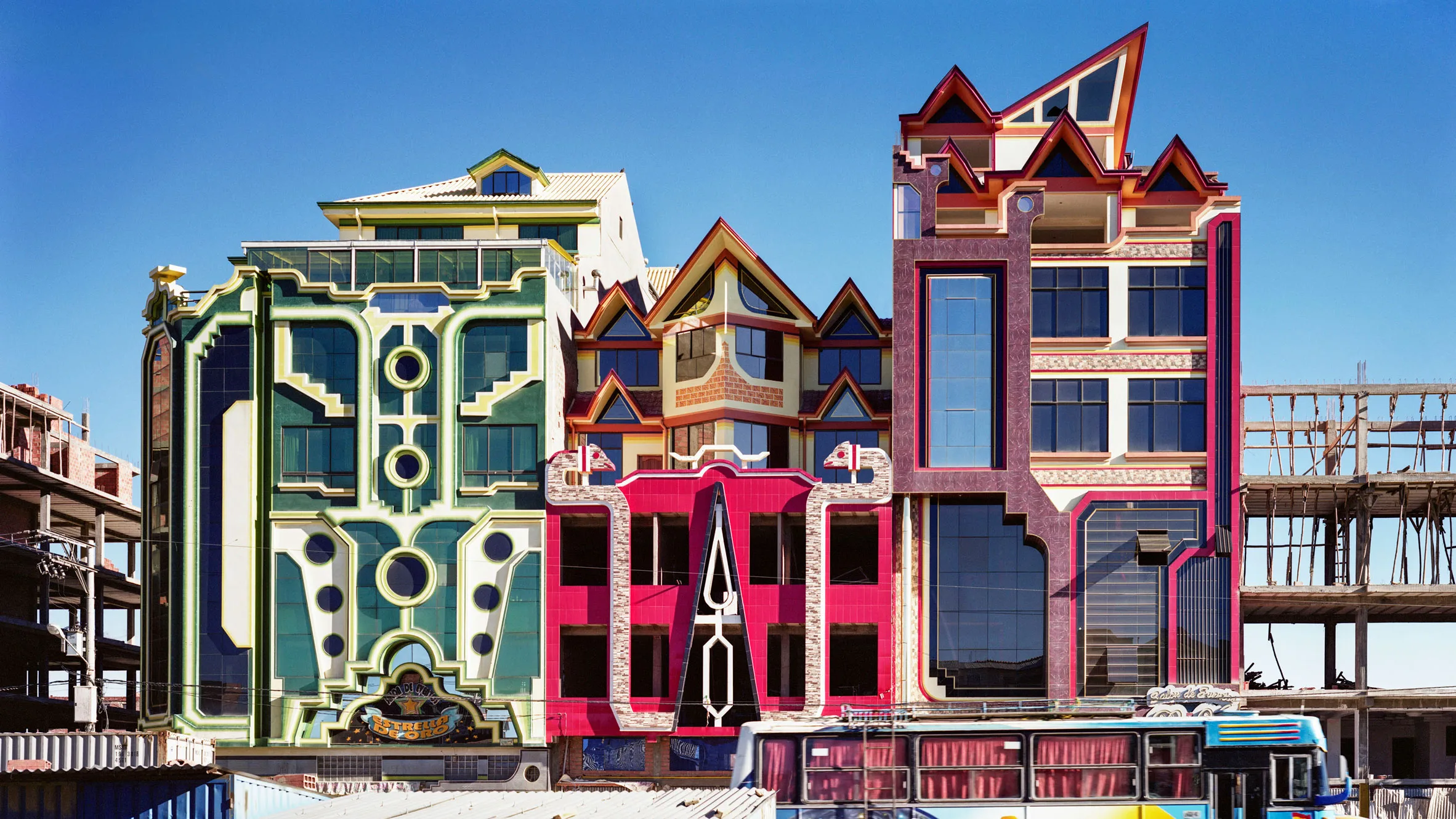
From a formal perspective, Mamani's architecture radically breaks with the notion that architectural sophistication should be tied to aesthetic restraint. His buildings feature façades marked by chromatic explosions, complex geometric shapes, ornamented surfaces, and visually impactful compositions. The architect incorporates geometric patterns found in the aguayo fabrics used by the aimarás women, iconographic elements of the Andean cross, pre-Columbian symbols, forms inspired by animals, mountains, lightning, and flowers, as well as references drawn from the architecture of Tiwanaku, one of the most significant pre-Columbian civilizations of the Andean region.
The archaeological site of Tiwanaku plays a central role in his creative imagination. Located about sixty kilometres from El Alto, the architectural complex is one of Bolivia's principal historic heritage sites. Mamani often notes that his geometric forms derive directly from observing the motifs present in the ruins of this ancient Andean capital. However, his architecture does not stop at historical reproduction. What makes his work relevant is precisely the ability to translate ancestral references into a contemporary language. Instead of creating archaeological replicas, he produces buildings that engage simultaneously with the past and the present. This cultural operation gains particular significance when viewed through the lens of Latin American architectural history. For much of the twentieth century, architectural models deemed legitimate were imported from Europe or the United States.
Modern architecture has become synonymous with universality, rationality and progress. In this process, countless forms of indigenous constructive knowledge have been devalued or excluded from official narratives. Mamani's work challenges this logic by asserting that indigenous references do not belong exclusively to the past, but can form the basis of contemporary architectural projects. His production also engages with phenomena observed in other creative fields across Latin America, especially fashion, design and visual arts. In all these areas, a growing appreciation of culturally marginalized repertoires can be seen, alongside a search for creation models less dependent on the validations of the Global North. In this sense, Mamani's buildings can be understood as architectural manifestations of a broader movement of aesthetic decolonization.
The specialized criticism often debates the position of his work within contemporary architecture. Some architects classify his projects as overly decorative and question their disciplinary framing. Others argue that his output represents one of the most important architectural contributions from Latin America in recent decades. Regardless of these divergences, the cultural impact of his work is undeniable. More than a hundred buildings have been constructed according to his formal principles, and numerous reinterpretations of his style have begun to appear in various Bolivian cities. The phenomenon highlights something fundamental. Mamani's architecture did not become relevant only because it introduced a new aesthetic. It gained strength because it responded to a concrete social demand for recognition and representation.
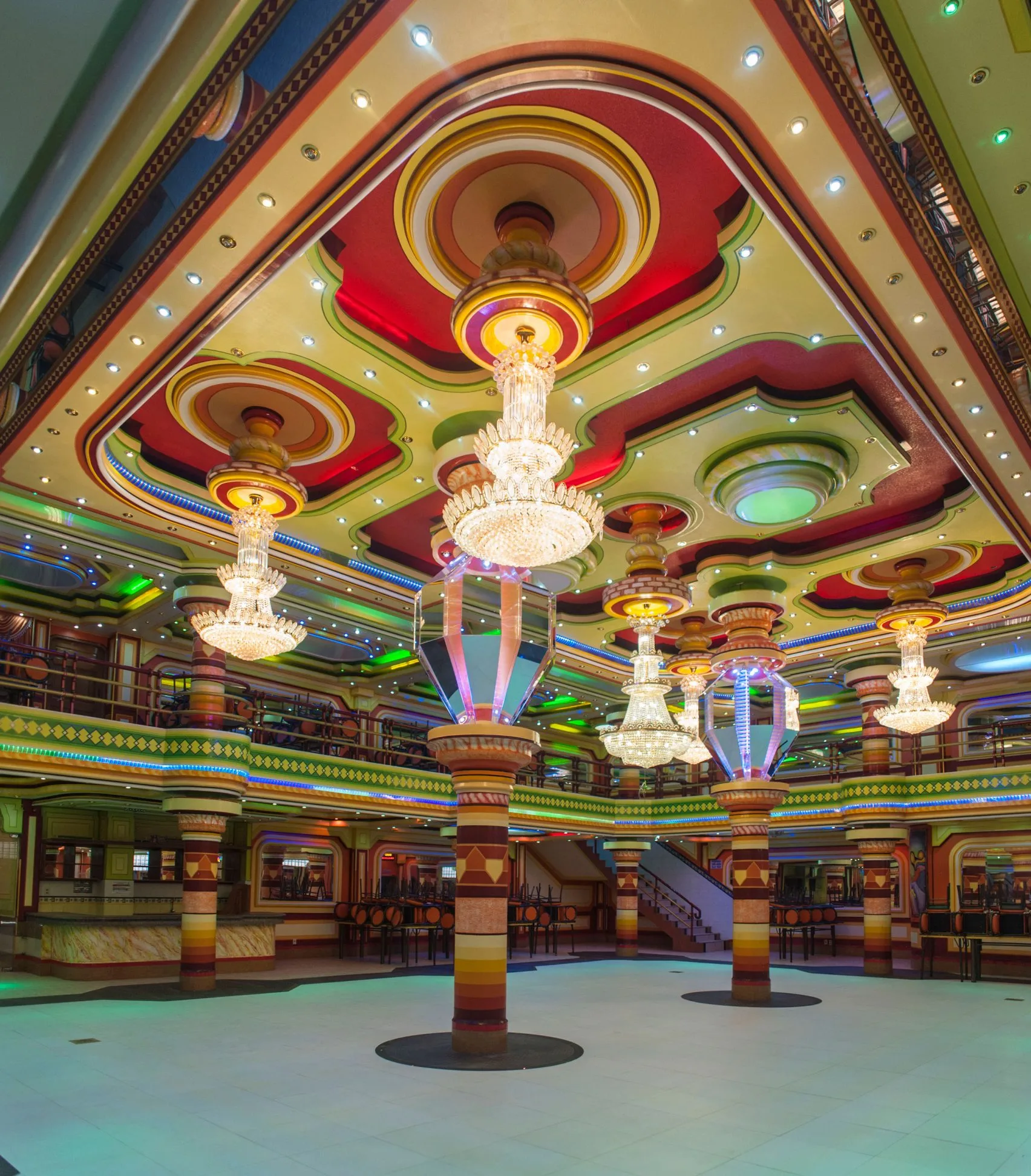
This political dimension becomes even more evident when we observe the relationship between its buildings and the rise of indigenous populations in contemporary Bolivia. For centuries, Aymara communities remained excluded from centers of economic and symbolic power. The emergence of an indigenous business class created new forms of social visibility that needed to be translated spatially. The cholets function as monuments of this historical transformation. They are buildings that communicate economic success, yet reject the traditional codes associated with Western luxury. This issue is particularly relevant to contemporary debates on luxury and cultural consumption. For decades, luxury has been associated with discretion, minimalism, and formal restraint. Mamani's architecture proposes an alternative based on visual exuberance, ornamentation, and the explicit affirmation of cultural identity. His work suggests that luxury can take distinct forms depending on the cultural contexts in which it manifests.
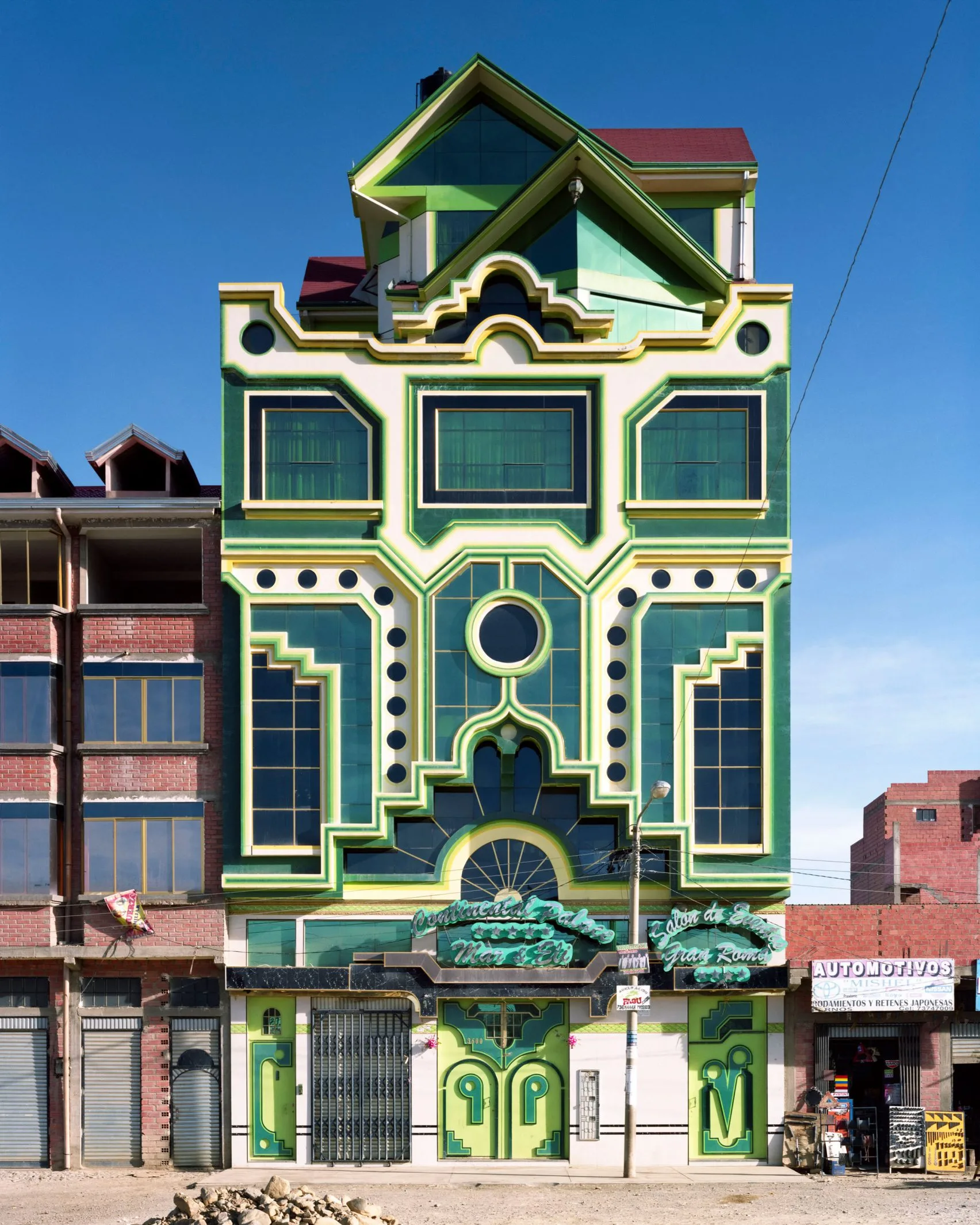
His work shows that modernity need not be synonymous with homogenization and that innovation does not require abandoning local references. By turning El Alto into a kind of visual laboratory of Andean contemporaneity, Mamani built far more than colorful buildings. He created an architectural language capable of making visible a history that for a long time remained on the margins of official discourse. At a time when architecture, fashion, design and art are intensely debating issues of identity, representation and cultural diversity, his output stands as an example of how aesthetic forms can serve as instruments of symbolic transformation.
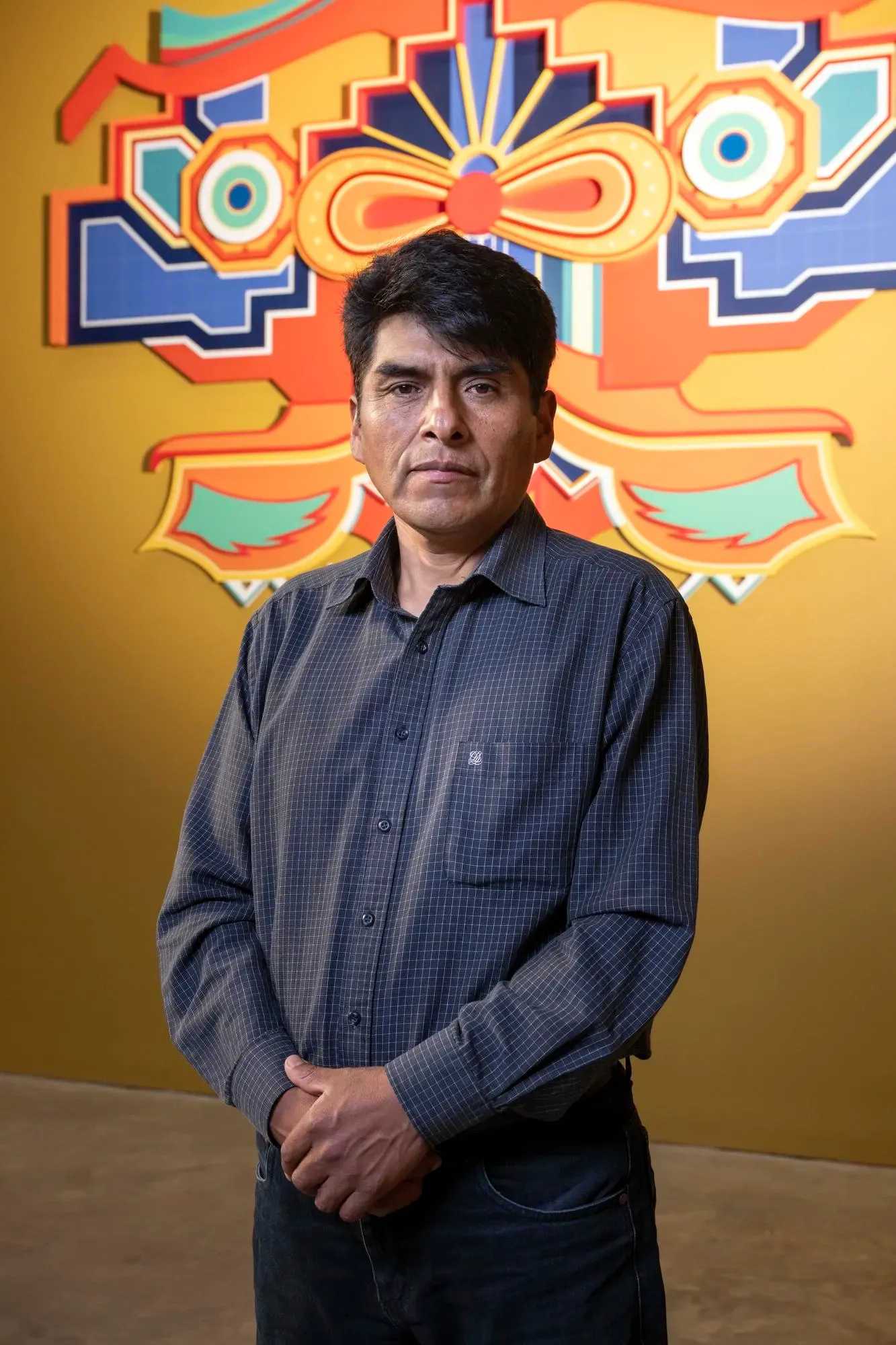
The so‑called New Andean Architecture does not merely represent a formal trend. It embodies a historic shift in the distribution of visibility, recognition and cultural power in Bolivia.
Complete TV · Reels
SP-Arte @sp_arte reaches its 22nd edition from April 8 to 12, at the Bienal Pavilion in São Paulo. The event gathers 180 exhibitors
See on InstagramFrom Complete




More from Sarah Rocksane Araujo
View profile


Latest from Complete
 CultureMaja Petrić: the artist who wrote her own artificial intelligence
 InnovationLight has become a building material
 The CoverBrazil still gives little recognition to genuinely Brazilian authorial fashion.
 FashionFashion and the addiction of evaporation
 DesignAnton Berkasov plays his own art as one would play an instrument
 The Cover"I'm more afraid of being bored than of trying something new"
 BeautyBORNTOSTANDOUT arrives in Brazil