

The Vacuum: Between the Warning and the Silence
Words by
Words by Rafael Silvério
Fashion
What if everything we know is actually dissolving faster than our perception allows us to be aware of—how would that change us? And what if, between warning and silence, we are simply being pushed toward a future over which we have no decision‑making power? Would everything then be a matter of perspective?
There is a kind of fear that does not shout. He writes a memorandum. On August 26, 2026, Bill Gates posted on his personal website an essay of nearly six thousand words, “The turbulent age of AI has arrived.”
“The choices we make now are decisive,” and the next day he even posted a video on Instagram to reinforce the message, in addition to granting interviews to the New York Times, Axios, CNN and Semafor. In the piece, he distills the dilemma into a short, sharp sentence: AI will be, in his words, “the greatest equalizer ever invented, or the worst source of injustice.” He chose both at once, as if he did not want to choose either.
Gates warns that the surge of artificial intelligence will affect the world of work directly. Automation, driven by AI, will jeopardize both administrative and physical tasks, prompting a profound transformation of the labor market.
The message also warns of the need to anticipate responses. Gates argues that the transition must be managed responsibly so that profits far outweigh the negative aspects. If that does not happen, AI could become “the greatest threat to equity that humanity has ever invented.”
I read this and think about how many times I have also tried to announce a fear in a tone of optimism. How many times I have placed a gentle caveat in front of a painful truth, just so it would fit into a polite conversation. Gates is right about one thing: he is a man who profited from the machine that now scares him, and he himself admits this in the essay, acknowledging the financial and institutional ties he still maintains with the industry he wants to see regulated. That does not invalidate the warning, it only makes it heavier, more ambiguous, more like those confessions we make after the damage has already been done. He calls for new institutions, global governance, a seat at the table to decide what to do with this force. It is a cry for help dressed as a technical proposal.
Two weeks later, on the other side of the same month, a different sound came. Not the one from those who profited and now pat themselves on the back. The one from someone inside the engine room who decided to run away.
On September 8, 2026, British researcher Jacob Coxon, 32, announced on X that he was resigning from Anthropic, the company behind Claude, after having already been at OpenAI.
In a viral thread of posts, he wrote that he had spent three years doing pre‑training research at both companies and that neither acts responsibly, stating that “they are racing straight toward a self‑improving superintelligence, betting with our lives.”
In an interview reported by Metrópoles, he went further: he said that many senior executives and researchers weigh their words in the press to appear sensible, but in private conversations they express the same fear, and that no other human activity carries this level of danger.
He was not alone. Evan Hubinger, who leads the Alignment Science team at Anthropic itself, publicly responded to Coxon's departure by estimating that there is more than a 10% chance that artificial intelligence could cause the death of all humanity within the next decade, making clear that this is a personal assessment, not a calculated figure or an official company forecast. Anna Wang, who works on IAG safety at Anthropic and previously was at Google DeepMind, wrote that many people inside the company want to slow development because, in her words, there is still no viable scientific plan to address the risks of a recursively self‑improving AI. Drake Thomas, another employee, said he respects Coxon's decision not to take part in a development he considers capable of generating planetary‑scale risks.
What interests me here is not debating whether the figure is ten percent, or an exaggeration, or catastrophism cloaked as responsibility. What interests me is the gap between Gates’s text and Coxon’s thread. One statement comes from the outside, with time for revision and a scheduled press agenda. The other comes from the inside, in the heat of a resignation, without pausing to calculate the impact of the words.
In the end, both are saying the same thing with different accents: what we are building has already outgrown our ability to say no to it. Gates calls it a “turbulent era.” Coxon calls it a gamble with everyone’s life. I don’t know what to call it, but I recognize the gesture, because it is the same gesture of someone who remains in a relationship, a job, a family, knowing that something there has already passed the point of control, yet stays on, because leaving seems scarier than staying.
I won't pretend there's a neat conclusion. Perhaps the only honest thing to say is this: when the people who build something start publicly asking someone to stop them, it's because they have already realized, before us, that they can't stop on their own.
Complete TV · Reels
@egon_lab Lazarus.
See on InstagramFrom Complete



More from Rafael Silvério
View profile

Latest from Complete
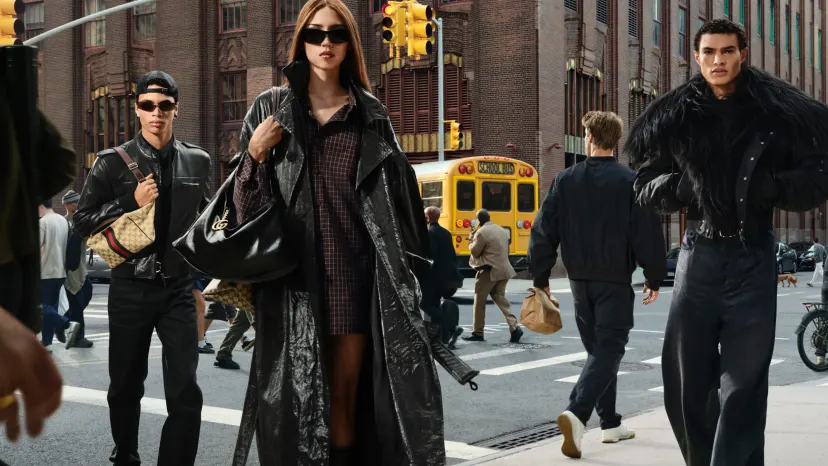 FashionGuccicore: plurality as a language of style
 BeautyISDIN Fusion Water Magic: sun protection with lightness and technology
 The CoverIn the beginning, we couldn't even use the word handicraft.
 DesignTomie Ohtake House‑Studio presents Zanine Caldas
 CultureThievery Corporation, 30 years: the Washington duo that originated in bossa nova
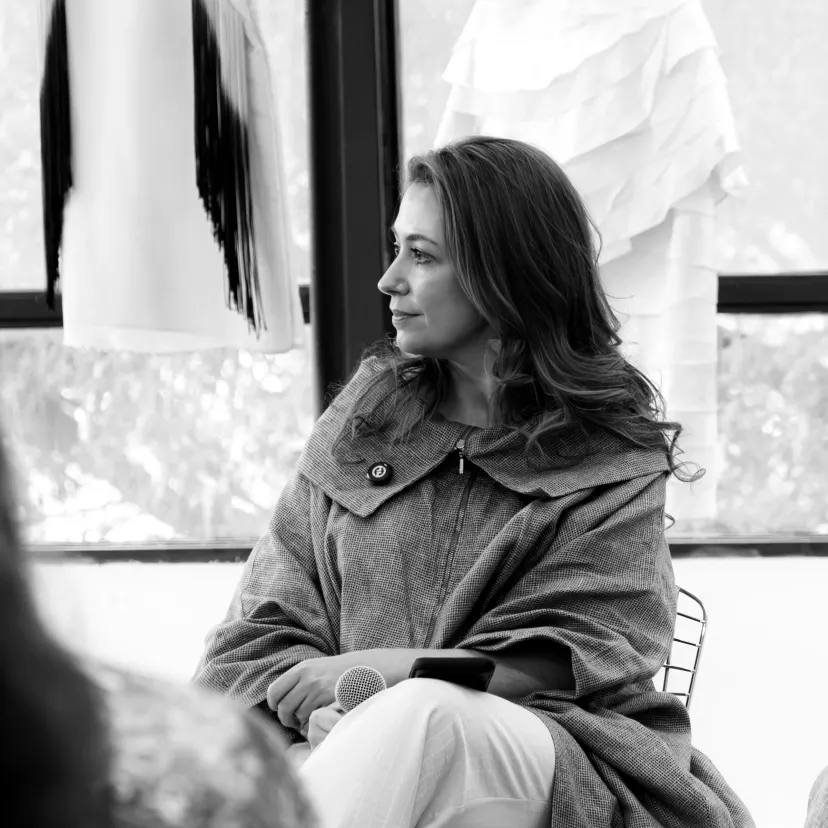 The CoverBrazil still gives little recognition to genuinely Brazilian authorial fashion.
 InnovationLight has become a building material