

Crack Wall
Words by
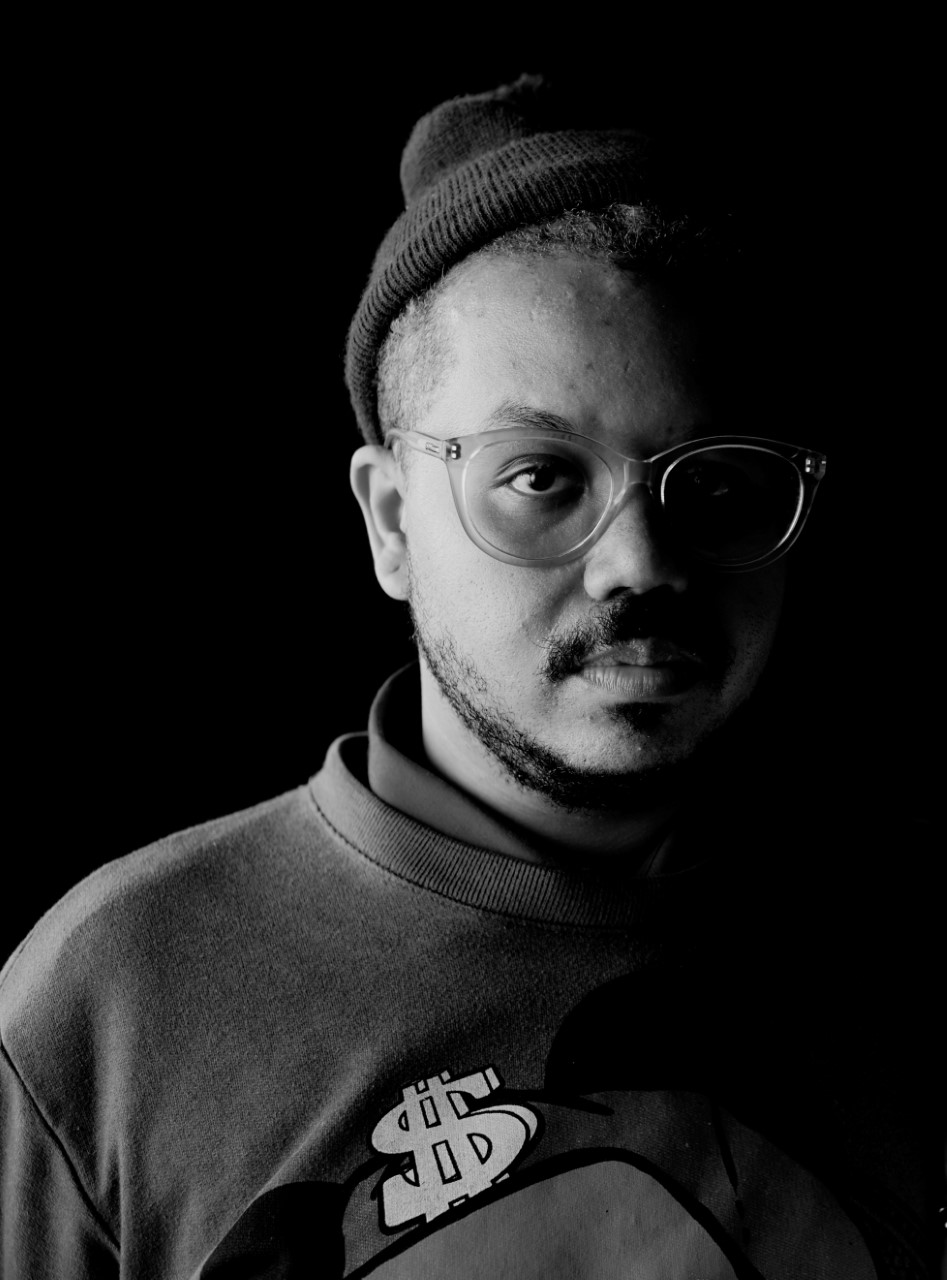
Words by Rafael Silvério
Fashion · September 14, 2026
This is a provisional map of cracks, made by someone who continues building their own wall while trying to understand why they erected it.
It's amazing how many people around me have, in one way or another, directly or indirectly, questioned me about self‑esteem.
Most of them are on Instagram, that arena where everything becomes a showcase and intimacy turns into a commodity.
We live inside what we might call a new bonfire of vanities: emotional soft porn, exposure as a bargaining chip, body and affection vying for engagement. In this image market, almost no one can still tell self‑esteem from a hunger for validation.
They look similar on the surface but are opposite at their core. Guy Debord already drew attention, decades ago, to the fact that the spectacle is not merely a collection of images we consume, but a social relationship between people that becomes mediated by them. What we now call the feed is just the most efficient version of that same mechanism: we no longer exchange experiences, we exchange representations of experiences.
None of the people who approached me were part of my inner circle. Yet the remarks kept echoing almost like a chorus: “I stopped looking at myself,” “I’m afraid of what they might say about me.” Short sentences that reveal something larger: how other people's judgment has become a controlling force over the very image we construct of ourselves.
In one of those conversations, someone told me they could no longer get dressed in the morning without thinking about how it would perform as content. Another said they were afraid to change their opinion publicly, as if every transformation had to be justified to an audience.
Michel Foucault described this phenomenon decades before social networks existed, when he spoke of the panopticon: surveillance no longer requires an actual guard once we internalize the other's gaze and begin to police ourselves constantly, out of precaution.
My narrative also falters. I can’t pinpoint the moment I began to project, for those outside my comfort zone, a confidence that I don’t always feel rooted within me. It seems that, to speak of self‑love publicly, one must first hide all the cracks in the wall we build in the name of self‑acceptance—a kind of curation of one’s own vulnerability.
Judith Butler helps name this feeling when she proposes that identity is not something fixed that we simply express, but something we repeat and stage until it seems natural. If this is true for gender, as she argues, it is also true for confidence: we perform security so many times that we begin to confuse the performance with the thing itself.
That is where the old quote from Audre Lorde comes back to make complete sense, like a compass:
"The erotic is a place between the nascent awareness of our own being and the chaos of our strongest feelings. It is an intimate sense of satisfaction that, once we have lived it, we know we can aspire to. Because once we have experienced the fullness of that depth of feeling and recognized its power, we cannot, out of our honor and self‑respect, demand less of ourselves." (Audre Lorde, The Uses of the Erotic)
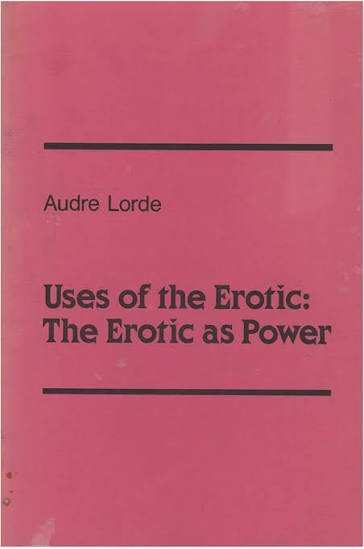
Lorde wrote this as a Black lesbian woman in a context that sought to normalize her desire and existence. Though my experience differs, the logic remains the same: in a culture that profits from our insecurity and then sells back solutions for the void it itself creates, recognizing one's own inner power is an almost insurgent act. We live under a meticulously engineered system. First, we are convinced that something is missing in us—the wrong body, an insufficient face, a life deemed undesirable by others. Then, the same feed offers us the solution to that newly installed emptiness.
It is a closed loop, almost perfect in its cruelty: insecurity becomes a product, and the product needs insecurity to keep existing. bell hooks, when writing about love, insisted that loving oneself, within a culture organized around domination and comparison, is one of the most political acts there are, because it rejects the logic of scarcity that sustains this market.
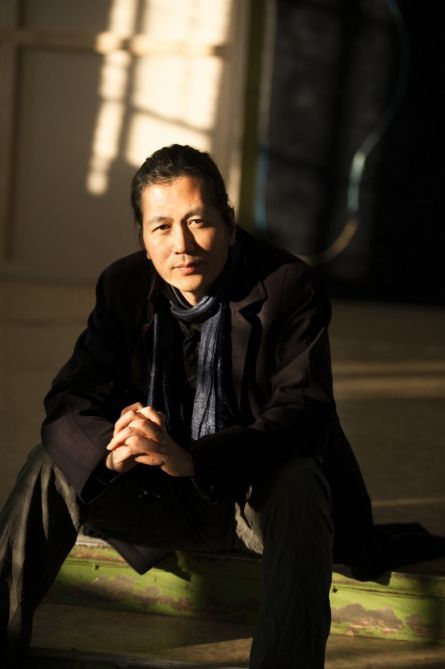
The philosopher Byung‑Chul Han describes something similar when he talks about the performance society, one in which we no longer need an external whip to exploit us; we ourselves take on the roles of boss and employee, demanding constant optimization from ourselves. Applied to image, this means that merely existing is not enough; one must perform a marketable version of oneself, lest one disappear from the game. Jean Baudrillard would go further: he would say that this marketable version, being repeated so often, replaces the original thing, and we end up living from simulacra of ourselves, copies without an original that nevertheless circulate as if they were true.
Therefore, recognizing one’s own internal power becomes an almost insurgent gesture. Not because it is a spectacular act, but precisely the opposite: it is a refusal of the logic of spectacle. It is saying that my completeness does not depend on others’ approval, that my worth is not a datum to be thrown into the attention market. In this sense, turning inward, at a time that profits from our outward gaze, is almost an act of disobedience.
And perhaps this silent disobedience, without stage or audience, is the most honest form of resistance that remains to us. In my maturity, or perhaps my immaturity, I made peace with spirituality. And, in this new congregation, I also stepped away from paths that ceased to make sense. In this learning, saying no became essential for me to assert myself to the world. A second birth, but aware of all the gnosis I already inhabit, without buying a misshapen version of myself shaped by others’ gaze and judgment.
For years I've written about authenticity. Perhaps this is the most fragile—and precisely because of that, the most powerful—moment I find myself in: the strength of aligning what I demonstrate I am with who I feel I am. There is a kind of decisive energy that makes me combative. Even with so many suns eclipsing, I managed, in adverse times, to open a fissure in time and space where I take shelter. And I, who have always been overly humble, now dare to be insolent. I try to take risks, but consciously.
There is something deeply contradictory about having to publicly announce that one is at peace with oneself. The very need to declare already reveals how fragile that peace still is, still under construction. Perhaps that's why I distrust those who speak of self‑esteem without hesitation, as if reading a memorized script. Life, when observed up close, is rarely linear enough to fit into a caption.
Simone Weil wrote that attention is the rarest and purest form of generosity. I think of this when I notice how our attention today is the first thing that leaves us, even before the body or the voice. Giving genuine attention to something—or to someone, including oneself—requires presence, and presence is precisely what the algorithm makes increasingly scarce.
Cultivating self‑esteem in this context begins by relearning how to give attention without haste, without an audience, without the expectation that it will generate a return.
I do not claim to provide a neat solution to this restlessness. I prefer to inhabit it. There is a greater honesty in admitting that I still falter, that I still find myself seeking approval where I should seek only truth, than in pretending a serenity I do not fully feel. Writing, for me, serves this purpose: not to prove I have arrived somewhere, but to record the journey while it still hurts and still teaches.
If any form of freedom is possible within this system that profits from our insecurities, it is probably not in defeating it from the outside, but in deserting it from within, silently, every day, until the act of belonging ceases to seem like resistance and simply becomes life again.
Complete TV · Reels
SP-Arte @sp_arte reaches its 22nd edition from April 8 to 12 at the Bienal Pavilion in São Paulo. The event gathers 180 exhibitors.
See on InstagramFrom Complete



More from Rafael Silvério
View profile

Most popular
 CultureOsesp opens Environment Week with springs by Boulanger and Schumann
 CultureAmaro Freitas plays a free concert at CCBB SP within Atlântico Sertão
 CultureMuseu Oscar Niemeyer opens on the holiday for the 36th Biennial's final days
 CultureKati Katona and the space that no gaze can embrace
 CultureThe Vacuum: Between the Warning and the Silence