

Complete Profile: Muriel A. Pemberton
Muriel Pemberton holds a quiet but foundational position in the history of contemporary fashion.
Words by
Words by Sarah Rocksane Araujo
Editorial, Fashion and Beauty
His name rarely appears on popular lists of great twentieth‑century designers, nor does it circulate as frequently as that of creators who passed through the institutions he helped build, but his contribution may be even deeper because it is not limited to clothing design, but to the invention of a new way of thinking about fashion education. Before Muriel Pemberton, fashion training in Britain was still strongly tied to the traditional maison system and to technical learning subordinated to the logic of haute couture. With her, fashion ceased to be merely a craft and definitively entered the realm of artistic, intellectual and experimental practice within European formal education.
Born in 1909 in Tunstall, Stoke on Trent, Muriel grew up in a region steeped in British ceramic tradition. Many women of her generation followed paths linked to decoration and design applied to local manufacturing, including her sisters, but from an early age she expressed a specific desire to become an artist. At fifteen she entered Burslem's art school as the youngest student in the institution, an experience that gave her an initial training deeply connected to drawing, visual composition, and material observation. Yet what would truly transform her trajectory would happen years later, when she secured a scholarship to study painting at the Royal College of Art.
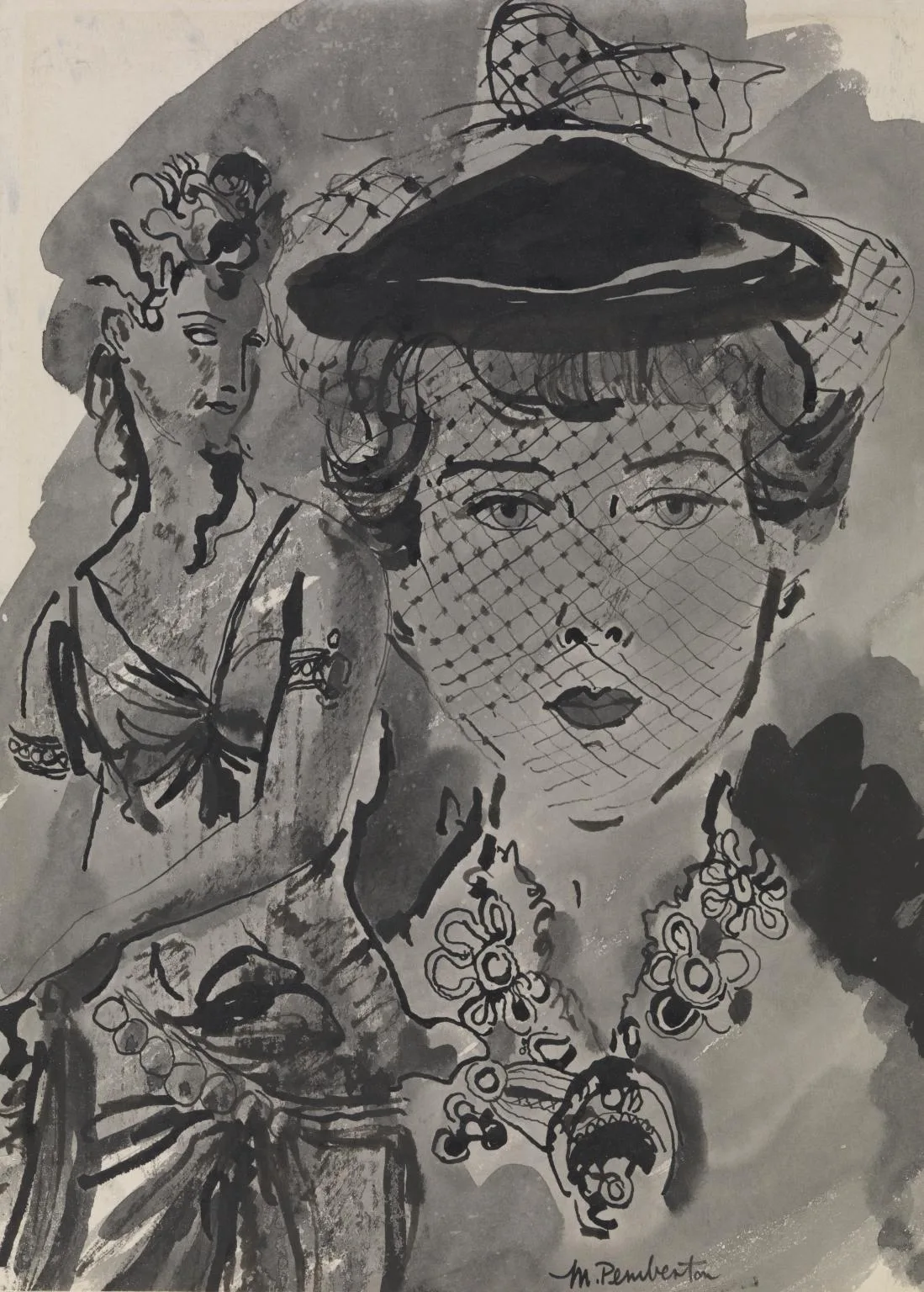
It is important to understand the historical context of this formation because the environment of the Royal College in the 1920s and 1930s represented a moment of reorganization of the borders between art, design, and industry. While traditional schools still rigidly separated painting, sculpture, applied arts, and fashion, the Royal College was slowly beginning to dissolve those divisions. This interdisciplinary opening would be decisive for Muriel Pemberton to develop a new perception of fashion. For her, designing clothes should not mean reproducing technical studio formulas, but building visual language, aesthetic thought, and artistic sensitivity.
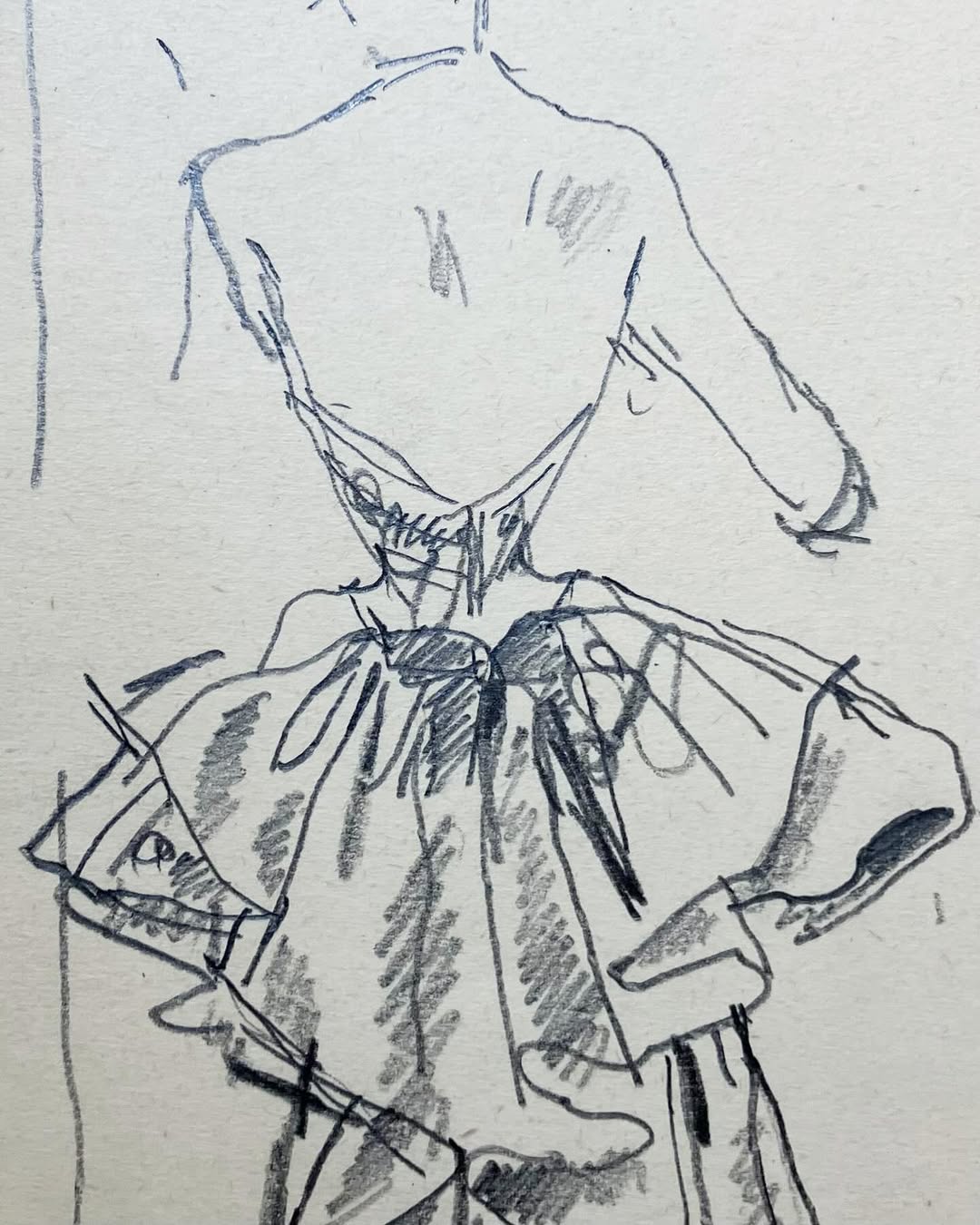
The transformation occurs almost by accident. While strolling in Stoke, a woman asked where she had bought the dress she was wearing. The dress had been designed and made by Muriel herself. From that moment, she realized that fashion could not only coexist with her artistic practice, but also sustain it financially without compromising her creative freedom. Upon returning to the Royal College, she proposed to Professor Ernest Tristram the creation of a fashion diploma. There was no established model for such a program yet. Muriel then literally invented the curriculum herself. She worked on dress design at Reville and Rossiter, served as seamstress to Queen Mary, studied pattern making at Katinka School and delved into costume history through the readings suggested by historian James Laver. This blend of practice, historical research and aesthetic freedom inaugurated a teaching model that would later transform fashion education across Europe. In 1931, Muriel Pemberton received the first Diploma in Fashion awarded by the Royal College of Art. The event represents not only an individual achievement but an epistemological shift within British culture. For the first time, fashion was institutionally legitimized as an autonomous artistic field of knowledge.
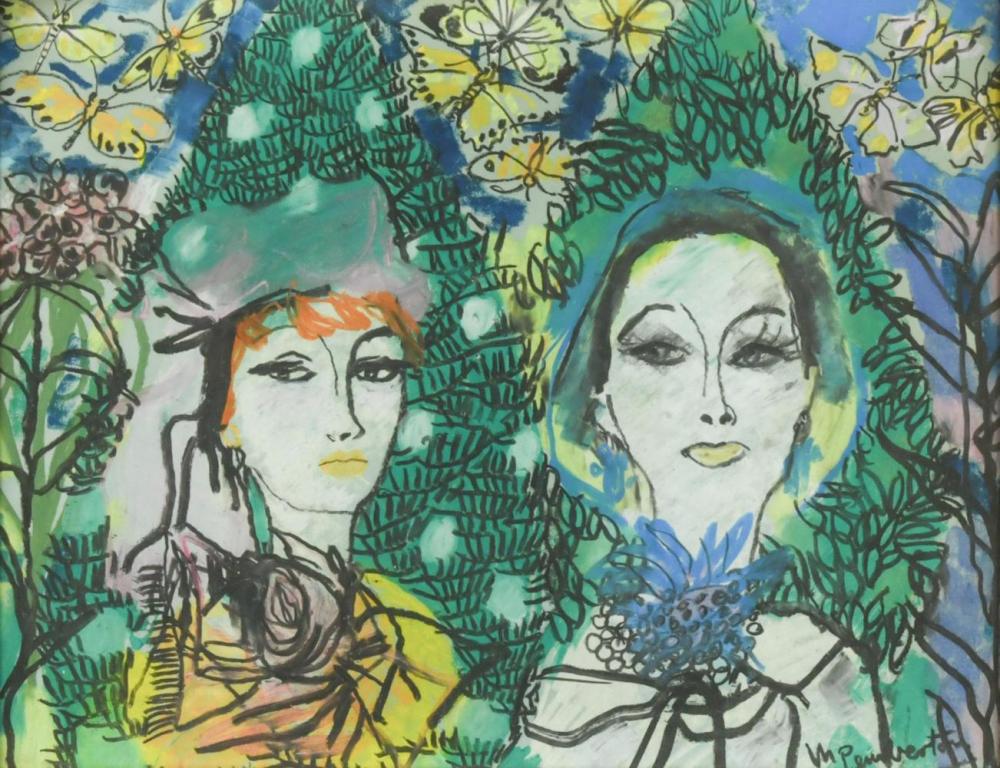
Soon after, she began teaching fashion drawing at St Martin’s School of Art, initially only two days a week. What began as a modest side activity quickly expanded thanks to her intellectual and pedagogical persistence. Muriel does more than teach. She builds an unprecedented educational framework: she adds museum studies, patternmaking, observational drawing, costume history and interdisciplinary practices to the curriculum. Gradually, she transforms the department into the United Kingdom’s first fashion college. Until then, learning took place largely within the disciplinary logic of sewing and technical reproduction. Pemberton breaks with this paradigm by arguing that a fashion student must first be a visual thinker, someone able to experiment with materials, forms, images and ideas without immediate subordination to commercial demands.
Her pedagogical methodology was profoundly liberating for its time. Many students arrived at the school coming from painting or other artistic fields and had little technical experience in traditional ateliers. Rather than correcting this lack through disciplinary rigidity, Muriel turned fragility into creative power. She encouraged students to draw by constantly observing the model rather than the paper, seeking more fluid and spontaneous lines. In some exercises, she prohibited the use of pencil and offered oil pastel, ink and even experimental mixtures with laundry detergent to stimulate gestural freedom.
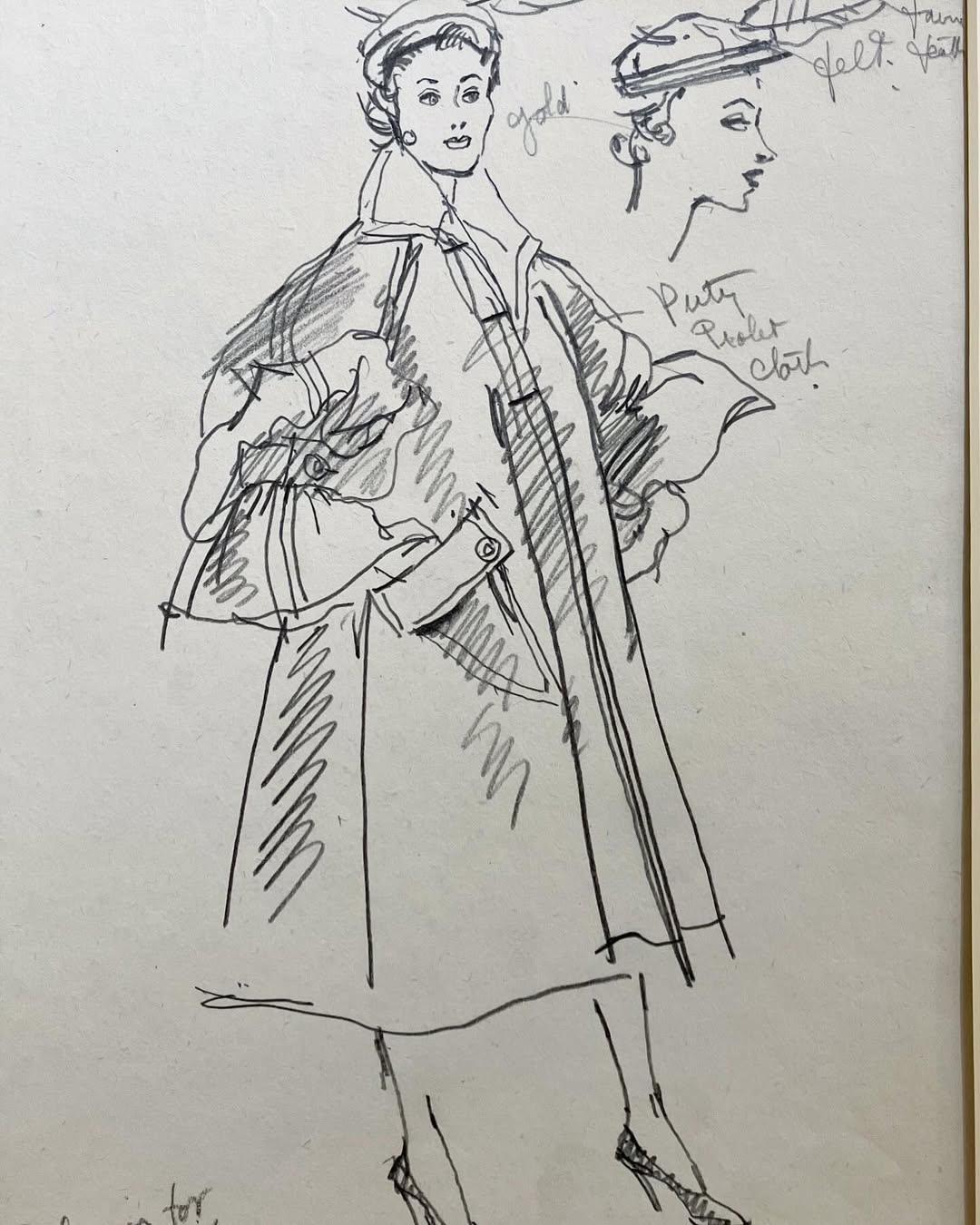
This stance would help consolidate London as one of the main creative centers of global fashion in the decades that followed. Names such as Alexander McQueen, Phoebe Philo, Riccardo Tisci, Bruce Oldfield and Katherine Hamnett emerge within a pedagogical tradition that directly traces back to the structure created by Muriel Pemberton. The importance of this for fashion history is immense. Before her intervention, Paris still dominated the notion of aesthetic legitimacy within the international fashion system. London had a tradition in tailoring, but had not yet consolidated a strong experimental identity within contemporary authorial design.
Alexander McQueen may be one of the most evident examples of this legacy. His time at Central Saint Martins completely redefines the relationship between fashion, performance and emotional narrative. The impact of his collections cannot be understood solely by impeccable technique, but by the imaginative freedom that characterized his training. McQueen developed a deeply personal language because he studied in an educational environment that valued authorial identity over the reproduction of formulas. The same applies to Phoebe Philo, whose minimalist and intellectually sophisticated approach at Chloé and later at Céline redefined contemporary women's fashion. Although aesthetically distant from McQueen, Philo shares the same authorial confidence cultivated by a teaching system that encouraged creative independence. Riccardo Tisci, in turn, perfectly synthesizes the multicultural and emotional dimension inherited from the pedagogical tradition of Saint Martins. By affirming that the school allowed students to be themselves, without imposing ideas, the designer reveals exactly the central principle of Muriel Pemberton's philosophy.
It is significant to notice how Pemberton's legacy remains alive even in contexts that are extremely different from contemporary fashion. From McQueen's dramatic narratives to Philo's emotional minimalism, from Galliano's gothic theatricality to Tisci's hybrid sensibility, there is an invisible thread linking these seemingly divergent practices. This thread is the idea that fashion is an artistic language rather than merely a commercial product.
Muriel also maintained a consistent output as a painter throughout her life. This coexistence of painting and fashion helps to understand her aesthetic vision. For her, clothing, portraits, flowers and surfaces belonged to the same visual construction universe. Her watercolors showed an intense attention to colour, texture and composition. Portraits functioned as extensions of her fashion illustration practice. Still lifes were arranged in almost textile-like layers. Her relationship with Vogue between 1952 and 1956 also underscores her ability to move between artistic language and commercial visual culture without losing visual complexity.
Another aspect of her trajectory is the way she approached her own creative process. Many of her paintings continued to be reworked even after being signed, as if they were collections permanently open to updates. This dynamic perception of the work brings her artistic practice closer to fashion's seasonal logic, while also revealing a highly modern view of creation as a continuous flow rather than a finished object. Central Saint Martins itself, the institution that would later emerge from the merger of St Martin’s and the Central School, still carries this experimental heritage. The school has become a global synonym for innovation precisely because it preserved the core principle established by Pemberton since the 1930s: the idea that a student must discover their own language before adapting to market demands.
There is also a feminist dimension to her trajectory. Muriel builds institutional spaces of legitimacy for fashion at a time when both artistic education and design itself were still dominated by male authority structures. Her contribution goes beyond training famous designers. Muriel redefines fashion’s cultural status within modern education. By introducing drawing, historical research, visual experimentation and artistic freedom into the curriculum, she moves fashion out of a purely decorative sphere into a critical and culturally sophisticated territory. Her story also provides an important reflection on the role of creative schools in a society’s cultural formation. Saint Martins did not become relevant only for producing famous designers, but because it established an environment where experimentation was encouraged. Such institutional space is rare and requires pedagogical figures capable of safeguarding creative freedom even in the face of commercial pressures.
That may be precisely why Muriel Pemberton’s legacy remains so contemporary. In an industry often obsessed with speed, virality and formulaic repetition, her trajectory reminds us that true innovation depends on imagination cultivated slowly.
Complete TV · Reels
Na Gagosian @gagosian , em Nova York, a exposição Negative Sculpture reúne dois trabalhos recentes de Michael Heizer e retoma uma investigaç
See on InstagramFrom Complete





More from Sarah Rocksane Araujo
View profile


Latest from Complete
 FashionMatías Irala: the time of craftsmanship
 CultureThievery Corporation, 30 years: the Washington duo that originated in bossa nova
 The CoverBrazil still gives little recognition to genuinely Brazilian authorial fashion.
 InnovationLight has become a building material
 DesignAnton Berkasov plays his own art as one would play an instrument
 The Cover"I'm more afraid of being bored than of trying something new"
 BeautyBORNTOSTANDOUT arrives in Brazil