

SP-Arte Rotas crosses the border and brings Latin America into the conversation
In its fifth edition, the fair that was created to view Brazil beyond the Rio‑São Paulo axis welcomes galleries from Uruguay, Argentina, Colombia and Italy, and brings together 70 houses in the ARCA from August 26 to 30.
Words by
Words by Caíque Nucci
Editor-in-Chief
The SP-Arte Rotas arrives at its fifth edition doing what it set out to do since 2022, and a little more. The fair was created to delve into Brazilian art produced outside the Rio‑São Paulo axis, and in this edition it extends the gesture to neighboring countries: galleries from Uruguay, Argentina, Colombia and Italy join, continuing the expansion movement that began in 2025. Seventy galleries, plus invited museums and special projects, will be present at ARCA in São Paulo from August 26 to 30.
The house rule remains the same and is what sets Rotas apart from a typical fair: each booth presents an unpublished project, developed especially for the event. It is not a showcase of the collection; it is a curatorial proposal by each gallery. In practice, this tends to highlight artists and movements that circulate only regionally, and names that have yet to emerge.
Who comes from abroad
The Latin American expansion brings Sur from Uruguay, Barro, Isla Flotante and W‑galería from Argentina, and Casa Zirio from Colombia. The Italian Orma completes the foreign roster.
Among the Brazilian debuts are Apartamento 61, Boi, Casa do Povo, Casa Seva, Errol Flynn, Gruta, Jaider Esbell, Lucas Recchia, Midlej, Ocupá, Pórtico and Refresco. They share the corridors with long‑standing houses such as Almeida & Dale, Casa Triângulo, DAN, Flexa, Galatea, Gomide&Co, Luciana Brito, Marilia Razuk and Vermelho.
The Brazilian map of the fair is its argument. It includes Lima from São Luís do Maranhão, Karandash from Alagoas, Cave and Leonardo Leal from Ceará, Marco Zero from Pernambuco, Paulo Darzé and Midlej from Bahia, and Cerrado and Karla Osório from the Central‑West.
The projects that explain the fair
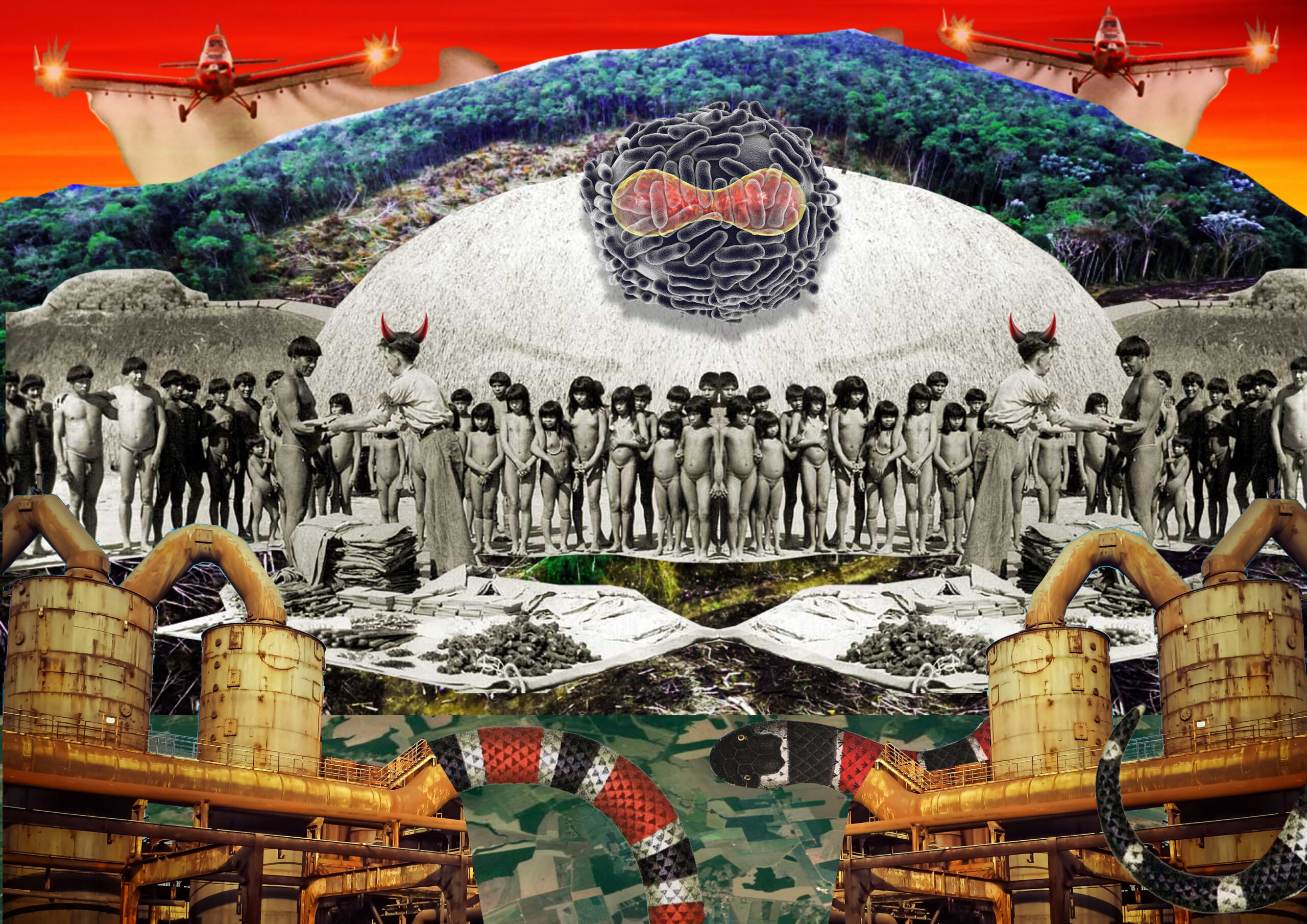
Four of them clearly illustrate what Rotas aims to be. Sertão Negro is the workshop‑school founded by Dalton Paula in Goiânia, which will turn five in 2026, the same age as the fair. Galeria Ocupá works to build bridges between Rio de Janeiro’s southern zone and artists from peripheral territories of the city. Galeria Jaider Esbell de Arte Indígena Contemporânea is an independent collective space in Boa Vista, Roraima, dedicated to the production of Indigenous artists.
Casa do Povo presents a series of paintings by Maxakali artists from the Aldeia‑Escola‑Floresta, a project in the Itamunheque region of Teófilo Otoni, conceived by Sueli and Isael Maxakali.
What to see at the booths
The W-gallery brings together Mónica Millán, Chonon Bensho and Florencia Sadir around textile, indigenous and ancestral knowledge, building on the work Millán has been developing since 2002 with weavers and embroiderers from Yataity, Paraguay. Leme gathers Sandra Gamarra Heshiki, Olinda Silvano Inuma and Jorge Enciso in a project on Latin American indigenous knowledge. Marilia Razuk links territory, nature and memory with Manuel Brandazza, Lucia Pizzani and Lucélia Maciel.
Portas Vilaseca proposes an affective cartography of the North and Northeast with amorí, Marcone Moreira, Samara Paiva and Zé Carlos Garcia. Marco Zero presents an exhibition curated by Cristiano Raimondi around the idea of enchantment, featuring Chacha Barja, Kuenan Mayu, Rayana Rayo and Tunga. Karandash showcases a selection of Brazilian popular production with Maria Amélia Vieira, Dalton Costa, Mestre Manoel da Marinheira and Jasson.
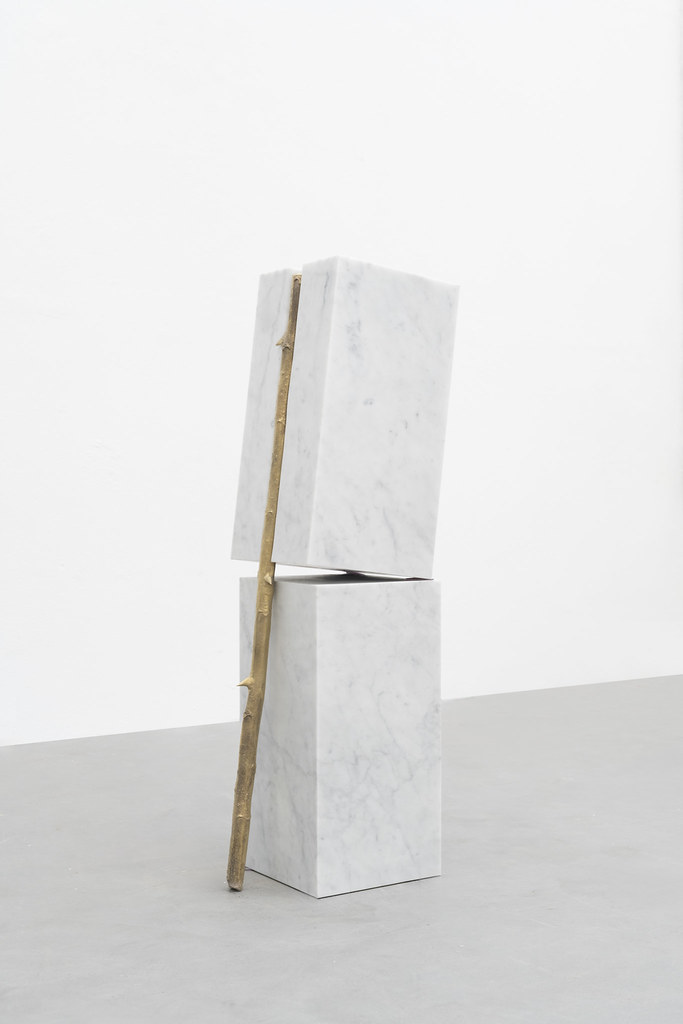
Orma, in partnership with the Brazilian MaPa, links Sérgio Lima's historic production with Luciano Maia's research on surrealism, eroticism and Amazonian narratives. Mitre adopts the crossroads as its curatorial principle, featuring Sandro Ayê, Gê Viana, Luana Vitra and Rafael RG. The Artists' Gallery presents the solo show “Songs of Freedom” by Raphael Escobar, about work chants historically sung to coordinate effort and create a sense of collectivity in repetitive tasks.
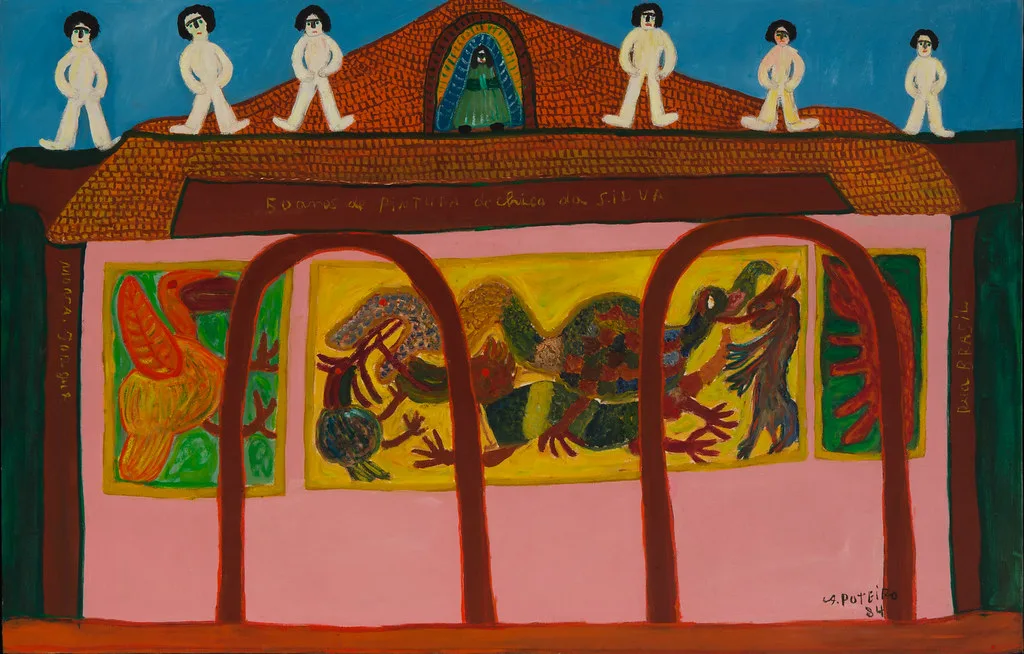
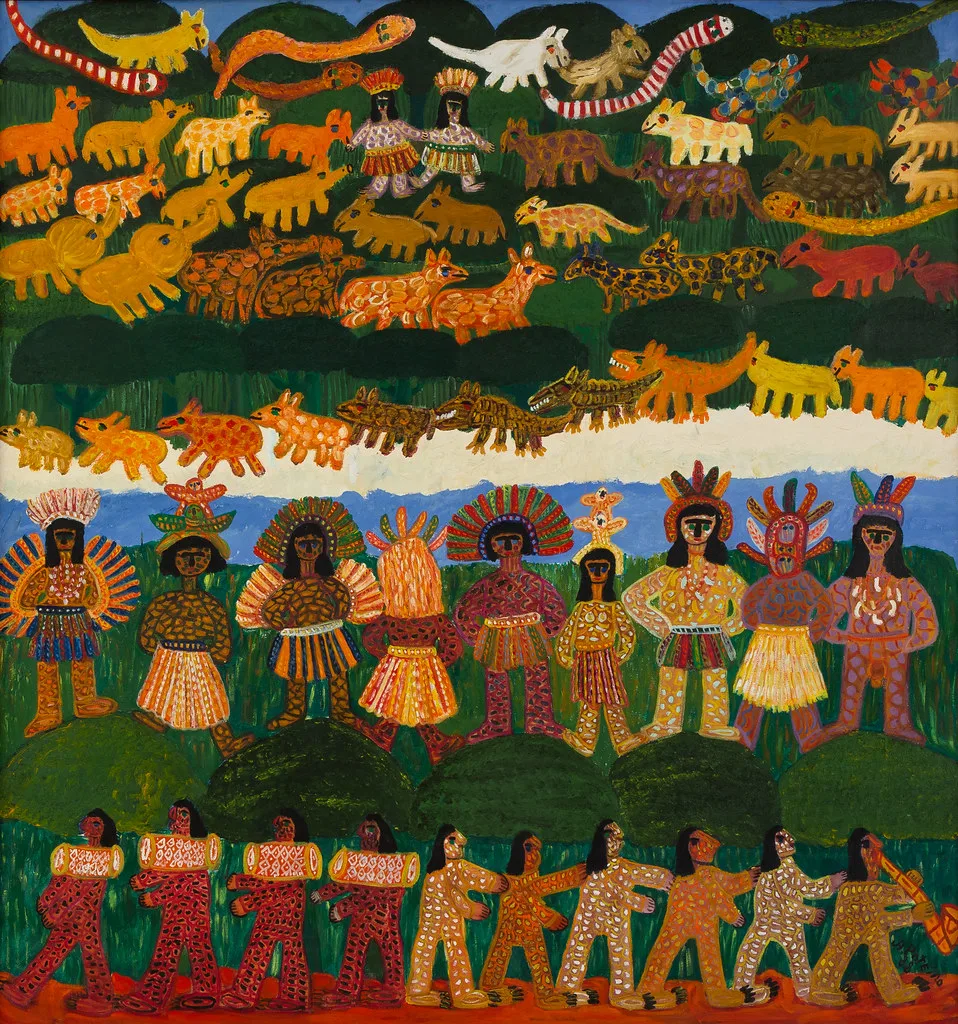
Among the historic names, Almeida & Dale places Eleonore Koch, Nelson Felix, Elena Damiani and Paulo Pasta side by side, while Superfície brings together Mira Schendel, Leon Ferrari, Antonio Dias and José Leonilson. Aura showcases contemporary production by Uýra, Arivanio Kixelô and Ziel Karapotó. Among the solo shows are Arcangelo Ianelli at Frente, James Lisboa, Hiram Latorre at Martins&Montero, Antonio Poteiro at Errol Flynn, Mariana Tassinari at Danielian and Vivi Rosa at Janaína Torres.
Mirante and the Expanded Landscape
At the heart of the fair, the Mirante section begins with the idea of an expanded landscape, treated less as a genre and more as a field for contemplating the relationships between humans and what surrounds them. The curation is by Bernardo Mosqueira, and within it memory, ecology, spirituality, politics, history and imagination appear intertwined.
Who signs the direction
The artistic direction of this edition is by Bernardo Mosqueira, curator, writer and researcher from Brazil who lives in New York. He is the founder and artistic director of Solar in Rio de Janeiro since 2015, was chief curator at the Institute for Studies on Latin American Art from 2023 to 2025, and was part of the curatorial team at the New Museum from 2021 to 2023.
Mosqueira received the Vilcek Prize for Creative Promise in Curatorial Work in 2025 and the Lorenzo Bonaldi Prize for Art, from GAMeC, in Bergamo, in 2017. He holds a master's in curatorial studies from the Center for Curatorial Studies at Bard College.
Palco SP-Arte
The conversation program runs from Thursday, the 27th, to Saturday, the 29th, featuring artists, curators, collectors and other sector actors, and offers space for public participation. Among the guests are artists Ayrson Heráclito and Carmela Gross and curator Júlia Rebouças. The program is curated by Tamara Perlman. To participate, simply arrive.
Service
SP-Arte Rotas 2026, from August 26 to 30, at ARCA, located at 360 Avenida Manuel Bandeira, Vila Leopoldina, São Paulo. The 26th is reserved for guests. On the 27th and 28th the fair opens from 1 p.m. to 8 p.m.; on the 29th from 12 p.m. to 8 p.m.; and on the 30th from 12 p.m. to 7 p.m. Tickets are sold at the official box office.
Complete TV · Reels
IMMENSIA, de Kati Katona
See on InstagramFrom Complete


More from Caíque Nucci
View profile
Latest from Complete
 CultureMaja Petrić: the artist who wrote her own artificial intelligence
 InnovationLight has become a building material
 The CoverBrazil still gives little recognition to genuinely Brazilian authorial fashion.
 FashionFashion and the addiction of evaporation
 DesignAnton Berkasov plays his own art as one would play an instrument
 The Cover"I'm more afraid of being bored than of trying something new"
 BeautyBORNTOSTANDOUT arrives in Brazil