

Kati Katona and the space that no gaze can embrace
The new media artist based in Budapest turned a 2,000‑square‑metre inflatable zeppelin into a 360‑degree projection that dismantles, second by second, our certainty of where we are.
Words by
Words by Caíque Nucci
Editor-in-Chief · September 14, 2026
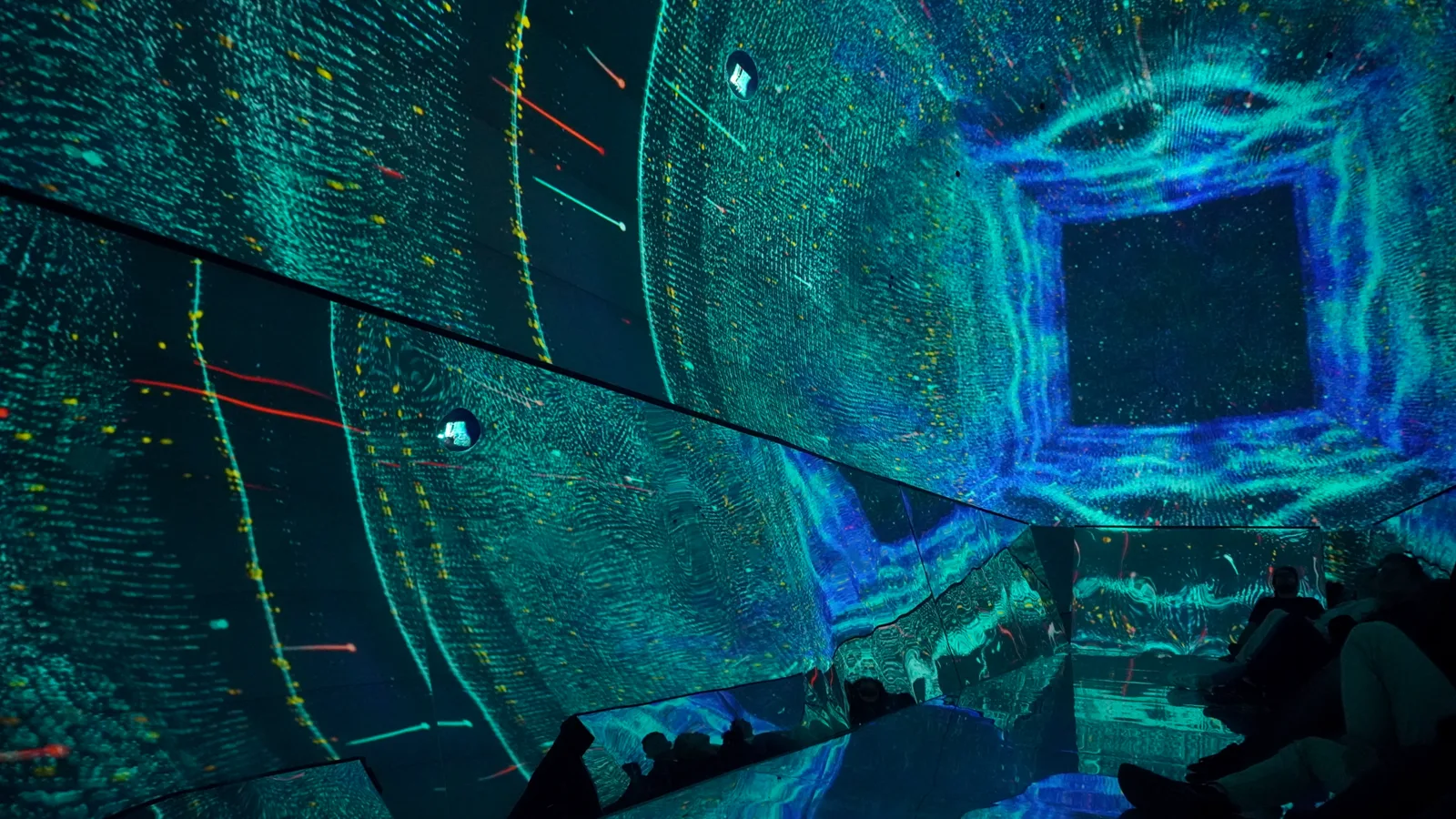
Entering IMMENSIA means accepting that it will not be possible to see everything. The work of Kati Katona fills an entire room with image, from floor to ceiling and in all directions, and at every point on the surface something is changing at the same time. The eye selects a fragment, while the rest transforms. It is this limit, not a technological trick, that the work addresses.
A zeppelin in the middle of the museum
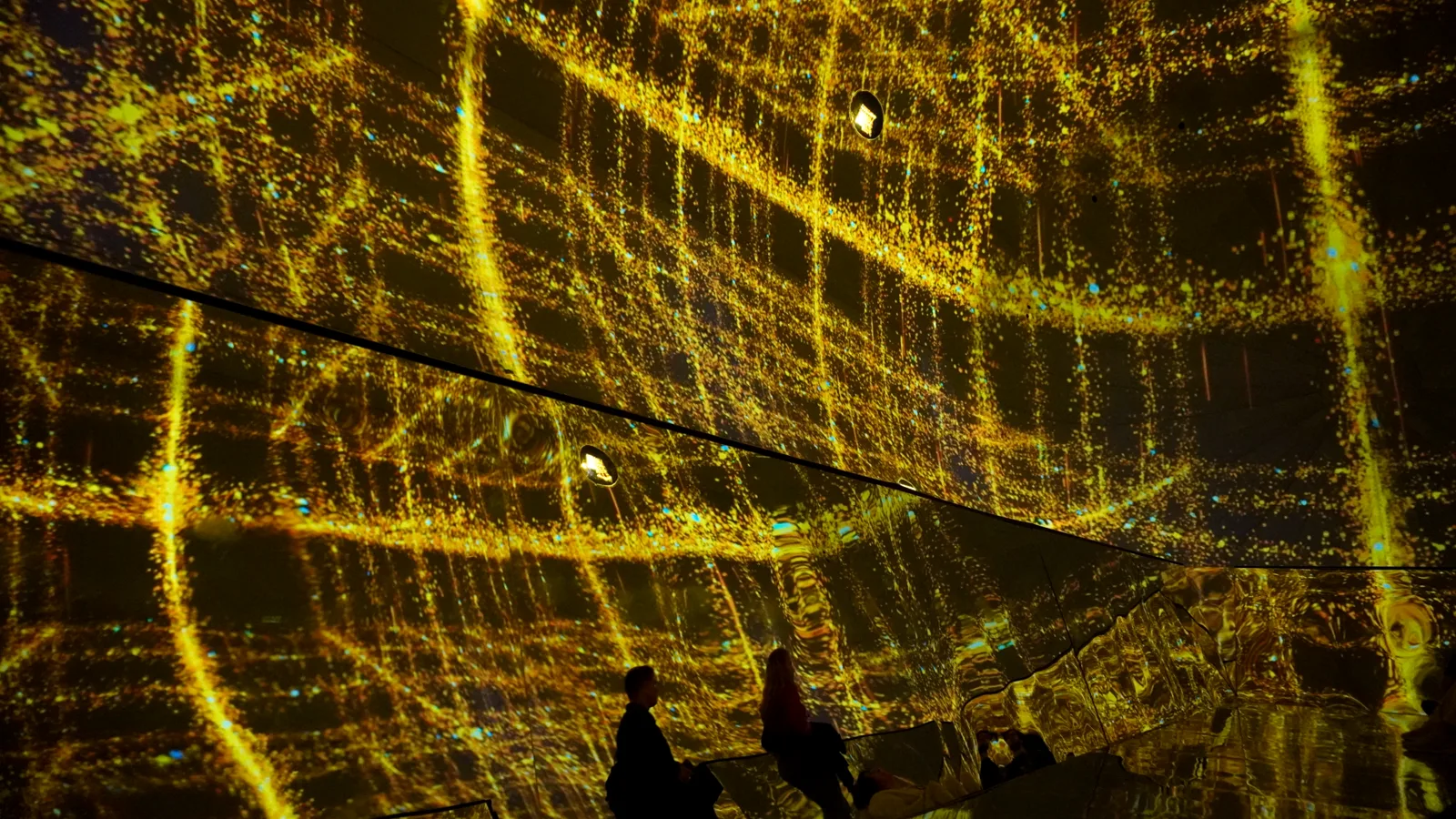
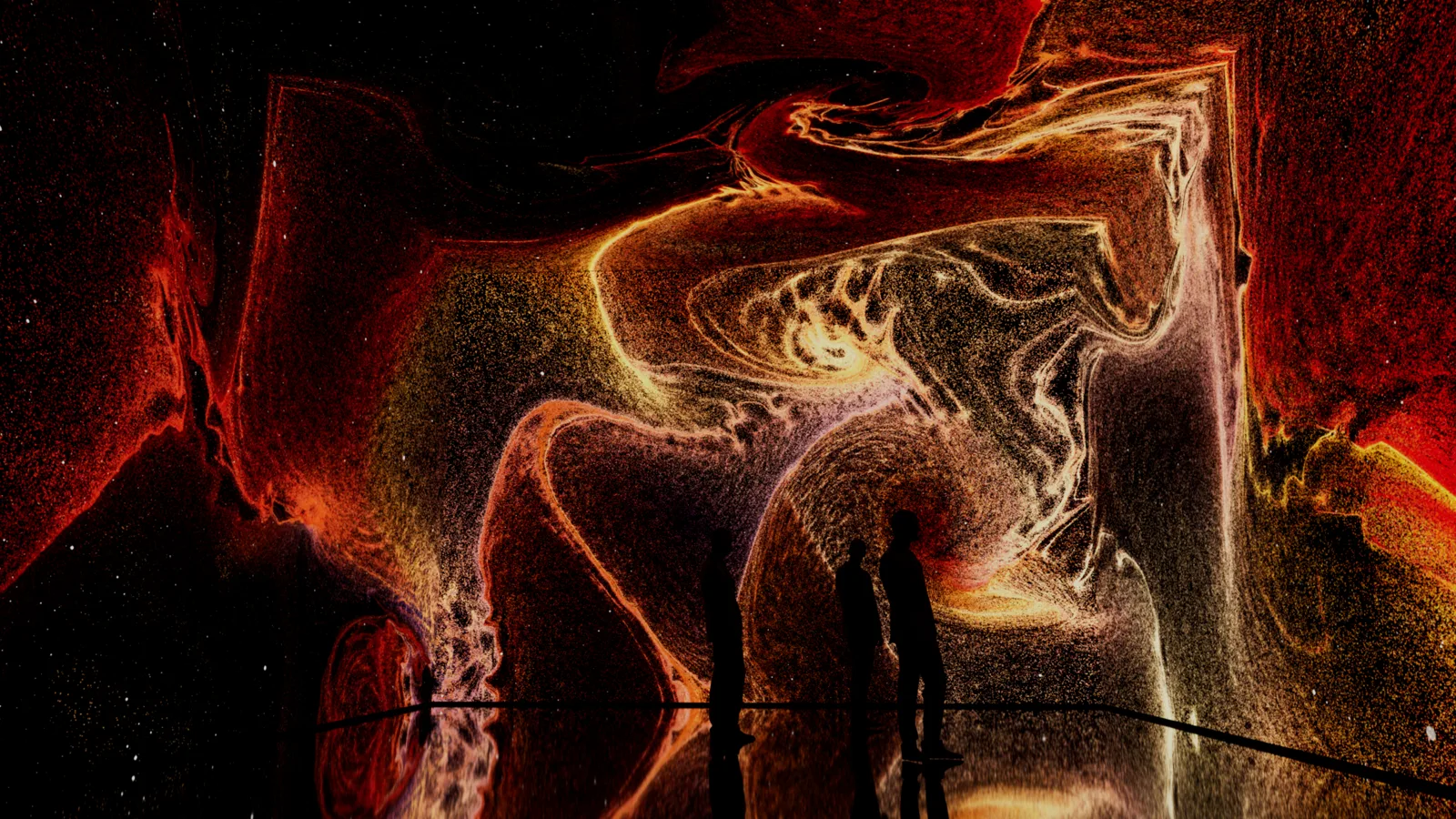
IMMENSIA was created for Phantom Vision, the exhibition of Light Art Museum in Budapest, one of the first spaces in the world dedicated to collecting, researching and displaying art made with light. The show gathered about 35 Hungarian and international artists between August 2024 and July 2025, curated by Barnabás Bencsik and Borbála Szalai. At its center, Katona's work gained its own architecture: an inflatable structure shaped like a cigar, resembling a zeppelin, 40 meters long and 2,000 square meters of projection, where you enter through a lock gate and find a 360‑degree environment with mirrors.
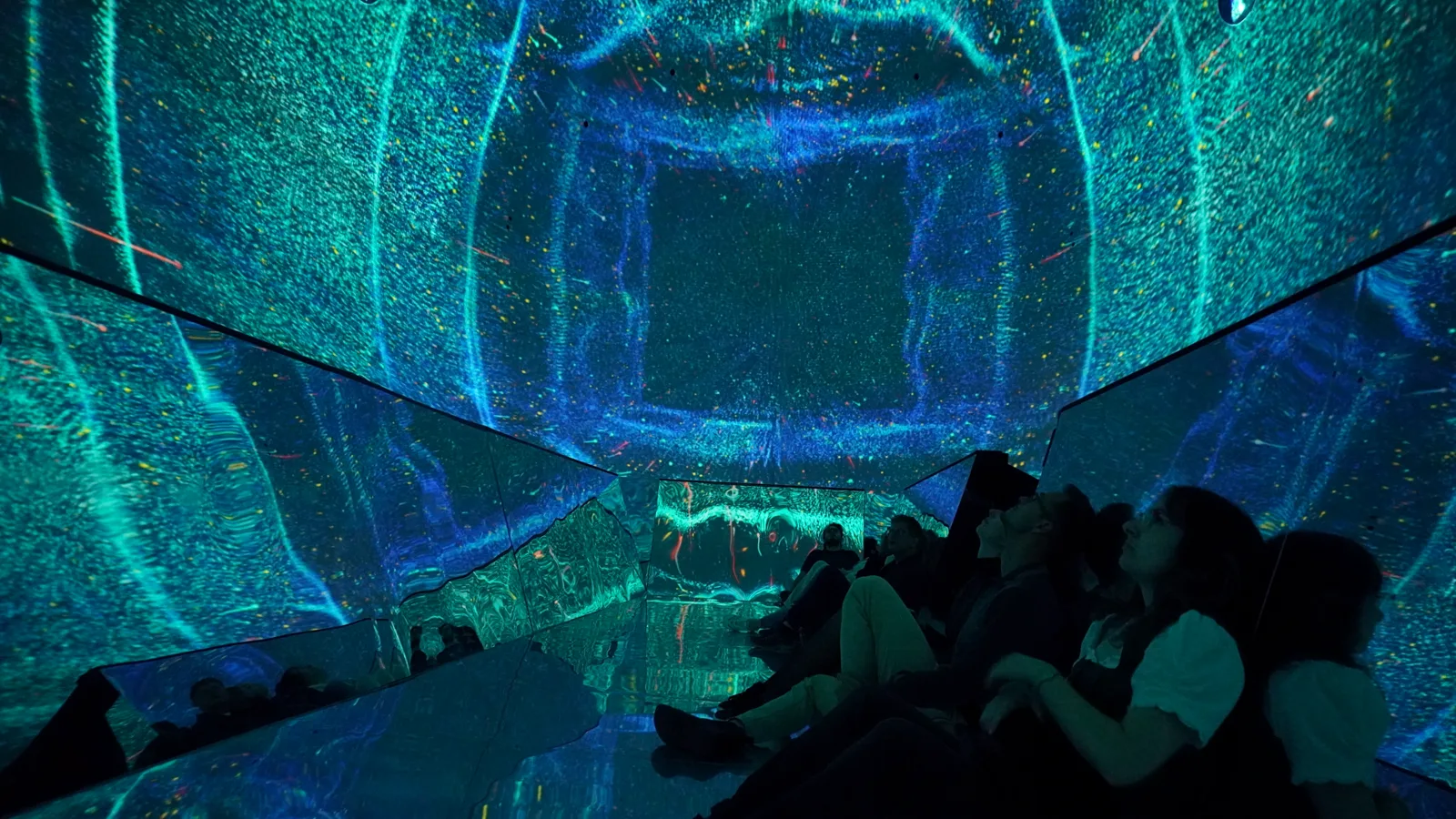
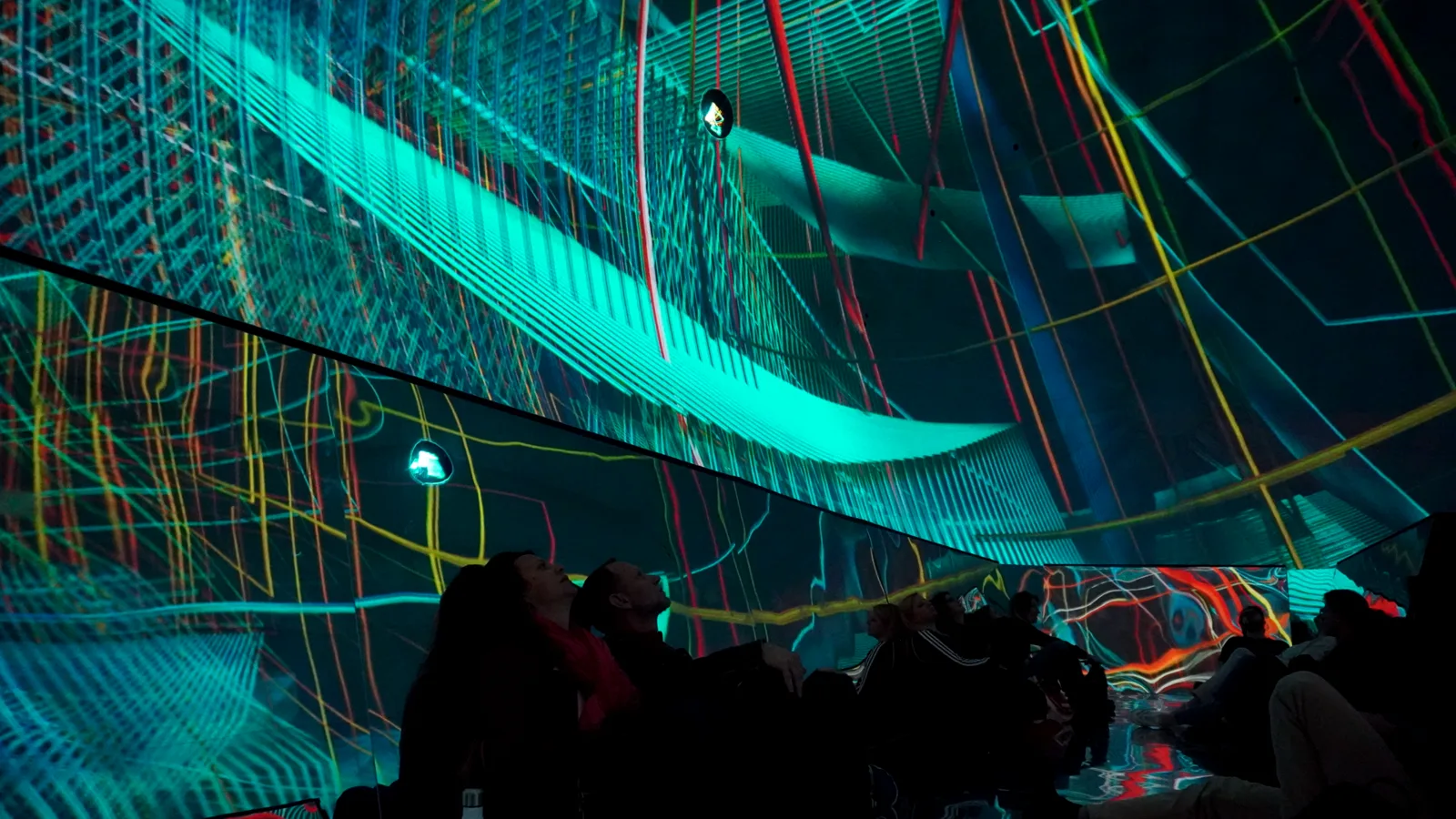
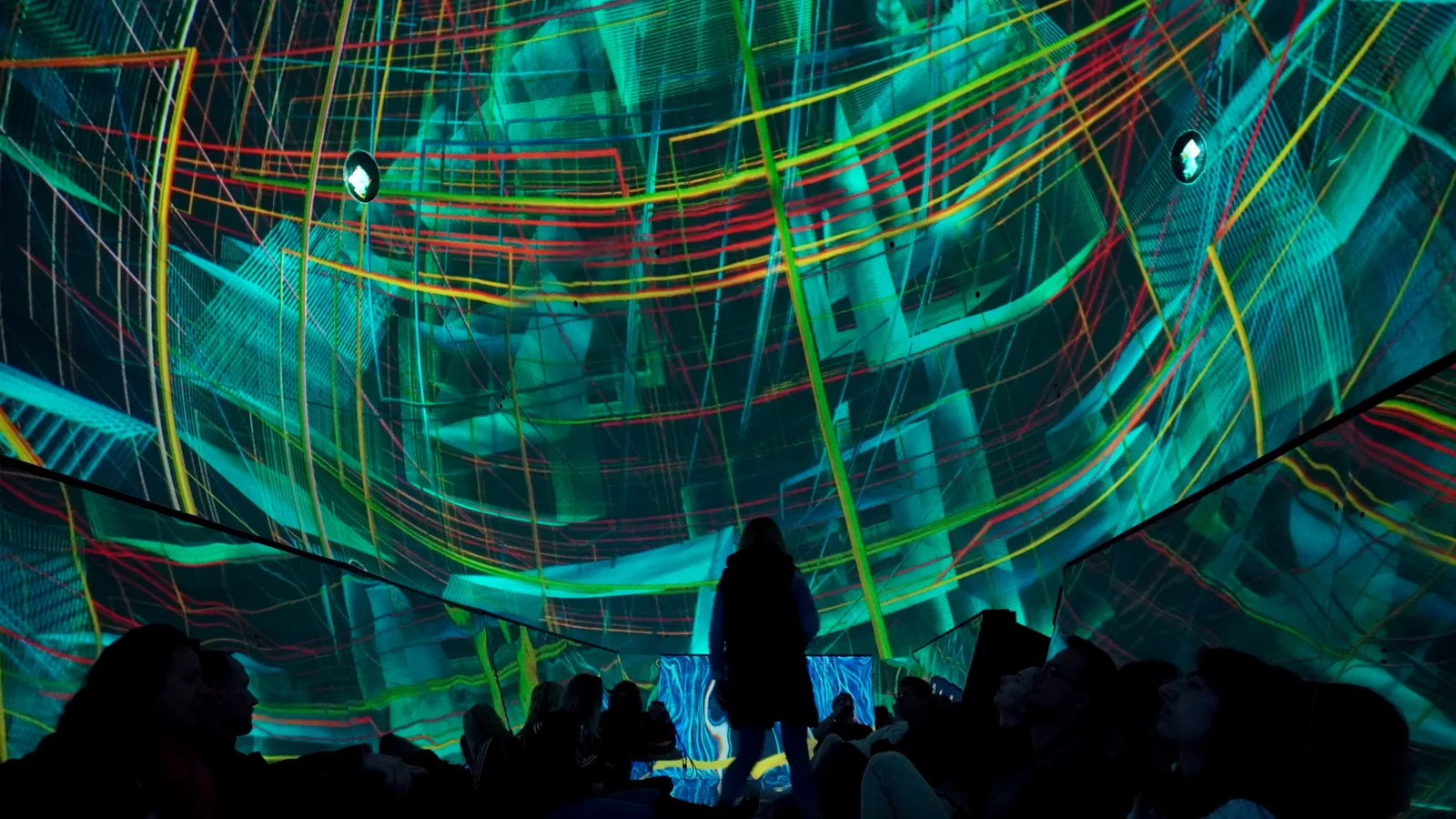
The title comes from Latin and means immeasurable space, infinite. For five minutes and twenty seconds, two‑dimensional planes create the illusion of three‑dimensional bodies, return to being surface, and pulse between one thing and another. Forms that appear solid dissolve into color and re‑emerge ahead. The colors and figures, in the text the curator wrote for the work, function as the abstract translation of thoughts and feelings.
The perception that only arrives in pieces
The most interesting point of IMMENSIA lies in what it refuses. The traditional image has only one plane and one point of view, and the viewer knows where to look. In a projection that occurs on all walls simultaneously, following everything is physically impossible. The perception of those inside fragments, and it is precisely this incompleteness that becomes the material of the work. Each visitor constructs their own version from the fragment they managed to see, and becomes a co-author of what they experienced there.
Where does this gaze come from
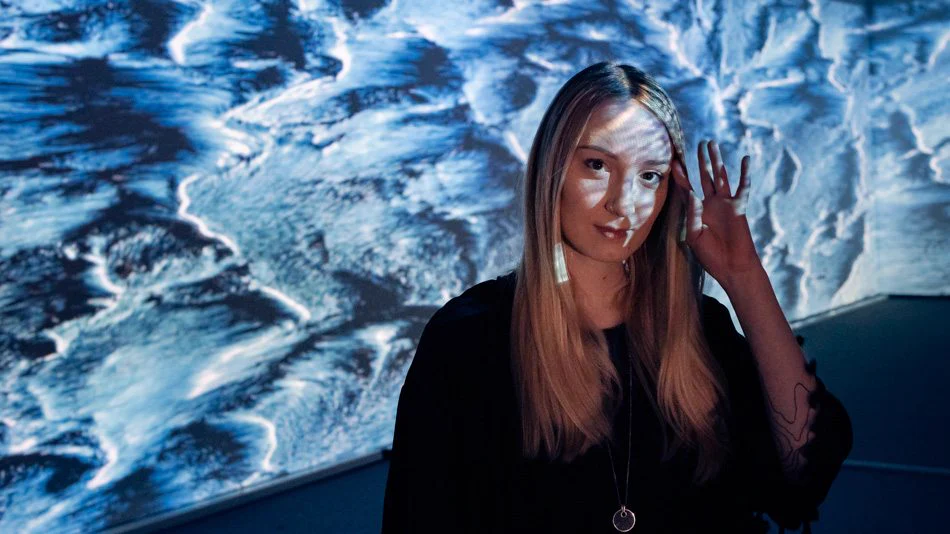
Kati Katona was born in November 1995 and grew up in Topolya, a small town in Vojvodina in northern Serbia, running through the region’s fields, lakes and woods—a childhood spent outdoors that she now links to the presence of nature in her work. She studied at the Bogdan Šuput design school in Novi Sad and moved to Budapest to study media design at METU university, a choice shaped by the seasons she spent as a child at her maternal grandparents’ house in the city. She has lived in Hungary for ten years. A new‑media artist and designer, she works with generative and 3D animation, interactive installation and projection mapping, almost always drawing from natural elements, biomorphic structures, patterns and algorithms. Her research revolves around a constant question: how do immersive environments change the way we perceive space, and how far can technology redraw the boundary between the physical and the digital.
Since 2016 she has been involved in large‑scale projects. She has exhibited at Kanvas in Dubai, at Cinema Mystica and the Light Art Museum, presented as a visual artist at the Live Cinema, Patchlab and LPM festivals, and had works shown at Vivid Sydney, White Night Melbourne, the Ghent Light Festival and Hungary’s Zsolnay Light Festival.
Before the large immersive rooms, she explored almost every format of live imaging. As a member of the Global Illumination team, she worked on the digital sky‑mapping for the 2021 New Year’s Eve celebration at Seattle’s Space Needle, a project that later earned an Emmy. She created visuals for electronic‑music shows and festivals such as Ozora and Sziget, and together with musician Balázs Zságer founded the audiovisual duo Žagar AV Experience, which performed at the Live Cinema Festival in Rome and at the Patchlab Festival in Krakow.

What came next
The research on space continued in other formats. In December 2024, Katona took Continuum to the dome of the Fotonica festival in Rome, a fulldome work that extends across the entire ceiling the same investigation between physical and digital dimensions. In 2025, Essentia premiered at the Shining Shanghai Light Festival in China, among the 20 finalist projects. There the subject shifts scale: instead of an infinite space, the idea of home, built in layers of print, rhythm and light, drawn from the experience of someone who grew up in one country and was educated in another.
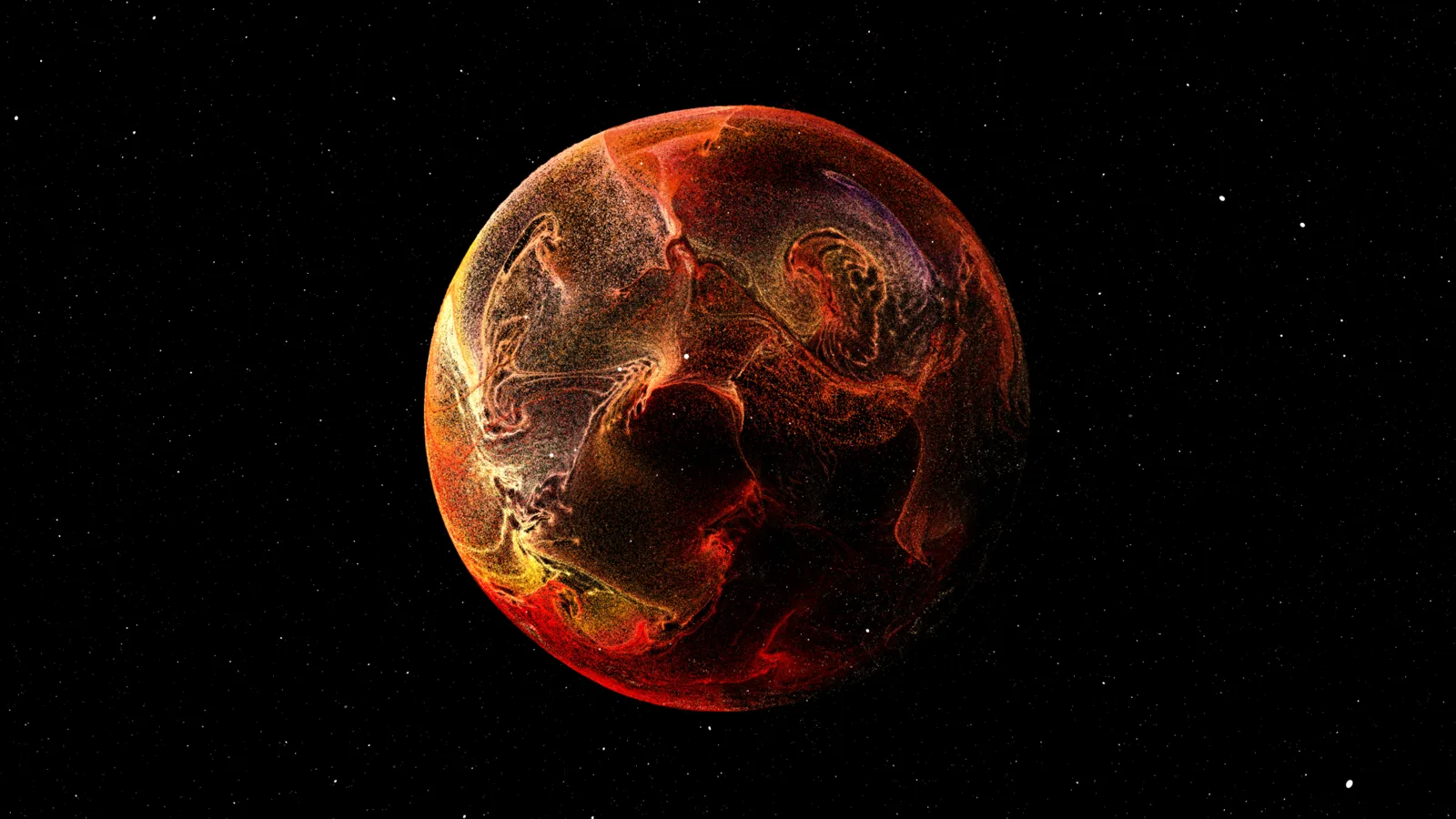
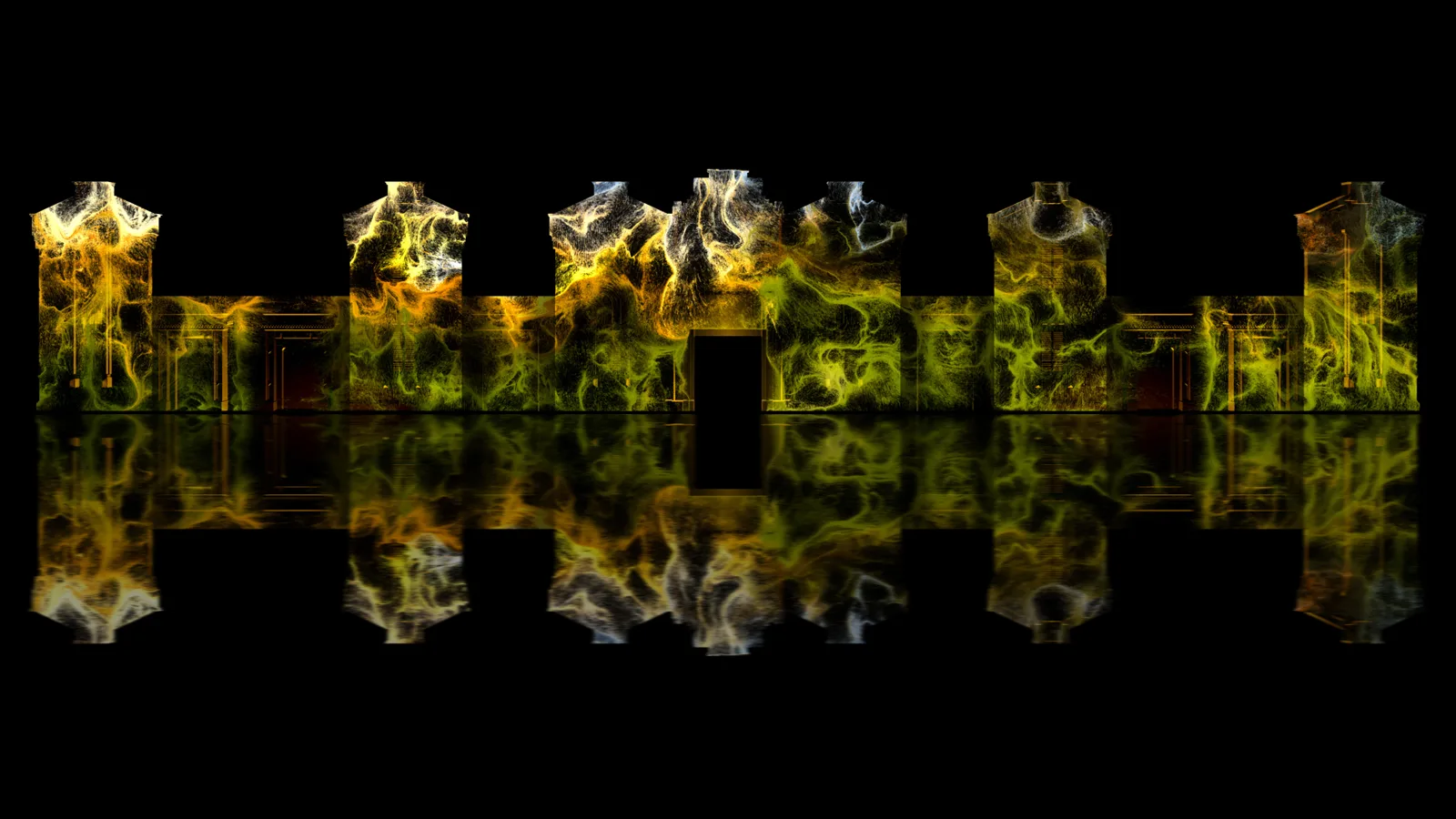
This year, Continuum was also presented at Digital Canvas: Art Meets Technology, a creative technology showcase by the Special Effects Group, held with Kanvas, Dubai's digital art platform.
Water is another recurring territory. Ocean Anthology, a meditative video loop about the tension and delicacy of deep waters, in which droplets rise, collide and then dissolve back into the whole, was featured in 2025 at the AI Art Gallery of the AI for Good Global Summit in Geneva, curated by Kanvas.
From infinite rooms to the memory of a home, Kati Katona's work always returns to the same place: space is not something we see, it is something the body attempts, and never fully manages to measure.
Complete TV · Reels
IMMENSIA, by Kati Katona
See on InstagramFrom Complete


More from Caíque Nucci
View profile


Most popular
 CultureOsesp opens Environment Week with springs by Boulanger and Schumann
 CultureAmaro Freitas plays a free concert at CCBB SP within Atlântico Sertão
 CultureMuseu Oscar Niemeyer opens on the holiday for the 36th Biennial's final days
 CultureCrack Wall
 CultureThe Vacuum: Between the Warning and the Silence