

Augusto Paz: A Casa da Tia Cleusa
The show “A casa da tia Cleusa” dives into the designer's childhood memories in Santo André, in the ABC region of São Paulo, and turns everyday domesticity into the backdrop of his collection.
Words by

Words by Sarah Rocksane Araujo
Editorial, Fashion and Beauty
Listen to this story
After a debut marked by reflection on death, in homage to a close friend, Augusto Paz presents his second collection with a gesture that moves from mourning to the celebration of life. The show “A casa da tia Cleusa” dives into the designer's childhood memories in Santo André, in the ABC region of São Paulo, and turns everyday domesticity into the backdrop of his collection.
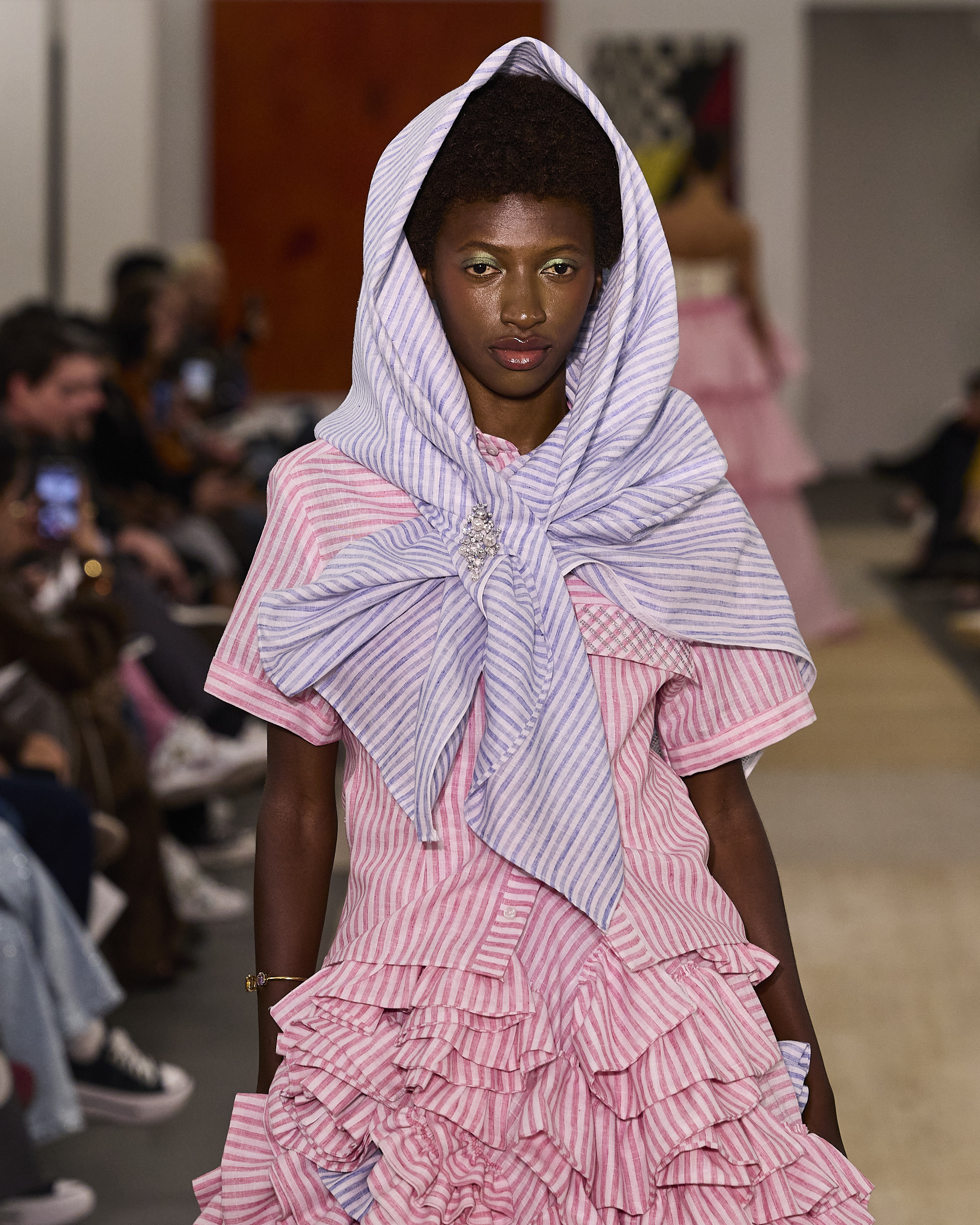
The collection's title is a tribute to Brazilian women and their homes, with emphasis on the figure of aunt Cleusa, host of the designer's childhood summers. The starting point is the kitchen, a central space of company and imagination, with its gathered curtains, appliance covers, the traditional plastic-bag holder and fabrics printed in florals, stripes and checks. Those references appear reinterpreted in volumes, colours and textures that mix playfulness and sophistication.
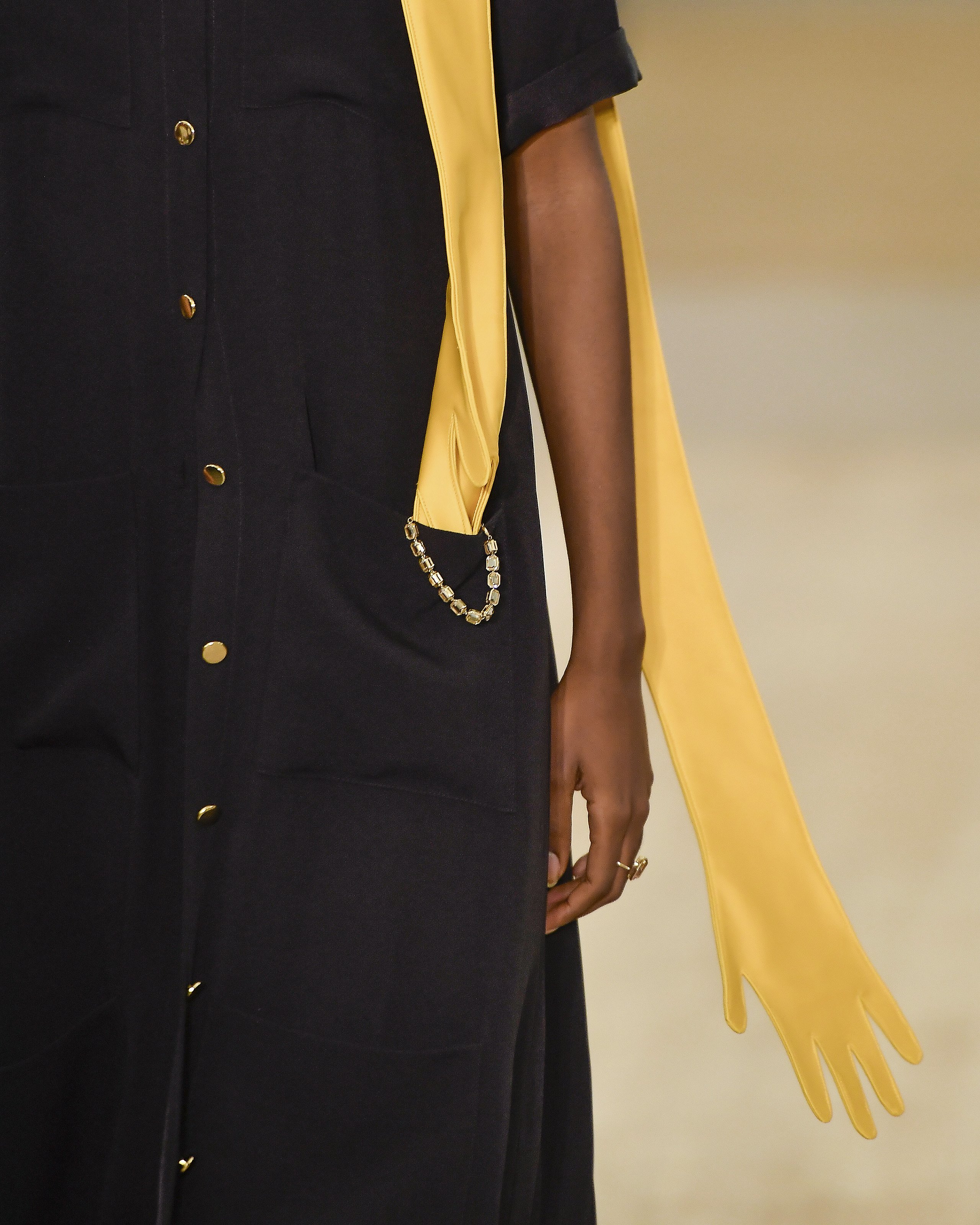
The collection's colours move between the vividness of pinks, reds, yellows and bright blues, in contrast with intense greens, black and brown. That palette, drawn from domestic decoration and from a Brazilian suburban aesthetic, appears organised in a refined and contemporary way. In the construction of the pieces, Augusto reaffirms his made-to-measure signature, favouring structured silhouettes and well-architected volumes. Dresses, skirts and shirts recall the forms of the 1940s: a fitted upper half and skirts that open into breadth, with layers of gathers and frills at hems and sides. The wrap, a recurring device in his repertoire, reinforces the link to classical technique, appearing in dresses and in skirt-and-shirt sets.
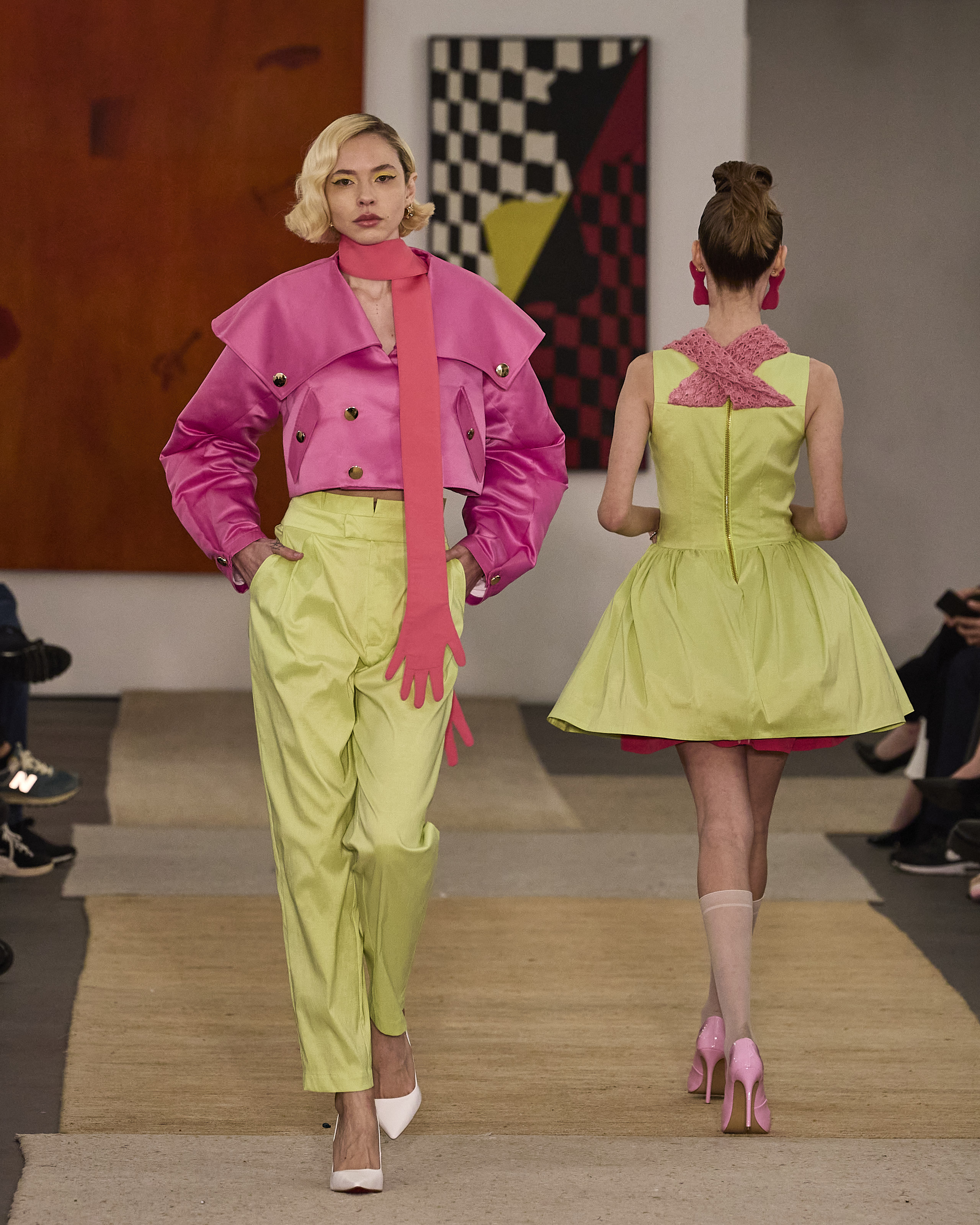
In tailoring, the designer investigates the pioneering women's tuxedos of the 1970s. Blazers, trousers, jackets, waistcoats and coats gain lapels of new shapes, experimental fastenings and loose yokes at the back. There are voluminous pockets on coats and waistcoats, giving the pieces an urban tone. The short jackets, with wide collars and double-breasted fastening, contrast with elongated blazers and tapered trousers, revealing a balance between formal sophistication and everyday function.
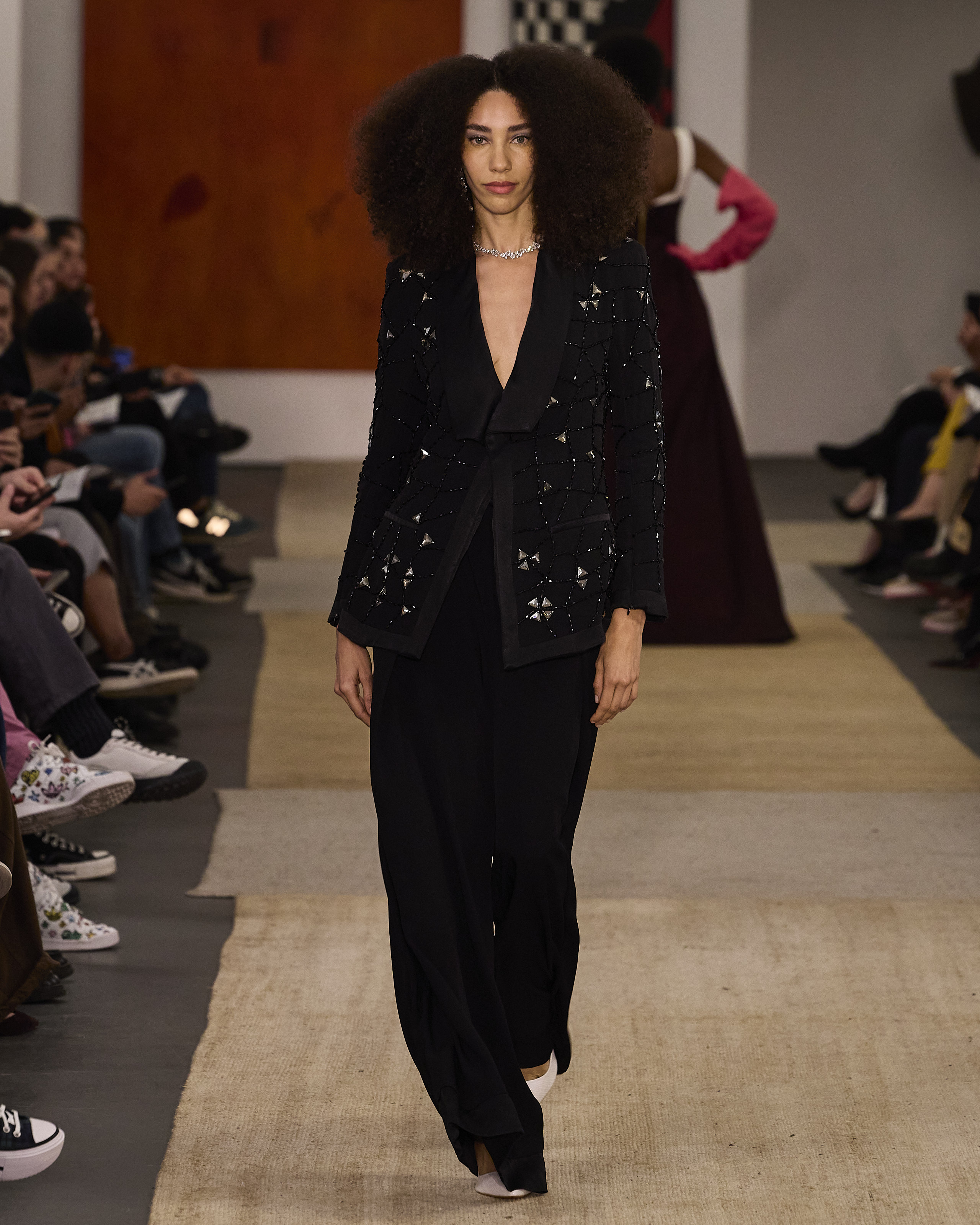
Handwork stands out. Crochet appears both in specific details and across the whole surface of coats. Stone embroidery spreads across dresses, suggesting artisanal luxury. The partnership with the label Cuadró, by designer Carla Prado, brought exclusive accessories made from fabric offcuts from the atelier. Patchwork and embroidery turned waste into desirable objects, widening the collection's sustainable argument.
Affective memory as material for creation
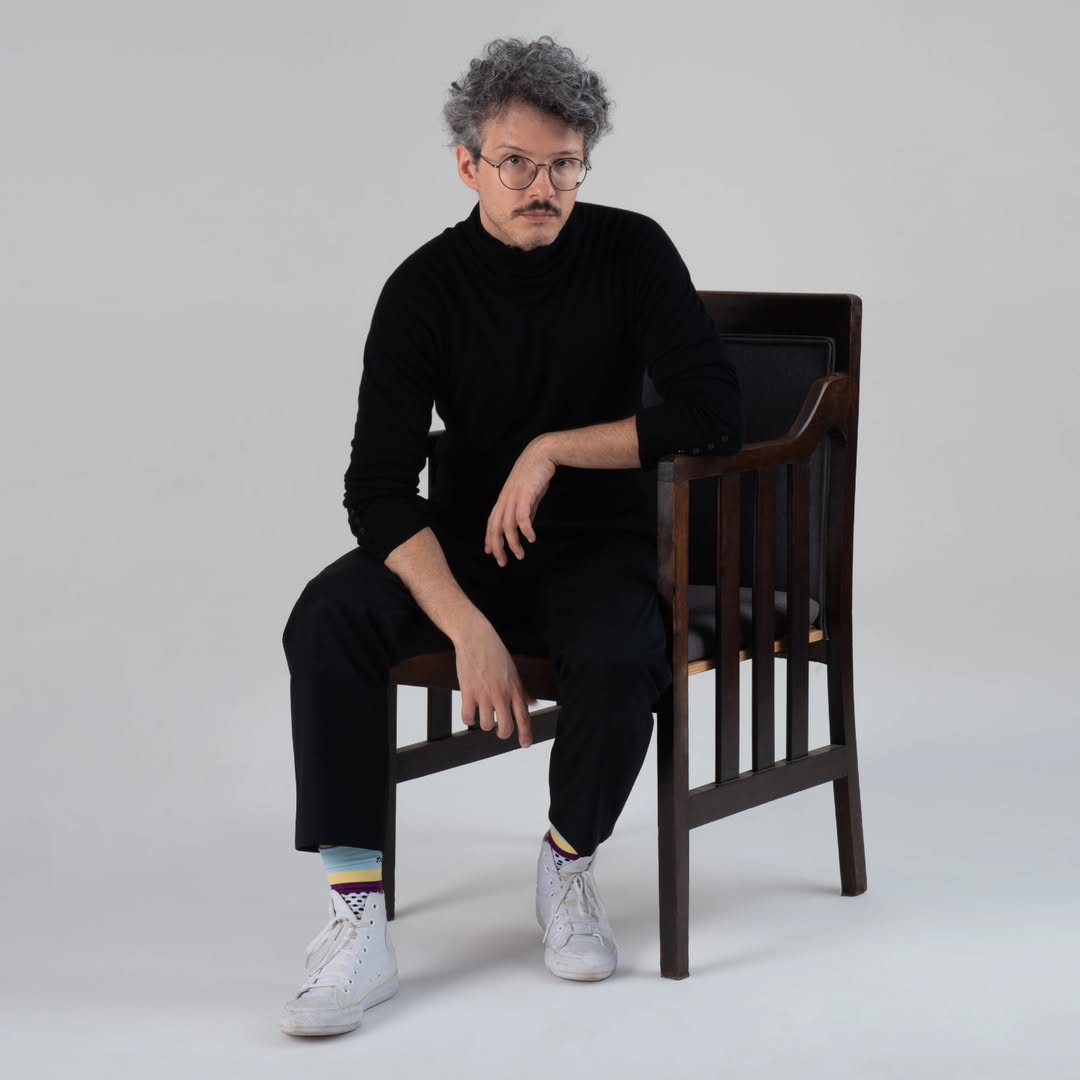
Asked how he turned personal memories into a collection, Augusto answered clearly: he did not set out to represent all Brazilian women, but the concrete figure of his aunt. “My exercise was to return to that pleasant place of childhood, having lunch with my aunt during the holidays. I took elements of that typically Brazilian house and carried them into the collection. The gathers come from the little curtains under the sink, the tiled floor became embroidery with Swarovski, and even the ball glove was reinterpreted as a washing-up glove”, he said.
The designer explained that he has always liked the refined silhouettes of the 1950s and 60s, but that this time he wanted to imagine what a Brazilian ball in a back yard would look like. “It is a colourful, playful collection, but still sophisticated. A dialogue between memory and contemporary desire.”
Compared with the previous collection, marked by reflection on death, Augusto described “A Casa da Tia Cleusa” as lighter and happier. “Without doubt it is far more playful. More colourful, wider, with that place of a happy child. It is a way of crossing the mourning for the loss of my mother, of finding strength in good memories.”
Despite the strong autobiographical charge, Augusto also thinks about his clients. “The atelier has corporate demand. So we created tailoring in crepe, lighter for the Brazilian climate, and shirts with wide sleeves and ribbed cuffs, to offer comfort. It is memory, but it is also function.”
The show connects affection and technique, intimacy and sophistication, tradition and experiment. By turning elements of the Brazilian suburban home into runway design, the designer shifts the public's gaze: what was once considered banal or domestic now appears as a symbol of aesthetic identity and creative force. If his debut spoke of finitude, the second collection speaks of permanence: of memories, of the women who structure homes, of the handwork that resists time. Augusto proves that authorial fashion, while anchored in autobiography, can open space for wider dialogues about culture, identity and affection.
Complete TV · Reels
O artista uruguaio Mauro Cosenza @mauro_cosenza, formado no circo e no teatro físico, apresentou Neo Botanica na Load Gallery @load.gallery
See on InstagramFrom Complete






More from Sarah Rocksane Araujo
View profile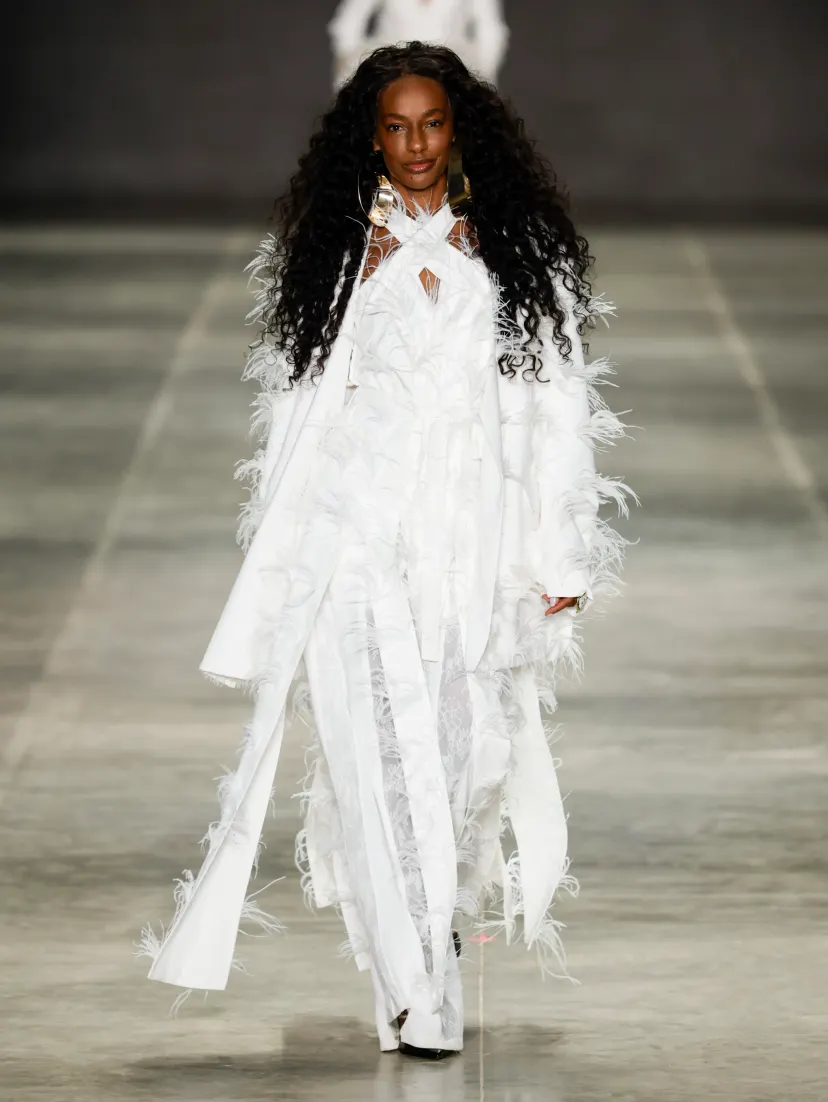
Latest from Complete
 FashionGuccicore: plurality as a language of style
 BeautyISDIN Fusion Water Magic: sun protection with lightness and technology
 The CoverIn the beginning, we couldn't even use the word handicraft.
 DesignTomie Ohtake House‑Studio presents Zanine Caldas
 CultureThievery Corporation, 30 years: the Washington duo that originated in bossa nova
 The CoverBrazil still gives little recognition to genuinely Brazilian authorial fashion.
 InnovationLight has become a building material