

The bomber jacket: (re)invention and identity
If the history of sportswear and military dress is already marked by appropriations, the bomber carries a strategic advantage: its shape is simple, recognisable, almost iconic. That solid base lets every designer project their own narratives onto it, shifting the meaning of the piece without erasing its essence.
Words by

Words by Sarah Rocksane Araujo
Editorial, Fashion and Beauty
Listen to this story
There are garments that, by their own history, stop being merely clothes and become cultural symbols. The bomber jacket is one of them. Born as a military uniform, popularised by cinema and by music and reinterpreted by generations of designers, it has become fertile ground for debates on identity, memory and style.
If the history of sportswear and military dress is already marked by appropriations, the bomber carries a strategic advantage: its shape is simple, recognisable, almost iconic. That solid base lets every designer project their own narratives onto it, shifting the meaning of the piece without erasing its essence. To understand how that reinvention works, it is worth looking at two recent examples that put in perspective not only the design, but the cultural weight each reading carries.
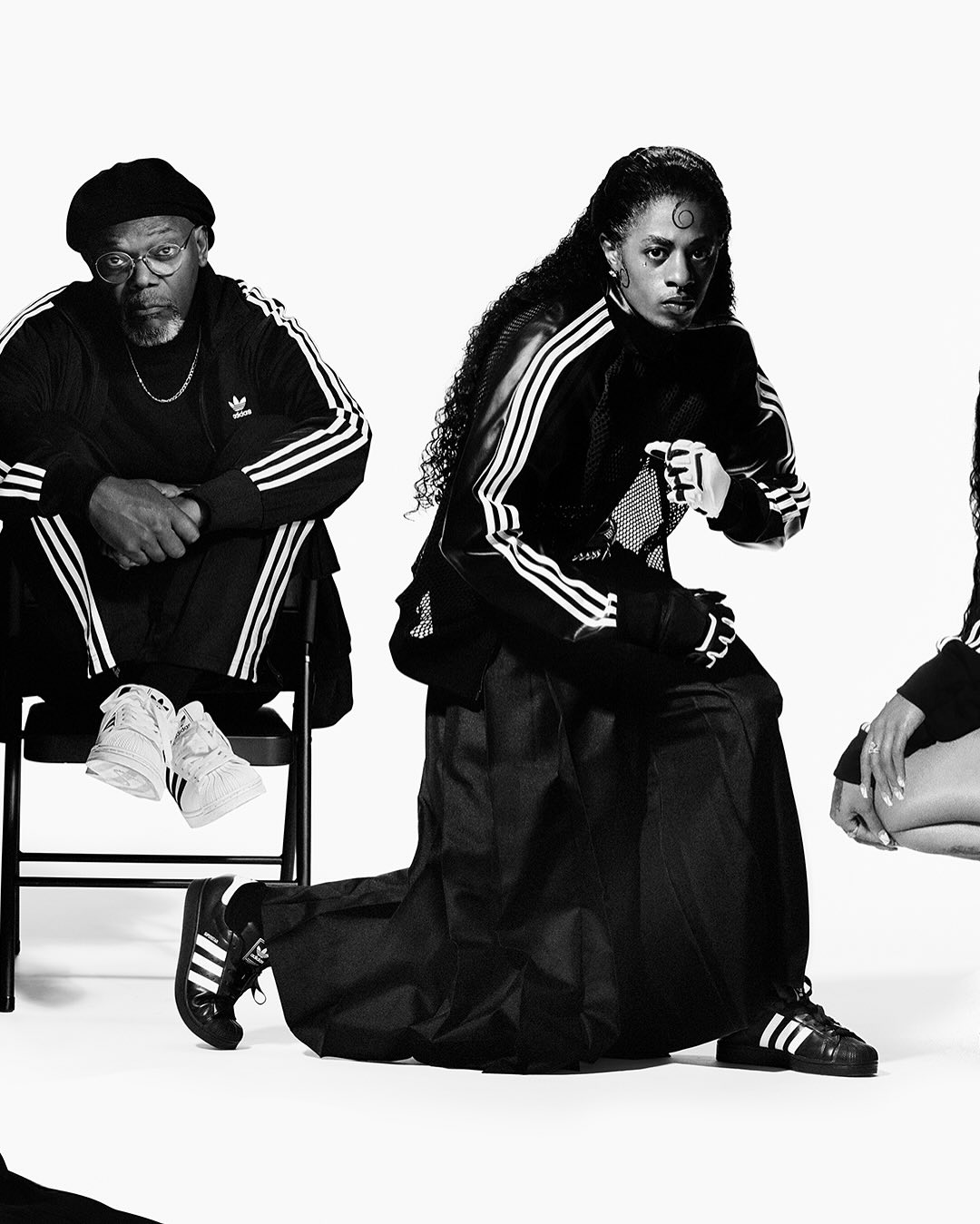
GRACE WALES BONNER, ADIDAS & 1970s JAMAICA

Grace Wales Bonner, founder of the London label Wales Bonner, is one of the most promising designers in contemporary fashion, recognised with the LVMH Prize in 2016. Born in London to a Jamaican father and an English mother, she uses her ancestry as a source for collections that explore Black male identity and sexuality with artisanal refinement. A graduate of Central Saint Martins, Wales Bonner worked with Meadham Kirchhoff and with American Vogue's fashion editor, Camilla Nickerson. Her debut, “Ebonics” (2015), won her the Emerging Designer award at the British Fashion Awards.
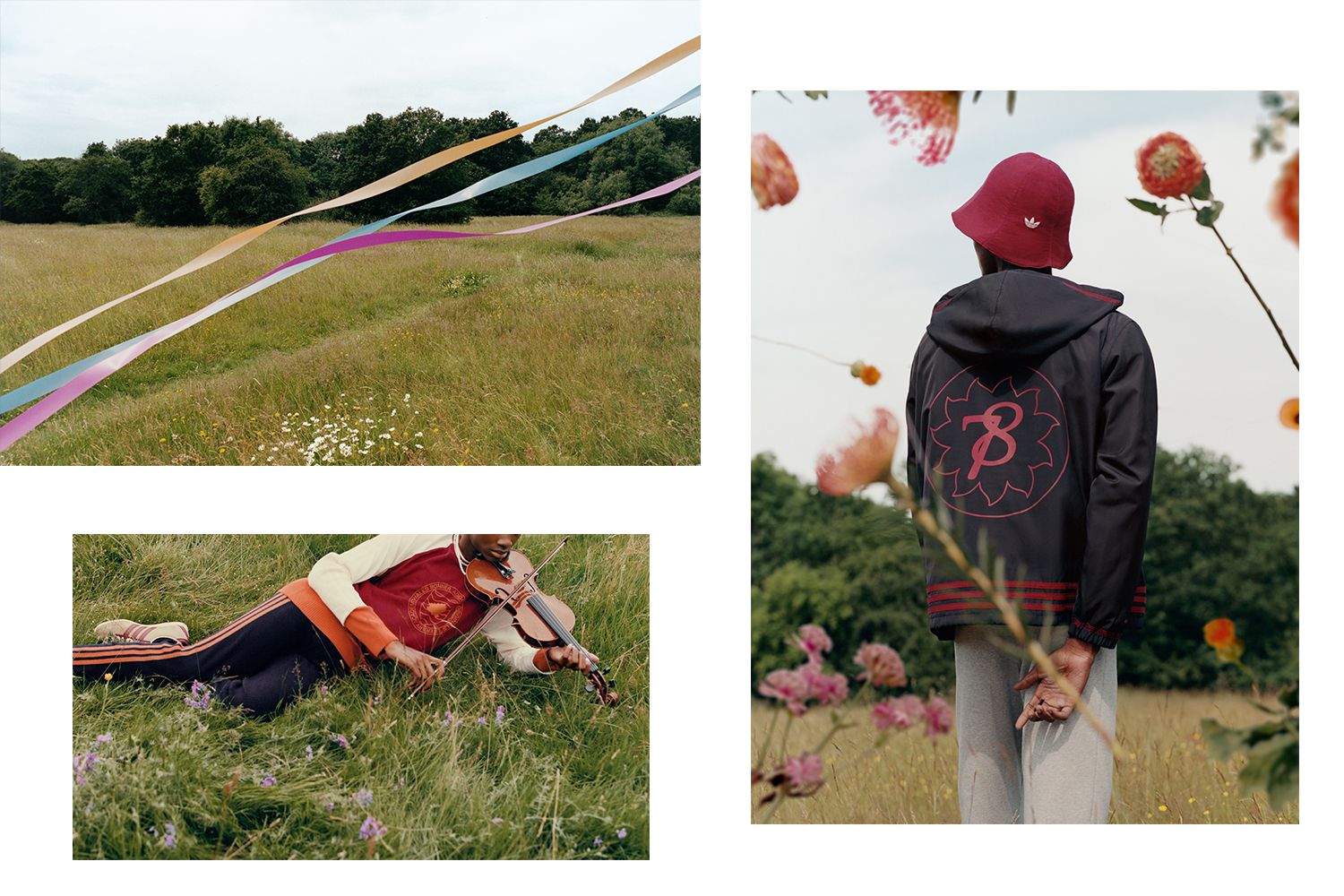
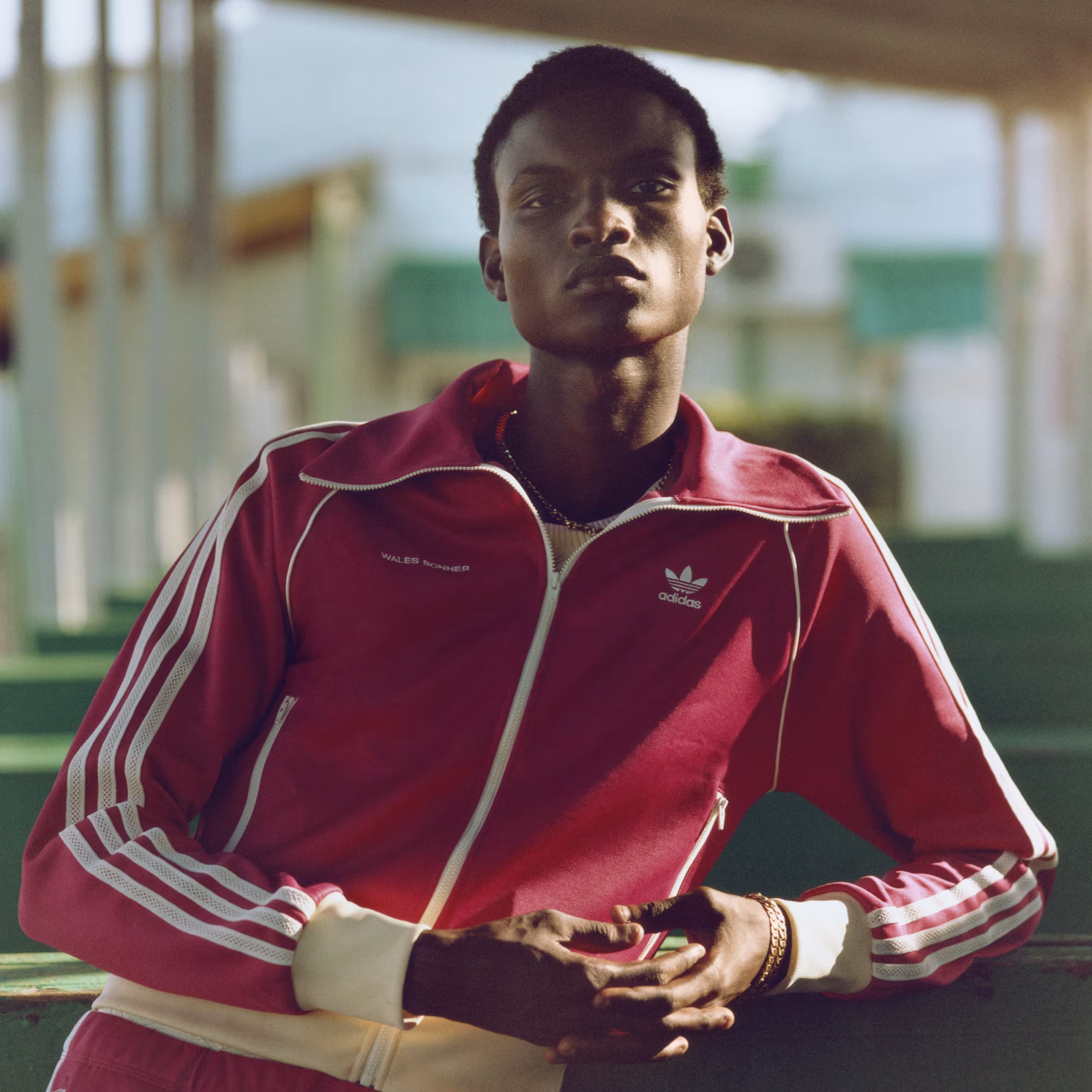
She is known for combining a precise tailoring technique with a poetic and scholarly view of Black culture, extending her practice into exhibitions, artistic collaborations and creative residencies, always addressing themes such as identity, history and ethnicity. Her work establishes dialogues between the Afro-Caribbean and European luxury. In her hands, the jacket goes beyond sportswear and becomes a capsule of history. One emblematic example is a reddish-pink tracksuit, with a wide collar, fitted cut and hand-crocheted finishes. The piece recalls the clothes her father wore in the 1970s, but not as literal reproduction: it is a rereading raised by luxury fabrics and refined construction. In the Jamaica of that time, the tracksuit stood for prestige, rivalling traditional tailoring. Bonner recovers that memory and places it in the circuit of contemporary fashion, dissolving the borders between the popular and the sophisticated.
MARTINE ROSE, 1990s KIDS CLUB

Martine Rose, a London designer who has led her eponymous label since 2007, has earned cult status in menswear design. Known for her unconventional approach, Rose presents her collections outside the traditional calendar, in unusual locations in north London such as climbing centres and markets. Growing up in south London, surrounded by diverse subcultures, including the rave and reggae scenes of the 1990s, her aesthetic is deeply drawn from the interaction between those communities. A graduate of Middlesex University in 2002, she launched her first label, LMNOP, in 2003, alongside Tamara Rothstein.
Two years later she began her solo project, initially focused on men's shirts, with financial support and mentoring from the Prince's Trust, the British institution that supports young entrepreneurs. Initially supported by Fashion East, Rose also received sponsorship from the British Fashion Council's NEWGEN MEN award. Her suits and streetwear pieces are sold locally and internationally by stores such as Matches Fashion, Machine-A, Barneys New York and Ssense. Though positioned in menswear, her label attracts a growing female following. Rose has collaborated with brands such as Been Trill, Timberland and CAT. In 2017 she was nominated for the prestigious ANDAM prize and shortlisted for the LVMH Prize; in 2018 she was in the running for British Designer of the Year, from the BFC.
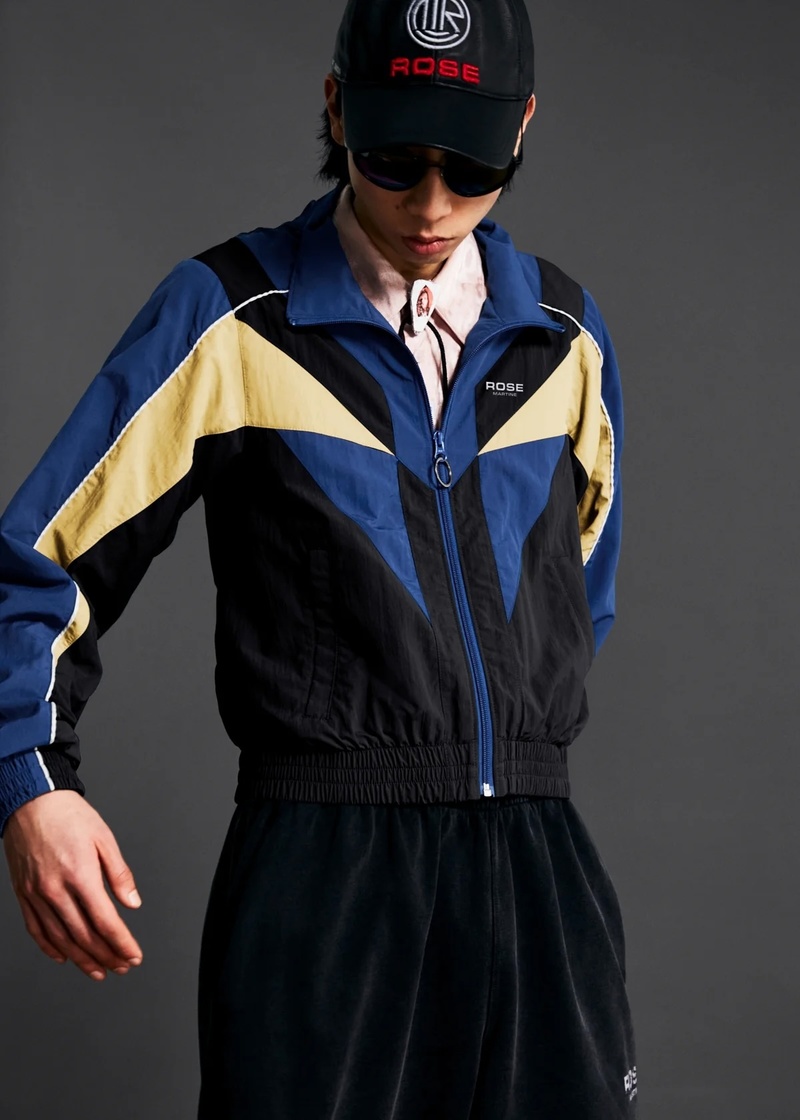
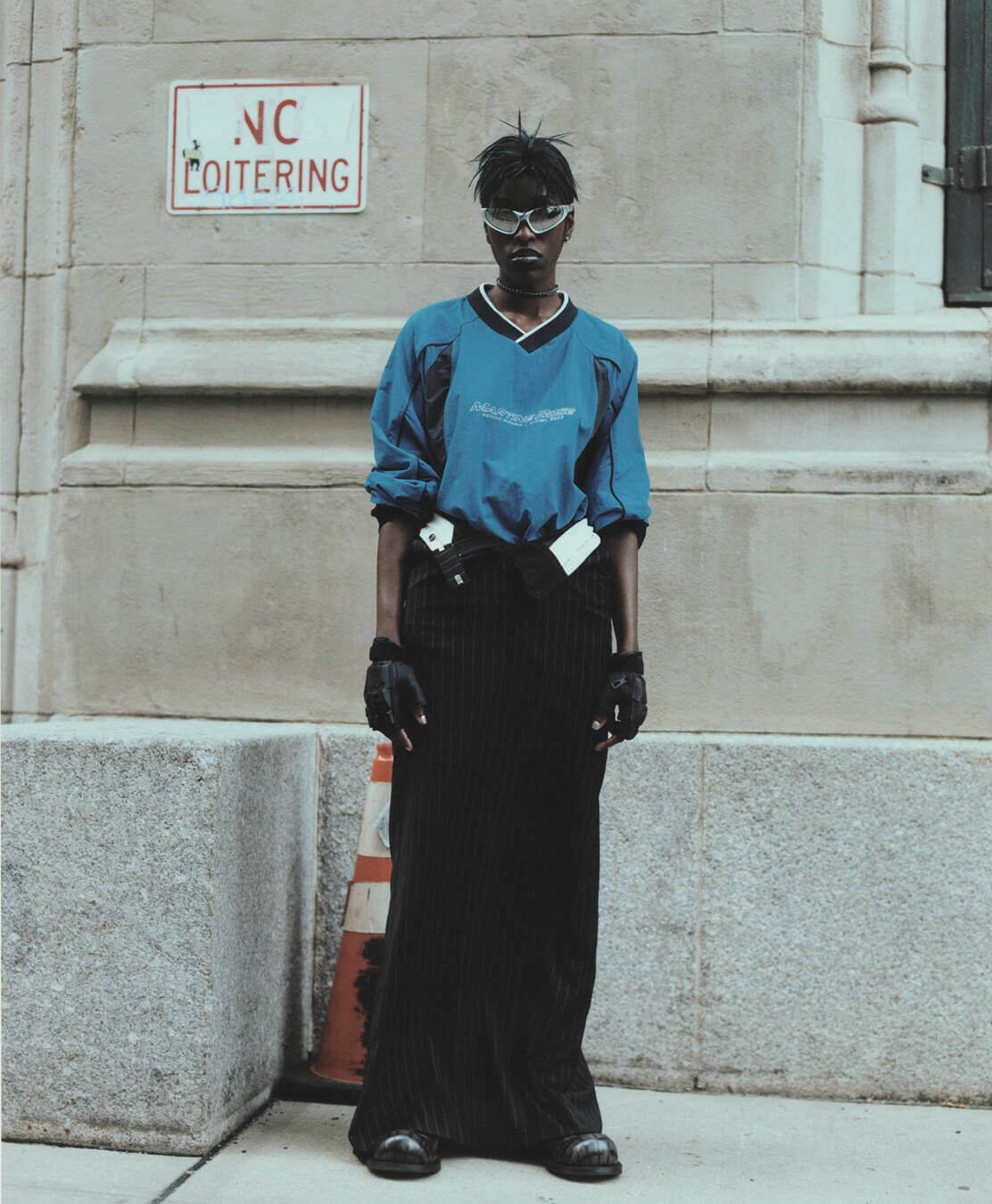
Her references to 1990s rave culture and to the peripheral subcultures of the United Kingdom are evident, for instance, in her bomber, which at first glance looks familiar, with colour blocks, a wide silhouette and substantial nylon, but which surprises in the construction of the shoulders, recalling a shawl or a toga, departing from the traditional sportswear cut. That subtlety deconstructs the retro and introduces the complexity of tailoring, putting the relationship between high and low culture under tension, questioning aesthetic hierarchies and proposing new forms of consumption and desire.
HISTORY & TIMELESSNESS
That kind of reading and transformation is only possible because the garment carries, from its origin, a charge of functionality and universality. The bomber was created to protect pilots in extreme conditions, then adapted to urban daily life. That duality, utilitarian and stylistic, makes it versatile ground for innovation. Designers can work on it without having to explain its function: the public already knows what it is, freeing space to explore what it means. There is also a question of timelessness.
Unlike seasonal trends, the bomber survives the swings of fashion because it combines three rare attributes: a recognisable shape, narrative potential and formal neutrality. That allows it to absorb aesthetic codes as distinct as luxury crochet, hand embroidery or experimental tailoring. In practice, every reinterpretation of the bomber is a comment on belonging, on what is preserved and what is transformed. In the current landscape, where fashion seeks a balance between memory and innovation, the bomber jacket remains a precise example of how historical garments can reinvent themselves without losing relevance.
Complete TV · Reels
THE IMAGE THAT RESPONDS TO HANDS, by Anton Berkasov
See on InstagramFrom Complete






More from Sarah Rocksane Araujo
View profile
Latest from Complete
 FashionFORCA Studio at SPFW N61: Forca X, Bridgestone tire and punk leather
 DesignTomie Ohtake House‑Studio presents Zanine Caldas
 The CoverIn the beginning, we couldn't even use the word handicraft.
 CultureThievery Corporation, 30 years: the Washington duo that originated in bossa nova
 InnovationLight has become a building material
 The CoverBrazil still gives little recognition to genuinely Brazilian authorial fashion.
 BeautyBORNTOSTANDOUT arrives in Brazil