

COMPLETE OBSESSED: Dennis Rodman
A pop icon and the enfant terrible of the 1990s, he subverted the aesthetic and behavioural norms of his time, challenging the cult of homogenisation that ruled both sport and media culture.
Words by
Words by Sarah Rocksane Araujo
Editorial, Fashion and Beauty
Listen to this story
In a culture that rewards conformity and the reproduction of previously validated trends, Dennis Rodman remains a rare witness to the radicalism of authenticity. A pop icon and the enfant terrible of the 1990s, he subverted the aesthetic and behavioural norms of his time, challenging the cult of homogenisation that ruled both sport and media culture. While the collective mindset favours the erasure of singularity in the name of predictability, Rodman destabilised the game, on and off the court.
In today's NBA, fashion has become a spectacle of its own. The players' tunnel, once a space of mere transition, now works as a runway, where athletes parade looks carefully composed for digital consumption. Style has always been closely tied to professional basketball, with figures such as Allen Iverson defining an era. But no name provokes reactions as divergent as Dennis Rodman.
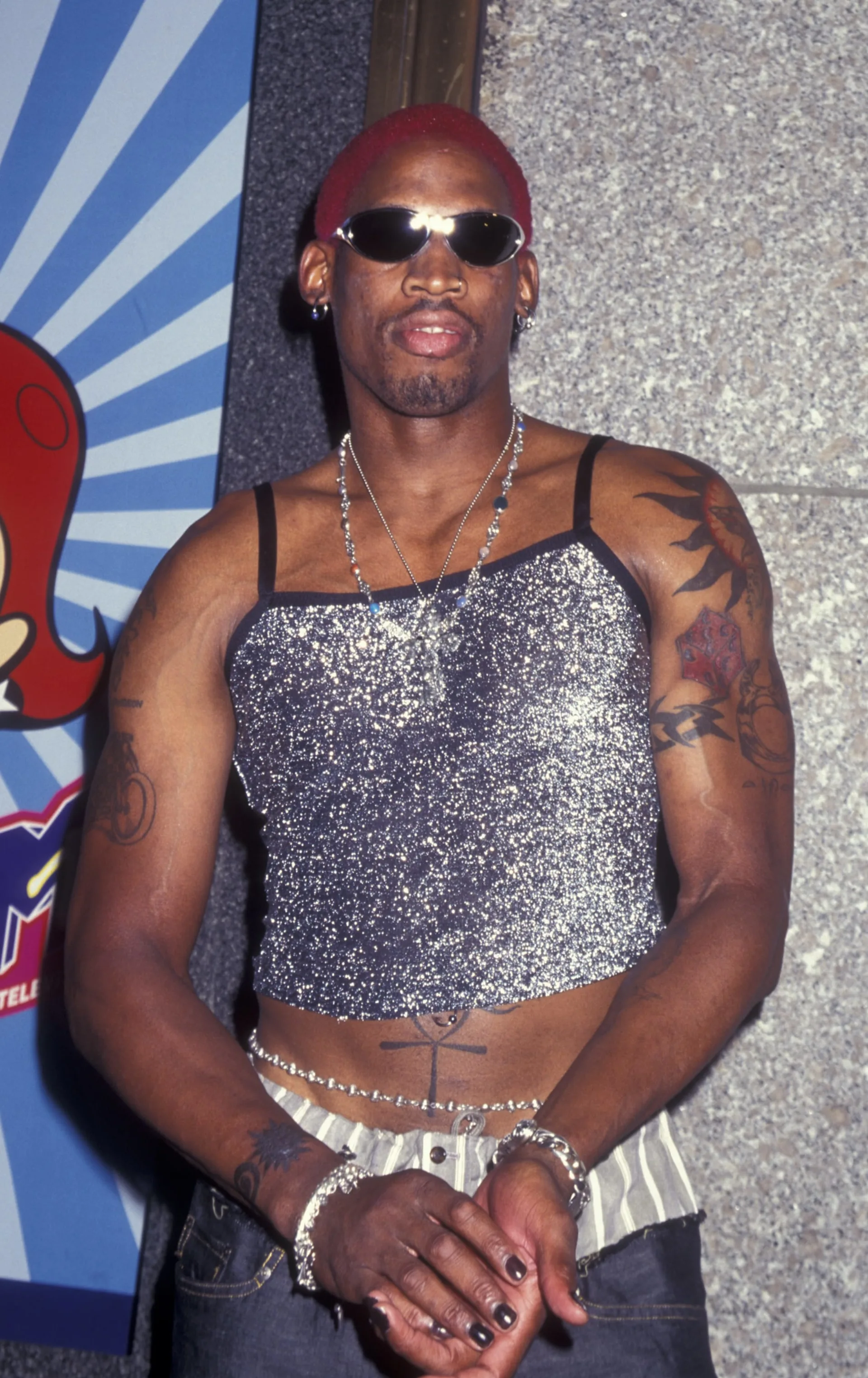
To reduce Rodman to mere eccentricity would be a mistake. At the height of his career, while dominating rebounds with the precision of a scientist of the game, he wore fluorescent hair, challenged gender norms with clothes that mixed femininity and irreverence, and attended red carpets in dresses and make-up. He married himself in a wedding dress during the promotion of his autobiography. He took part in professional wrestling. He became a face associated with the maximalist excess of labels such as Von Dutch and Ed Hardy. And, in one of the most unusual chapters of his path, he established a controversial relationship with Kim Jong-un, becoming a frequent visitor to North Korea.
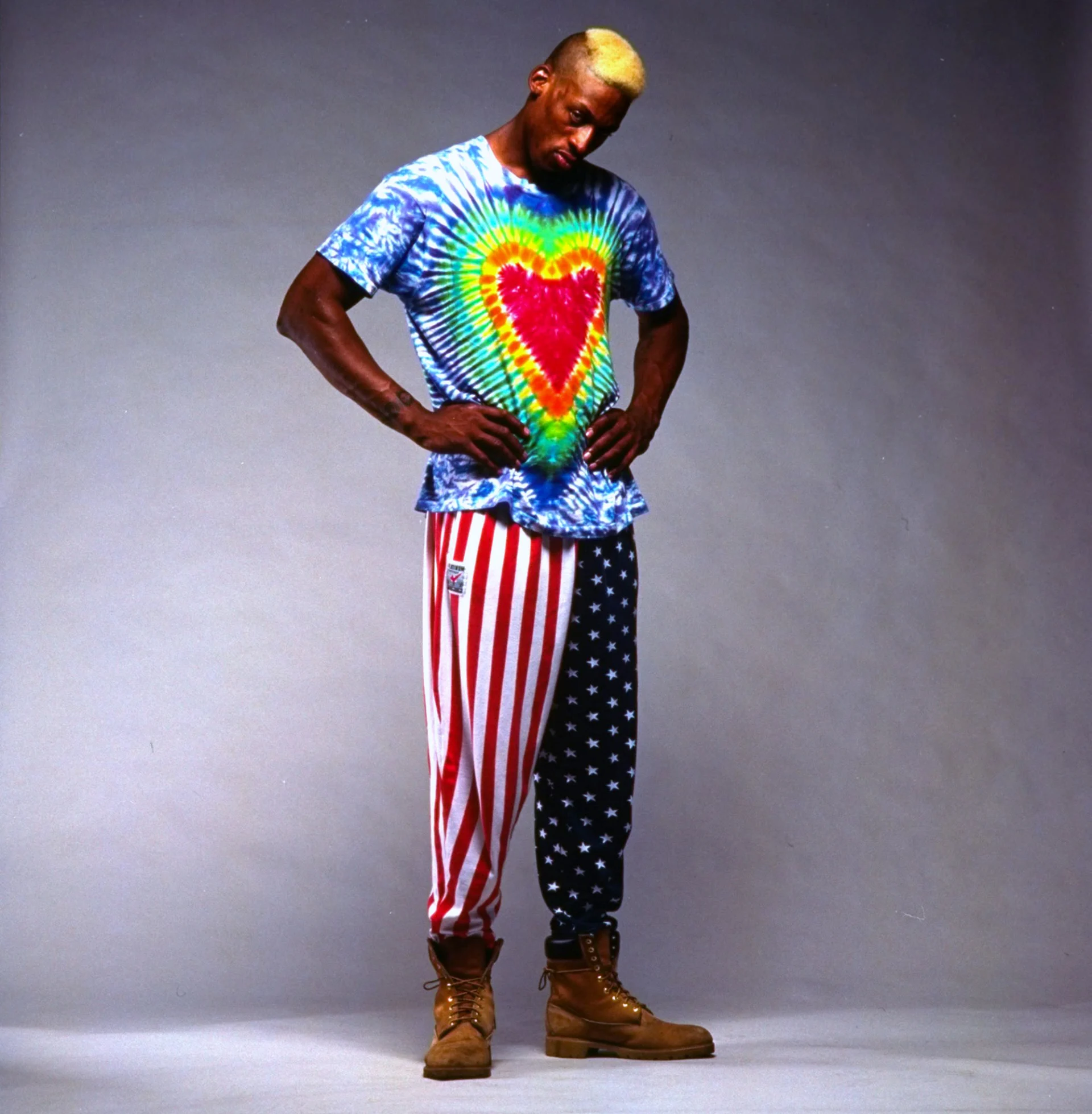
Rodman was never a product of consensus. His style provoked fascination and repulsion, but never indifference. With the recent impact of the documentary The Last Dance, it becomes clear how visionary his aesthetic approach was. Elements once seen as provocative, nail polish, chokers, fluid silhouettes, are today common in the visual repertoire of contemporary fashion. If the past saw him as a deviation, the present consecrates him as a forerunner.
Born in Trenton, New Jersey, in 1961, Rodman lived several lives in one. A controversial, inimitable and untameable figure, he won five NBA titles, was the league's best rebounder seven seasons in a row and became a Hall of Fame member. But his legacy goes beyond the statistics. He was a dissident body in the normative space of sport, a performative rupture in an environment governed by predictability.
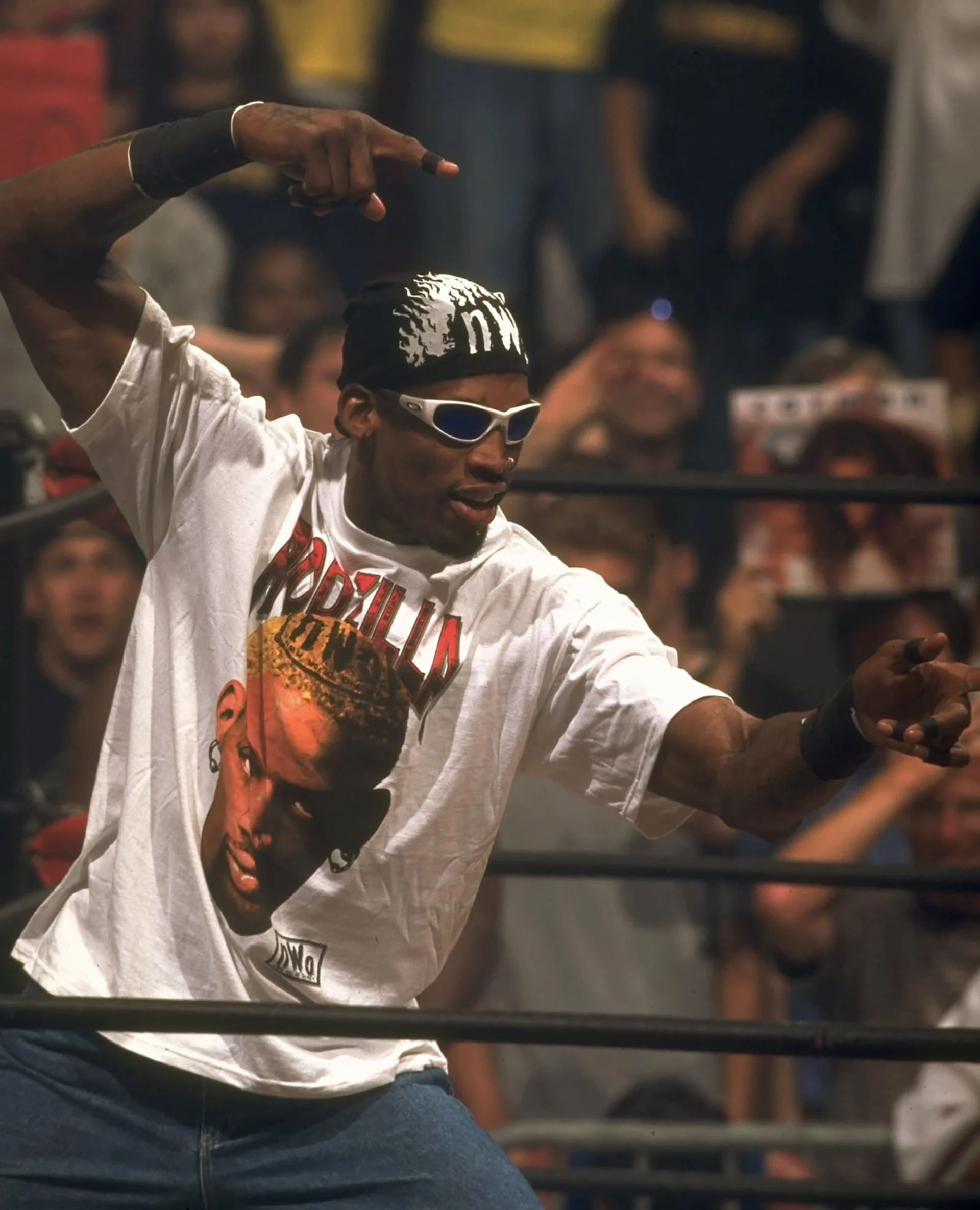
Two decades after the peak of his fame, his influence on fashion persists. Whether in his legendary television appearances, dyeing David Letterman's hair the same neon green he had already worn, or in the wraparound Oakley sunglasses and patterned haircuts that defined his look, Rodman anticipated trends only now fully absorbed. With the rise of the Y2K revival and the renewed value placed on 1990s aesthetics, revisiting the iconic moments of his style becomes inevitable. Rodman did not merely wear clothes: he wore ideas, provoked narratives and dismantled codes. His look was not a fashion statement, but a living manifesto against predictability. And that is exactly why he remains unforgettable.
Complete TV · Reels
Maja Petrić: a artista que escreveu a própria inteligência artificial
See on InstagramFrom Complete






More from Sarah Rocksane Araujo
View profile
Latest from Complete
 FashionFORCA Studio at SPFW N61: Forca X, Bridgestone tire and punk leather
 DesignTomie Ohtake House‑Studio presents Zanine Caldas
 The CoverIn the beginning, we couldn't even use the word handicraft.
 CultureThievery Corporation, 30 years: the Washington duo that originated in bossa nova
 InnovationLight has become a building material
 The CoverBrazil still gives little recognition to genuinely Brazilian authorial fashion.
 BeautyBORNTOSTANDOUT arrives in Brazil