

The World According to Colour, by James Fox, arrives in Brazil
Against the grain of colour manuals and predictable palettes, the art historian James Fox invites the reader to revisit colour with restless eyes and an unarmed mind.
Words by

Words by Sarah Rocksane Araujo
Editorial, Fashion and Beauty
Listen to this story
The World According to Colour, his most recent book, turns like a theoretical kaleidoscope that scrambles absolute truths about the hues that organise our experience. Green, for instance, with all its aura of life, nature and regeneration, is in fact a reflection, a luminous illusion returned by leaves that refuse to absorb it. There is something almost poetic in the discomfort of the artist David Nash, who hesitated to use a colour “too organic” to fit on a canvas. Fox takes such appearances to stitch together an essay on how the meaning of colour is always cultural, unstable and political, even when it seems natural.
Divided into seven chromatic chapters, the book travels through the scientific, philosophical and historical backstage of colour, shedding light on its uses and abuses across the centuries. Fox, a professor at the University of Cambridge, is direct in proposing a central paradox: we know what a colour is, but we can rarely explain why it affects us so much. Black, for example, receives special treatment: absent of light, yet full of meaning, it appears in the togas of the Romans, in Japanese screens and in the symbolic resistance that inhabits its contrasts. For Fox, black is not absence but dialectical presence, like a silence that resounds louder than sound. His attentive eye turns technical records into small visual chronicles, from the pages of Shakespeare to the pixelated screens of the first “natural” television in 1960s Japan.
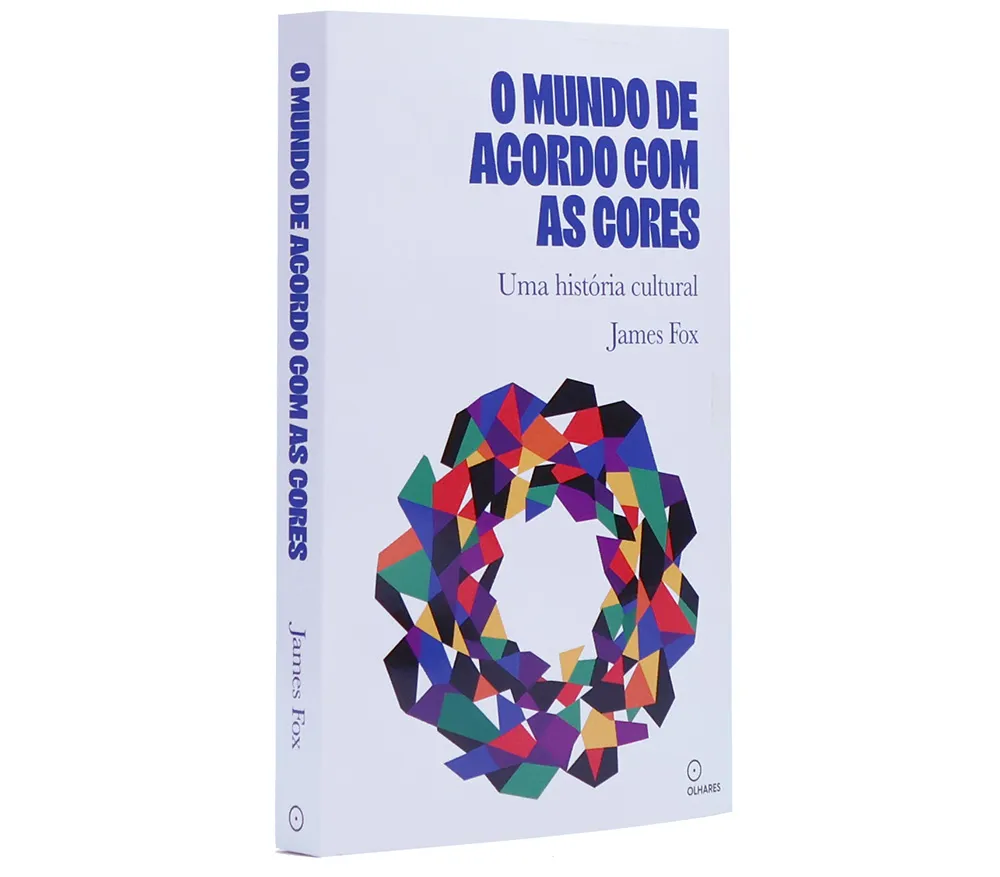
But not everything shines in Fox's spectrum. If on one hand the work generously illuminates the chromatic backstage of civilisations and ideologies, on the other it stumbles over its own digressions. Reflections such as “black is the black sheep of colours” sound fragile beside the density of the earlier analysis, and the narrative arcs at times get lost in poorly anchored detours. The question “How many meanings can a colour have before it ceases to have meaning?” arises as a legitimate provocation, but also reveals the risk of over-relativising what it set out to reveal.

Even so, The World According to Colour is valuable reading for designers, artists, thinkers and the curious, who will find in its pages a constellation of clues to understanding why, in a world saturated with tones, we still lack the words to describe the impact of a single colour.
Complete TV · Reels
Caos e ordem, do compositor tOmO
See on InstagramFrom Complete






More from Sarah Rocksane Araujo
View profile


Latest from Complete
 FashionFORCA Studio at SPFW N61: Forca X, Bridgestone tire and punk leather
 DesignTomie Ohtake House‑Studio presents Zanine Caldas
 The CoverIn the beginning, we couldn't even use the word handicraft.
 CultureThievery Corporation, 30 years: the Washington duo that originated in bossa nova
 InnovationLight has become a building material
 The CoverBrazil still gives little recognition to genuinely Brazilian authorial fashion.
 BeautyBORNTOSTANDOUT arrives in Brazil