

SPFW N60: Alexandre Herchcovitch
The designer returns to volumes of past centuries, skirts with accentuated hips, fitted corsets, setting them against exposed zips and martingales that put the border between the artisanal and the industrial, the classic and the contemporary, under tension.
Words by
Words by Sarah Rocksane Araujo
Editorial, Fashion and Beauty
Listen to this story
Without resorting to a single theme, a deliberate choice born of creative maturity, the designer presents a collection that works as an essay on the craft of sewing: clothing as architecture of the body, construction as discourse. The absence of a narrative concept gives way to the presence of technique, to the precision of someone who has mastered the making and places it at the service of form. The first four looks already signal that direction: a set of tricoline blouse and twill trousers, a white crepe dress with heavy fall and side cutouts running almost the full length, a cotton shirt and shorts, and a long black dress, half fitted, half loose. The contrast between structure and fluidity, restraint and movement, sets the tone of a collection that investigates the balance between the visible and the invisible, what is shown and what is only suggested.
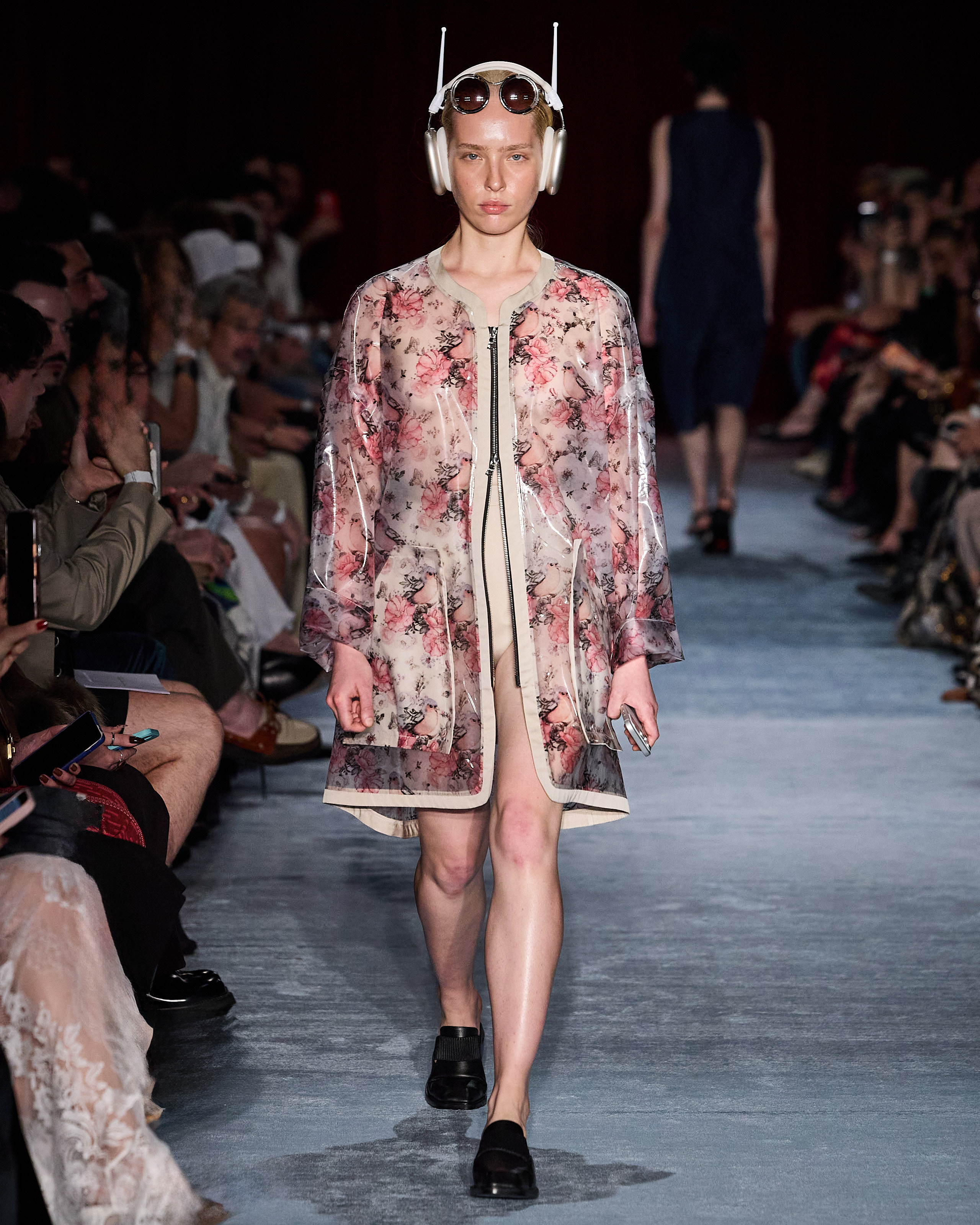
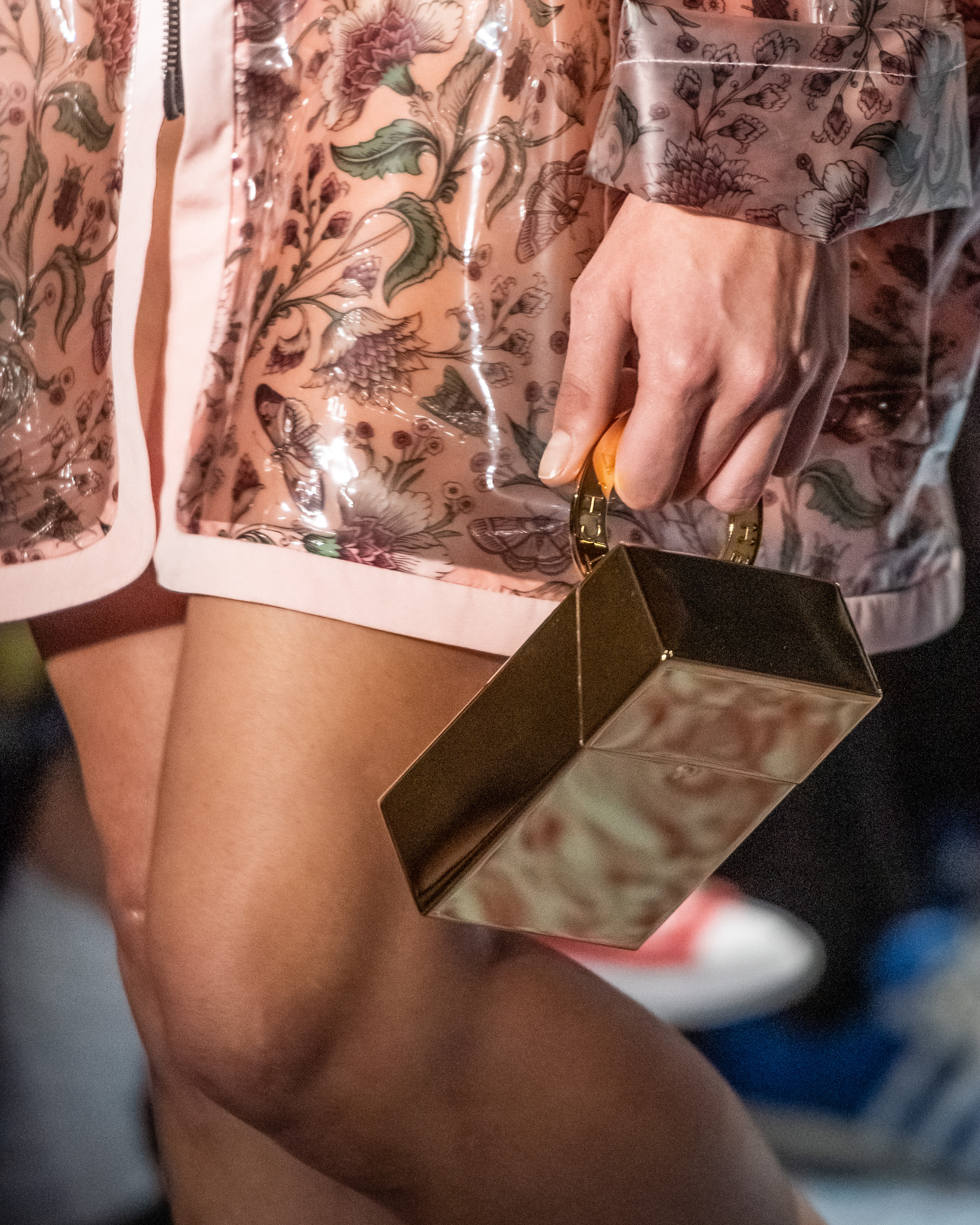
In common, every piece reveals an almost obsessive rigour in its construction. The black dress, for instance, is nearly seamless; the shorts carry internal structures that lift the hems and reveal coloured linings; the wide backs of certain dresses recreate the silhouette of sweatshirt hoods, a gesture that brings couture closer to the everyday. What looks like layering is often a single piece, ingeniously articulated by pleats, darts and strategic cuts. That attention to detail, which runs through all of Herchcovitch's work, finds a rare clarity here. There are echoes of tailoring, echoes of baroque drama, echoes of the experimentalism of the 1990s, but all of it submitted to a calmer, almost scientific eye. The designer returns to volumes of past centuries, skirts with accentuated hips, fitted corsets, setting them against exposed zips and martingales that put the border between the artisanal and the industrial, the classic and the contemporary, under tension.
The show, in that sense, seems to sum up a path of reconciliation. Herchcovitch, long celebrated for his capacity for rupture, now practises a different kind of radicality: the radicality of subtlety. In giving up grandiloquent themes, he claims the right to the essential. Every detail is intentional, every fold has a function. It is a work of emotional precision, where formal rigour is the vehicle of expression. The result is a deeply contemporary collection, not because it follows trends, but because it understands the present as a space of multiplicity and contradiction. In a single piece, the historical gesture and the minimalist synthesis coexist; the fetish of detail and the honesty of form. It is the mature translation of a vision that, since the 1990s, has helped establish Brazilian fashion as a field of thought and experiment.
Complete TV · Reels
A SP-Arte @sp_arte chega à sua 22ª edição entre os dias 8 e 12 de abril, no Pavilhão da Bienal, em São Paulo. O evento reúne 180 expositores
See on InstagramFrom Complete





More from Sarah Rocksane Araujo
View profile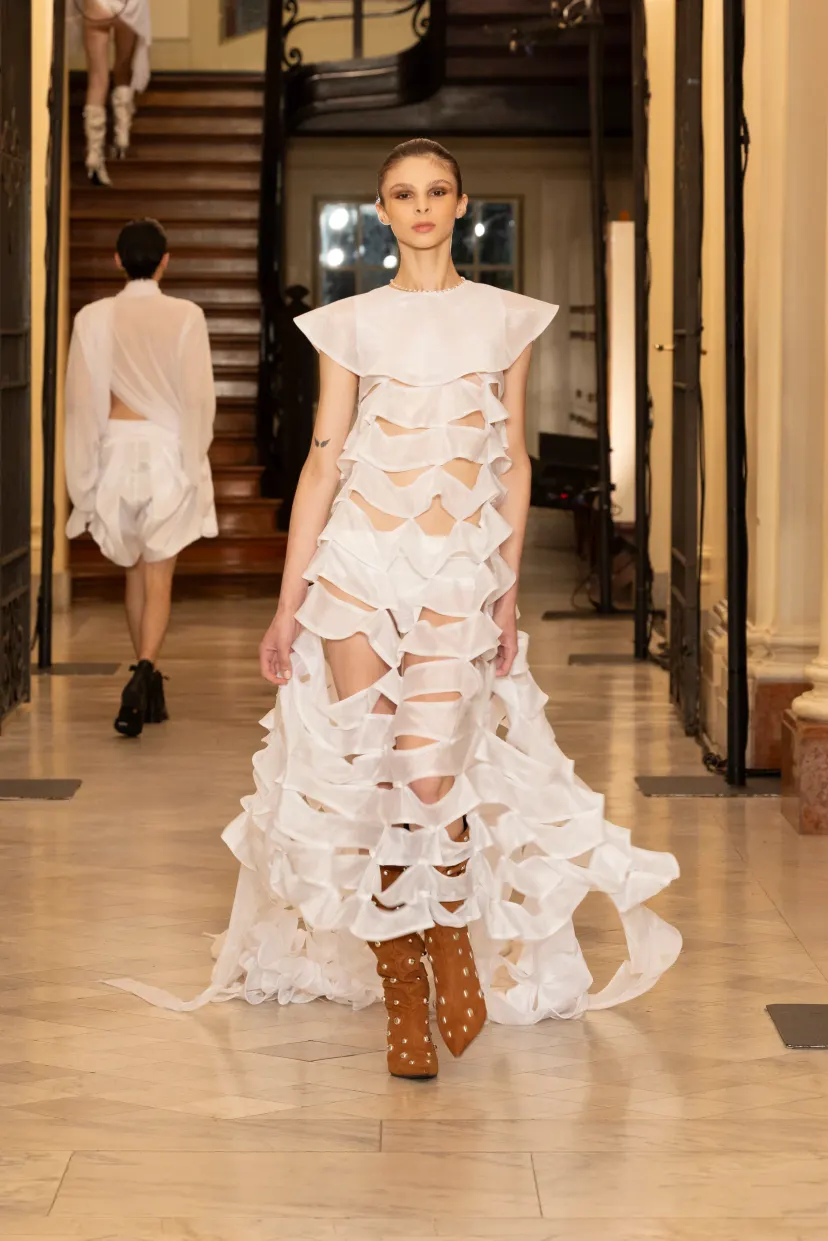
Latest from Complete
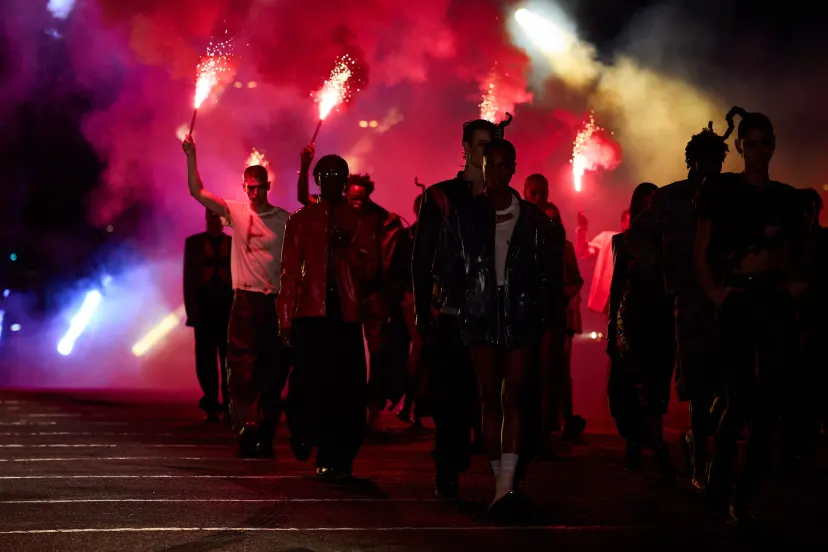 FashionFORCA Studio at SPFW N61: Forca X, Bridgestone tire and punk leather
 DesignTomie Ohtake House‑Studio presents Zanine Caldas
 The CoverIn the beginning, we couldn't even use the word handicraft.
 CultureThievery Corporation, 30 years: the Washington duo that originated in bossa nova
 InnovationLight has become a building material
 The CoverBrazil still gives little recognition to genuinely Brazilian authorial fashion.
 BeautyBORNTOSTANDOUT arrives in Brazil