

SPFW N60: Catarina Mina
Known for its work with bobbin lace, carnauba straw and crochet, Catarina Mina now widens its handmade repertoire, taking in the embroidery of Caicó, in Rio Grande do Norte, recognised as Brazilian Intangible Heritage, and the Richelieu of Maranguape, a highly sophisticated cutwork and embroidery technique traditional in one of the oldest towns in Ceará.
Words by

Words by Sarah Rocksane Araujo
Editorial, Fashion and Beauty
Listen to this story
In its third appearance at SPFW, the Ceará label Catarina Mina presents the collection “Carnaúba”, consolidating a singular position in Brazilian fashion: that of turning handwork into a strategic project for the future. More than showing clothes, the label proposes a repositioning of Northeastern craft, not as aesthetic quotation or affective appeal, but as social technology, circular economy and authorial fashion language. The collection marks an important point of expansion. Known for its work with bobbin lace, carnauba straw and crochet, Catarina Mina now widens its handmade repertoire, taking in the embroidery of Caicó, in Rio Grande do Norte, recognised as Brazilian Intangible Heritage, and the Richelieu of Maranguape, a highly sophisticated cutwork and embroidery technique traditional in one of the oldest towns in Ceará. That integration between craft territories creates a narrative of an expanded Northeast, where state borders give way to a collaborative cartography of manual knowledge.
The hand embroidery, developed by mothers in situations of economic vulnerability, is not treated as mere decorative detail, but as a source of dignified income and creative autonomy. Catarina Mina reaffirms that valuing raw material also means valuing labour and history.
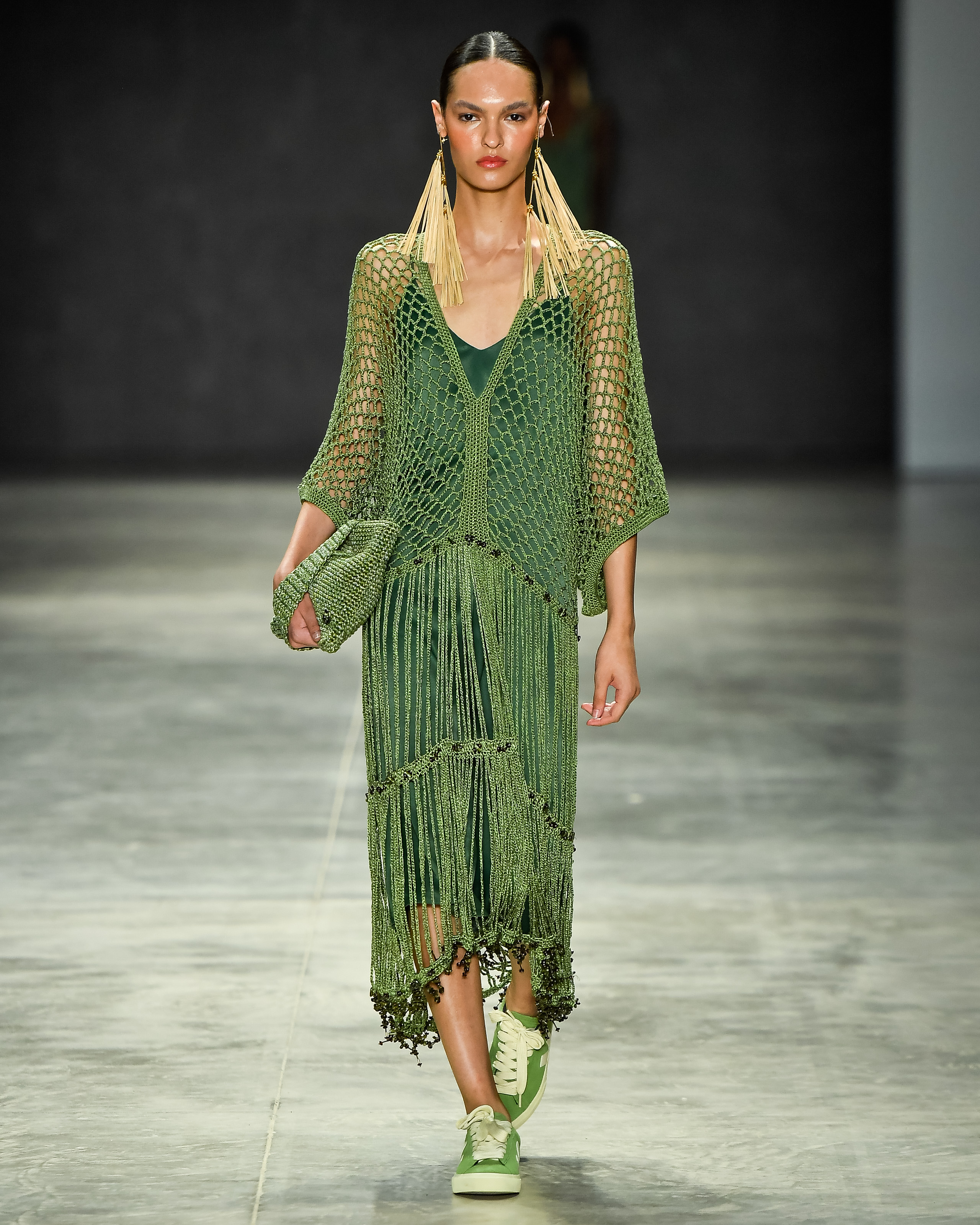
The choice of carnauba as the collection's central axis is deliberate and symbolic. Known as the “tree of life”, it represents not only the landscape of Ceará, but the logic of total use: nothing is discarded, everything is transformed, an ancestral principle that precedes and surpasses any runway discourse on sustainability. The tree appears in maximalist embroidery over linen and Richelieu, in the kaftan that becomes the show's key piece, and also in fragmented readings: leaf, stem and fruit appear as discreet, almost cartographic inscriptions. The Palma and Noir prints, painted in watercolour, present the tree in variations that stand for the day and the night of a carnauba grove, giving the collection a poetic layer without losing technical rigour. The use of noble fabrics such as silk, linen, ramie and naturally based cotton reinforces the idea of a rooted luxury, where value lies more in the time of making than in international aspiration.
By raising techniques such as bobbin lace and Richelieu to a contemporary dimension, Catarina Mina breaks with the stereotype of craft as something “rustic” or “folkloric”. Crochet, straw and embroidery do not work as nostalgia, but as an aesthetic matrix of sophistication, aligned with global fashion without giving up territorial identity. In the bags and accessories, delicate buriti straw appears in new shapes, reinforcing an aesthetic of refined utility.
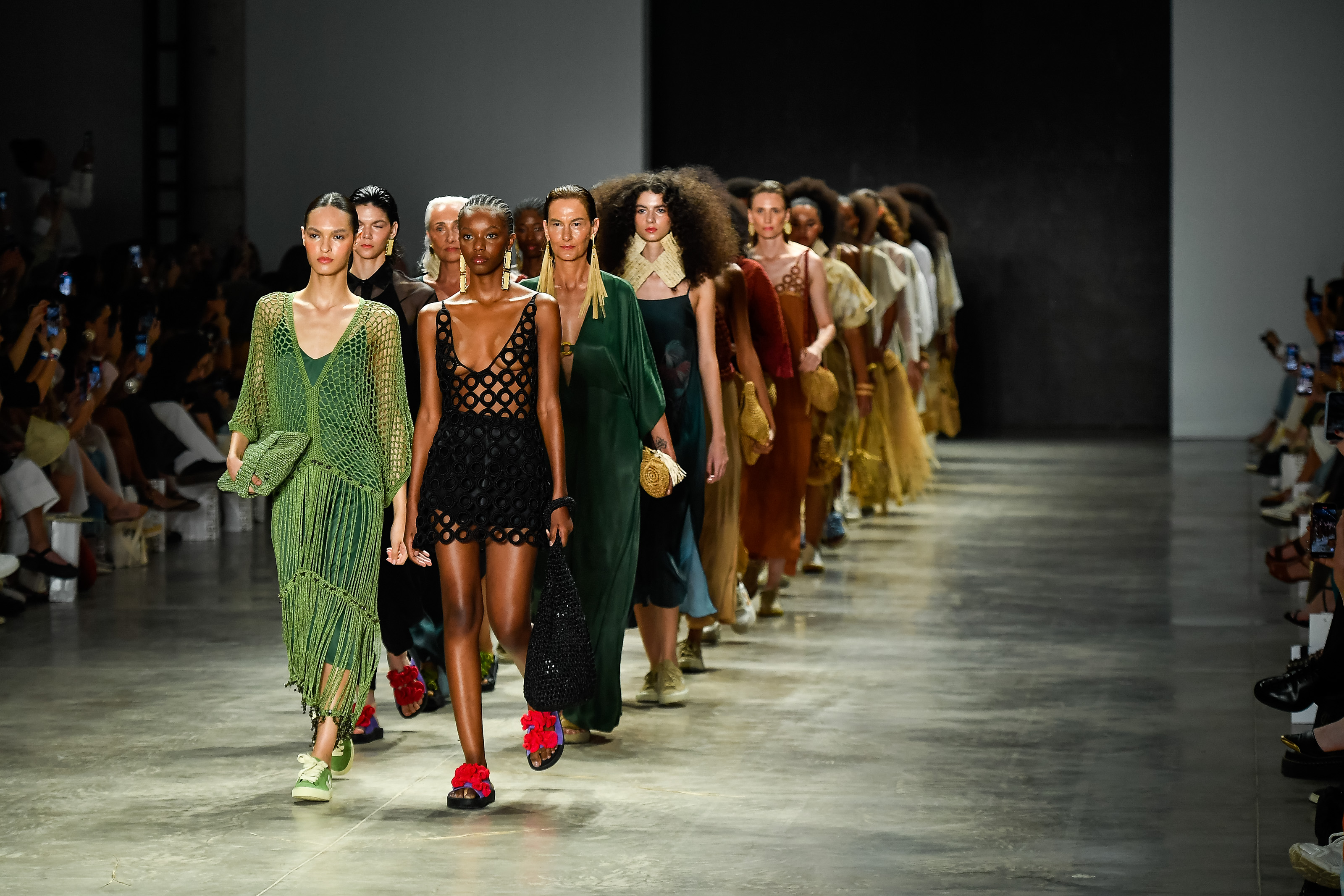
More than celebrating the carnauba, the collection celebrates those who harvest, who weave, who embroider, who transform. And it is a reminder that, in Brazil, the fashion of the future can be born from the work of hands that know the land, and not only from screens.

Complete TV · Reels
@egon_lab Lazarus.
See on InstagramFrom Complete






More from Sarah Rocksane Araujo
View profile


Latest from Complete
 FashionFORCA Studio at SPFW N61: Forca X, Bridgestone tire and punk leather
 DesignTomie Ohtake House‑Studio presents Zanine Caldas
 The CoverIn the beginning, we couldn't even use the word handicraft.
 CultureThievery Corporation, 30 years: the Washington duo that originated in bossa nova
 InnovationLight has become a building material
 The CoverBrazil still gives little recognition to genuinely Brazilian authorial fashion.
 BeautyBORNTOSTANDOUT arrives in Brazil