

Wally Dion: the quilt as contemporary language
A Canadian artist of Saulteaux descent, from Yellow Quill First Nation, Dion starts from traditional Indigenous crafts to build a visual vocabulary that speaks with memory, ecology and identity.
Words by
Words by Sarah Rocksane Araujo
Editorial, Fashion and Beauty
Listen to this story
In the expanded field of textile design, the work of Wally Dion stands as a gesture of cultural preservation and reinvention. A Canadian artist of Saulteaux descent, from Yellow Quill First Nation, Dion starts from traditional Indigenous crafts to build a visual vocabulary that speaks with memory, ecology and identity.
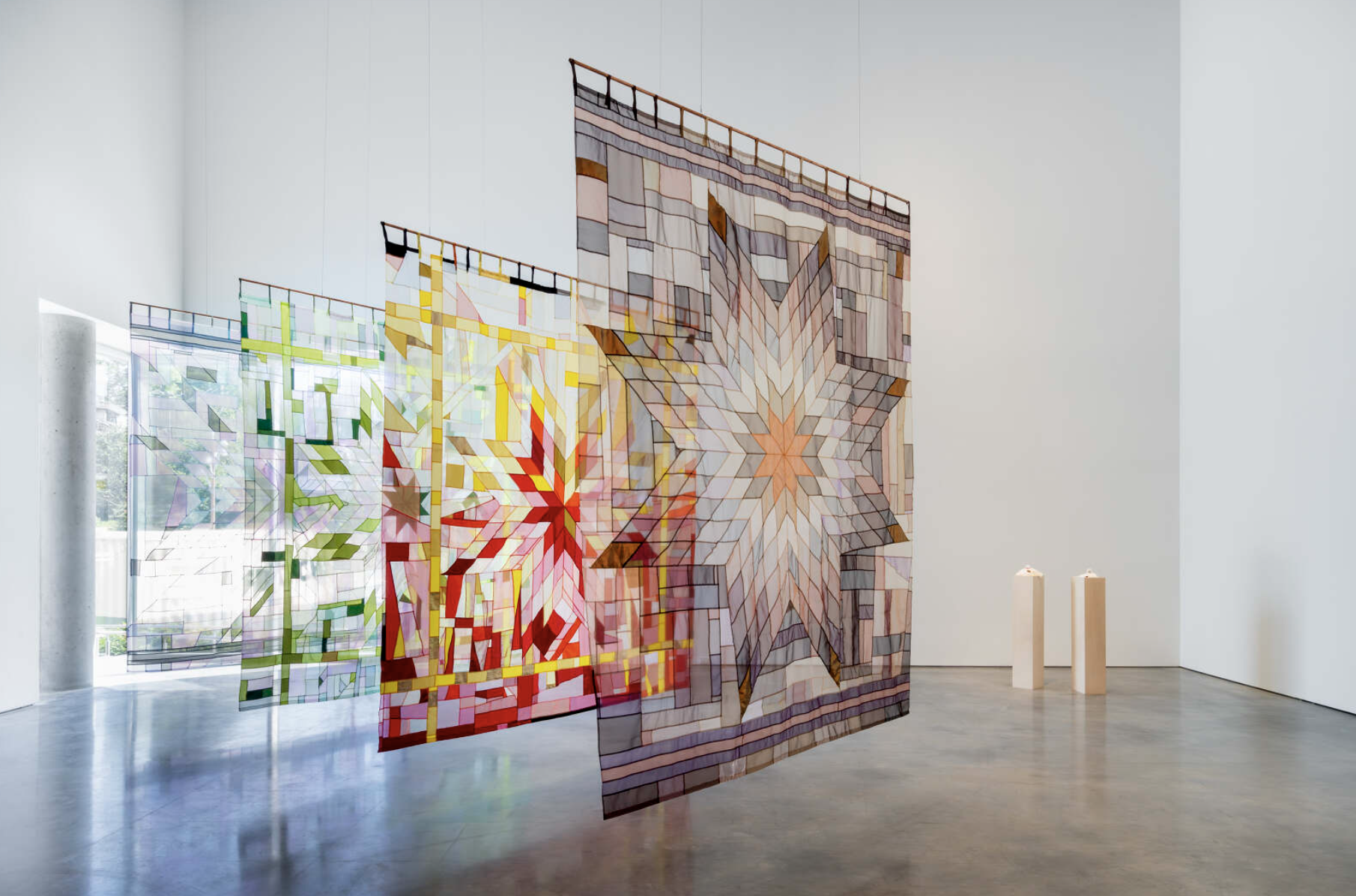
In the Grass Quilt series the approach of his work becomes plain: here the quilt, the technique of assembling covers from blocks of fabric, is transposed onto translucent surfaces. The star-shaped pattern, recurrent among Native communities in the United States and Canada, carries deep meaning: these quilts are traditionally ceremonial gifts, symbols of honour and community recognition.
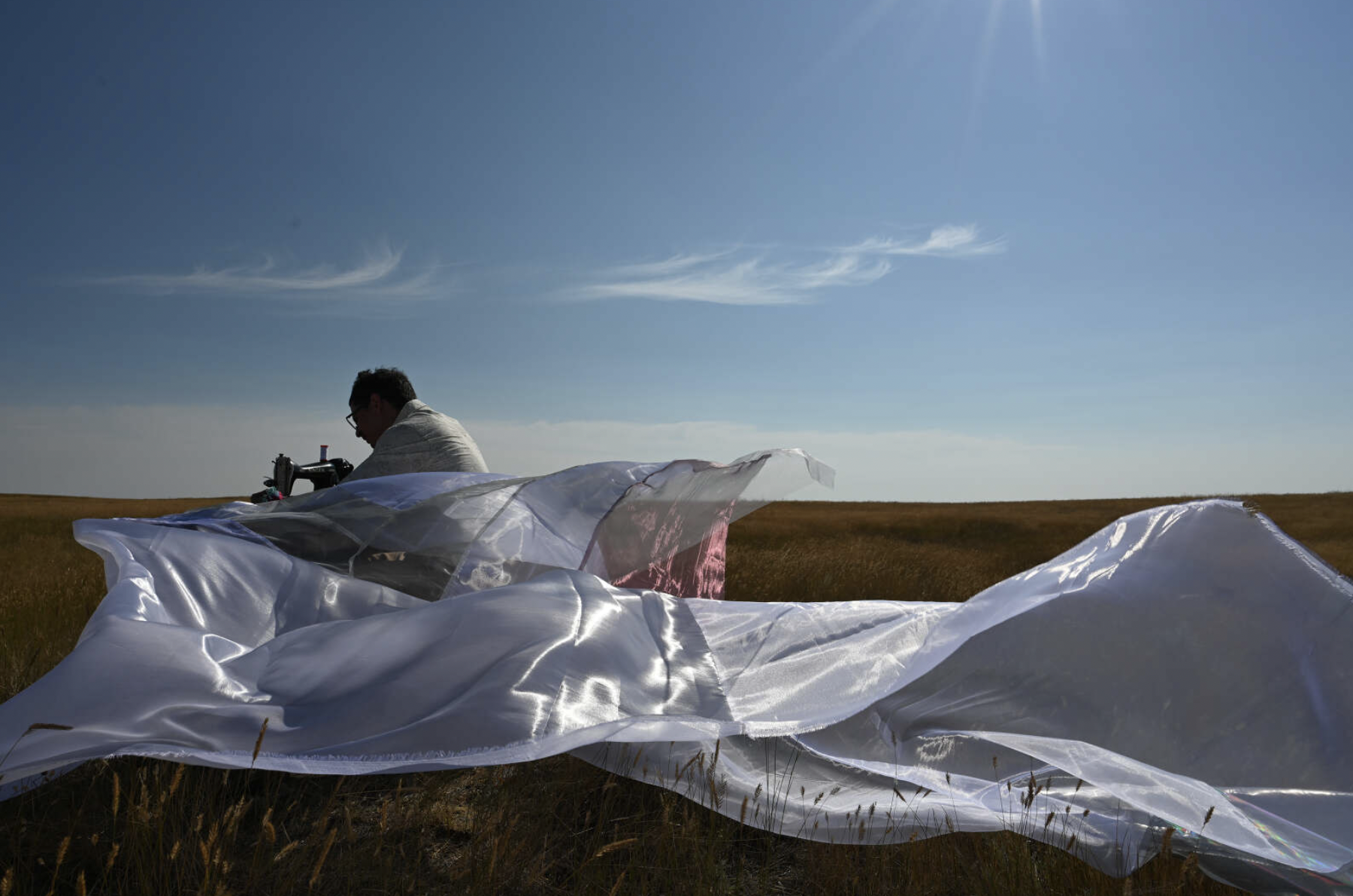
Dion's gesture is not merely formalism, it is the manifestation of an ancestry reinvented through a quilt in translucent fabrics. His work here reconfigures the function of the object, from domestic utility to the field of contemporary art and design. Transparency introduces a poetic reading: the fabric lets light through, as though memory were not opaque but permeable, allowing past and present to illuminate each other. Historically, quilts replaced bison hide robes, also used as high-prestige gifts. That transition was marked by the destruction of the herds, a direct consequence of colonial expansion in the Great Plains. By taking up the pattern present in tradition and tying it to the region's original ecosystem, Dion builds a visual narrative that returns the bison to the territory, even if symbolically.
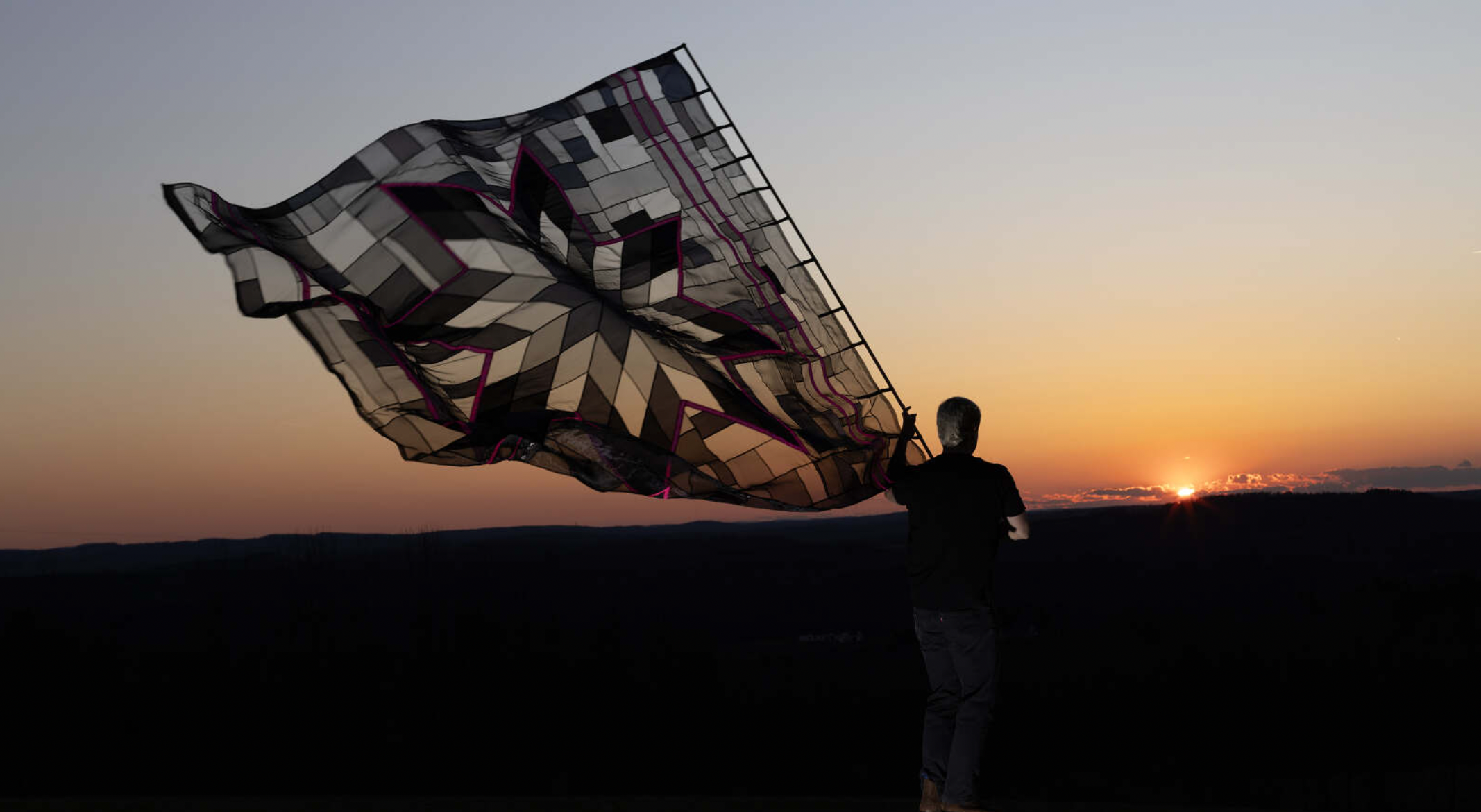
For some Indigenous communities, the bison stands for sustenance, economy, spirituality and reciprocity with the land. Its absence is a collective wound, and its symbolic presence, in narratives, memories, documents and in Dion's work, is an act of repair and of the persistence of its existence. In that context, his work stands as a platform of dialogue between design and experiment, where translucent materiality, allied to a precise geometric structure, reflects a technical rigour that both preserves and displaces tradition. For the field of design, Dion's work challenges a recurring logic: that innovation and cultural inheritance are opposed. On the contrary, his work proves that tradition can be the most fertile starting point for thinking contemporary aesthetic languages.
Complete TV · Reels
O artista uruguaio Mauro Cosenza @mauro_cosenza, formado no circo e no teatro físico, apresentou Neo Botanica na Load Gallery @load.gallery
See on InstagramFrom Complete




More from Sarah Rocksane Araujo
View profile
Latest from Complete
 FashionFORCA Studio at SPFW N61: Forca X, Bridgestone tire and punk leather
 DesignTomie Ohtake House‑Studio presents Zanine Caldas
 The CoverIn the beginning, we couldn't even use the word handicraft.
 CultureThievery Corporation, 30 years: the Washington duo that originated in bossa nova
 InnovationLight has become a building material
 The CoverBrazil still gives little recognition to genuinely Brazilian authorial fashion.
 BeautyBORNTOSTANDOUT arrives in Brazil