

In Belgrade, the Atlantic was heard before it was seen
Manja Ristić and Aleksandar Lazar turned the ocean's sonic geography into image and installation, and what appears on the wall has less to do with landscape than with listening.
Words by

Words by Caíque Nucci
Editor-in-Chief
The first thing that appears is a shape that no one can name right away. It could be a sea anemone, it could be an explosion frozen in mid‑air, it could be a slice seen under a microscope. It floats over black, composed of white and blue filaments that unfurl from a dark, dense center. Across it run red rectangles and fine lines, the kind a machine draws when trying to understand what it is looking at.
This shape is sound.
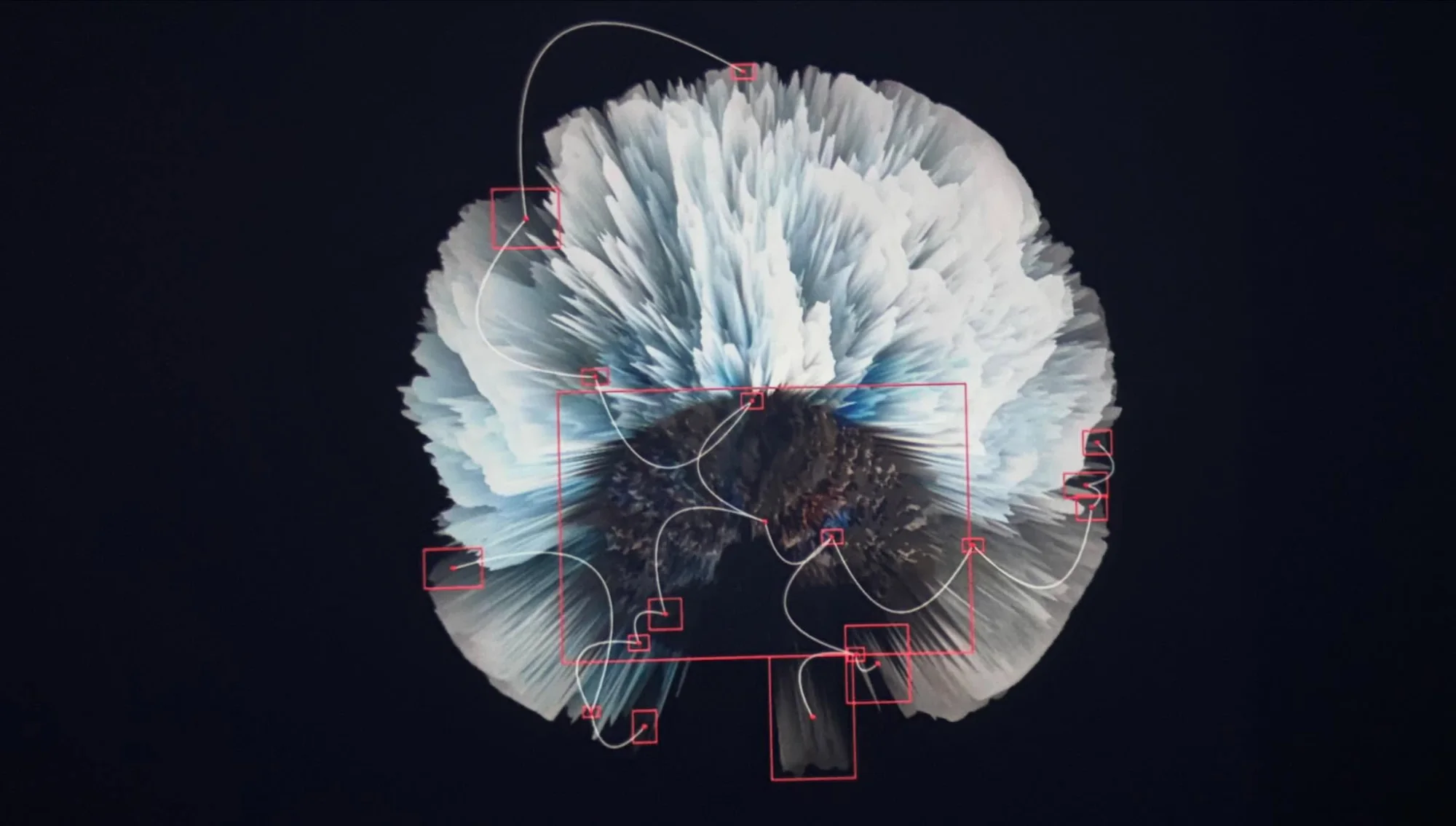
“Atlantis”, by Manja Ristić and Aleksandar Lazar, originated from the Atlantic’s sound geography. The expression is technical and worth explaining: the ocean has an audible relief, made of currents, of cracking ice, of creatures communicating kilometers away, of passing machines. This relief changes as the water warms, as the ice retreats, as traffic increases. It is, at once, both a landscape and a record of what is happening to it.
What the two did was treat this listening as a matter of image and space, not as a soundtrack. The exhibition occupied the Galeria Podroom, at the Centro Cultural de Belgrado, with sound, moving image and installation, and the three elements addressed the same question: what remains of a place when the only thing you have of it is the noise it makes.
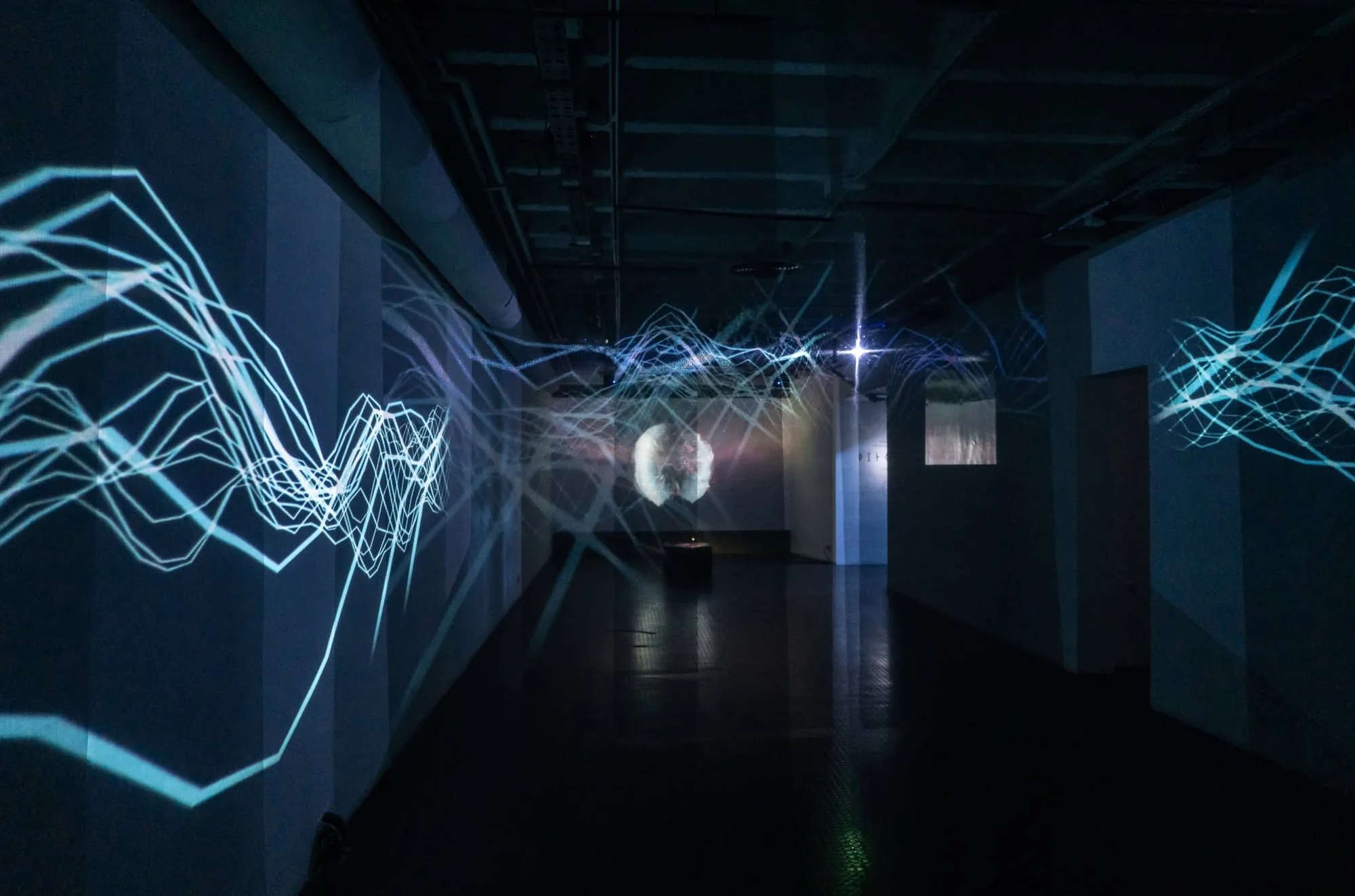
In the hallway, blue lines cross the wall, ceiling and floor without respecting any corner. They have the exact shape of a drawn sound wave, that jagged line any audio program displays, only freed from the graph and stretched across the entire building. Anyone who enters passes through the sound in the middle.
That's where the exhibition does what matters. It does not illustrate the ocean. It shows the ocean the way an instrument delivers it: as data, as line, as a form that needs to be interpreted by someone. The red rectangles over the central image are not decoration. They are the mark of the gaze that classifies, the same kind of frame that a recognition system draws around what it is still trying to identify. The work leaves this gaze on display rather than hiding it.
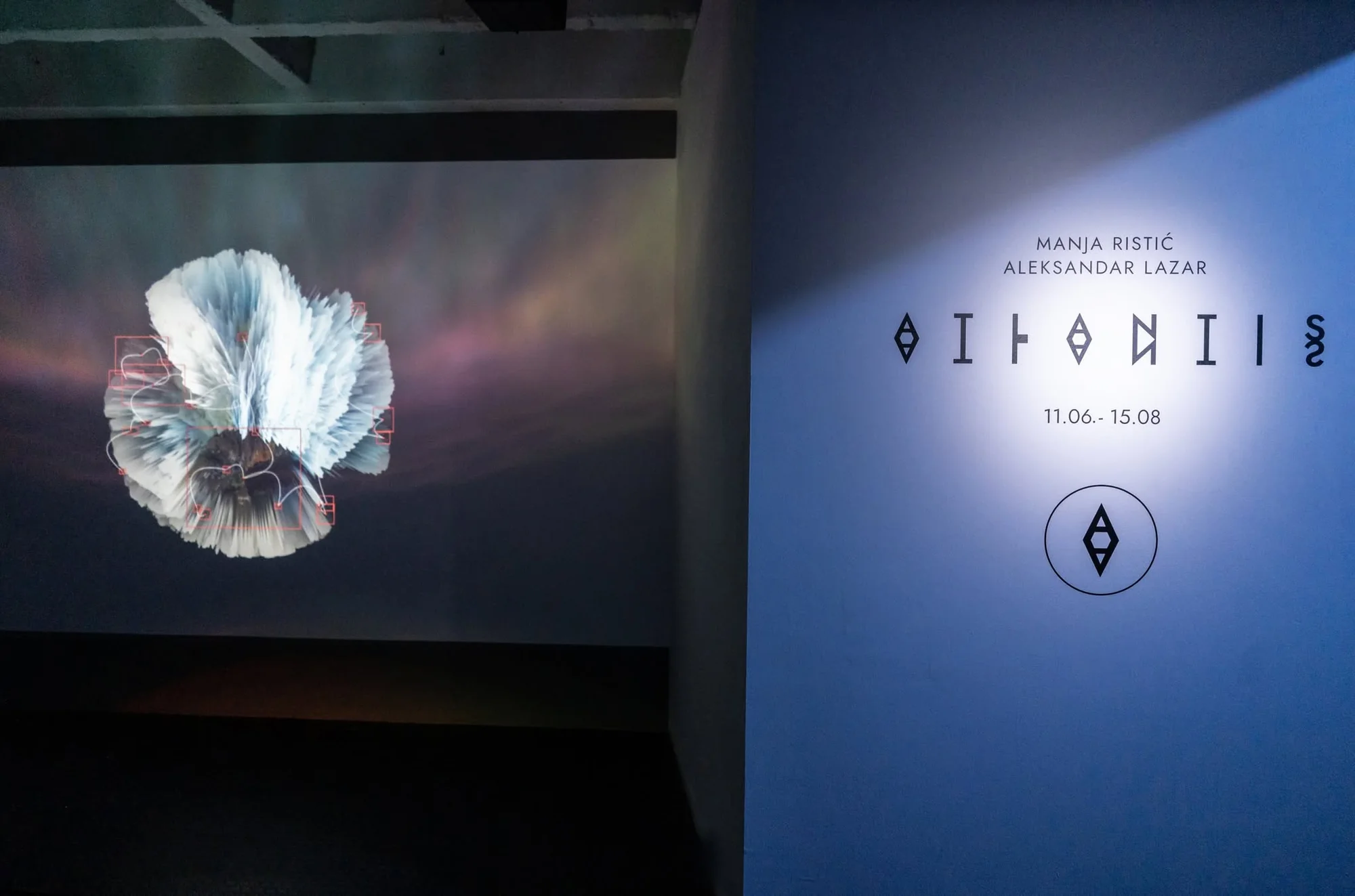
Even the title is written like this. On the entrance wall, “Atlantis” appears in an invented alphabet, of straight signs that recall runes and a technical diagram at the same time. The word is there, readable to those who take the time, and unreadable to those who pass quickly. It is a good description of the whole work.
The choice of Atlântico is not neutral. It is the ocean that separates Europa from América and that carries, at its core, the route by which millions of people were taken by force. Speaking of a place’s memory through the sound it holds is a decision that resonates farther than ecology, although ecology is present, in the cracking ice and the warming water.

The exhibition was open from June 11 to August 15, 2026. The photographs are by Ema Sabo.
Complete TV · Reels
The sonic geography of the Atlantic turned into image and space.
See on InstagramFrom Complete





More from Caíque Nucci
View profile
Latest from Complete
 FashionFORCA Studio at SPFW N61: Forca X, Bridgestone tire and punk leather
 DesignTomie Ohtake House‑Studio presents Zanine Caldas
 The CoverIn the beginning, we couldn't even use the word handicraft.
 CultureThievery Corporation, 30 years: the Washington duo that originated in bossa nova
 InnovationLight has become a building material
 The CoverBrazil still gives little recognition to genuinely Brazilian authorial fashion.
 BeautyBORNTOSTANDOUT arrives in Brazil