

Jonathan Anderson makes his haute couture debut at Dior with a new perspective on the house's legacy
The show, held at the Musée Rodin, marked not only the debut of the Irish designer in this territory, but also a decisive moment for the house.
Words by

Words by Caíque Nucci
Editor-in-Chief
Listen to this story
On January 26, 2026, Jonathan Anderson presented his first haute couture collection for Dior. The show, held at the Musée Rodin, marked not only the Irish designer's debut in this territory, but also a pivotal moment for the house: the reaffirmation of haute couture as a space for experimentation, technical precision, and language construction.
Appointed creative director of Dior eight months prior, Anderson undertook one of the most demanding exercises in fashion. The Spring Summer 2026 collection brought together 63 looks that engage directly with the house's history, without resorting to nostalgia. The result was a contemporary reading of haute couture, where tradition and creative process walk hand in hand.
Founded in 1946, Dior built its identity upon haute couture. The New Look, presented post-war, redefined the feminine silhouette with delicate shoulders, marked waistlines, and full skirts, a structure that evoked the shape of a flower, a recurring symbol in the house's imagination. Anderson starts from this legacy, but chooses to expand upon it.
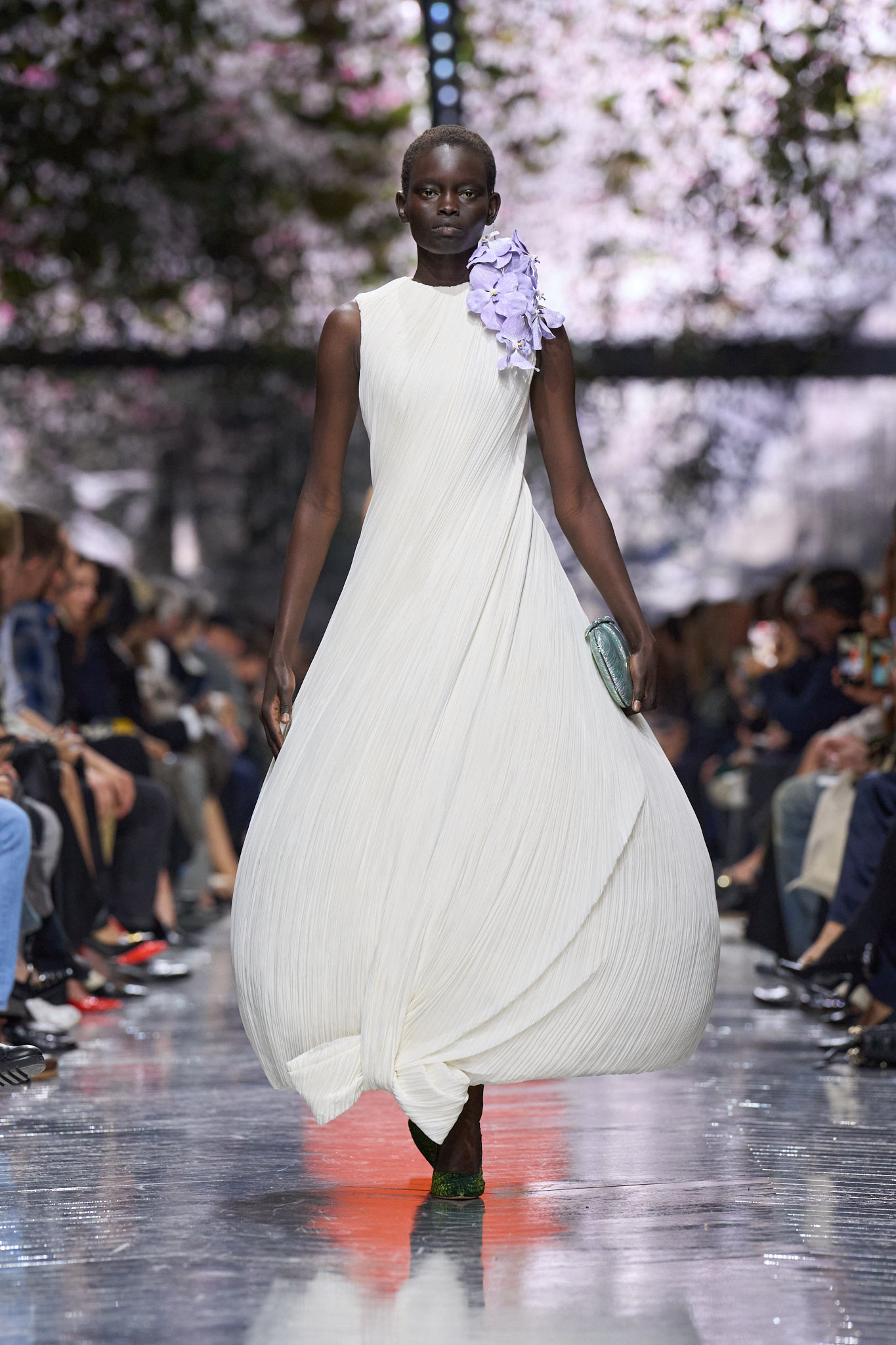
Different from previous collections, where the floral reference appeared in a punctual manner, here it becomes a conceptual axis. Flowers emerge in volumes, embroidery, jewelry, and suspended scenery above the runway space. Not as an ornament, but as a metaphor. The collection proposes haute couture as a living organism, in constant transformation, where technique and intuition coexist.
This approach reflects a thought already present in Anderson's trajectory. In his previous work, elements of nature were always reinterpreted in a structural form, often tensioning the limits between fashion, art, and design. At Dior, this gaze gains scale and rigor. The silhouettes explore ample volumes, fluid lines, and constructions that value the movement of the body, with references to Magdalene Odundo's ceramics, perceptible in the way the forms envelop and mold the figure.
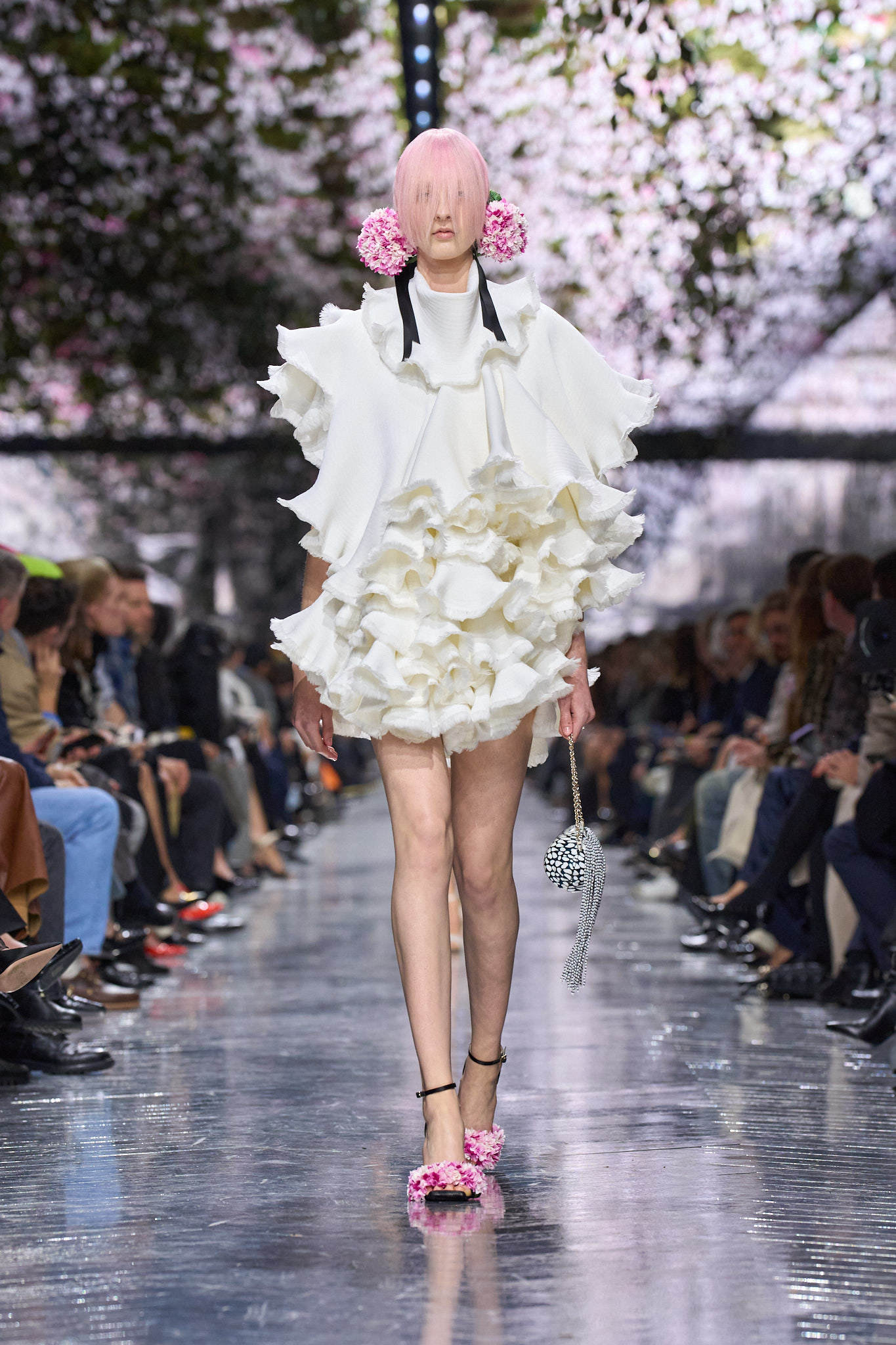
The accessories reinforce this authorial reading. Earrings of large proportions, bags made from embroidered fabrics, and pieces with sculptural contours dialogue with the ensemble without competing with it. The footwear, developed by Nina Christen, maintains the same logic of precise and silent construction.
There are also clear references to the creative directors who preceded Anderson at Dior. The theatricality and play of references evoke the period of John Galliano, while the restraint and formal clarity echo the work of Raf Simons. These citations, however, appear in a subtle form, integrated into the narrative of the collection.
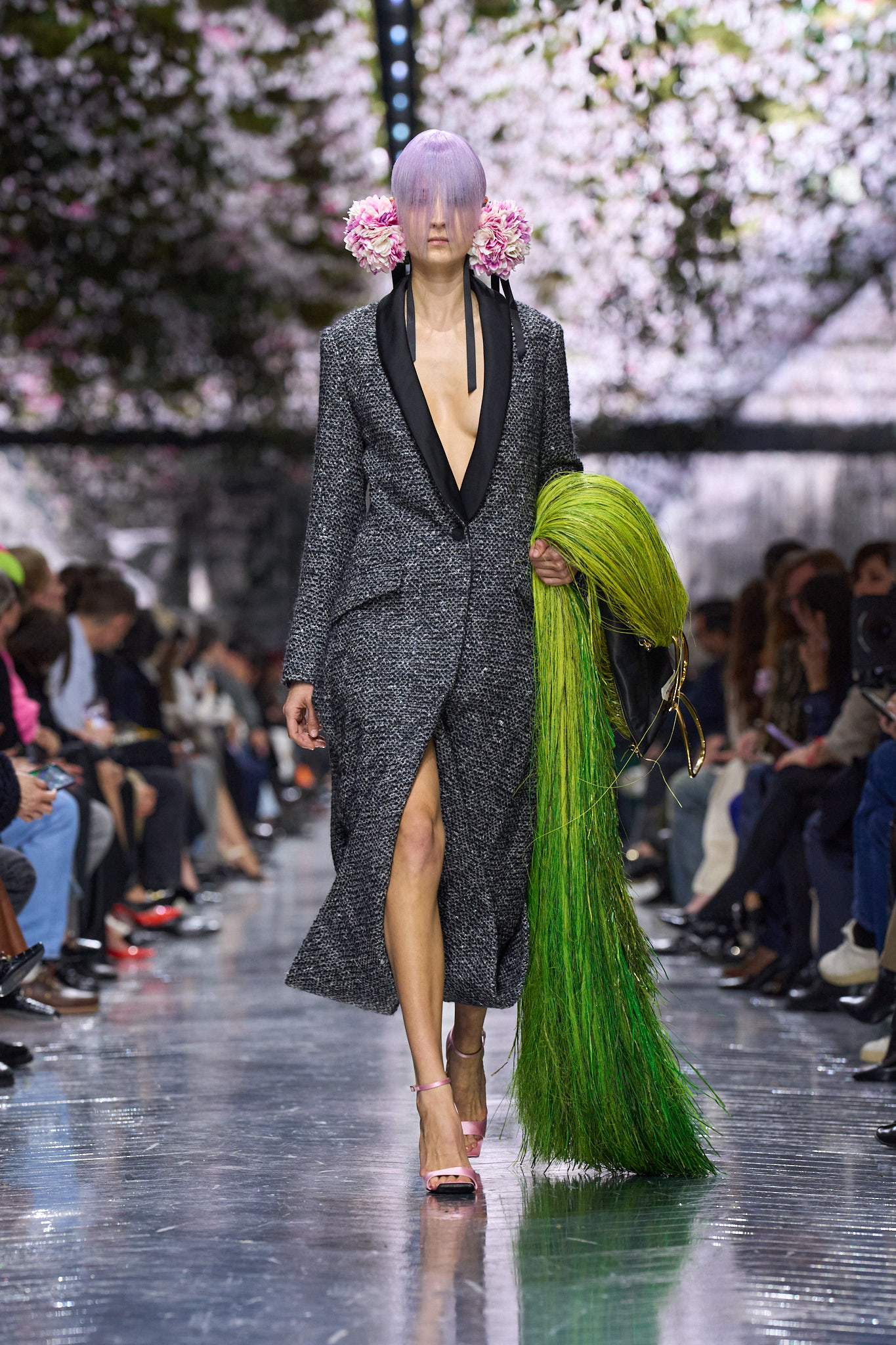
Jonathan Anderson's debut in Dior's haute couture does not rely on immediate impact, but on the construction of a solid discourse. It is a collection that understands the historical weight of the house and, at the same time, proposes possible paths for the future of haute couture, less as a symbol of opulence and more as a space for research, technique, and language.
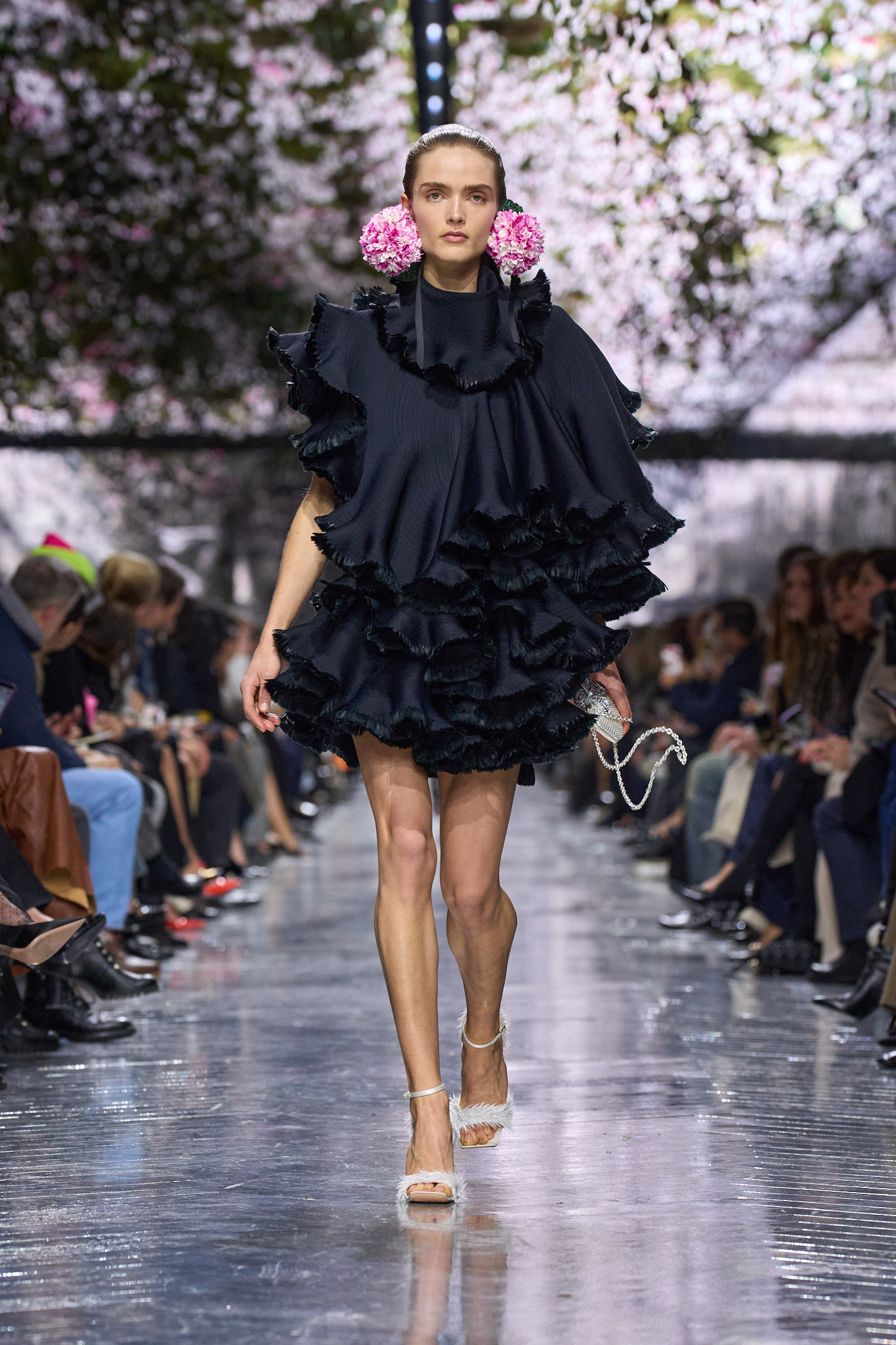
By opening the Spring Summer 2026 haute couture week, Dior reaffirms its central role in this calendar. And Jonathan Anderson makes it clear that his vision for the house passes through continuity, not rupture.
Complete TV · Reels
Maja Petrić: a artista que escreveu a própria inteligência artificial
See on InstagramFrom Complete





More from Caíque Nucci
View profile
Latest from Complete
 FashionGuccicore: plurality as a language of style
 BeautyISDIN Fusion Water Magic: sun protection with lightness and technology
 The CoverIn the beginning, we couldn't even use the word handicraft.
 DesignTomie Ohtake House‑Studio presents Zanine Caldas
 CultureThievery Corporation, 30 years: the Washington duo that originated in bossa nova
 The CoverBrazil still gives little recognition to genuinely Brazilian authorial fashion.
 InnovationLight has become a building material