

Leonardo Drew: Ubiquity II
The artist uses ordinary boards, bought new, which go through intense processes of transformation, cuts, charring, gluing, layering, until they take on an almost archaeological appearance. For Drew, matter has to pass through a life cycle: to be born, to decay, to be reborn.
Words by

Words by Caíque Nucci
Editor-in-Chief
Listen to this story
The main hall of the South London Gallery becomes a space of suspension and impact through Leonardo Drew's intervention. Known for exploring the tensions between matter, architecture and narrative, the North American artist occupies the room with an installation of monumental scale that seems to capture the exact instant of an explosion. Made of wood transformed in the studio, darkened, dismembered and recomposed, the structures pile up at opposite ends of the gallery like frozen traces of an imminent collapse.
Created specifically for the space, the work reflects the tension between order and chaos, a recurring principle in Drew's path. Though it recalls debris, what is seen is not found: it is built. The artist uses ordinary boards, bought new, which go through intense processes of transformation, cuts, charring, gluing, layering, until they take on an almost archaeological appearance. For Drew, matter has to pass through a life cycle: to be born, to decay, to be reborn.
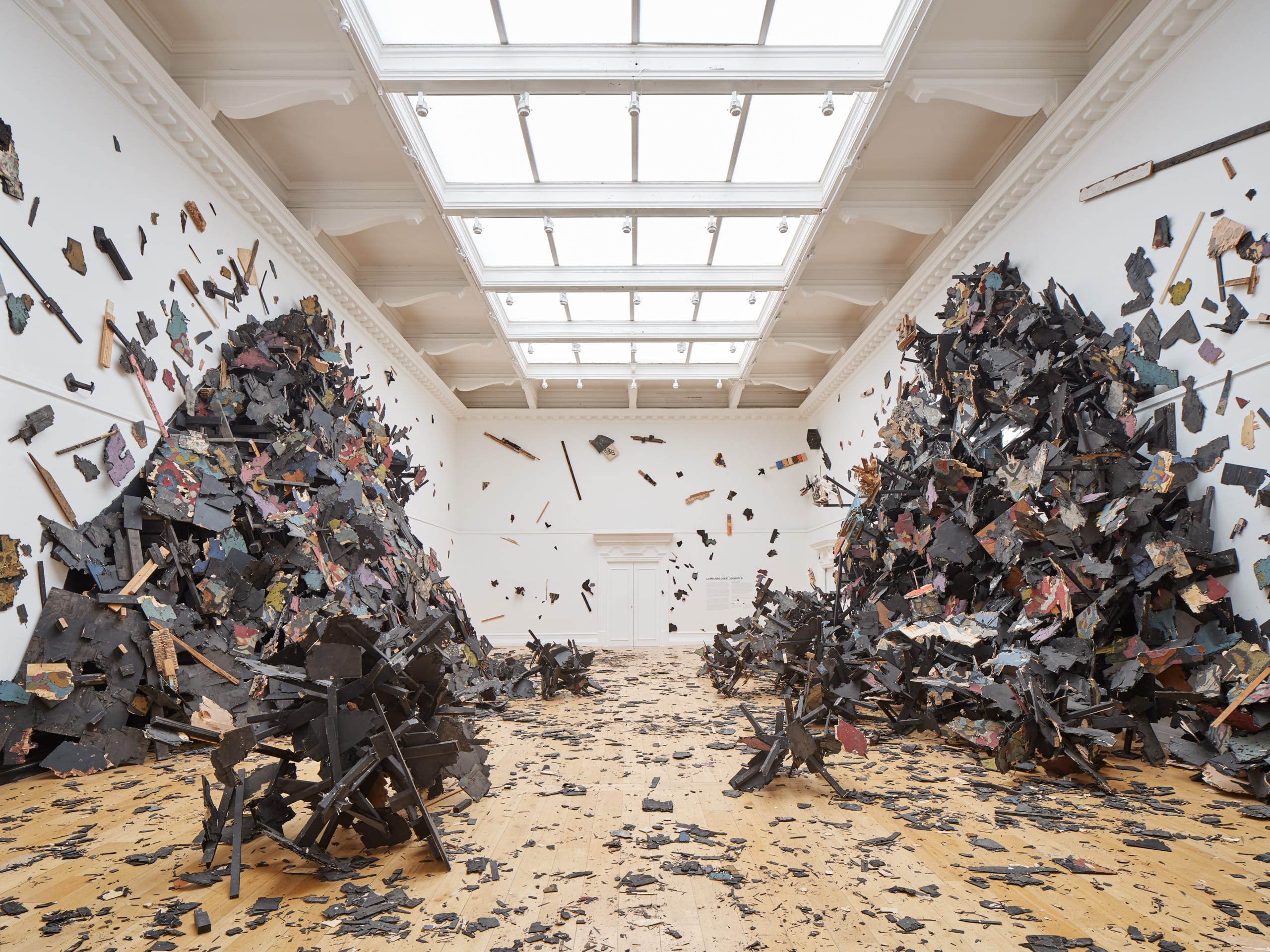
The result is a sculptural landscape that mixes explosion and erosion, where every fragment carries invisible histories. The two central structures have distinct natures: to the left of the entrance, what is seen is a frozen eruption; to the right, a kind of mountain slowly collapsing. Both are organised by a logic of spatial occupation that respects the proportions, entrances and architectural breathing space of the gallery, a gesture that reinforces the dialogue between work and setting, so important in Drew's production.
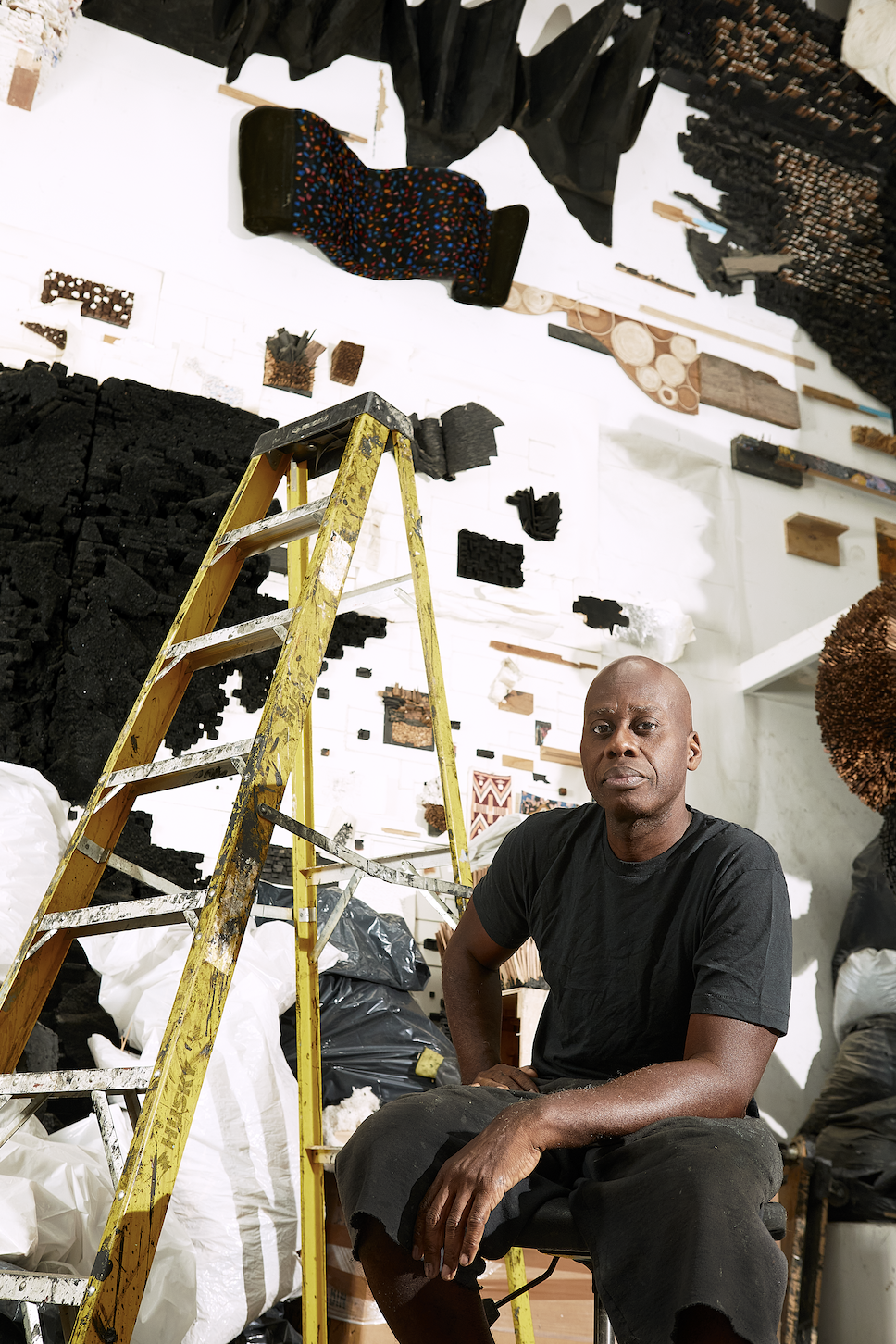
Since the 1990s, Leonardo Drew has created installations that reorganise material memories. His work has passed through institutions such as The Metropolitan Museum of Art, The Studio Museum in Harlem and Guggenheim Bilbao, and forms part of collections such as that of Linda Pace. In his practice it is possible to identify echoes of artists such as Louise Nevelson and Theaster Gates, but his signature lies in the refusal of balance and in the celebration of collapse as language.
The exhibition remains open until 7 September 2025 and reinforces the potential of art as a means of putting space, time and matter under tension, without needing movement to cause impact.
Complete TV · Reels
A SP-Arte @sp_arte chega à sua 22ª edição entre os dias 8 e 12 de abril, no Pavilhão da Bienal, em São Paulo. O evento reúne 180 expositores
See on InstagramFrom Complete



More from Caíque Nucci
View profile
Latest from Complete
 FashionGuccicore: plurality as a language of style
 BeautyISDIN Fusion Water Magic: sun protection with lightness and technology
 The CoverIn the beginning, we couldn't even use the word handicraft.
 DesignTomie Ohtake House‑Studio presents Zanine Caldas
 CultureThievery Corporation, 30 years: the Washington duo that originated in bossa nova
 The CoverBrazil still gives little recognition to genuinely Brazilian authorial fashion.
 InnovationLight has become a building material