

O Barco by Grada Kilomba: where memory sails in the present
The work does not seek to monumentalise the past, but to expose its belly. Instead of rising to the sky as an imperial landmark, it descends to the level of the ground, revealing the hidden side of colonial narratives.
Words by

Words by Caíque Nucci
Editor-in-Chief
Listen to this story
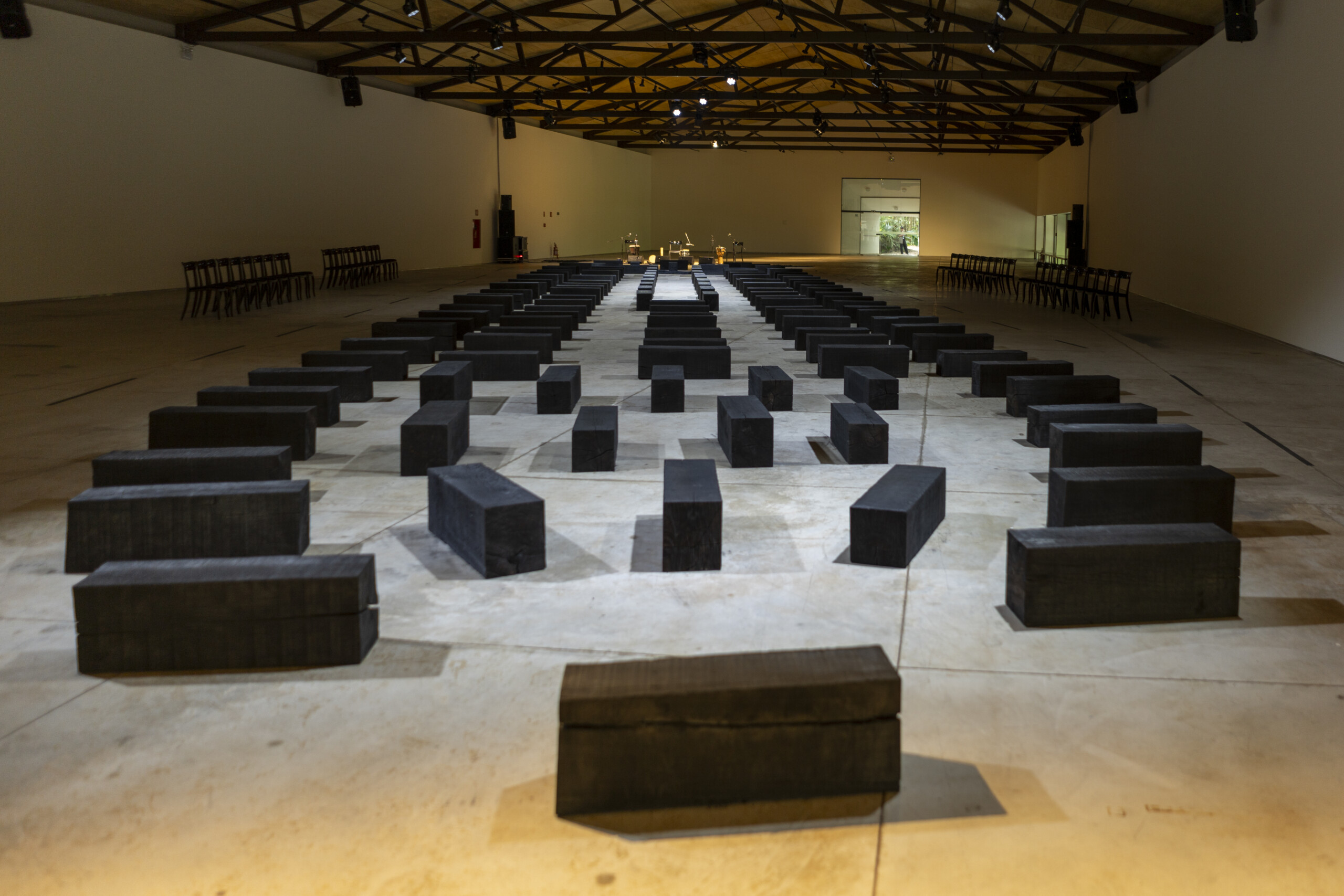
In the Galeria Galpão at Inhotim rests a vessel made of remembrance. Stretching 32 metres, O Barco (2021), by the Portuguese-Bissau-Guinean artist Grada Kilomba, emerges from the ground like a silent scar, carved into 134 blocks of burnt wood. The installation evokes the belly of the ships that crossed the Atlantic carrying millions of enslaved African bodies, translating into matter a history of violence, silencing and resistance.
Each block of wood carries singular marks, burns and textures that recall skin and memory. Along the path between the pieces, a poem engraved in gold unfolds in six languages: Yoruba, Cape Verdean Creole, Kimbundu, Portuguese, English and Arabic; leading the visitor through a sensory and historical crossing. The installation invites you to walk that space the way one walks over unwritten archives, traces of lives turned into numbers and now restored to human condition.
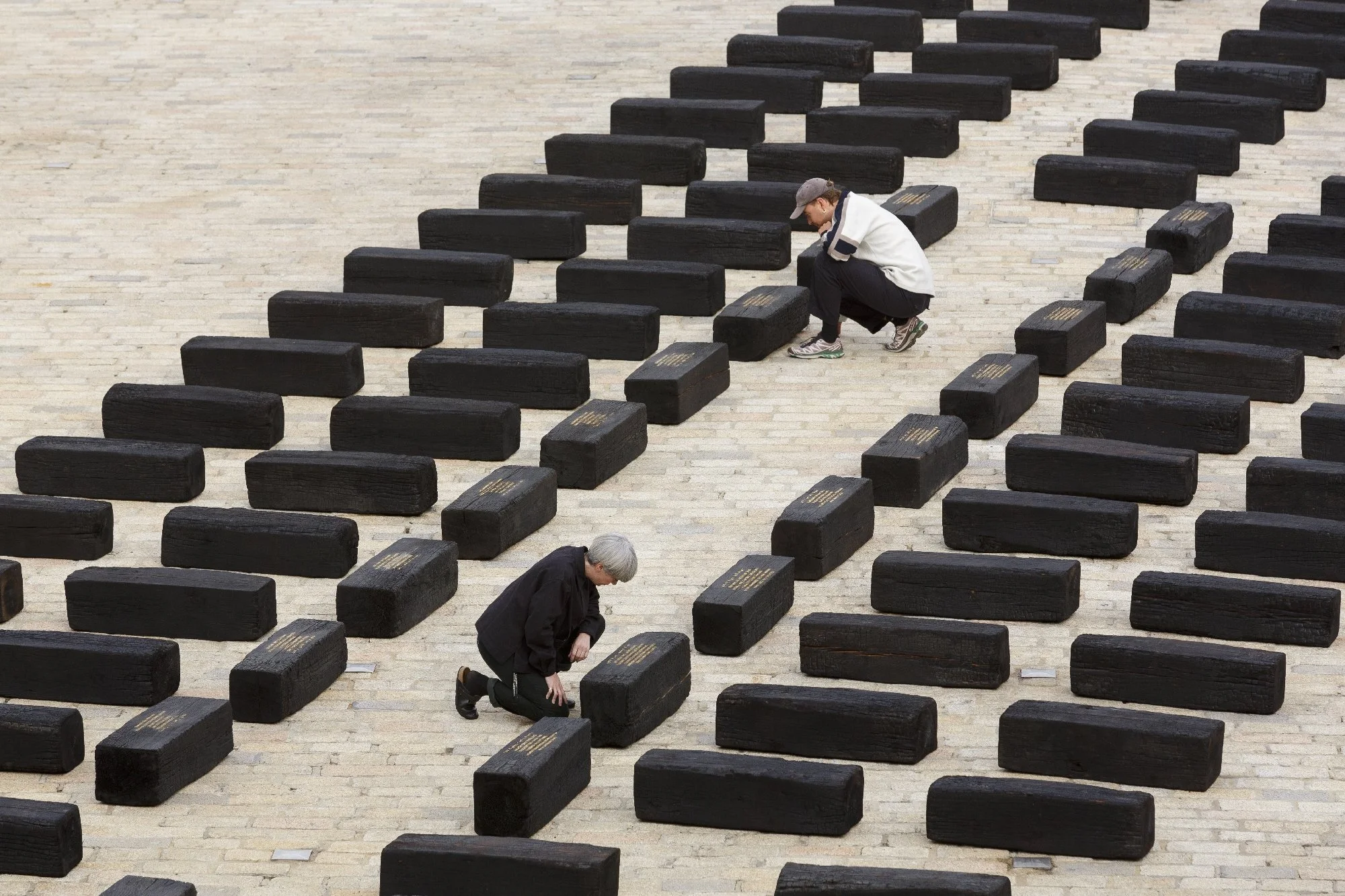
The work does not seek to monumentalise the past, but to expose its belly. Instead of rising to the sky as an imperial landmark, it descends to the level of the ground, revealing the hidden side of colonial narratives. The horizontality of the installation contrasts with the verticality of traditional structures of power, turning the space into a territory of contemplation and listening.
O Barco goes beyond the sculptural dimension. Over the course of its showing at Inhotim, three performative acts reactivate the space with music, dance and body. In the first act, the Ensemble Lisboa occupied the gallery with voices and percussion that resounded like memorial chants. In the following acts, artists from the region itself form a local ensemble, creating a direct link between territory, community and living memory.
Previously shown in Lisbon, Barcelona and London, the work finds new symbolic ground at Inhotim. Among trees, natural light and the silence of the Minas landscape, what was once an instrument of oppression becomes an altar of remembrance and affirmation. O Barco creates a space of ritual and reflection, where past, present and future intertwine.
In crossing this installation, the visitor contemplates not just a work, but a territory of collective memory. Grada Kilomba's piece reaffirms art as an instrument of historical rewriting and a space of healing, opening gaps in time so that silenced histories can be told again, this time with dignity.
Complete TV · Reels
NASA @nasa has just released a free tool for Earth Day: enter your name and see each letter spelled out in real photographs.
See on InstagramFrom Complete



More from Caíque Nucci
View profile
Latest from Complete
 FashionGuccicore: plurality as a language of style
 BeautyISDIN Fusion Water Magic: sun protection with lightness and technology
 The CoverIn the beginning, we couldn't even use the word handicraft.
 DesignTomie Ohtake House‑Studio presents Zanine Caldas
 CultureThievery Corporation, 30 years: the Washington duo that originated in bossa nova
 The CoverBrazil still gives little recognition to genuinely Brazilian authorial fashion.
 InnovationLight has become a building material