

Pina Bausch and the Redefinition of Dance as a Theatrical Experience
Her practice combined movement, text, sound, and set design in pieces that directly explored human behaviors and experiences.
Words by
Words by Caíque Nucci
Editor-in-Chief
Listen to this story
Philippine “Pina” Bausch emerged as a singular voice in contemporary dance from the 1970s, when she took over the direction of the Tanztheater Wuppertal in Germany and began to articulate a mode of creation that left behind the traditional separation between dance and theatre.
Trained at the Folkwang Hochschule in Essen and having attended the Juilliard School in New York, Bausch was not limited to technique or conventional choreography. Her practice brought together movement, text, sound, and scenography in pieces that explored human behaviours and experiences in a direct manner. This cross-disciplinary approach ultimately gave rise to the expression Tanztheater, or dance-theatre, a field in which actor-dancers engage physically and emotionally on stage, often reinterpreting everyday gestures and relationships.
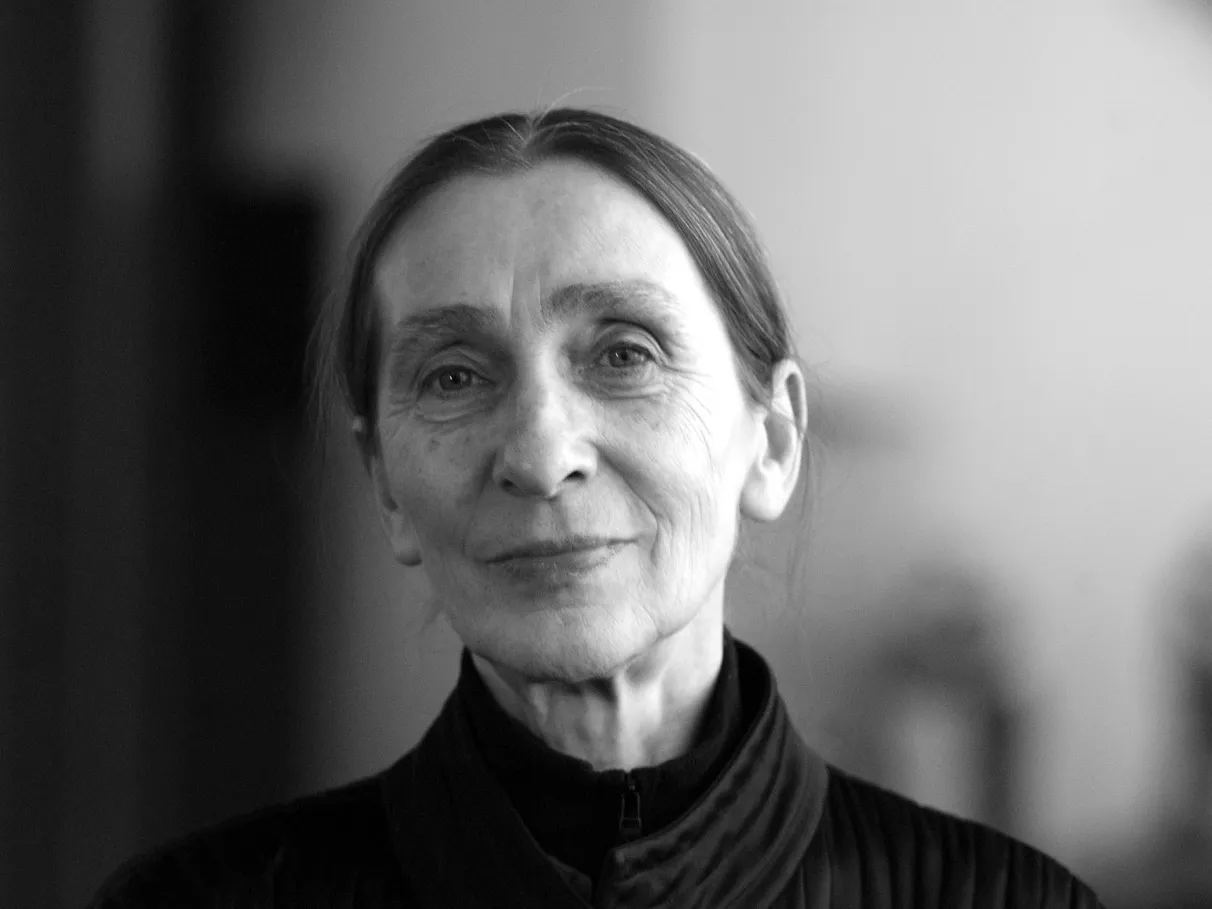
Pina Bausch's trajectory opens a distinct perspective on stage creation. Rather than constructing linear narratives or prioritizing technical virtuosity, her pieces were organized as sequences of moments that reveal tensions, contradictions, and repetitions of human behavior. Costumes, objects, and seemingly mundane situations are displaced into a performative context that demands an active reading from the audience.
The repertoire that Bausch developed over her long tenure at the helm of her company, from Café Müller to productions like Kontakthof and Vollmond, was received internationally not merely as dance, but as a mode of theatrical experience in which the body is both instrument and message.
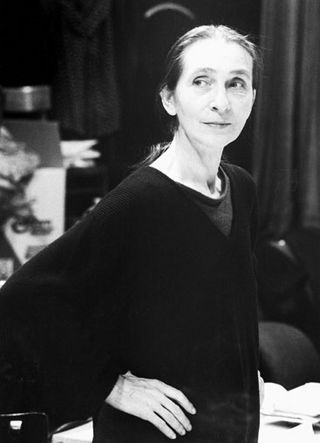
Even after her death in 2009, her influence persists in the way contemporary dance constitutes itself in dialogue with other forms of expression. The company she founded continues to tour stages across various geographies, and institutions like the Pina Bausch Foundation maintain her repertoire in circulation and in dialogue with new generations of interpreters and creators.
Bausch's work is not confined to a historical period: it reformulated the idea of performance as an encounter between body, context, and narrative. Its repercussions resonate in contemporary art languages, where movement and meaning coexist in the same fabric.
Complete TV · Reels
STELLAR IRIS, do artista Thomas Blanchard
See on InstagramFrom Complete




More from Caíque Nucci
View profile
Latest from Complete
 FashionGuccicore: plurality as a language of style
 BeautyISDIN Fusion Water Magic: sun protection with lightness and technology
 The CoverIn the beginning, we couldn't even use the word handicraft.
 DesignTomie Ohtake House‑Studio presents Zanine Caldas
 CultureThievery Corporation, 30 years: the Washington duo that originated in bossa nova
 The CoverBrazil still gives little recognition to genuinely Brazilian authorial fashion.
 InnovationLight has become a building material