

Rio Fashion Week: what is at stake in Rio's return to the fashion calendar
After more than a decade without its own fashion week, Rio debuts an event that combines runway shows, business, and creative diplomacy, raising real questions about what a fashion week needs to deliver today.
Words by
Words by Caíque Nucci
Editor-in-Chief
Listen to this story
The global fashion calendar functions as a power structure. Paris, Milano,
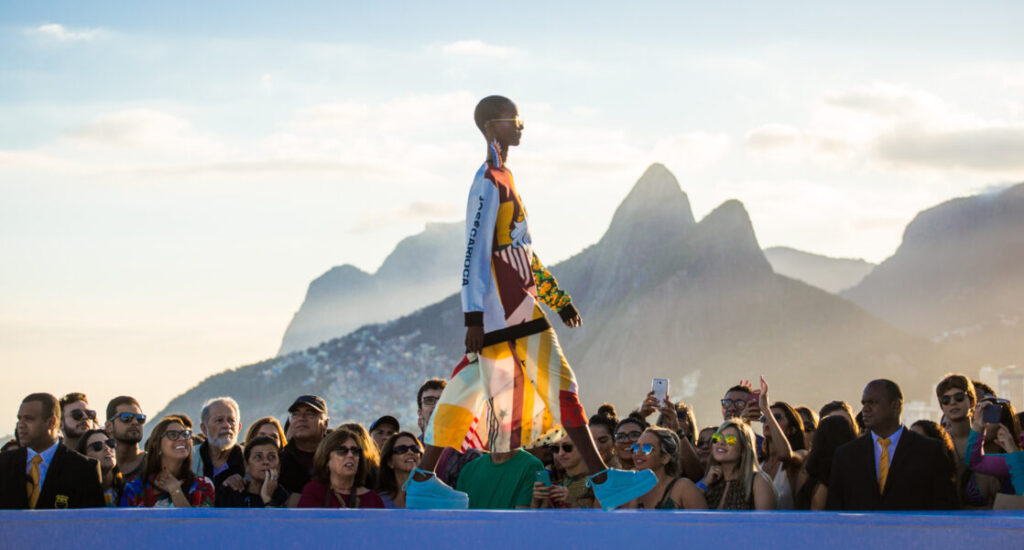
The model adopted by the event is less that of a traditional fashion week and more that of a market platform with a runway. The structure is revealing: on one hand, the parades of names like Normando, Isabela Capeto, Karoline Vitto, Patricia Vieira, and Salinas; on the other, the Rio Showroom, a business salon aimed at national and international buyers, and a cycle of business sessions with figures like Imruh Asha, fashion director of Dazed Magazine, Alix Morabito from Galeries Lafayette, and Stephanie Wenk, creative director of Sauer. This is a configuration that São Paulo Fashion Week took years to consolidate, and which Rio is trying to establish since its first edition. The bet is high, but the logic is correct: fashion week without commercial structure is a showcase without a store.
The difference between RFW and SPFW is not just geographical. São Paulo has built, over three decades, an identity as the capital of the Brazilian fashion industry, with manufacturing, retail, wholesale, and training. SPFW, created by Paulo Borges in 1996, was born within this ecosystem and consolidated its authority as the Paulista industry grew. Rio operates on a different key: a city with a strong cultural and aesthetic identity, but without the same productive weight in the textile sector. What Rio Fashion Week can offer that São Paulo does not is a different perspective, a cut of fashion that goes through the body, climate, street culture, and connection with sports and entertainment. The partnership with Adidas in a parade signed by Rafa Pinah is not a detail, it is a sign of territory.
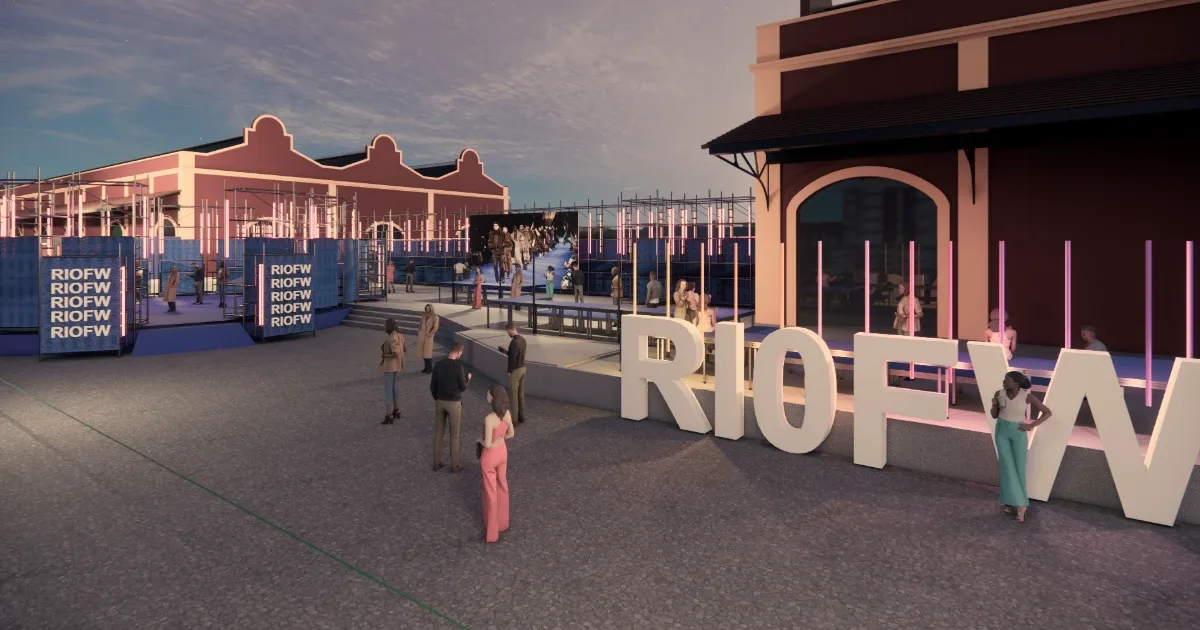
The operation behind the event is conducted by IMM Esporte e Entretenimento, a company owned by Alan Adler that already organizes SPFW, the Grande Prêmio de São Paulo de Fórmula 1, and the Rio Open. The choice of Adler to operationalize the event says a lot about what the Rio City Hall and the Tourism Secretariat, represented by Daniela Maia, see in the project: not a niche event for the fashion market, but an urban event with real economic impact potential, estimated at R$ 200 million and up to R$ 1 billion in spontaneous media for the city. The creative curatorship was entrusted to Olivia Merquior, who built the selection of brands from a deliberate criterion of regional diversity, with representatives from the five regions of Brazil in the lineup.
Rio Fashion Week arrives at the right time. The Brazilian fashion market had a real gap in the calendar: São Paulo consolidated, Rio absent. Filling this space with a structure that combines runway, business, and training from the first edition is no small feat. Fashion weeks take years to create critical mass, and Rio is already debuting with a diverse lineup, international guests, and an ecosystem logic that many events take decades to build. Regardless of what comes next, the initiative deserves recognition for what it represents: Brazilian fashion presenting itself to the world with more than one voice.
Complete TV · Reels
IMMENSIA, de Kati Katona
See on InstagramFrom Complete



More from Caíque Nucci
View profile
Latest from Complete
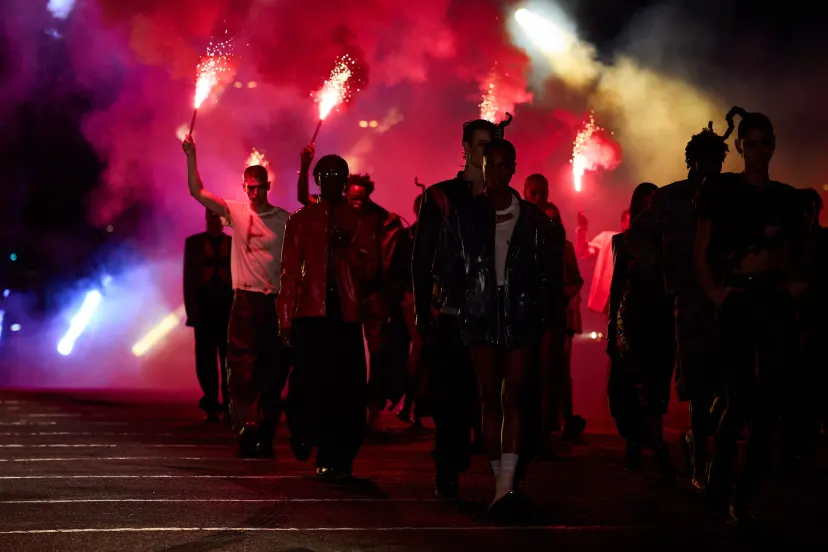 FashionFORCA Studio at SPFW N61: Forca X, Bridgestone tire and punk leather
 DesignTomie Ohtake House‑Studio presents Zanine Caldas
 The CoverIn the beginning, we couldn't even use the word handicraft.
 CultureThievery Corporation, 30 years: the Washington duo that originated in bossa nova
 InnovationLight has become a building material
 The CoverBrazil still gives little recognition to genuinely Brazilian authorial fashion.
 BeautyBORNTOSTANDOUT arrives in Brazil