

The Dancing Pavilion: Estúdio Guto Requena, Rio de Janeiro, 2016
With a metal structure carrying an interactive skin, the building used sensors installed on the dance floor to capture sound and body movement.
Words by
Words by Caíque Nucci
Editor-in-Chief
Listen to this story
During the Rio 2016 Olympic Games, Estúdio Guto Requena was invited to develop a temporary installation in the Olympic Park in Barra. The result was the Dancing Pavilion, a project commissioned by a Brazilian beer brand, which worked as a space for parties, live music and immersive experiences.
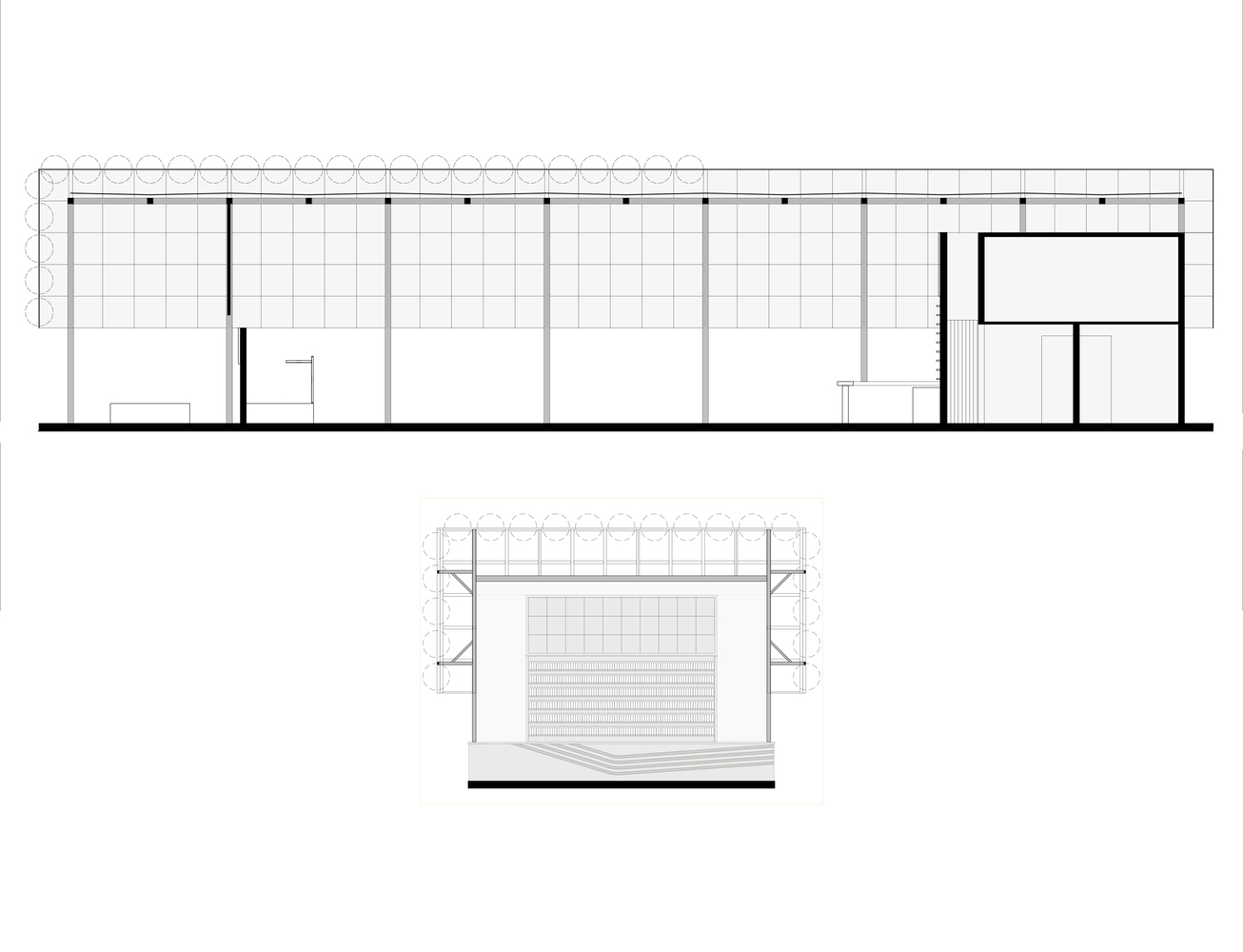
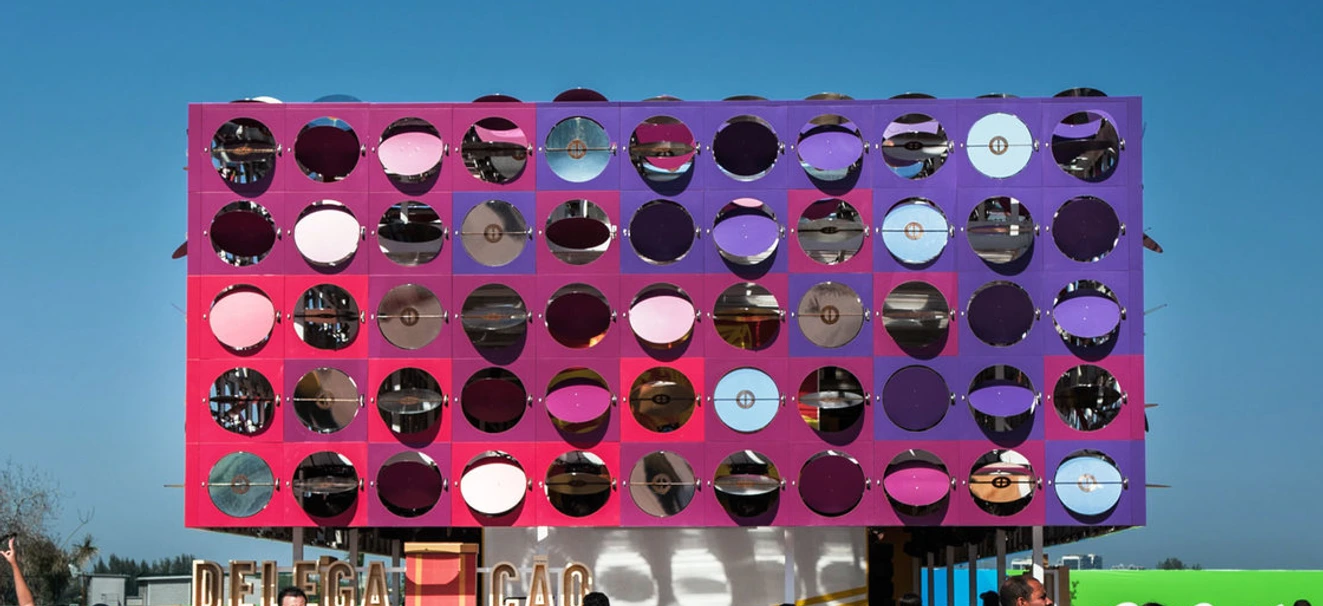
With a metal structure carrying an interactive skin, the building used sensors installed on the dance floor to capture sound and body movement. That data activated some 500 round mirrors on the façade, which turned, opened and closed in response to the activity inside, turning architecture into a kinetic surface. The pavilion reacted to the behaviour of the public in real time, creating a visual choreography in sync with the space.
During the day, the structure cast graphics of light and shadow onto its surroundings. At night, with directed lighting, it took on a vibrant, almost performative aspect, visible from a distance. The proposal was not limited to aesthetics: it aimed to provoke visitors, stimulate sensation and lead them into a state of escape, in an experience that integrated technology, design and affection.
The project was conceived as an unfolding of the studio's enquiry into hybrid architectures, which explore the intersection of the physical and the digital. The collaboration with D3, a producer specialising in interactive installations, was essential to developing the hardware and software systems that brought the kinetic skin to life.
Although it was an ephemeral installation, the Dancing Pavilion remains one of the most emblematic works of the studio's production. Its relevance lies not only in its visual impact or technical innovation, but in the way it anticipates contemporary discussions on responsive architecture, sensitive space and emotion as a design language.
Complete TV · Reels
A IMAGEM QUE RESPONDE ÀS MÃOS, de Anton Berkasov
See on InstagramFrom Complete



More from Caíque Nucci
View profile
Latest from Complete
 FashionFORCA Studio at SPFW N61: Forca X, Bridgestone tire and punk leather
 DesignTomie Ohtake House‑Studio presents Zanine Caldas
 The CoverIn the beginning, we couldn't even use the word handicraft.
 CultureThievery Corporation, 30 years: the Washington duo that originated in bossa nova
 InnovationLight has become a building material
 The CoverBrazil still gives little recognition to genuinely Brazilian authorial fashion.
 BeautyBORNTOSTANDOUT arrives in Brazil