

Camille Henrot and the absurd logic of small orders
Known for work that moves between video, sculpture and installation, Henrot presents sculptures drawn from abacuses, children's toys and distorted charts, suggesting a world where pedagogy and disorientation walk side by side.
Words by

Words by Gilles Pedroza Leite
Design and Innovation
Listen to this story
With the exhibition A Number of Things, the French artist Camille Henrot turns the gallery into a territory where the human impulse towards order and classification is exposed with humour, criticism and lyricism. Known for work that moves between video, sculpture and installation, Henrot presents sculptures drawn from abacuses, children's toys and distorted charts, suggesting a world where pedagogy and disorientation walk side by side. The pieces evoke familiar forms but refuse to offer simple answers; they question the very logic of organising the world, mixing primitive functionality and formal poetry.
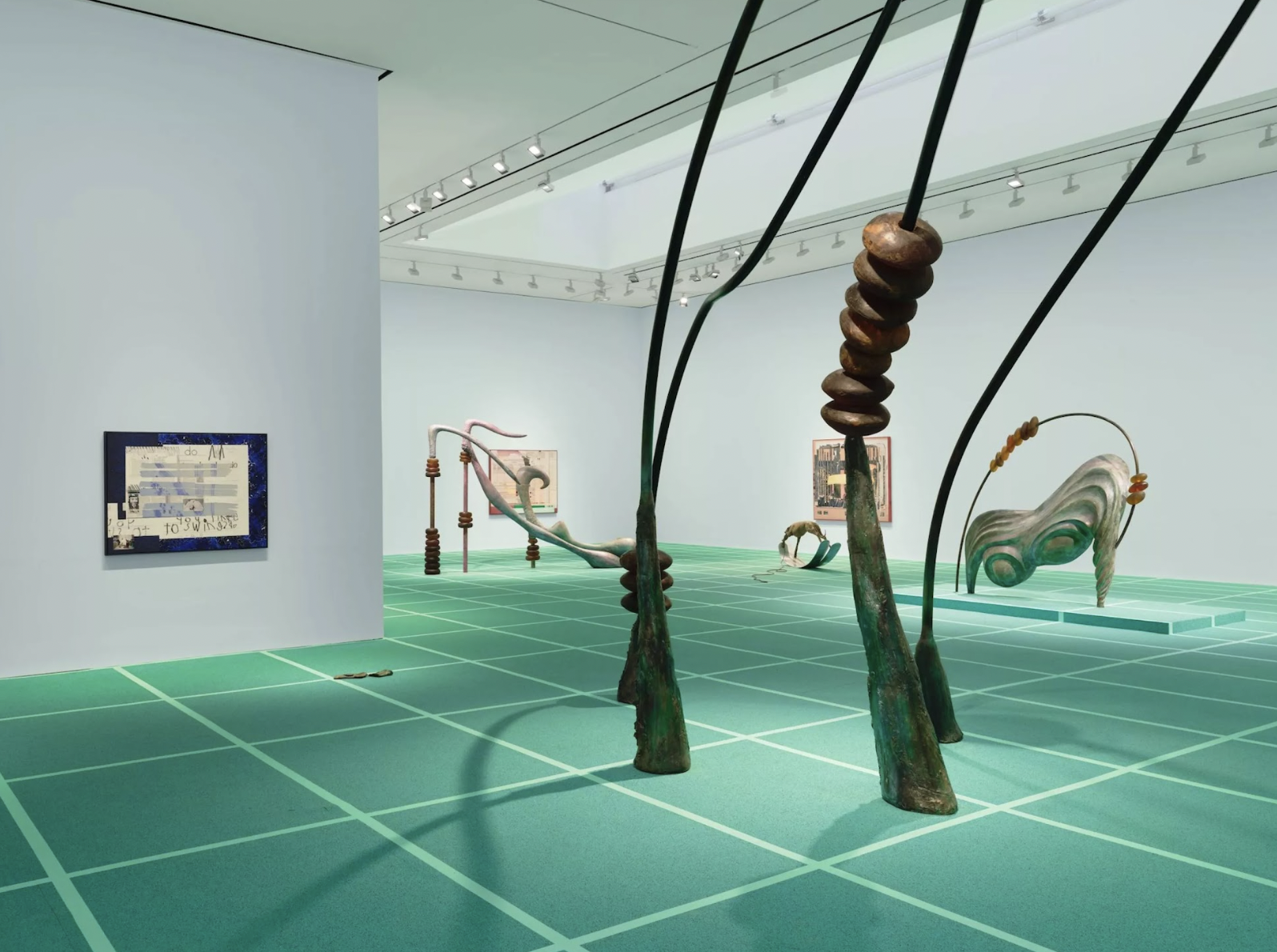
The biomorphic curves and opalescent bronze finishes reinforce the sense that these objects, though inanimate, carry a subtle kind of vitality. The show also includes works from the series Dos and Don'ts, begun in 2021, in which the artist mixes collage, print and painting over the pages of etiquette books. From those materials, Henrot builds a visual comment on the social codes that govern everyday behaviour. On the canvases, fragments of exams, school tasks, error messages and to-do lists gain new life in vibrant and provocative compositions. In reorganising those residues of daily life, the artist reveals the constructed, and often contradictory, character of codes of conduct. The series articulates a central point of her practice: the tension between the need for structure and the inevitable chaos of subjective experience.
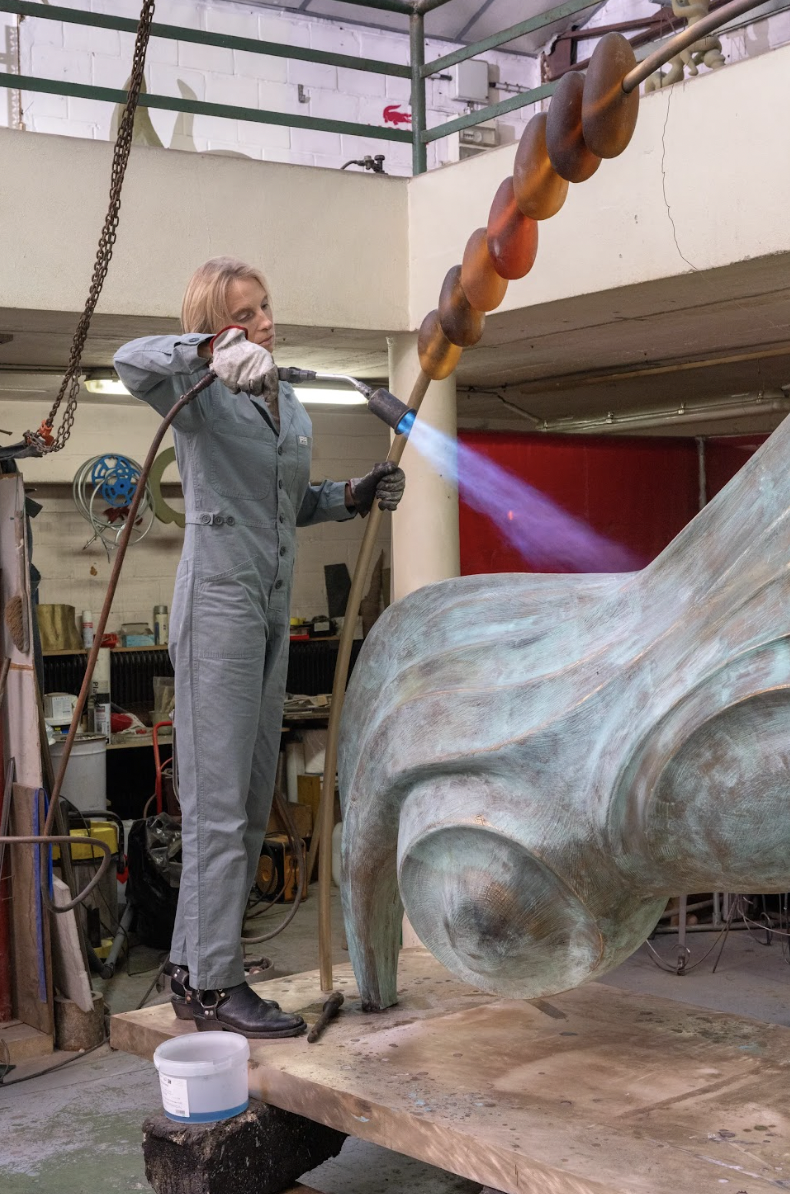
Beyond the works on show, A Number of Things proposes an activation of sensory space, with an intervention on the gallery floor by the studio Charlap Hyman & Herrero. The redrawn floor invites the visitor to move more consciously, reinforcing the immersive aspect of the exhibition. Henrot's choice of elements associated with childhood and with teaching is not random: by staging devices that teach us to count, to follow rules or to distinguish shapes, she offers a visual reflection on the mechanisms that shape behaviour from an early age. Rather than offering answers, the artist reminds us that every system is, in the end, a provisional construction.
Complete TV · Reels
Nascida no norte de Nova York, Dianna Lopez @_diannalopez começou a fazer música quase por acidente: estava ajudando um colega na faculdade
See on InstagramFrom Complete



More from Gilles Pedroza Leite
View profile


Latest from Complete
 FashionFORCA Studio at SPFW N61: Forca X, Bridgestone tire and punk leather
 DesignTomie Ohtake House‑Studio presents Zanine Caldas
 The CoverIn the beginning, we couldn't even use the word handicraft.
 CultureThievery Corporation, 30 years: the Washington duo that originated in bossa nova
 InnovationLight has become a building material
 The CoverBrazil still gives little recognition to genuinely Brazilian authorial fashion.
 BeautyBORNTOSTANDOUT arrives in Brazil