

Frank Herbert by Alejandro Jodorowsky: the art of Dune
In the 1970s, Jodorowsky conceived a film that was not merely an adaptation of Frank Herbert's work, but a total experience, an aesthetic manifesto that expanded the very notion of visual narrative.
Words by

Words by Gilles Pedroza Leite
Design and Innovation
Listen to this story
If "Dune: Part Two" reaches the screen as a meticulously architected epic, there is another version of "Dune" that hovers over the cinematic imagination as a visionary delirium, a work that never existed and that nevertheless redefined the limits of design in cinema. It is Alejandro Jodorowsky's "Dune", a project as megalomaniac as it was revolutionary, recorded in the documentary Jodorowsky's Dune (2014), by Frank Pavich.
In the 1970s, Jodorowsky conceived a film that was not merely an adaptation of Frank Herbert's work, but a total experience, an aesthetic manifesto that expanded the very notion of visual narrative. The Chilean-Mexican filmmaker saw "Dune" as a spiritual journey, a portal to transcendence, and his approach to production design reflected that boundless ambition. With Jean "Moebius" Giraud, he illustrated more than 3,000 storyboards, not merely functional sketches, but graphic compositions of vertiginous visual richness, full of esoteric symbolism and forms that defied any conventional logic.
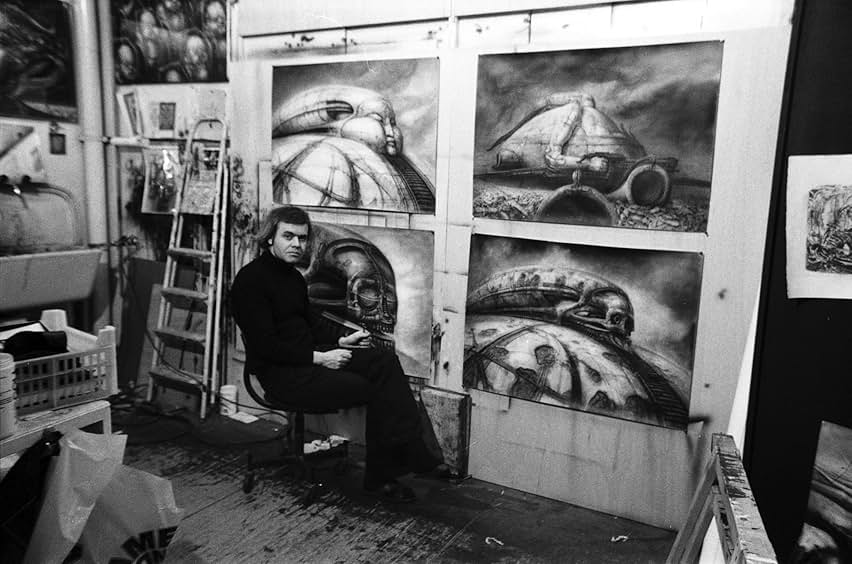
The cast Jodorowsky planned turned the mise-en-scène itself into a play of signs. Salvador Dalí, who would play the Emperor, demanded a fee of 100,000 dollars an hour: a gesture that in itself already turned the imperial figure into a pastiche of aristocratic extravagance. Orson Welles, persuaded to join the cast with the promise of luxurious banquets, would embody Baron Harkonnen, while Mick Jagger and Gloria Swanson made up a cast that blurred the borders between pop, surrealism and classical cinema. Paul Atreides, the saga's protagonist, would be played by Jodorowsky's own son, trained for years in martial arts and Eastern philosophy for the role.
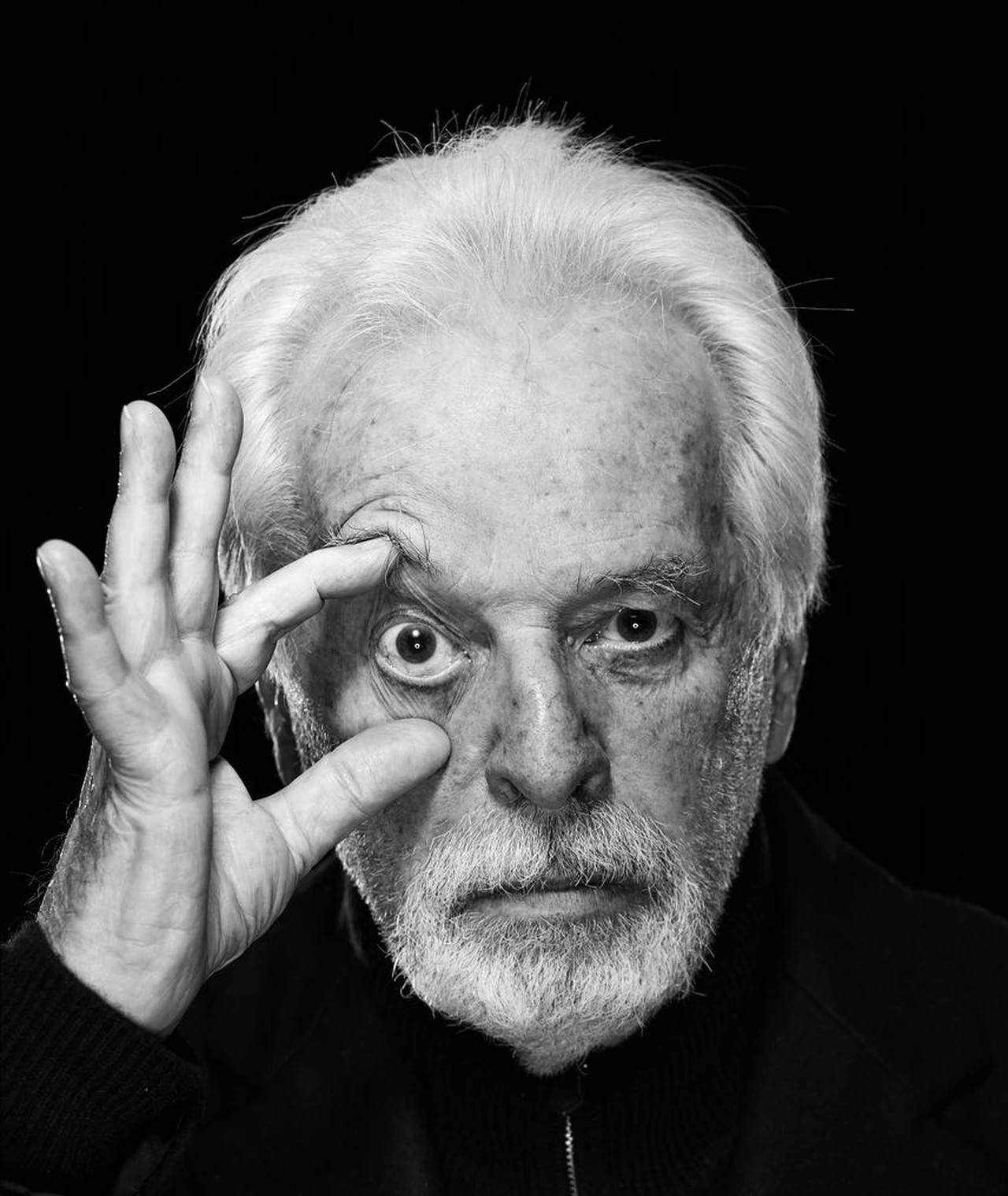
But perhaps Jodorowsky's most radical proposal lay in the conception of filmic space. He called in H. R. Giger, future creator of the biomechanical aesthetic of Alien, to imagine the Harkonnens as beings out of industrial nightmares, mixing flesh and metal in a grotesque spectacle of decadence. Chris Foss, master of illustrated science fiction, designed ships that seemed to grow organically, ignoring any commitment to functional aerodynamics. And for the soundtrack, Jodorowsky imagined a juxtaposition of the electricity of Pink Floyd and the progressive compositions of Magma, creating a sound as dense and hallucinatory as the visual landscape.
The film never left the page. The budget, unable to keep up with the director's creative voracity, collapsed before filming, and the adaptation rights passed to Dino De Laurentiis, who would later hand the project to David Lynch. Yet the ruins of that unmade "Dune" haunt visual culture. Elements conceived for it can be traced in Blade Runner, Star Wars and Alien, proving that what Jodorowsky drew was never lost, only dispersed into the iconography of the 20th century.
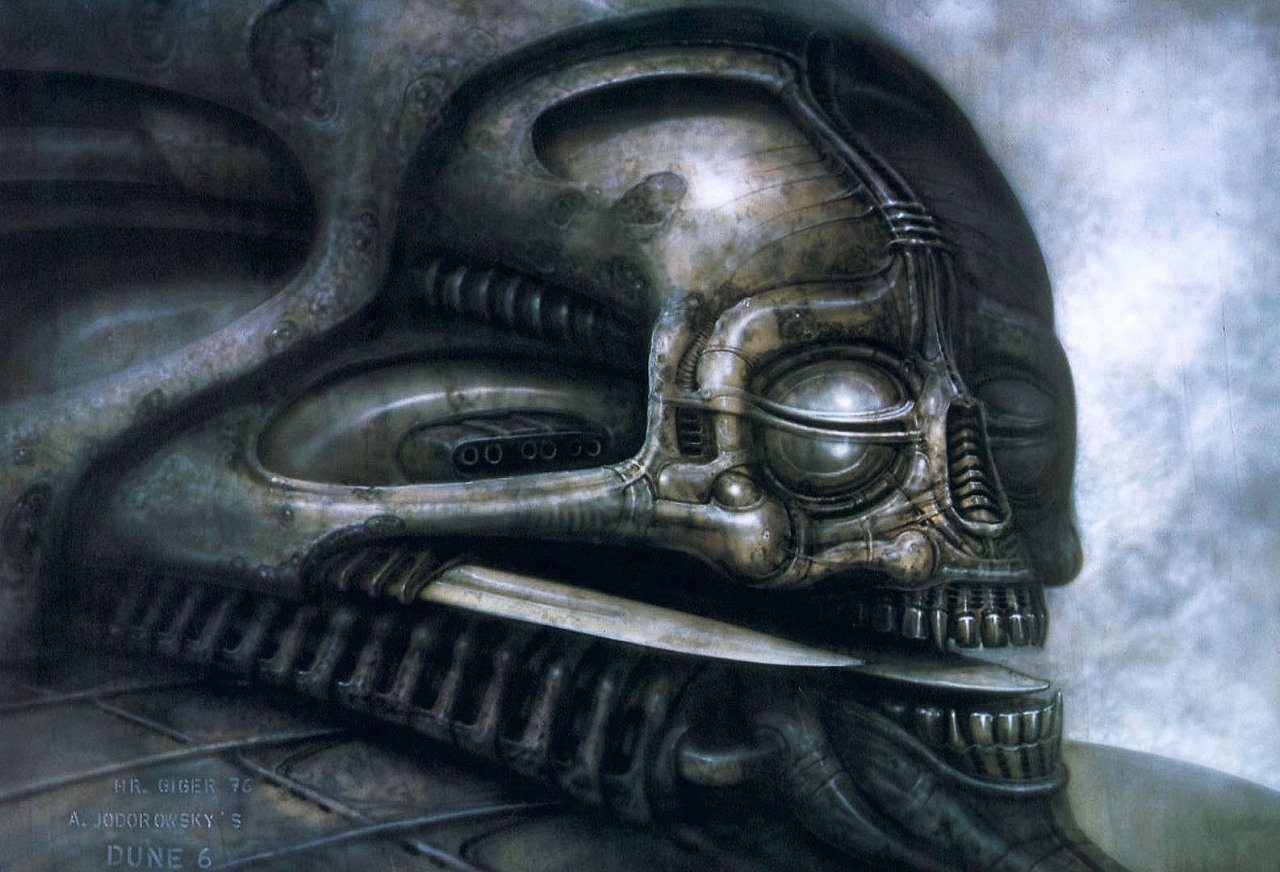
Jodorowsky did not make a film, he built an imagination. His "Dune" is an impossible object, a cinematic essay that exists in collective memory as a palace of sand, constantly remodelled by the wind of artistic influence. His greatest achievement was perhaps to show that, in design, the radical is not an excess, it is a necessity.
Complete TV · Reels
In the work “with my vowels”, Swilk @swilkwork develops an investigation of language as a physical system. The installation uses structures.
See on InstagramFrom Complete



More from Gilles Pedroza Leite
View profile


Latest from Complete
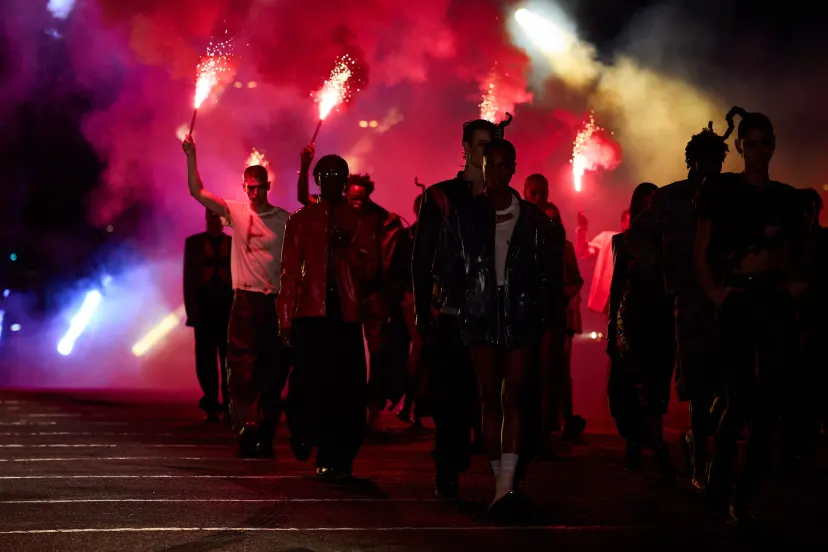 FashionFORCA Studio at SPFW N61: Forca X, Bridgestone tire and punk leather
 DesignTomie Ohtake House‑Studio presents Zanine Caldas
 The CoverIn the beginning, we couldn't even use the word handicraft.
 CultureThievery Corporation, 30 years: the Washington duo that originated in bossa nova
 InnovationLight has become a building material
 The CoverBrazil still gives little recognition to genuinely Brazilian authorial fashion.
 BeautyBORNTOSTANDOUT arrives in Brazil