

Le Corbusier: concrete as organised utopia
His most radical project was perhaps less a specific building than a vision: the Radiant City.
Words by
Words by Gilles Pedroza Leite
Design and Innovation
Listen to this story
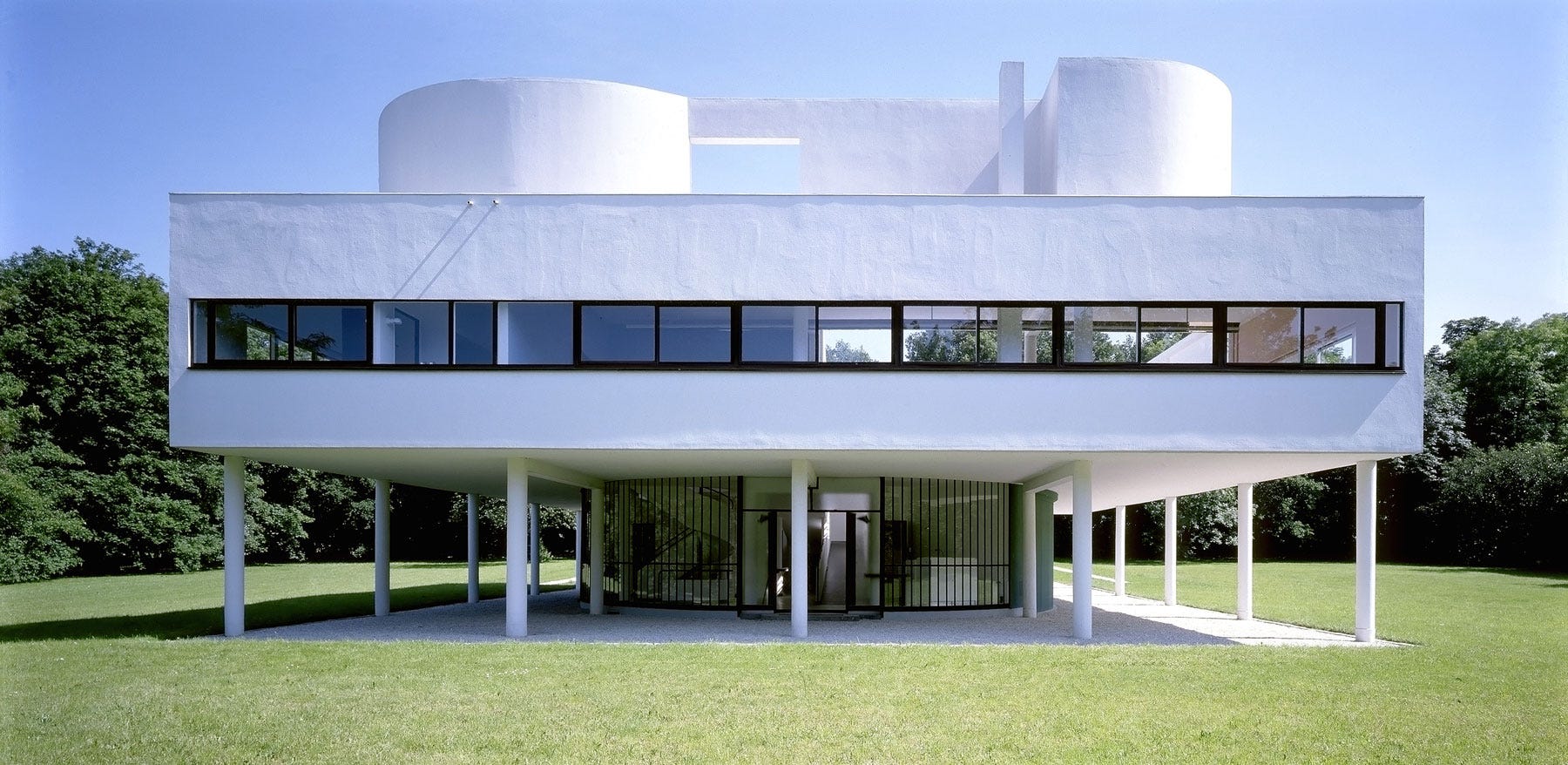
Few names carry as much symbolic weight in the vocabulary of modern design as Le Corbusier. More than an architect, he was a visual thinker, who saw in industrial forms and classical proportions a possible synthesis between reason and beauty. His “five points of a new architecture” were not merely functional guidelines, but principles of a design ethic aimed at modern life: pilotis, free plan, free façade, ribbon window and roof garden. In distilling urban chaos into inhabitable geometries, Corbusier forged a visual language that shaped everything from buildings to objects, proposing a new agreement between human being, machine and landscape.
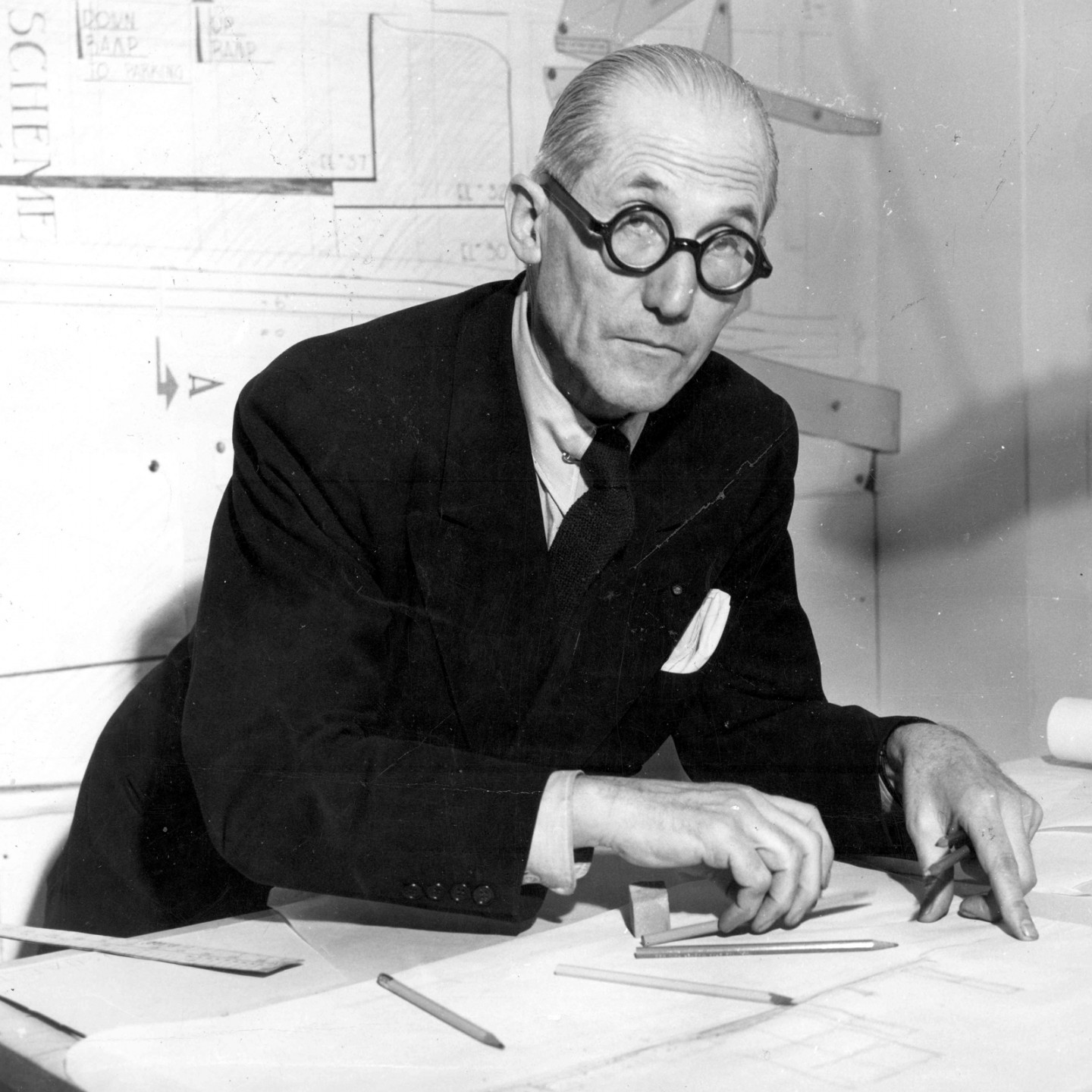
His most radical project was perhaps less a specific building than a vision: the Radiant City. In that urbanist manifesto, elevated streets, housing units and green areas made up a rational ecosystem, a machine for living and coexisting. Influenced by utopian ideals, he conceived the city as a composition of ordered flows, where functionalism was not opposed to the poetic. His architecture, often reduced to exposed concrete, was also full of sculptural gestures: unexpected curves, primary colours and brises-soleils drawn like visual scores. He thought like an engineer, but drew like an artist who knew how to listen to the silence of forms.
Le Corbusier's legacy goes beyond his iconic buildings. He founded a way of thinking: to design is to anticipate ways of living. His influence echoes in the disciplines of graphic design, furniture and even in today's parametric urbanism algorithms. By turning space into a tool of social transformation, he planted the idea that design can be a political practice. It is no accident that his chairs and lamps continue to circulate as symbols of a modernism that still dreams of an organised, accessible and beautiful world. The Corbusian gesture endures because it was not only form: it was intention. A line that, even today, draws possible futures.
Complete TV · Reels
Nascida no norte de Nova York, Dianna Lopez @_diannalopez começou a fazer música quase por acidente: estava ajudando um colega na faculdade
See on InstagramFrom Complete



More from Gilles Pedroza Leite
View profile


Latest from Complete
 FashionGuccicore: plurality as a language of style
 BeautyISDIN Fusion Water Magic: sun protection with lightness and technology
 The CoverIn the beginning, we couldn't even use the word handicraft.
 DesignTomie Ohtake House‑Studio presents Zanine Caldas
 CultureThievery Corporation, 30 years: the Washington duo that originated in bossa nova
 The CoverBrazil still gives little recognition to genuinely Brazilian authorial fashion.
 InnovationLight has become a building material