

Project Aura: Google's XR answer
In partnership with XREAL, Google takes up the architecture of expanded vision the way one redraws a glass palace: discreet, immersive, almost imperceptible. Far from the technocentric fetish of the Vision Pro or the industrial aesthetic of the first wearable interfaces, Aura appears as a device that prefers to suggest rather than assert.
Words by

Words by Gilles Pedroza Leite
Design and Innovation
Listen to this story
With the announcement of Project Aura at Google I/O, the future of smart glasses pulses again under a new light, no longer as a timid promise of the past, but as a strategic gesture that fuses technology, desire and invisibility. In partnership with XREAL, Google takes up the architecture of expanded vision the way one redraws a glass palace: discreet, immersive, almost imperceptible. Far from the technocentric fetish of the Vision Pro or the industrial aesthetic of the first wearable interfaces, Aura appears as a device that prefers to suggest rather than assert. Tethered, light and with a translucent optical vocation, it projects augmented reality not as spectacle, but as latent presence, a digital whisper among the folds of perception.
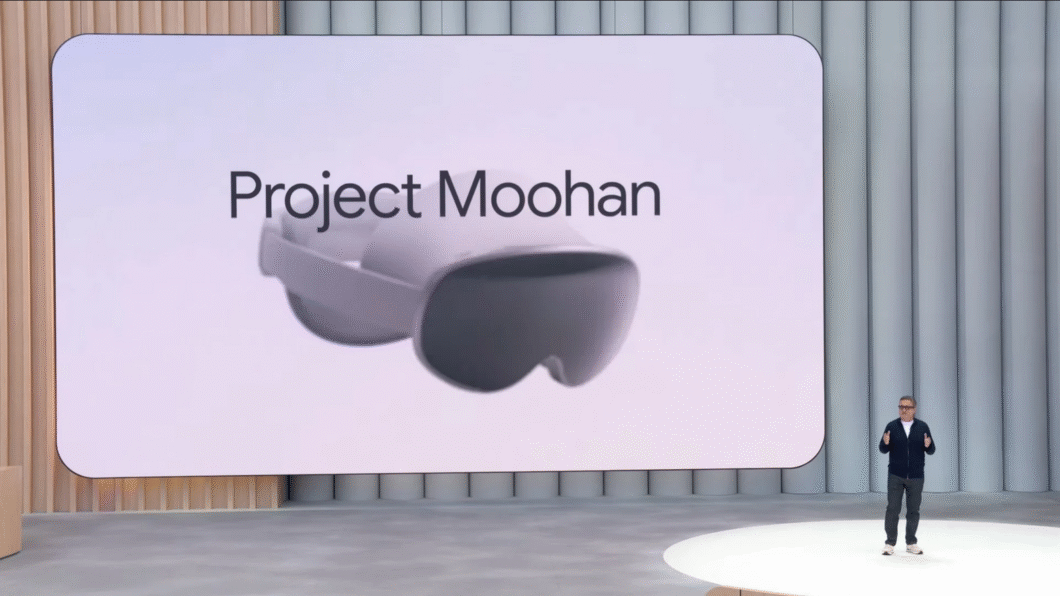
It is significant that XREAL, heir to Nreal and accustomed to experiment with micro-OLED lenses and birdbath optics, should be chosen for this move. Project Aura carries in itself the DNA of a transition: from the speculative exuberance of the first AR glasses to a more restrained and pragmatic language that nevertheless does not give up ambition. Integration with the Gemini AI signals a post-materialist turn in technology design: the object disappears, but goes on acting. Mixed reality, contextual assistants, simultaneous translation, computer vision: Aura does not want to replace the world, but to accompany it, comment on it, enrich it with invisible layers of meaning. It is a gesture that recalls Rams's design: to reduce not as deprivation, but as care.
Perhaps Aura's real project is not merely the building of a gadget, but the rehabilitation of an imagination. Since the days of the ill-fated Google Glass, the idea of smart glasses seemed cursed by its craving for the leading role. Now Google opts for a lateral presence, offering the system, delegating the body. As with Wear OS, the bet falls on the ecosystem, on developers, on the collaboration between hardware and software. Aura, in that sense, is more concept than product. It is design as silent mediation between the human and the digital, between promise and gesture. Glasses that do not only show, but listen. That do not want to be the centre, but the filter. That, instead of shouting the future, whisper presence.
Complete TV · Reels
A NASA @nasa acabou de lançar uma ferramenta gratuita para o Dia da Terra: escreva seu nome e veja cada letra soletrada em fotografias reais
See on InstagramFrom Complete



More from Gilles Pedroza Leite
View profile


Latest from Complete
 FashionFORCA Studio at SPFW N61: Forca X, Bridgestone tire and punk leather
 DesignTomie Ohtake House‑Studio presents Zanine Caldas
 The CoverIn the beginning, we couldn't even use the word handicraft.
 CultureThievery Corporation, 30 years: the Washington duo that originated in bossa nova
 InnovationLight has become a building material
 The CoverBrazil still gives little recognition to genuinely Brazilian authorial fashion.
 BeautyBORNTOSTANDOUT arrives in Brazil